

When my family lived in Panama, we had both garbage and recycling collection. The running joke was that the “recycling” was a charade, and that the trucks were taking everything to the same landfill—only about 5 percent of municipal waste is recycled annually in the Latin American country.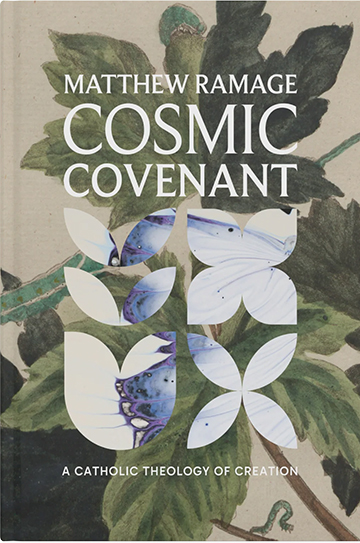
Sadly, the trash situation was so out of control that during the dry season, the landfills would often catch on fire, and the sky would rain ash for many miles around. Certainly, we’re a lot better in the United States when it comes to recycling… but still not exactly great. We Americans recycle less than ten percent of plastics, and as much as a third of what we put in recycling cannot actually be recycled, because it’s contaminated by food waste.
It’s enough to throw up one’s hands and wonder whether it’s worth recycling at all, given the irony many of us have witnessed of the socially acceptable shaming of people for not being sufficiently environmentally conscientious. For many Christians, this can be an acute frustration, because so many Americans embrace the environmentalist cause with a devotion and zealotry that seems idolatrous, let alone anti-human, especially when it manifests itself as an alarmism that calls for population control or, alternatively, with irrational, impractical demands that we phase out fossil fuels. We’ve all seen the bumper stickers.
This is why Benedictine College professor Matthew Ramage’s new book, Cosmic Covenant: A Catholic Theology of Creation, is both welcome and relevant. In thirteen chapters, Ramage articulates a faithful Catholic conception of the natural order that addresses many of the imbalances and errors of contemporary environmentalism, while offering a panoply of reflections and practical suggestions for how Catholics can honor God’s creation, whether in urban, suburban, or rural settings.
In his introduction, Ramage acknowledges an understandable skepticism many Catholics may have towards modern environmentalism, channeled as it so often is via explicitly anti-religious narratives and woke ideological screeds. As many of us have heard, hasn’t the Bible’s exhortation for man to “subdue” the earth been used to justify the careless and destructive exploitation of the natural world? (I’m reminded of a 2021 Washington Post article praising “Black and Indigenous Farming” as superior to Western agricultural methods, the piece curiously silent on the fact that those methods have lifted hundreds of millions of people out of poverty in the twentieth century alone).
Yet Ramage rightly reminds us that Holy Scripture, as well as Holy Tradition and the testimony of many saints, is filled with references to nature as an integral means for us to understand both God and ourselves. As the Psalmist declares: “The heavens are telling the glory of God; and the firmament proclaims his handiwork” (Psa 19:1).
In truth, there’s a lot about Scripture that will remain obscure for us (if not unintelligible) without a knowledge of the natural world. To give but one example, because so many of us today live in areas with significant light pollution, the Genesis account of God telling Abraham on three separate occasions that his descendants would number as many as the “stars in heaven” loses much of its rhetorical force. Whereas today, even on a clear night, we may only see a few hundred stars, Abraham would have seen thousands, which would have been easily understood as “countless.”
“At its core,” writes Ramage, “the Church’s environmental vision is an invitation to recognize and rejoice in the interconnectedness of every single creature that the Lord God has made.” The author’s titular “cosmic covenant,” he explains, is “an intimate bond [that] unites every creature in heaven and on earth with one another and with their triune Lord.” This includes an ethical obligation to stewardship, but goes far deeper, perceiving the earth as “a gift to cherish, a family to which we belong, and a sanctuary in which the divine glory dwells.”
There is a long Catholic tradition beginning with the patristics and continuing with our most recent popes that views Sacred Scripture and the natural world as “two books” that orient us toward God. “For every creature has a special beauty proper to its nature, and when a man ponders the matter well, these creatures are a cause of intense admiration and enthusiastic praise of their all-powerful Maker,” writes St. Augustine.
In his fourth and fifth chapters, Ramage expands on this interpretation via insightful analysis of Genesis. He notes that in addition to a creation story, the first book of the Torah is communicating eternal truths about man—that we are all “adam,” which literally means “dirtling.” When we read that man is to “till and keep” the earth (Gen. 2:15), it should be interpreted as not only caring for the garden but also observing nature so that we better understand and interact with it in such a manner that is beneficial to both, cultivating the wilderness into something beautiful and sustaining. And when Adam names the creatures (c.f. Gen 2:19-20), we should understand this not as a manifestation of tyrannical supremacy, but of companionship and gratitude, as anyone who has taken the time to learn the various plants and animals in his community can appreciate.
Citing the writings of Joseph Cardinal Ratzinger (later Pope Benedict XVI), Ramage notes that the Edenic mandate, far from promoting a paradigm of exploitation, values and uplifts creation. Catholics should reject what Benedict calls “a peculiar Western self-hatred that is nothing short of pathological,” that often manifests itself in an environmentalist context, lest we descend into a “new pantheism tinged with neo-paganism.” Provocatively (and perceptively), Ramage notes that the atheistic environmentalism of modernity is antithetical to a proper understanding of creation, because it fails to recognize the divine origin of nature, nor man’s proper responsibility within it.
The results are visible everywhere. From contraception to antinatalism, modernity cynically rejects our calling to participate in the creation of new human life to love and cultivate creation. Whether one is exploiting or worshipping nature, a certain nihilism takes hold, whereas, says Benedict, “respect for the human being and respect for nature are one and the same.”
In one of the interesting parts of the book, Ramage argues that Catholics err if they think that death is entirely representative of a post-Fall paradigm, because some death must have existed prior to Genesis 3. Citing what Norma Wirzba calls the “incarnational nerve,” Ramage explains that death is necessary for the perpetuation of creation because even seeds must die in order to create new vegetation. Thus, vegetarianism, far from representing a respect for creation, reflects a failure to understand how death is an integral component of creation as God intended it. St. Athanasius and St. Thomas Aquinas, among others, have argued that death was “programmed” into creation from the very beginning. Even Jesus Himself seems to hint at that when He taught that unless a seed dies, it cannot bear fruit (Jn 12:24).
So what are we to do? Ramage encourages readers to identify and embrace the natural rhythms of creation wherever we might find them. For those with little or no land, this could be as simple as possessing a few plants or gardening. It also means shifting the conversation from the grand meta-narratives over which we have little control to the practical and particular. “It is not possible to truly care about every last forest, grassland, or body of water, but we can care about ours,” he writes.
His emphasis on fighting not only the exterior pollution we encounter in our world but the interior pollution within our own souls is welcome, given not only that the welfare of our souls is more important, but that the more we are transformed by God’s grace, the more capable we are of exercising virtue and restraint.
In sum, we Catholics should view ourselves not as separated from nature, as if we were “aliens” externally inserted into it by God, but rather born and grown within it. Creation is our companion, not simply matter to be exploited and discarded. Far from being a radical environmentalist position, Ramage ably shows that this has been the explicit position of every pope since Paul VI, including Benedict XVI, whose writings exhorting the proper care for creation earned him the nickname “the Green Pope.”
As we read in the great Southern writer Wendell Berry — who, after Benedict XVI, seems to be Ramage’s favorite writer to quote: “Every person’s obligation toward creation is summed up in two words from Genesis 2:15: ‘Keep it.’”
Cosmic Covenant: A Catholic Theology of Creation
By Matthew Ramage
Word on Fire Academic, 2026
Hardcover, 328 pages
If you value the news and views Catholic World Report provides, please consider donating to support our efforts. Your contribution will help us continue to make CWR available to all readers worldwide for free, without a subscription. Thank you for your generosity!
Click here for more information on donating to CWR. Click here to sign up for our newsletter.


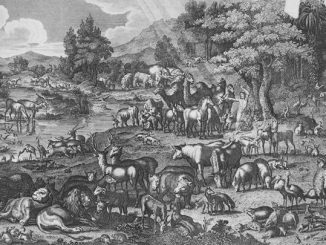

Adam naming the animals was not tyrannical supremacy, just supremacy in virtue of his divinely-made nature. I doubt whether the irreligious generations that most ruthlessly exploited and destroyed nature in their incarnation of the absolutism of the market ever understood what they were doing as the biblical injunction to subdue nature. Subduing nature in the Adamic sense can be seen in what’s left of rural landscapes in Europe where agriculture is still in proportion to human needs rather than the market as an absolute. This rational subjugation left a patchtwork of fields, pastures, towns and woodlands that is prettier than most “wildernesses”; these are usually monocultures of one sort or another, and when they are devoid of all signs of humanity and history, are cold, almost frightening places.
Adam is called the priest of Eden. Keeping involved keeping the Garden holy. God created the animals while Adam named them. I’ve been told that naming is a way to show dominion. That by naming the animals that Adam was given dominion over them. The result of this process was a way for God to allow Adam to discover where his place was in the created order. Of all the animals created on the sixth day only humans were made in God’s image and likeness. That is why only Eve was a suitable helpmate for Adam.
*
Everything in the Garden of Eden was put there by God. He was the One Who made the trees bear fruit. Everything in the Garden were the things that are God’s. By eating the forbidden fruit Adam and Eve took the things that are God’s without His permission. They could not be trusted with the things that are God’s. The serpent was promising Adam and Eve autonomy. God made them live out the consequences of autonomy by exiling them from Eden where they would be the ones who would need to make the land yield its increase by the sweat of the brow.
*
The seven days of creation has a covenantal dimension. In Hebrew to seven oneself was to swear an oath. On the seventh day God rested. He contemplated the universe that He had created.