

It was highly amusing for me to read the comments to my “Winnowing Weasel Words” piece, recently published by CWR.
First, I was described as an American, and then, when the editor pointed out that I am an Australian, it was said that this didn’t matter, since I was the “darling of the American neo-cons”. Anyone who has read my publications will know that my doctoral thesis, published as Culture and the Thomist Tradition, was critical of the American neo-conservative tradition and that I have never recanted.
The joke about neo-conservatives is that they are liberals with teenage daughters. One of my intellectual heroes, the late and great Alasdair MacIntyre, once declared in an interview that ever since he understood liberalism, he had wanted nothing to do with it, and that was when he was 17 years old. I think I was a bit older before I reached the same conclusion. The London-based publisher Bloomsbury is in the process of printing a collection of my political theory essays due for release in May 2027. It will carry the title Catholic Social Theory Unwhigged. “Whig” is a word from the British political lexicon. The late Michael Novak picked this up and coined the concept “Whig Thomism”. The forthcoming Bloomsbury book is my summa contra Whig Thomism. I doubt very much that it will get a favourable review in the neo-con flagship journal First Things.
The truth of the matter is that I am more of a paleo-conservative than a neo-conservative—or in British parlance, a Tory rather than a Whig. Paleo-conservatives never had liberal moments. They have opposed every revolution since and including the Reformation. This includes the French Revolution, the American Revolution and the Sexual Revolution. Moreover, they are usually strong monarchists. I have never met one who wasn’t. Their hearts are deeply infused with the culture of old Catholic Europe. They hold people like Kant and Bismarck and Voltaire and Rousseau in utter contempt. They fall asleep reading Locke. Worse yet, when it comes to the United States, they typically think it should still be part of the British Commonwealth, with Charles III as its king. Americans in general, and not just neo-cons, often wince and twitch at the suggestion, though in recent times some people are warming to the idea.
Chaos in the House of Windsor
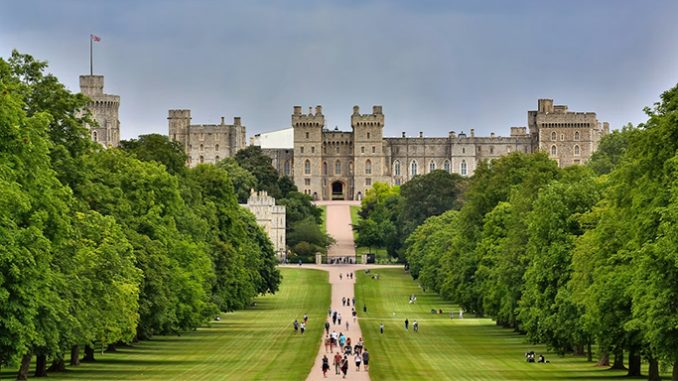
This is the perfect segue to the real subject of my piece, and that is the chaos in the House of Windsor. For those who do not follow British royal news or Hollywood gossip the backstory is that in 2018, Prince Harry, younger brother of Prince William, married Meghan Markle, a divorcee educated at a Catholic school in Los Angeles where the nuns completely lost the plot in the late 1960s. The nuns became hippies. The cardinal of the day went on television and warned good Catholic parents not to send their daughters to the school because the nuns had become communists.
There is a great account of this in the 1999 book Catholics and American Culture: Fulton Sheen, Dorothy Day, and the Notre Dame Football Team by Mark S. Massa. I don’t know if there were any nuns left during Ms Markle’s time, but suffice to say that Markle turned out to be an advocate for all the fashionable cultural Marxist causes, including abortion on demand and sex-change operations. She has indeed been described as the “queen of woke”.
Once engaged to Prince Harry, Meghan Markle caused mayhem in the royal family. She got the courtiers off-aside, didn’t even bother wearing a pair of shoes to the lunch where she first met Prince William and Princess Catherine, thought it was a joke that she was expected to curtsy to Queen Elizabeth, and thought that she should be paid appearance fees for her performance of royal duties. The press, having initially been wildly enthusiastic, turned against her. Prince William went to speak to Prince Harry about the problem. They allegedly had an argument that turned physical and Prince Harry lost his balance, falling onto the floor and breaking a dog’s breakfast bowl.
Meghan then became increasingly upset that people didn’t seem to love her the way that they loved the late Princess Diana. She told Harry she felt suicidal. He believed her. They ultimately planned an escape from royal life on what they called their “freedom flight” back to Los Angeles. Harry was warned that he could not be a part-time royal and a part-time professional celebrity. There was no possibility of a half-in/half-out lifestyle. He chose what the British press called the “Megxit” option. They abandoned royal life. However, Queen Elizabeth was merciful and did not strip Harry of his Duke of Sussex title. Once in LA, both he and Meghan continued to use their royal titles to market themselves in celebrity circles.
Harry wrote a memoir called Spare (2023), in which he talked about losing his virginity behind a pub wall with someone who wasn’t even so much as a girlfriend. He bragged about taking drugs and killing members of the Taliban; he talked about having once had a frozen todger (British slang for the male reproductive organ); and he said lots of very unflattering things about his father, his brother, his sister-in-law and his father’s second wife, Camilla. In an interview with Oprah Winfrey, both Harry and Meghan accused the British royal family of racism and Harry later accepted an award for standing up to racism within his family circle.
Spare sold very well and made millions of dollars, but every other business venture flopped. Meghan’s cooking shows were watched because they were so bizarre they had to be seen to be believed. In one episode, for instance, she demonstrated how it is possible to “elevate” a bag of pretzels by moving them out of the bag in which they were sold, putting them into a fresh cellophane wrapper, and then tying a ribbon around the cellophane. Constant media stories about whether or not the couple’s two children were actually carried by Meghan or brought into the world via surrogacy agreements resulted in the couple putting out a video where Meghan, looking very pregnant, twerks to hip hop music, and Harry walks backwards and forwards across the video lens gesturing towards his private parts.
Confession, contrition, reconciliation
Fast forward to this past week, when the couple returned to the UK. The public does not know why. Explanations include that Harry was about to find himself at risk of being imprisoned for five years for lying on his US visa application, that the pair have been living billionaire lifestyles on a millionaire’s income and need to milk King Charles for money, that they have realised that the children need to be educated in the UK if they are to be taken seriously as British royals, that Harry is massively homesick, that the marriage is imploding, and even that Harry has another love interest in California and that Meghan therefore wanted him out of California.
Nobody but the couple, and perhaps a few insiders, know the truth of the matter. The rest is all speculation.
What is known, however, is that King Charles wants to see the pair in some sense rehabilitated. And he wants Prince William to forgive Harry for all the emotional pain and reputational damage that he and his wife have caused.
And this is where the whole situation is becoming theologically interesting. The big question now being debated is: should William forgive Harry? In a recent poll, only 4 percent thought so. At present, public sympathy is with William and Catherine. However, the Church of England is dominated by woke types and a line is being run that Prince William must show that he is a good Christian by offering the pair an olive branch. And only if he does so, is he ready and worthy to become a Christian king.
If I were Prince William, my response would be to point to the parable of the prodigal son in Luke 15: 11-32, and refer people to what happens when the prodigal son returns from squandering his inheritance. The words used by the prodigal son are “Father, I have sinned against heaven and against you. I am no longer worthy to be called your son.” This is what is called a confession.
When the son first realises he has been an idiot, he says to himself, ‘How many of my father’s hired servants have food to spare, and here I am starving to death! I will set out and go back to my father and say to him: Father, I have sinned against heaven and against you. I am no longer worthy to be called your son; make me like one of your hired servants’. This is what is called contrition or sorrow over one’s sins. It precedes confession.
Finally, reconciliation occurs when the one who has been the idiot acknowledges his sins and sincerely asks for forgiveness. The sequence is: contrition, confession and then reconciliation.
If I were Prince William, I would be saying, “I accept that I am a Christian Prince and must comport myself accordingly. I accept that Christ preached mercy and forgiveness.” But I would also be saying that before any such forgiveness can be given, there must be obvious signs of genuine contrition and a genuine confession. I would also suggest that the genuine confession take the form of the pair going on television and before the cameras admitting that they created “narratives” to make other members of the family look bad. I would also say that such forgiveness need not include allowing the pair to perform royal duties in the future. It should not restore them to the status of working royals. A woman who enjoys twerking but has a problem with curtsying does not meet the minimal standards required for royal life.
If they are restored to “working royals” status, there will be a huge number of royalists throughout the UK and the broader Commonwealth realms, reconsidering their political philosophies. If making Meghan and Harry working as royals again were to be the end of this soap opera, I might just have to ask the American neo-conservatives for forgiveness for my royalist past.
At the moment however I am living in hope that Prince William has the wisdom and the courage to comport himself as a Christian who knows his scripture. And that he can explain to the powers that be within the Church of England that according to the Gospel of St. Luke, genuine contrition and genuine confession precede genuine reconciliation.
If you value the news and views Catholic World Report provides, please consider donating to support our efforts. Your contribution will help us continue to make CWR available to all readers worldwide for free, without a subscription. Thank you for your generosity!
Click here for more information on donating to CWR. Click here to sign up for our newsletter.

From the back bleachers, two comments:
FIRST, about confession before reconciliation, Josef Pieper and Thomas Aquina agree with you, by scripture and by distinguishing:
Pieper: “Christ drove the money-changers from the temple with a whip, and when the most patient of men stood before the high priest and was struck in the face by a servant, he did NOT turn the other cheek, but answered: ‘If there was harm in what I said, tell us what was harmful in it, but if not, why dost thou strike me?’” (Jn 18:23).
Then Aquinas in his commentary on St. John’s Gospel: “Holy Scripture must be understood in the light of what Christ and his saints have actually practiced. Christ did not offer his other cheek, nor Paul either[!]. Thus to interpret the injunction of the Sermon on the Mount [turning the other cheek, Mt 5:39] LITERALLY is to misunderstand it. This injunction signifies rather the readiness [!] of the soul to bear, IF IT BE NECESSARY, such things and worse, without bitterness against the attacker. This readiness our Lord showed, when he gave up his body to be crucified. That response of the Lord was useful, therefore, for our instruction” (both citations in Pieper, “Fortitude and Temperance,” 1954).
As with the father in the prodigal son narrative, the readiness is to be there first, but does not pre-empt a fully restored relationship.
SECOND, the American experience was not really a “revolution” but rather a War for Independence. And, yet, in 1854 Franklin had proposed a sort of Commonwealth of Nations when he offered his Albany Plan (involving colonial unity to finance security along the Indian border—in what hypothetically could have been the alternative to later British taxation for British pacification of the frontier: Parliament’s “taxation without representation”). Such unity was lacking and galvanized only twenty years later at the Boston Massacre and Concord Bridge.
History is always open-ended and seems to me to be often driven less by the trendlines found in retrospective/progressivist history books than by the Butterfly Effect. Things always could have been different.
1754
I have long felt that Harry could have made a better choice of wife, preferably for one with whom he had much more in common. Americans are not notable for being the rigid rule followers which generally define British Royalty, and Harry should have taken that into account. Beyond the mis-matched choice, he later attacked his family, in part to peddle a book. Hard to forgive, no matter your station in life. Whether the accusations were true or not is less important than the betrayal his family, and country, in such a public way. A family reconciliation would be a nice thing but its hard to see how that would take place. I am quite certain that the author’s suggestion of a public confession by Harry would never happen , short of the complete breakdown of the marriage. I feel for their children, who will likely always have a distant relationship with their British family members.
Count me as an American who enjoys reading about the Royals, but has zero interest in being ruled by them.But they have my sympathy. Being a Royal doesnt exempt them from the emotional pains which all of us experience, and are part of the human condition, no matter your life status.
“Count me as an American who enjoys reading about the Royals, but has zero interest in being ruled by them.”
I feel the same way about the non-human dinosaurs.
Of course the CofE knows nothing about confession, contrition and penance. How many of them frequent the sacrament or even acknowledge its existence? And, even if the CofE simulates the Sacramental Rites (like Eucharist, Holy Orders, Reconciliation, Confirmation, Matrimony) of the Catholic faith, none of them are valid because they abrogated Episcopal Succession in the 16th c.
Regarding the matter of reconciliation and William as a Christian king, he needs to tread very carefully. It is not only the Crown that was offended, vilified, and slandered by Harry and Megan but William’s wife Catherine. If William is too hasty and dismisses his wife’s position in all this, he will wind up causing a rift between him and Catherine. He doesn’t want to repeat the dumb mistakes of his weak father (Let’s remember that the father in the Prodigal Son parable didn’t send out search teams to bring his errant son back nor was he prepared to throw an expensive cloak on a son who didn’t express contrition)..
“Didn’t send out search teams.”
And yet, “while he was yet a long way off, his father saw him…” (Lk 15:20), meaning that the father spent a lot of time personally waiting, inviting, watching in the watch tower where he could see a long way off? The “readiness” to forgive—such that the son felt safe to return and then actually repent?
Peter: precisely! A loving Father longs for his son’s return, a rebirth of their most intimate relationship, a return based on truth and not lies. A loving Father stays up at night anticipating his son’s return when everyone else is asleep. A loving Father wants nothing more than a reconciliation with his son. I should know; I’m a father. .
That the father saw his son from a long way off tells us that he saw him from a long way off. The rest is theological fantasizing.
That the Father ran out to his son, although the son was a long way off says multitudes about the tenderness and willingness of God to forgive us when we sincerely repent. No fantasy there.
While visiting Canterbury Cathedral a few years ago I was surprised to see a sign announcing Confessions were being heard. I understand the issues of validity but I was glad to see they were still following in that tradition.
With the ongoing shrinkage of the CE , perhaps one day things will revert to the original plan. Who knows?
High Church Anglicans continue with many of the Catholic rubrics. I know firsthand as my mother was CofE as she was born in Worcestershire. Her pastor (rector) back in NY used to reserve the Blessed Sacrament and offered to hear Confessions. In fact, when I was a pre-Vatican II Catholic school student I used to pop into her pew at her Episcopal Church after attending my own Catholic Mass with my grade school fellows. I was ahead of the Church in promoting synodality with our separated brethren even before it was ‘au courant.’
My comments yesterday disappeared into the CWR black hole, but thank you Deacon Edward. I’m very familiar with the Anglican Church also and have family in the UK.
My hope is that one day Anglicans may come back into the fold and bring their beautiful hymns with them. I’ll take the liturgical language, too. The powers that be who translated our liturgy/ scripture into English seem to have a tin ear at times.
🙂
If you happened to see the Queen’s funeral services, in Wales and the final funeral, they were very Christian oriented.
Yes, the Queen’s funeral was Christian, beautiful & very moving.I especially liked the bagpiper.
Why would you be gladdened by a pantomime? What I understand from Episcopalians is there is no doctrine necessity of auricular individual confession, even if they think there’s utility in any words of absolution.
Of course, CofE orders are invalid, so even if the cleric and penitent involved believe that absolution is granted, it is not-which is a tragedy from the false assurance of the penitent, but also the cleric who is usurping a sacerdotal faculty-even if they operate under the assumption that what they are doing is efficacious.
CoE marriages are just as valid as ours. The couple administers the sacrament to each other. The validity cleric’s orders matter not at all. In fact, our Church recognizes marriage that even lacked witnesses, today under unusual conditions but a vexing pastoral problem in the Middle Ages.
Thank you so much for sharing that, Miss Sandra. It’s true for couples in very isolated locations or special circumstances.
There are other unusual situations where the normal rules for marriages can be tweaked.
Sandra Miesel:
So if two DIVORCED CofE members were to marry, the Catholic Church would recognize the validity of the marriage because the CofE permits divorce and remarriage, correct? As in the case of Charles and Camilla.
Are CoE second or third marriages as valid as their first?
I guess it works in a similar way for the Eastern Orthodox?
Professor Rowland, I wish First Things was still the flagship journal of Catholic whiggism. The magazine today seems eager to stomp on the bones of Michael Novak and Fr. Neuhaus, all while preaching generational piety.
David, how exactly do you think First Things has changed, and when did this change take place?
Definitely after Fr. Neuhaus’ death, but I’d say the bigger change came sometime around 2014-6; Trump became a thing, Patrick Deneen published “Why Liberalism Failed,” and Rusty Reno turned FT into a platform that was, if not hostile to, then at least embarrassed by it’s past support for free-market economics, pluralistic democracy, and the American Experiment. The Josias and that ridiculous “Tradinista” movement (trying to combine medieval sacral monarchy, distributism and radical left-wing economics), the defense of the kidnapping of Edgaro Mortara, etc.
One of the earliest issues of FT had Neuhaus writing a long, incisive critique or R.J. Rushdoony and his Reconstructionism; nowadays FT seems to welcome such things with it’s call for a Protestant Franco. While the decline has not been as bad as, say, Crisis, this is not the same magazine Neuhaus founded. Rather than trying to make Catholicism a prophetic voice to be heard in the public square, it has given up on persuasion, and now takes refuge in the very same reconstructionism and daydreams it used to call out.
Brilliant! You are absolutely correct on all accounts. Full stop. Well done!
Bravo, Tracey! And, while it is definitely taking more credit than I deserve (as in “any”), I preen myself on inspiring this piece . . . or at least alerting you to the publication of “Winnowing Weasel Words.” I particularly enjoyed your comments re. the Neo-Cons, who at least have principles, although I disagree up to several points with some of them.
I wish Dr. Norman Kurland, president and co-founder of the Center for Economic and Social Justice (CESJ) had the time to talk to you. He has stories about his interactions with, e.g., Michael Novak with whom he had a number of conversations; he thinks he may have been the one to suggest the term “Democratic Capitalism” to Dr. Novak, before he decided that trying to sanitize either capitalism or socialism was worse than useless; they have more meanings than liberalism could ever have. I have even seen both Democratic Capitalism and Democratic Socialism given the same definition by different persons.
I am definitely looking forward to “Catholic Social Theory Unwhigged.” I have a hunch based on our brief exchanges it will parallel the work I am currently doing on the origins of Catholic social thought, integrating the personalism of Pope St. John Paul II into the “real story” of American political philosophy. You won’t believe what I am finding. It will upset everyone across the political and religious spectrum one way or another, even more than it already has.
Regarding this article, I think I can understand where His Majesty is coming from and the difficulty he is facing. Forgiveness is for everyone but in the civil order it requires more than repentance, confession, and a token penance. It needs principles on which future behavior is based — and since the advent of res novae in their modern form in the 1830s, the world has been busily dismantling principles in favor of expedience or even transitory whim. Forgiveness is difficult enough when someone has willfully violated a fundamental principle, but how do you forgive someone who has no principles?
His Majesty has principles, even if you might not agree with them, but what about others without them? What are Prince Harry’s principles, other than to take what he wants and can get away with? No one else really matters to someone like that, and repentance is effectively meaningless. When what Msgr. Ronald Knox termed “enthusiasm” takes over, to the enthusiast (as Knox noted more than once) the “ungodly” have no rights. This makes repentance impossible, for the category of the ungodly includes anyone with whom the enthusiast disagrees or has what he or she wants or just doesn’t like. The allegedly guilty party might not even have done anything he or she recognizes as wrong. When neither the victim nor the sinner has principles, who is to say which is which? What you get is a society in which, as so many have pointed out over the centuries, might makes right. The rich and the powerful are right because they are rich and powerful.
I learned a new word: todger.
That is all.
“The truth of the matter is that I am more of a paleo-conservative…”
*******
Thank you Miss Tracey. I’ll have to remember that term. It might describe me, too.
🙂
Sarah Mullally Archbishop Canterbury, former oncology nurse and chief nursing officer has a corporate concept of confession and repentance. Not exactly the personal encounter with a priest representing Christ and the Church.
Prior to Trent confession was largely a personalized act, the Church realizing there required a set pattern to ensure forgiveness of sins.
Ms Mullally’s stance reflects Christianity in the modern age, Catholics now rarely confessing to a priest. This essay addresses a true and vital lapse in practice of the faith. The question Tracey Rowland addresses regarding Meghan Markle and Prince Harry is public confession in context of the requirement for private confession. Is there overlapping?
Rowland suggests Harry make a genuine act of contrition to Prince William and the Royal Family. Meghan Markle seems a lost cause. Although, not to discount the certain value of direct admission of guilt to the aggrieved party, Rowland’s well presented saga indirectly places accent on the efficacy of personal admission of fault to God, the source of all good.
In doing so in context that all offense is an offense to God recognizes the universal character of sin as an offense that exceeds the privacy of the affair, as an injury that affects the entire human corpus and the author of life.
In a sense it recognizes Mullally’s corporate concept of repentance as good but secondary to the personal account we must all admit to God and his mystical body.
Initially I classified this article, along with others within the category of gossip column. Although, unlike the garden variety column written for sake entertaining sarcasm, shocking expose this effort went a few steps further because it addressed a legitimate moral question. The efficacy of repentance and forgiveness in a real life drama.
Entertaining, yes. Expose yes. Moral significance absolutely. It addresses a moral scenario many of us have struggled with, inter familiar disagreement and breaking of relationships. Often left unresolved for a lifetime.
The question I decided to be worth addressing was this very issue, and the legitimate moral response to its resolution. Rowland gave the example of the prodigal son. My thoughts included Christ’s words, If you bring your gift to the altar be sure to first reconcile your disagreement with your opponent – then bring your gift forward.
Does this action parallel a legitimate form of confessional repentance? If Christ recommends it we can count on it being a legitimate form. That is Rowland’s point despite the gossip column setting. At times a real life situation offers a good venue for ethical discernment.
Should read [I fault auto correction]: inter familia[l] disagreement and breaking of relationships.
Sadly, the author of rich theological books led me on a strange gossip trip that began with defending herself against a readership completely foreign to her as though this were worthy of reply. By the time I had arrived at the theological speculation—to forgive or not to forgive, that is the question—I couldn’t bear to move on. Why was this published? Why not edit it and simply speculate on the merits of forgiveness? What a strange piece for CWR.
Forgiveness does not require an apology, repentance, or the firm intent to reform. As Christians we are obliged to forgive offenses with or without that.
Reconciliation requires all three. With such blatantly public offenses, a blatantly public apology is required in reparation.
The rules are the same for bishops and kings as for laymen and subjects. They do not need to repent to be forgiven by people. They do need to repent to be reconciled to other people, and to be forgiven by God.
I thought some sins would be held bound in heaven?
Less this please,
Here, here. It’s odd that she writes a whole other piece to address some previous commentor. (It even comes across that the royal family bit was added to try to turn it into a real article about something, and it’s not clear why the non-catholic royals should be of such concern for CWR readers anyway.) Yet, she arguably half admits to the comment by calling herself a “paleo” conservative versus a neo con, and actually says she is “more of” a paleo. Is she thus admitting she’s a neo-con to whatever extent but just “more” of a paleo? Besides, they are two branches of the same american “conservatism,” having many points in common. But it would also seem we’re talking about catholic “conservatives.” Is she denying that she could be thought of as a de facto member of american catholic conservative circles, regardless of her nationality?
What Rowland also didn’t do was address the substance of critical comments over the first piece, which comprise a decent number of them. There seems to be a recent uptick here of follow-up pieces by indignant authors, to look down on comments they don’t like, including on superficial matters; perhaps smacking of the arrogance, and thus easily hurt pride, that intellectuals tend to exhibit(?)
Such strangeness perfectly accompanies CWR’s quirky tech platform, the kiddos’ return to school, and realigned weather observations to fit meteorological fall.
FWIW, I’ve been doubtful about Harry and Meghan from the start. See no reason to retract my skepticism.
Don’t really understand the swipe at First Things.
But great article from Tracey Rowland – no weasel words here in need of winnowing.
I can’t help but notice that you left the Williamite (more commonly known as The Glorious Revolution) and earlier Roundhead revolutions off your list.
I, too, thought the leap into “speculation” on the royal family laundry was a bit of a stretch. And yet, there’s the irony that the entire Anglican “ecclesial communion” (not a “church,” because fully disjointed from the Apostolic Succession, under Elizabeth I) is entangled with another curious marital situation. The Henry VIII thingy. After five centuries, what goes around comes around?
I recently saw a statistic somewhere that stated a large percentage of English Catholic priests are former Anglicans!
Sarah Mullally Archbishop Canterbury, former oncology nurse and chief nursing officer has a corporate concept of confession and repentance. Not exactly the personal encounter with a priest representing Christ and the Church.
Prior to Trent confession was largely a personalized act, the Church realizing there required a set pattern to ensure forgiveness of sins.
Ms Mullally’s stance reflects Christianity in the modern age, Catholics now rarely confessing to a priest. This essay addresses a true and vital lapse in practice of the faith. The question Tracey Rowland addresses regarding Meghan Markle and Prince Harry is public confession in context of the requirement for private confession. Is there overlapping?
Rowland suggests Harry make a genuine act of contrition to Prince William and the Royal Family. Meghan Markle seems a lost cause. Although, not to discount the certain value of direct admission of guilt to the aggrieved party, Rowland’s well presented saga indirectly places accent on the efficacy of personal admission of fault to God, the source of all good.
In doing so in the context that all offense is an offense to God recognizes the universal character of sin as an offense that exceeds the privacy of the affair, as an injury that affects the entire human corpus and the author of life.
In a sense it recognizes Mullally’s corporate concept of repentance as good but secondary to the personal account we must all admit to God and his mystical body. Although directly making peace with our brother as Rowland advises does have biblical New Testament context.
Sarah Mullally Archbishop Canterbury, former oncology nurse and chief nursing officer has a corporate concept of confession and repentance. Not exactly the personal encounter with a priest representing Christ and the Church. Although, however qualified her views may be she’s a woman. That however doesn’t disqualify a woman from offering sound advice.
Prior to Trent confession was largely a personalized act, the Church realizing there required a set pattern to ensure forgiveness of sins.
Ms Mullally’s stance reflects Christianity in the modern age, Catholics now rarely confessing to a priest. This essay addresses a true and vital lapse in practice of the faith. The question Tracey Rowland addresses regarding Meghan Markle and Prince Harry is public confession in context of the requirement for private confession. Is there overlapping?
Rowland suggests Harry make a genuine act of contrition to Prince William and the Royal Family. Meghan Markle seems a lost cause. Although, not to discount the certain value of direct admission of guilt to the aggrieved party, Rowland’s well presented saga indirectly places accent on the efficacy of personal admission of fault to God, the source of all good.
In doing so in the context that all offense is an offense to God recognizes the universal character of sin as an offense that exceeds the privacy of the affair, as an injury that affects the entire human corpus and the author of life.
In a sense it recognizes Mullally’s corporate concept of repentance as good but secondary to the personal account we must all admit to God and his mystical body. Although directly and contritely making peace with our brother as Rowland advises Prince Harry does have biblical New Testament context.
“Sarah Mullally Archbishop Canterbury”
Honestly, that’s as nonsensical as Caitlyn Jenner. Both are BAD counterfeits of what they claim to be. Although to be fair, ol’ Bruce might have been facing the double curse of being forgotten and age related low T, and figured he could get the spotlight by becoming a self important parody like the Kardashian women.
Although it is nonsensical, we perforce deal with nonsensical people offering that title to a woman. It exposes the reason why numbers of Anglican priests have turned to Catholicism and the three personal ordinariates [Ordinariate of the Chair of Saint Peter, Personal Ordinariate] recognized as Catholic by Rome. That it wasn’t strictly due to conversion of belief.
The difficulty with Benedict XVI’s Apostolic Constitution allowing the transfer of Anglican to Catholic identity while retaining Anglican custom, is that some former Anglican clergy do not fully accept Catholic doctrine.
“some former Anglican clergy do not fully accept Catholic doctrine.”
Honestly, if I met her in person, wouldn’t be feeding the delusion by addressing her with an arrogated title. “I find the salutation “Cosplay” useful in the circumstance. It takes issue with her pretension, and isn’t the sort of aggressive personal insult “Beavertooth” is.
Perhaps. I’ll take your word for it, since I am not personally aware of any or any public examples. Then again, we have the same problem with some Catholic “clergy” and prelates. (think “light loafers” Jimmy Martin).
Fr. Peter: don’t Anglicans converting to Catholicism all have to make a Profession of Faith. If my memory serves me, the formula was “I believe ALL that the Catholic Church teaches and believes.”
A person can submit to the formality and retain doubts. How many Catholics repeat the Credo on Sunday and question what they say? You are aware, of course, of the multitude of so-called believers who believe Christ is symbolically present in the Eucharist.
The accusation that former Anglican clergy do not accept Catholic doctrine is unsubstantiated. Based on statements reported in the press, it would be easy to believe that there are many Catholic clergy, even princes of the church, who are less than orthodox. However, the critical point is it does not impugn either the Church or her doctrine if any member is less than faithful. As a member of an Ordinariate community, who came into the church from the Anglican tradition, I can attest that most come because we wanted to be fully Catholic, and were happy to make the profession of faith before the alter at our reception. My experience with Ordinariate clergy (and Catholic clergy in general), is that they faithfully believe and have often come into the Church a great personal cost. Again, even if there were a member of the Ordinariate clergy who “…some former Anglican clergy do not fully accept Catholic doctrine,” it is not an indictment of the three Ordinariates or of Ordinariate clergy in general.
Upvote.
I do find it interesting when I hear converts being complained of for not being entirely Catholic. Given over half of Catholics are pro-LGBT and support legalized abortion at some point in the pregnancy, there is indeed plenty to complain about with cradle Catholics not being entirely Catholic.
But there is a bit of a difference in the way converts from particular directions don’t match up to orthodox Catholicism. Or to mainstream cafeteria Catholicism. Our formation shapes us, for good or ill, no matter where we come from, and that gives us a similar shape to others from the same formation. It often involves blind spots in particular places, not insincerity.
The Church is meant for taking sincere people with a variety of problems, and turning them into Saints, so this is not actually a problem. It’s the people trying to “fix the Church’s teaching from the inside” who are problems.
Paleo-conservatives never had liberal moments.
This would seem to be falsified by the fact that Paul Gottfried who supposedly coined the phrase “paleo-conservative” in the 1980s is something of right wing libertarian, famously friendly to older forms of bourgeois liberalism. Gottfried has frequently criticized Catholics like MacIntyre as “socialists”. I don’t have a dog in this fight, but I doubt Dr. Rowland would want to be associated with what Americans call “paleo conservativism”.
I wish people, and women in particular would suspend their fascination with the “Royals”. They are the appendix of European polity. They serve no purpose, but can become inflamed and infected.
The appendix serves a purpose as a reservoir of beneficial gut bacteria during a diarrheal illness. Most American women cared about Princess Diana and to a lesser extent the Queen. The men in the family show their weak breeding with every generation.
“The appendix serves a purpose as a reservoir of beneficial gut bacteria during a diarrheal illness.”
Well then I stand corrected, as I acknowledge that would be an extraordinarily useful function in physical proximity to you.
No sir-eeee.
Anglicanism has no sacrament and this includes inter alia the reality that the marriages are purely of the natural order typically entered into with the culture mindset including so much as is opposed to the natural order and faith.
Anglican marriage is not sacrament of marriage.
Also, in the area of marriage, they distinguish between legal marriage and common law arrangements as if to guard some sort of elevated status for legal marriage; however they make the law to more or less have equable/steadying legalistic consequences for both including “law of divorce” and “termination” as measures of equability and stability.
All of which come under the socio-legalist umbrella-conceptualization and terminology, “family law”.
Then unfortunately when Catholic marriage gets into difficulties and straits, the habit now is that the parties including clergy subjugate themselves into/under these “laws” and make themselves subject to them. Most unnatural plus counter-Gospel self-accommodation where sacrament and Church are made as mere incidentals.
AL is unable to resolve these and adds its own confusions and ambiguities into them.
Anglican marriage is Christian sacramental marriage. You are gravely mistaken on Catholic doctrine.
There is no sacrament by just getting married whether as an Anglican or any other non-Catholic.
When Protestants marry it is not sacrament.
When Mohammedans marry it is not sacrament.
When Confucianists marry it is not sacrament.
When Hindus marry it is not sacrament.
When Anglicans marry it is not sacrament.
When an Anglican marries a Catholic in Anglican rubrics it is not sacrament.
Just being baptized into Christianity does not make everything that follows a sacrament.
And when two confirmed Catholics marry outside the Church it is not a sacrament.
Elias, when two validly baptized persons marry validly, it is a sacrament. That is the case even if they do not BELIEVE it is a sacrament. Whether, and to what extent, they receive sacramental graces would of course depend on their dispositions, but that does not affect the validity of the sacrament. In order for a Catholic to marry validly, the “canonical form” must be followed (i.e., marrying in the presence of a duly deputed priest or deacon), but non-Catholics are not bound by the Church’s positive legislation. (They are of course bound in conscience to seek and embrace the true religion, but that is another question.) The Church acknowledges the baptism administered by non-Catholics. The fact that the Church of England has no valid holy orders (and thus, no valid Eucharist, confession or extreme unction) does not affect the validity of baptism or marriage.
“For the Church, no natural marriage separated from the sacrament exists for baptized persons, but only natural marriage elevated to the dignity of a sacrament” (International Theological Commission, Propositions on the Doctrine of Christian Marriage, 3.5). This is also the solemn teaching, for example, of Pope Leo XIII: “certain it is that in Christian marriage the contract is inseparable from the sacrament, and that, for this reason, the contract cannot be true and legitimate without being a sacrament as well. For Christ our Lord added to marriage the dignity of a sacrament; but marriage is the contract itself, whenever that contract is lawfully concluded.”
No priest, no sacrament of marriage.
All elements must be present. In the same way the priest must use the words of consecration explicitly, in the Mass.
No priest, no sacrament of marriage.
If you are non-Catholic and wish to be sacramentally married -i.e., in the Church,- you must first get the required dispensation. This is not something you do with a priest, it is done with the bishop. Then, once you get it, the sacrament of marriage is effected with the priest.
All elements must be present.
So many people tripping on this. What is that. Pope Francis had the view that “most marriages are null”. It could well be he missed the mark on a number of separate issues to do with marriage, thus dead-ending the evangelism due.
Natural marriage that is not sacrament is not just so null for not being a sacrament: it is not sacrament but could become sacrament. Sacramental marriage arriving at bad straits doesn’t reduce just so to being null: it is sacrament that needs tending. This is the thrust coming from JPII.
Thank you for this excellent piece, apart from the unnecessary and, in my opinion, misguided dig at First Things.
Granted that the journal no longer has Richard Neuhas, a once in a lifetime intellectual and apologetic giant. But as a non-neocon, I i still find First Things to be a good journal with some articles of real value.
Re Tom in Florida above (11:57 a.m.)
I, too, wondered at the swipe at First Things. Granted, I haven’t a clue about the difference between neo- and paleo-conservative so maybe that explains my non-objection. My main gripe against First Things is that I can no longer read any of their articles without a subscription.
Elias: “No priest, no sacrament of marriage.” Elias, this is false. The priest who presides at a Catholic marriage is not the minister of the sacrament, the spouses are. According to CHURCH LAW (not divine law), the presence of the priest is normally required for the valid marriage of Catholics. But he is not the minister, and in some cases, a valid marriage even for Catholics is possible without the presence of the priest, because, again, we are talking about positive ecclesiastical law, which can be dispensed in some cases. The Church of England (and its variants) does not have a valid sacrament of holy orders; you are correct about that. This means that they do not have real bishops or priests, and therefore they do not have those sacraments which can only be administered by priests of bishops: namely, confirmation, the Eucharist, penance and extreme unction. However, the ministers of the sacrament of matrimony are the spouses, NOT the priest. Non-Catholics can most certainly contract valid marriages, and since — according to Catholic doctrine — for those who are baptized, the CONTRACT of marriage and the SACRAMENT cannot be separated, whenever any two baptized persons marry validly, by that very fact they receive the sacrament of marriage.
Peter F., thanks, I think 1) this is the Orthodox problem that the Church will eventually solve and 2) you must -one must- read the passage in the Catholic sense.
Being baptized Catholic, one then is obliged to come to marriage in virtue of both Confirmation and Priesthood. Which is to say, all elements “to be made” present.
That is how the document is read and understood.
If I am to be re-instructed on that well then so much would have to be accounted for properly. My view is that sacrament marriage is both spousal contract and communion.
WITS. Which is to say, not merely contract or “Catholic contract”. Spousal communion.
And, in the assertion by St. Paul, this is the great mystery … instituted by Christ.
Hello Elias, just to make sure we are not talking past each other, are you Catholic or Orthodox? The position that you keep espousing is not the teaching of the Catholic Church. You are certainly correct, as you stated or implied in one of your other comments, that an attempted marriage involving one more Catholics attempting to marry outside the Church would be both invalid and non-sacramental. But non-Catholics are not bound by the Church’s marriage laws (“canonical form”); they have only to respect the natural law and legitimate civil laws. If those two non-Catholics marrying validly are both BAPTIZED, then their marriage is — and only can be — a sacramental marriage. This is the explicit teaching of the Catholic Church. For two baptized persons, there is either an INVALID attempted marriage or a valid and therefore SACRAMENTAL marriage. For baptized persons, the contract and the sacrament of marriage CANNOT be separated; there is no such thing as a valid and merely “natural” marriage for two baptized persons. Do you have anything from the Code of Canon Law, the Catechism or a magisterial text to back up your repeated assertion? Again, if you are Orthodox, we understand that your church has a different teaching than we do, but this is a Catholic site.
I am Roman Catholic.
In my understanding of sacramental marriage, as instituted by Christ, it can only be effected before a priest.
The Church recognizes natural marriage separately, as valid according to natural order. Meant to be brought to Christ yet not yet sacrament. Meanwhile is subject to its own vagaries with no guarantee of sacrament.
In addition, sacramental marriage depends on having been Confirmed not merely Baptized. (You seem to miss that.)
If I am to be reinstructed, I appeal to Holy See. If Holy See is unavailable I would defer to Cardinal Burke or Cardinal Sarah.
I have never heard that Sacramental marriages require Confirmation. In fact canon law says the opposie, see can. 1055.
https://www.vatican.va/archive/cod-iuris-canonici/eng/documents/cic_lib4-cann998-1165_en.html#TITLE_VII.
Sacramental or natural marriage with at least one Catholic party requires a priest (or deacon), and the marriage to be in a church but it is poosible for this to be dispensed by the local ordinary. Canon 1112 provides for a layperson presiding at a marruage provided a priest will not be available for a considerable time. The Japanese Catholics were without a priest for generations, so I expect they made use of that.
Amanda I think you write very well all the time not merely on occasion or “in general”; however, here, you have misread the Canon and you mislead me and others. Further, when you cite that Canon you can not NOT cite Canon 1056 at the same time; and when you cite any Canon you must read it alongside the other Canons and under the faith.
Just getting Baptized or just by having been Baptized, doesn’t turn everything else you do in life afterwards, into a Sacrament.
In addition, in respect of the Christian non-Catholic situations, in many cases it has to be checked if they were even validly Baptized.
I believe I always have something to learn and I am NOT seeing that sensibility shared in the present content under review by us, on this page.
What we can recognize as well, is that there are many areas of functional ignorance/discordance and wrong teaching happening by bishops under bishops that Pope Benedict and Pope Francis were to address and correct; who unfortunately continued in a trend of tripping over those practical and catechetical matters, into a sterile mode of always-philosophy.
Elias, the canon is:
“Can. 1055 §1. The matrimonial covenant, by which a man and a woman establish between themselves a partnership of the whole of life and which is ordered by its nature to the good of the spouses and the procreation and education of offspring, has been raised by Christ the Lord to the dignity of a sacrament between the baptized.
§2. For this reason, a valid matrimonial contract cannot exist between the baptized without it being by that fact a sacrament.
Can. 1056 The essential properties of marriage are unity and indissolubility, which in Christian marriage obtain a special firmness by reason of the sacrament.”
I’m not sure how it can get more clear than “a valid matrimonial contract cannot exist between the baptized without it being by that fact a sacrament.”, or how discussing the unity and indissolubility of Christian marriage changes the interpretation to require Confirmation.
I never claimed Baptism turns *everything* into a Sacrament, just valid marriages between baptized people. Which is exactly what the canon says happens. Obviously the baptism needs to be valid. Just as obviously, Confirmation is not required.
This is not teaching by a bishop, this is a direct quote from canon law, which only becomes law when the Pope approves it.
If you’d like to provide actual quotes from wherever you are getting this claim that Confirmation is necessary, you might help your case. As it stands, it’s your baseless opinion, vs. Pope-approved canon law.
Amanda, that would be saying that it is not necessary to receive Eucharist and the Holy Spirit in order to share in the Sacrament of Marriage.
Which can not be and actually is not open to Catholics “because Baptized”.
And it would not be sacramental marriage just natural marriage with an involvement of Baptism.
Unless in this or that non-ordinary instance the Bishop allows dispensation.
The baptism “threshold for everything” is an error that relates back to Luther.
The point I raised about Orthodox has to do with a too exclusive emphasis on the ministers of the sacrament apart from the priest; but if you notice carefully their ritual practice, it actually is to go before the priest.
Peter F. the passages you quote from ITC and Leo XIII are saying that Catholics may not marry other then before a priest; and should they purport to marry other than before the priest, it is sinful a) against the Church immediately and b) against purity when they subsequently engage in the indicated premarital sexual relations. Further, whereas this obliges Catholics, non-Catholics are not so obliged in conscience.
As Catholics we are not meant to take any swing as suits us or according to some kind of “swing averaging”. We are “in chains” as St. Paul says. The challenge of our age is to impart this appreciation in faith to the youngsters and to witness to it.
I suggest that the travesty of the age is the inundation of all kinds of OTHER issues that preoccupy attention and divert the focus and effort on chastity. Like those gobbling women St. Paul refers to, always learning something.
I also defer to Cardinal Arinze if you find Burke and Sarah too menacing.
https://www.newsweek.com/sports/mlb/hilarious-call-on-worst-swing-of-the-year-contender-goes-viral-12402930
I have not been following the goings-on in the British royal family ever since my husband died. My husband was from Sussex, a Catholic, a naturalized US citizen, and a staunch monarchist. I am Filipino, also a naturalized US citizen, but never had much interest in British things since the Philippines was never a British colony. Nevertheless, it was 41 years ago when my husband took me to England to meet his family. It so happened that Harry had just been born and we were at Buckingham’s gate to hear the announcement. I’m sure my husband would have been “thrilled to bits” had he lived to see Harry proclaimed Duke of Sussex. I’m sure he would have been saddened to know what happened to Harry when he grew up. I, too, feel sorry for Harry; but would like to know if his brother William really has the authority to demand that Harry repent of his sins publicly. I mean, William is not yet king; can he command his brother to do that? Harry is his brother, his only brother. Even before their mother Diana died, it was just him and Harry who held on to each other given both parents were carrying on with other people. William ought to take Harry back whether or not he repents. Harry is family. The British people are a forgiving lot. They took Camilla as the queen consort. They forgave King Charles for his adultery with Camilla. Charles and Camilla did not have to make public repentance. The people did not mind that William and Catherine themselves lived together before marriage, either. Why not be as kind to Harry, whose biggest sin is to fall in love with – and marry – someone tacky and not their kind? A bigger crime has been committed by a biblical prince against his king-father, yet the king mourned for his unrepentant son when the son died. I am referring to King David who mourned his son, Absalom, who tried to usurp his throne. “Absalom, Absalom – my son, my son, Absalom!” At least Harry is not trying to usurp the kingdom from his father – just trying to regain what he has lost.
Thank you for a very good summary of a complicated family history. You write like a true Christian.
mc p : you come across as everybody’s busybody. For a non monarchist, you seem to have the inside scoop.
“The British people are a forgiving lot. They took Camilla as the queen consort. They forgave King Charles for his adultery with Camilla. Charles and Camilla did not have to make public repentance. The people did not mind that William and Catherine themselves lived together before marriage, either. Why not be as kind to Harry, whose biggest sin is to fall in love with – and marry – someone tacky and not their kind?
Why do you think Andrew hasn’t been the recipient of this royal reservoir of foregiveness?
He must have done something truly awful, like the Princess Alexandra of Hanover who was removed from succession for becoming Catholic.
With every post, we plumb the depths of your misandry.