


 By
By 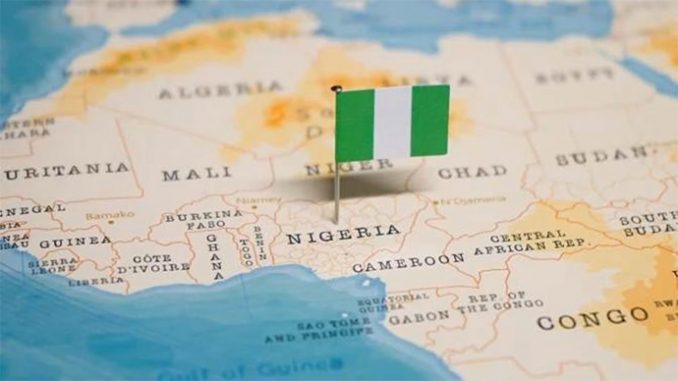
JOS, Nigeria — At least 11 people are feared dead and several others injured following a deadly attack by suspected gunmen in Gari Ya Waye community Angwan Rukuba, served by Nigeria’s Catholic Archdiocese of Jos.
The attack occurred on the night of March 29, Palm Sunday, at about 7:50 p.m. local time.
Eyewitnesses said the assailants stormed the area and opened fire on unsuspecting civilians before fleeing the scene. Security personnel, including the Nigerian Army, reportedly arrived at around 8:45 p.m. to restore order and secure the affected community.
Casualty figures from other affected areas remain unclear, as some victims were evacuated during the attack while others were taken to nearby mortuaries.
In response, the Plateau state government imposed a 48-hour curfew across Jos North, effective from midnight on March 29 through April 1, in a bid to prevent further breakdown of law and order.
In an interview with ACI Africa, the sister service of EWTN News in Africa, on March 30, Archbishop Matthew Ishaya Audu of the Archdiocese of Jos underscored the importance of relying on verified information amid conflicting reports.
“I think the details are not there. If I make a statement, I should do so with conviction and provide a clearer position,” he said.
Making reference to early reports about the number of deaths, the archbishop warned against relying on unverified figures circulating, particularly on social media.
“It’s true that yesterday … unarmed men, that’s what they say, attacked one place, and the reports are saying about 11 people were killed, but we don’t know the details,” Audu explained.
He noted that the curfew imposed by the Plateau state government has limited movement and made independent verification difficult.
“Since the morning, I have not been able to even come out. I cannot even say to my own JDPC that they can brief me better,” he said, referring to the Church’s Justice, Development, and Peace Commission.
Audu expressed concern about misinformation, warning that inaccurate reports could worsen tensions. “Sometimes these people, with social media, just write anything,” he said.
He also cautioned that while the curfew is intended to restore order, it could create vulnerabilities if not carefully managed.
“There is heavy restriction… not even movement of anybody, except maybe the police. They don’t even want to see you walking. As a result, if they don’t [manage the curfew well], other people can take advantage… and then more killing will take place, and more innocent people will die,” he warned.
The archbishop urged security agencies to remain vigilant and ensure residents are protected during the movement restrictions.
The timing of the attack — coinciding with the beginning of Holy Week — has heightened anxiety among residents.
However, Audu refrained from attributing the violence to religious motives despite circulating rumors.
“There were talks… that after fasting, they are going to attack us, the Christians … I don’t know what it is,” he said.
Remaining cautions, he added: “Please, I don’t want to add more problems to what we already have.”
Amid the uncertainty, the Church leader called on residents — especially Christians observing Holy Week — to turn to prayer. “Let them pray… That is what we need now.”
Drawing on the spiritual significance of the season, he added: “The cross is only a way to the Resurrection. We believe all the challenges of life, including what we are facing now, will become a thing of the past.”
Audu continued: “If we let ourselves hope and believe, just like God raised Jesus from the dead, he will raise us above our challenges.”
He also joined his prayers with those for peace across Nigeria.
“We pray that God will restore peace to our country,” he said.
The Angwan Rukuba incident adds to ongoing security concerns in Plateau state, a region that has experienced recurrent episodes of communal and ethno-religious violence. Authorities are yet to release a comprehensive official account of the situation as investigations continue.
Gov. Caleb Manasseh Mutfwang condemned the attack, describing it as “barbaric and unprovoked,” and assured the public that security agencies are actively pursuing those responsible.
Following a visit to the affected community on Monday, the governor expressed deep sorrow over the incident.
“Today, I visited Angwan Rukuba in Jos North Local Government Area with a heavy heart following the heinous attack on innocent citizens,” he said. “I stood with grieving families, listened to their pain, and shared in their loss. No words can truly capture the depth of sorrow in moments like this, but I want every affected family to know you are not alone. Your pain is my pain, and the pain of Plateau state.”
He pledged justice for the victims, stating: “I assure you that those responsible for this evil act will not go unpunished. My administration will pursue justice relentlessly until the perpetrators are brought to book.”
Mutfwang also outlined measures to support victims and their families.
“We will also ensure that the lives lost are honored with dignity through a befitting burial. Furthermore, the Plateau state government will take full responsibility for the medical treatment of all those currently receiving care as a result of this attack,” he said.
Calling for unity, he urged citizens and community leaders to collaborate with authorities.
“I call on all citizens — our traditional rulers, religious leaders, and community stakeholders — to work with us. Security is a shared responsibility, and together, we must rise above division and confront this challenge with unity and resolve,” he said.
The governor reaffirmed his administration’s commitment to peace and stability in the state, adding: “Let me reaffirm: My administration remains fully committed to restoring peace, strengthening security, and rebuilding trust across Plateau state.”
Residents have been advised to remain calm and cooperate with security agencies by providing useful information to support ongoing investigations into the attack.
Abah Anthony John contributed to this story.
This story was first published by ACI Africa, the sister service of EWTN News in Africa, and has been adapted by EWTN News.
If you value the news and views Catholic World Report provides, please consider donating to support our efforts. Your contribution will help us continue to make CWR available to all readers worldwide for free, without a subscription. Thank you for your generosity!
Click here for more information on donating to CWR. Click here to sign up for our newsletter.

The central tenet of Islam is conquest by force.
it is not really true that the central tenet of Islam is conquest by force. That is allowed no doubt, but the central tenet is the absolute sovereignty of God. And, this surprised me, the Koran speaks very frequently of God being merciful.
The nature and origin of Islam is a very complex matter, as is its actual present and historical forms. It would behoove Christians to come to a better understanding of what we are dealing with, because the present situation is one which continually results in bad things for the millions of Christians who live in constant danger from proximity to its more dangerous believers. The Vatican treads very carefully because it knows that any verbal mis-step can have dire consequences for those Christians, but, sadly, does not really seem to have an overall approach that will make any great difference.
And Islam is considered a religion? More like a cult.
NOSTRA AETATE;
3. The Church regards with esteem also the Moslems. They adore the one God, living and subsisting in Himself; merciful and all- powerful, the Creator of heaven and earth,(5) who has spoken to men; they take pains to submit wholeheartedly to even His inscrutable decrees, just as Abraham, with whom the faith of Islam takes pleasure in linking itself, submitted to God. Though they do not acknowledge Jesus as God, they revere Him as a prophet. They also honor Mary, His virgin Mother; at times they even call on her with devotion. In addition, they await the day of judgment when God will render their deserts to all those who have been raised up from the dead. Finally, they value the moral life and worship God especially through prayer, almsgiving and fasting.
Since in the course of centuries not a few quarrels and hostilities have arisen between Christians and Moslems, this sacred synod urges all to forget the past and to work sincerely for mutual understanding and to preserve as well as to promote together for the benefit of all mankind social justice and moral welfare, as well as peace and freedom.
Yes, but the article points more broadly to “communal and ethno-religious violence.” Communal can be a collage of religion (Islam), but also tribalism, language, races, ethnicity, local folk heroes (Muhammad? Gang leader?), culture, village culture, etc.
Identity politics on steroids.
Against which, the Western experience and assumption of socially integrating individuals (!) into societal nation-states glued together by upward economic mobility is too often a bad fit. A bad fit in non-Western contexts where the colonial boundaries can be a thin veneer over a communal patchwork. As in Nigeria: Hausa, Ibo and Yoruba and all else. Modernity can aggravate the cauldron.
Communal Islam is a special case in terms of both its internal sectarianism and its transnational expanse.
So, it seems to me, that a key test of Christian evangelization involves now, more than ever, a clarification that it’s not a Western imposition. And, about the Marxist admixture (a transplanted Western heresy), it calls for more than tentative preliminary agreement as with modernistica China which has been violently decapitated from its own wisdom tradition (Confucianism). That went well…
What, too, does ‘everyone’ mean by “fraternity”?
When will there be some relief for these people from the direct and imminent threat to their physical, mental and spiritual safety?
Such sad news for Holy Week. God bless Nigeria and Africa.
This article by historian R. Ibrahim cites the Koran to explain what many Christians still do not want to understand:
https://www.americanthinker.com/articles/2024/03/how_carnage_and_atrocities_heal_muslim_hearts.html
This article in the major Catholic publication WORLD should be an eye opener:
Life as a dhimmi in medieval Islamic Spain
And what it can teach modern day Christians in America
https://wng.org/authors/dario-fernandez-morera
As should this
“Allah” is no god despite what some Catholic leaders would have us think.
Allah is no god.
French British Catholic historian Hilaire Belloc’s 1938 essay on “The Great and Enduring Heresy of Islam” is instructive. The essay will give a quick yet broad and prophetic understanding of that faith. Highly recommended. A 5-minute read.
https://www.catholicfidelity.com/apologetics-topics/other-religions/islam/the-great-and-enduring-heresy-of-mohammed-by-hilaire-belloc/
Thank you so much Meiron for this Belloc piece. I had known about it second hand but had not read his actual writing on the matter. May I recommend historian R. Ibrahim’s book Defenders of the West: The Christian Heroes Who Stood Against Islam. It is an eye opener especially today given the continuous pontifications from girly church leaders trying to turn Christianity into a doormat religion. This is the link to Ibrahim book:
https://www.amazon.com/Defenders-West-Christian-Heroes-Against-ebook/dp/B09ZJYFD2W.