

Jan 7, 2026 / 09:37 am (CNA).
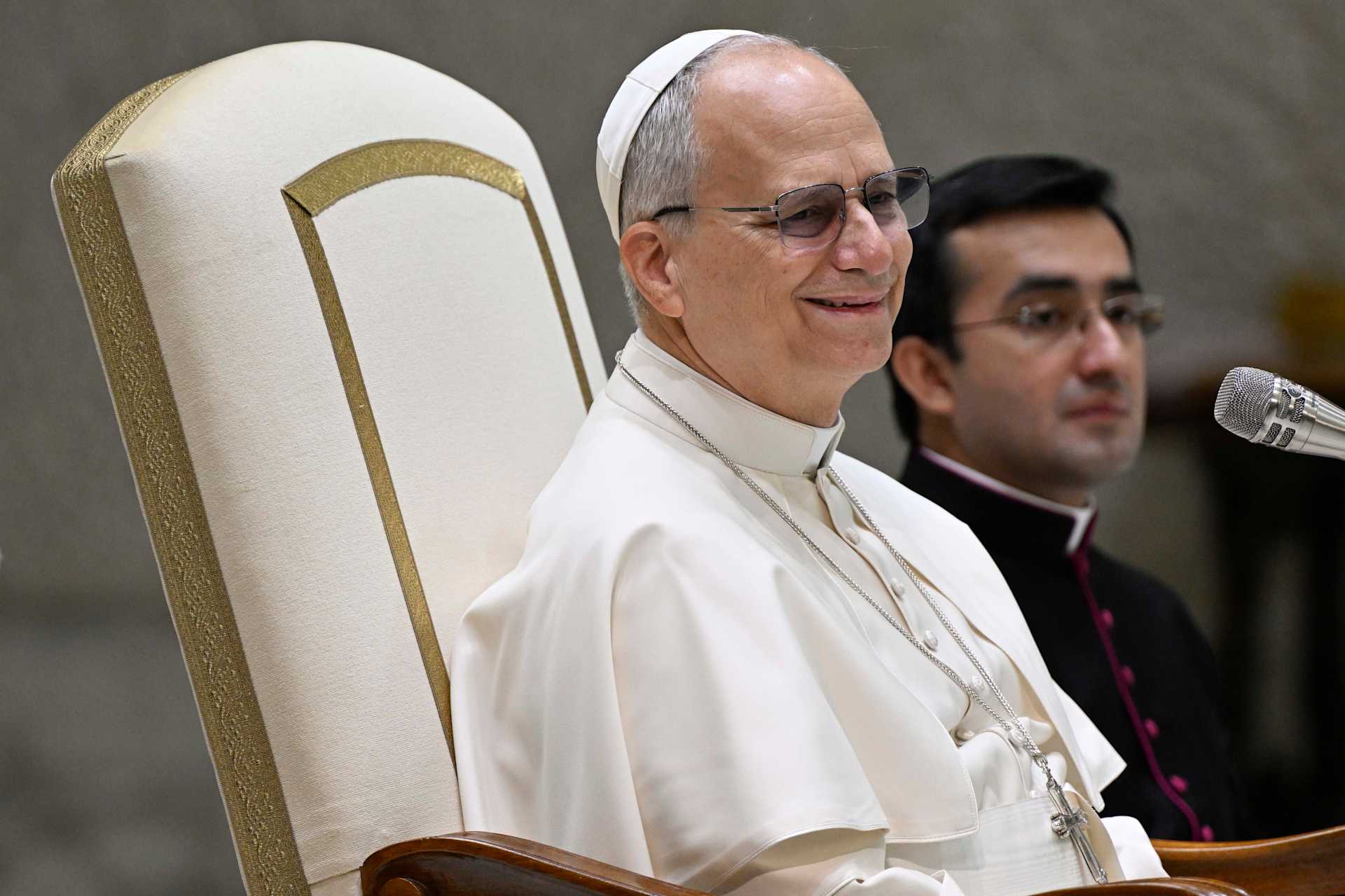
Pope Leo XIV began a series of reflections on the Second Vatican Council at his first general audience of 2026 on Wednesday.
The public audience, held indoors in the Vatican’s Paul VI Hall due to low temperatures, took place shortly before the start of Leo’s first consultation with cardinals, called a consistory, convened for Jan. 7–8.
The pope noted that though the Second Vatican Council took place just over 60 years ago, its generation of bishops, theologians, and lay Catholics is no longer alive — necessitating a renewed study of its teachings.
“While we hear the call not to let [the council’s] prophecy fade, and to continue to seek ways and means to implement its insights, it will be important to get to know it again closely, and to do so not through ‘hearsay’ or interpretations that have been given, but by rereading its documents and reflecting on their content,” the pope said on the morning of Jan. 7.
He affirmed that the magisterium of Vatican II “still constitutes the guiding star of the Church’s journey today.”
“As the years have passed, the conciliar documents have lost none of their timeliness; indeed, their teachings are proving particularly relevant to the new situation of the Church and the current globalized society,” he said, quoting Pope Benedict XVI.
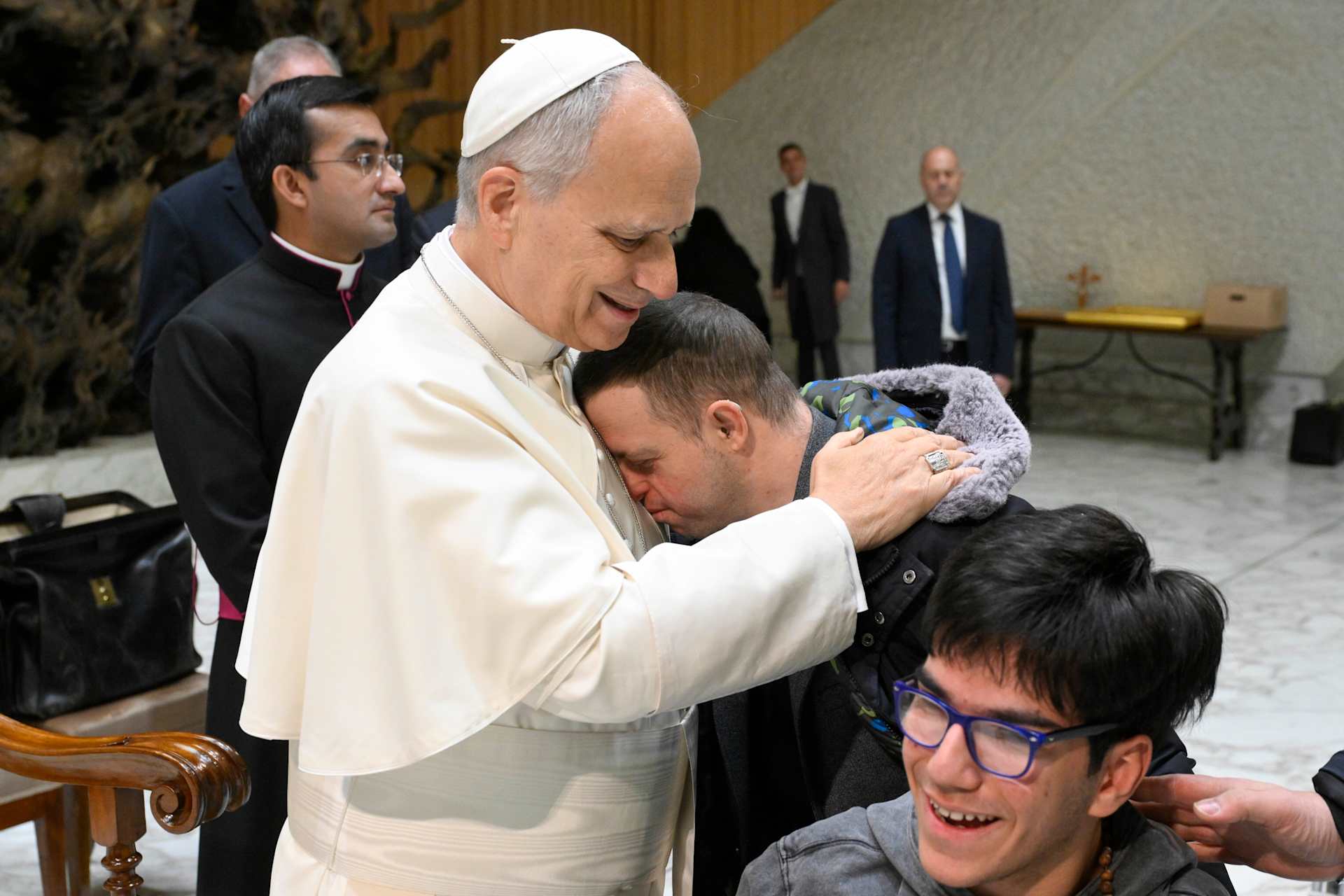
The Holy Father also recalled the original impulse of this great ecclesial event, convened by St. John XXIII, which paved “the way for a new ecclesial season” following a “rich biblical, theological, and liturgical reflection spanning the 20th century.”
Leo reviewed some of the council’s principal fruits, including that it “rediscovered the face of God as the Father who, in Christ, calls us to be his children.”
It also led, he said, to a renewed understanding of the Church “as a mystery of communion and sacrament of unity between God and his people,” and it initiated an important “liturgical reform” by placing the mystery of salvation and the active and conscious participation of the entire people of God at its center.
“It helped us to open up to the world and to embrace the changes and challenges of the modern age in dialogue and co-responsibility, as a Church that wishes to open her arms to humanity,” he explained.
Quoting St. Paul VI, he stated that the Church embarked on a new path in order “to seek the truth by way of ecumenism, interreligious dialogue, and dialogue with people of goodwill.”
That same spirit, he added, “must characterize our spiritual life and the pastoral action of the Church, because we have yet to achieve ecclesial reform more fully in a ministerial sense and, in the face of today’s challenges, we are called to continue to be vigilant interpreters of the signs of the times, joyful proclaimers of the Gospel, courageous witnesses of justice and peace.”
“As we approach the documents of Vatican Council II and rediscover their prophetic and contemporary relevance, we welcome the rich tradition of the life of the Church and, at the same time, we question ourselves about the present and renew our joy in running towards the world to bring it the Gospel of the kingdom of God, a kingdom of love, justice, and peace,” he said.
This story was first published by ACI Prensa, CNA’s Spanish-language news partner. It has been translated and adapted by CNA.
If you value the news and views Catholic World Report provides, please consider donating to support our efforts. Your contribution will help us continue to make CWR available to all readers worldwide for free, without a subscription. Thank you for your generosity!
Click here for more information on donating to CWR. Click here to sign up for our newsletter.


Leo XIV said the consistory was consultative. Nevertheless he affirmed that Synodaly is a dimension of the Magisterium, suggesting in words to the effect that we must be realistic and look ahead, liturgy included.
While he emphasizes consultative, in the same breath sets a permanent agenda.
Fr. Morello, I wish you a blessed New Year!
Of course, complete authority remains entirely with the Pope, but at least he is consulting with the Cardinals, instead of just the Curia or a handful of advisors.
There are too many topics I wish they’d take up, such as the tension between proponents of the old and the new Mass, the limits of synodality, and the unresolved legacy of Pope Francis. But do you think two days is enough time to discuss them?
I also think Cdl. Fernandez might be out of the DDF by the time the consistory is over, but I’m not holding my breath.
I’m hopeful and will keep praying because I love our Lord Jesus Christ and His Church.
Thank you, Fr. Morello, for your great comments in the past.
The destruction of the church will go on.
From the quoted remarks, the central message is clearly the “real Council of the Documents” as contrasted with the “virtual” Council (Benedict’s oft repeated distinction) or the detached spirit of the Council of the medial and Hans Kung and his later sycophants.
Some thoughts and a relevant quote from Benedict XVI and a summary:
THOUGHTS: Yours truly reads Pope Leo XIV’s message as recentering the perennial Catholic Church back from the sideline or periphery of a roundtable experiment under deformed “synodality.” The path ahead will be to invigorate the always Eucharistic Church as both institutional and charismatic, as both hierarchical and as communio—that is, as the “hierarchical communion” set forth in the Council Constitution on the Church (Lumen Gentium, Chapter 3 with the integral Explanatory Note). Not to be substituted by only a managed process.
Also, as useful as the Council Documents themselves is Final Report of the 1985 Extraordinary Synod of Bishops (a real synod!) convened by St. John Paul II, after twenty years—for the explicit purpose of preventing “divergent interpretations” of the Council—the ‘real” versus the “virtual” Council.
BENEDICT XVI: Also following the Council, Pope Benedict XVI—who participated in the Council—reflected on the partial loss at Trent of the broad “communio” or “ecclesial assembly” (not a synod) as more inclusive than the institutionally distinct role of the Apostolic Succession… .The Council of Trent—in response to the crisis of the Reformation—clarified Church teachings and restored the priesthood as more than a detached “cult-minister” (his words) but as a bearer of sacramentality through Holy Orders. This reaffirmation led to a separation of sorts between the baptized laity from the baptized-and-ordained clergy—the loss of communio—”the problem of the laity, which arose at this time and still haunts us today” (Benedict’s words in “Successio Apostolica,” as Chapter 2 of Ratzinger, “Principles of Catholic Theology,” Ignatius, 1982/Ignatius 1987). The “original meaning of the word ‘ecclesia’ as a ‘coming together’ within a Church that is both institutional and charismatic.
SUMMARY: the current consistory of cardinals (January 7-8, 2026) transcends the confusion advanced by a circular and invertebrate version of synodality, this by redirecting attention to the “real” Council of the Documents—versus any half-way house toward a congregationalist “paradigm shift.”
How to walk and chew gum at the same time?
I can’t see how a look back at the real VII can be anything but a good thing.
Unless it goes wrong like an inversion or a deconstruction or is used to perpetuate such.
Wait a sec, the Council is now complete and so the test of something and not the “grounds of a synodalizing journey” that is not in the Council. I can see a confirmation class getting authentic VATICAN II instruction at the parish level which itself isn’t “synod” but instruction. Broadcast to everyone at large wouldn’t be Gospel.
Pilgrim Church is on the move. We are privileged to be nourished and fortified by the dynamic teachings of the Second Vatican Council. Ecumenism, interreligious dialogue, and dialogue with people of goodwill is a mission second to none.
For some it would appear that the “spirit of Vatican II” has replaced Jesus Christ as the Church’s one foundation. When do we see disciplining of “spirit of Vatican II” advocates for misrepresenting Vatican II? The church at Corinth had those who thought that their knowledge of the pagan idols being false made it possible for them to eat meat offered to idols in violation of the Council of Jerusalem ban on this practice. The “spirit of Jerusalem” in action. St. Paul gave them correction in First Corinthians. Where is the Apostolic Succession/correction?