Symbols of several of the world’s leading religions. / Credit: Shutterstock
ACI Prensa Staff, Feb 19, 2024 / 07:00 am (CNA).
Father Eduardo Hayen Cuarón, director of the weekly newspaper Presencia of the Diocese of Ciudad Juárez in Mexico, recently responded to the question of whether all religions are equal, good, and true.
Responding on X Feb. 4, the priest addressed the following question: “I am an open-minded person and I believe that all religions are equal; they are all like rivers that one way or another flow into the sea. As long as religions lead man to do good, any religion is good and true, right?”
Hayen responded that “it is good to have an open mind to try to perceive all that is good in religions. Without a doubt, Muslims are very observant in prayer and fasting; Buddhists also mortify the body, and Jehovah’s Witnesses are tenacious in promoting their magazine by knocking on doors.”
“But judging a religion by some good elements it may have is not a valid criterion to say that it is the true religion. Not all religions are true. No,” the priest said.
“If we affirm that there is only one God,” the Mexican priest continued, “then there is only one divine truth, and therefore one religion is the true one. So be careful not to be so open-minded, so open that you are eventually left in a frightening spiritual confusion. Chesterton said that ‘having an open mind is like having an open mouth: It’s not an end, but a means.’ And the end, he said, is to close your mouth on something solid.”
The priest also said that at one point in his life he also believed “the tale that any religion leads to God and that therefore we should not bother finding the true one.”
“Many religions teach things contrary to those of other religions, so not all of them are true. Don’t get confused. If there is only one God, only one religion is the true one,” he continued.
In conclusion, Hayen said that “always living with an open mind can be a problem in finding something solid on which you can base your life. I hope your search is sincere, because when it comes to discerning what the true religion is, you must go as deep as possible. If you find it, your life will have hit the nail on the head.”
Which is the true religion?
The Catechism of the Catholic Church recognizes the right of every person to religious freedom and states that it is a duty of Christians to inspire in every person the love of truth and good.
No. 2105 of the catechism points out in this regard that “the duty of offering God genuine worship concerns man both individually and socially. This is ‘the traditional Catholic teaching on the moral duty of individuals and societies toward the true religion and the one Church of Christ.’”
The catechism explains that “the social duty of Christians is to respect and awaken in each man the love of the true and the good. It requires them to make known the worship of the one true religion which subsists in the Catholic and apostolic Church.”
“Christians are called to be the light of the world. Thus, the Church shows forth the kingship of Christ over all creation and in particular over human societies,” the catechism teaches.
This story was first publishedby ACI Prensa, CNA’s Spanish-language news partner. It has been translated and adapted by CNA.
If you value the news and views Catholic World Report provides, please consider donating to support our efforts. Your contribution will help us continue to make CWR available to all readers worldwide for free, without a subscription. Thank you for your generosity!
Click here for more information on donating to CWR. Click here to sign up for our newsletter.
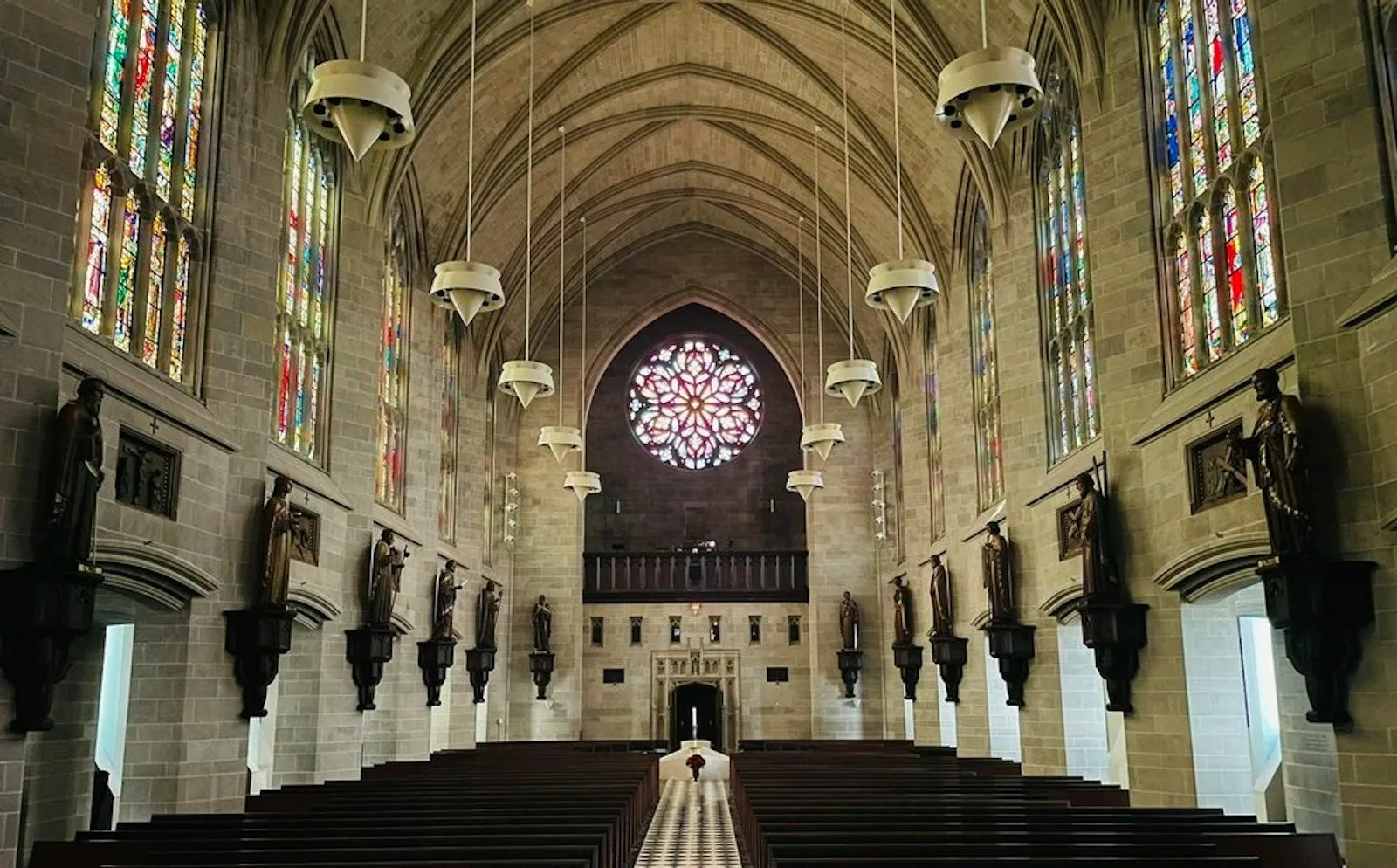
Father J.J. Mech, rector of the Cathedral of the Most Blessed Sacrament in Detroit, stands next to the life-sized statues of the apostles that have now been installed in the cathedral’s worship space, along with first-class relics of each apostle. The “Journey with the Saints” pilgrimage, which will be dedicated Feb. 8, 2024, in a special ceremony with Archbishop Allen H. Vigneron, is part of the cathedral’s ongoing transformation into an “apostolic center for the arts and culture.” / Credit: Photo courtesy of the Cathedral of the Most Blessed Sacrament and Detroit Catholic
Detroit, Mich., Jan 29, 2024 / 06:00 am (CNA).
At the Cathedral of the Most Blessed Sacrament in Detroit, the band is getting back together. The band of Christ’s 12 apostles, that is.
On Feb. 8, Detroit’s mother church will publicly unveil its long-awaited “Journey with the Saints” project, a permanent installation of 14 “larger than life” statues accompanied by first-class relics of each apostle, the latest accomplishment in the cathedral’s ongoing mission to turn itself into an apostolic center in the city of Detroit.
Archbishop Allen H. Vigneron will join Father J.J. Mech, rector of the cathedral, to dedicate the new installation during a special event at 7 p.m.
From its central perch on Woodward Avenue, the looming gothic cathedral of the Archdiocese of Detroit stands out in its neighborhood. Following Vigneron’s instruction to turn the church into a “cathedral of the arts,” Mech has spent the last several years converting the cathedral into a hub of missionary activity and beauty, drawing people to the faith via “shallow entry points.”
“Our goal is that we are going to be more accessible to people off of Woodward,” Mech told Detroit Catholic. “We want this to be a flexible public space, maybe even a community hub for not only spiritual enrichment but cultural enrichment, and it will be a safe place, and we will have security and all of that.”
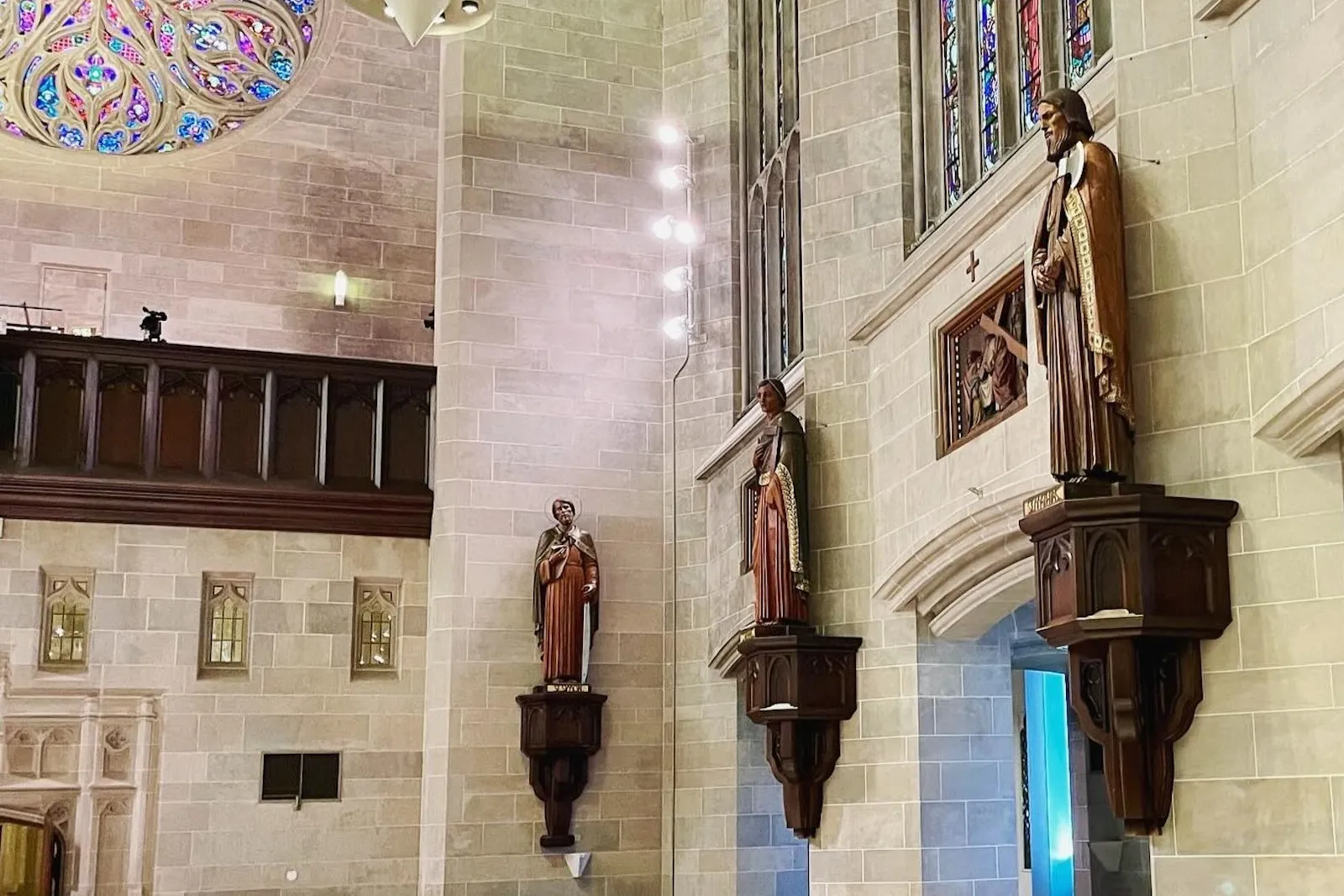
St. Simon, St. Thomas, and St. Matthias are pictured in their permanent fixtures atop the pillars inside the Cathedral of the Most Blessed Sacrament. The statues and relics of the apostles will be officially unveiled Feb. 8, 2024, as part of a permanent pilgrimage experience at the cathedral, “Journey with the Saints.” Credit: Photo courtesy of Detroit Catholic
The name “Cathedral of the Arts,” Mech explained, is a reminder that the proof of God is beauty — a principle that guides each of the new initiatives he and his team have undertaken on the cathedral’s campus.
The latest project, the installation of the seven-and-a-half-foot-tall statues and relics encircling the cathedral’s interior worship space, is the crowning jewel of those efforts, transforming the cathedral into a permanent pilgrimage site, guided by the men who knew Christ most intimately during his time on earth.
Complete with first-class relics, the new installation is among the first of its kind in North America bringing together all 12 of Christ’s apostles for veneration, and the only exhibit in the world with the relics accessible in this way.
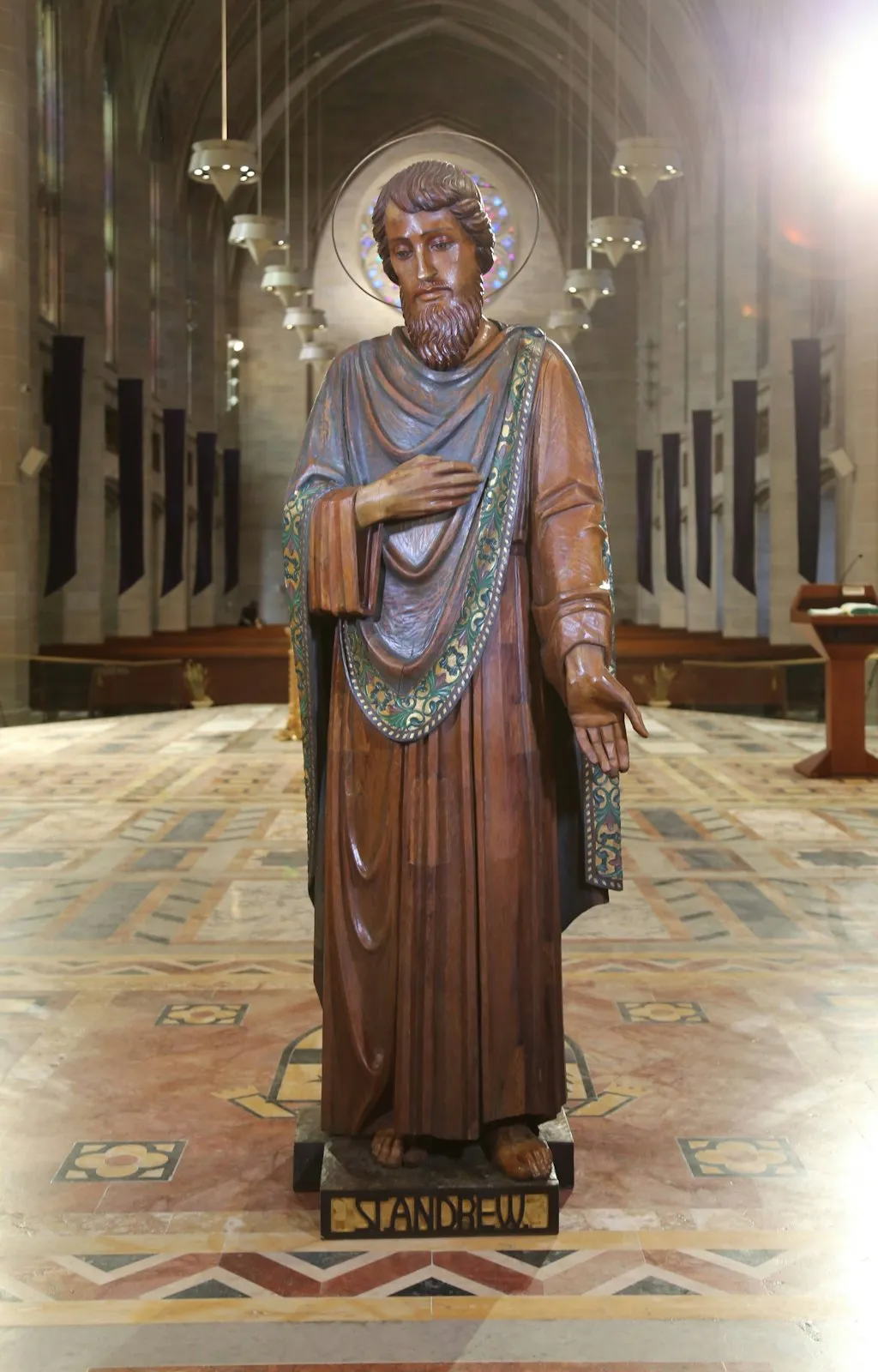
The 14 statues — including two eight-foot angels — each were carved from a single tree trunk in St. Ulrich Groeden, in modern-day Italy, in 1927. The statues were rescued from St. Benedict Church in Highland Park, which closed in 2014. After undergoing extensive restoration, the statues were installed in the cathedral’s nave in December.
The statue of St. Andrew. Each of the statues were carved from a single tree trunk and rescued from St. Benedict Church in Highland Park, which closed in 2014. After undergoing extensive restoration, the statues were installed in the cathedral’s nave in December 2023. Credit: Photo courtesy of Detroit Catholic
The statues include two angels, 10 of the original 12 apostles, St. Paul, and St. Matthias, the apostle who replaced Judas. Mech discovered that he had relics corresponding to the 12 saints, part of a collection of nearly 200 relics owned by the cathedral, all of which he hopes to be able to one day put on display.
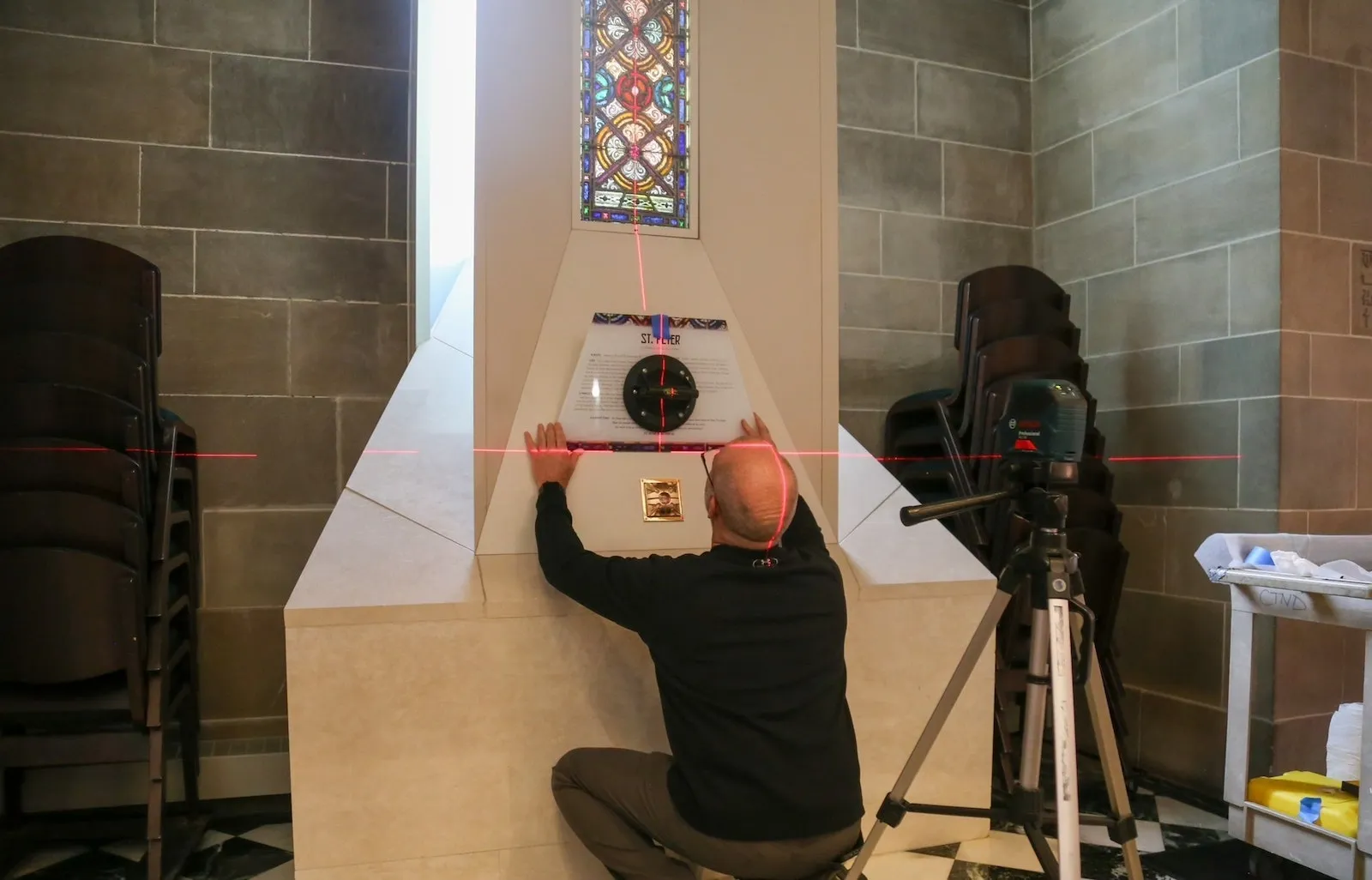
The relics and the signage were installed beneath each statue beginning on Jan. 8, in time for the dedication and blessing of the new reliquary pilgrimage on Feb. 8.
“I am so excited about the transformation that is happening,” Mech said. “When you come in, there will be three main signs that tell you how to go on a pilgrimage, what the goal of a pilgrimage is, and how to interact with these relics. [Pilgrims] are going to walk away transformed, different, and they are going to enter through prayer.”
“Journey with the Saints” is much more than a museum of Church history, Mech said, but a rare opportunity to invoke the help of Catholicism’s greatest saints.
“It’s not just about looking at a pretty statue and touching some bones. [Pilgrims] are going to have a purpose when they walk away,” Mech said. “People can decide what they want intercession for, what they are hoping for when they pray to a particular saint, and when they walk away, they’ll keep praying for that.”
Keith Calleja began installation of relics on Jan. 8, 2024, starting with the relic of St. Philip. Credit: Photo courtesy of Detroit Catholic
Mech said those whose prayers have been answered through the intercession of the saints will be invited to return to the cathedral and contribute a tile to a mosaic art piece that will be installed to show how God is answering prayers through the project.
While the saints and relics are the culmination of a long-sought project, it’s all part of a greater vision for Detroit’s cathedral, Mech said.
Another piece of the puzzle will be dedicated on May 12, when Archbishop Vigneron will unveil a new outdoor grotto at the cathedral in honor of the Blessed Virgin Mary.
During the height of the coronavirus pandemic in 2020, as the archbishop emotionally addressed the faithful during a livestreamed Mass from the cathedral, he entrusted the archdiocese to the protection of Our Lady of Lourdes and pledged to build the grotto “as a perpetual reminder” of her care and in memory of the lives lost to COVID-19.
Under the guidance of the archbishop, the Cathedral of the Most Blessed Sacrament finished a majority of the work on the grotto this fall, including statues of St. Bernadette Soubirous and Our Lady, whose face will reflect the one St. Bernadette saw in Lourdes, France, in 1858.
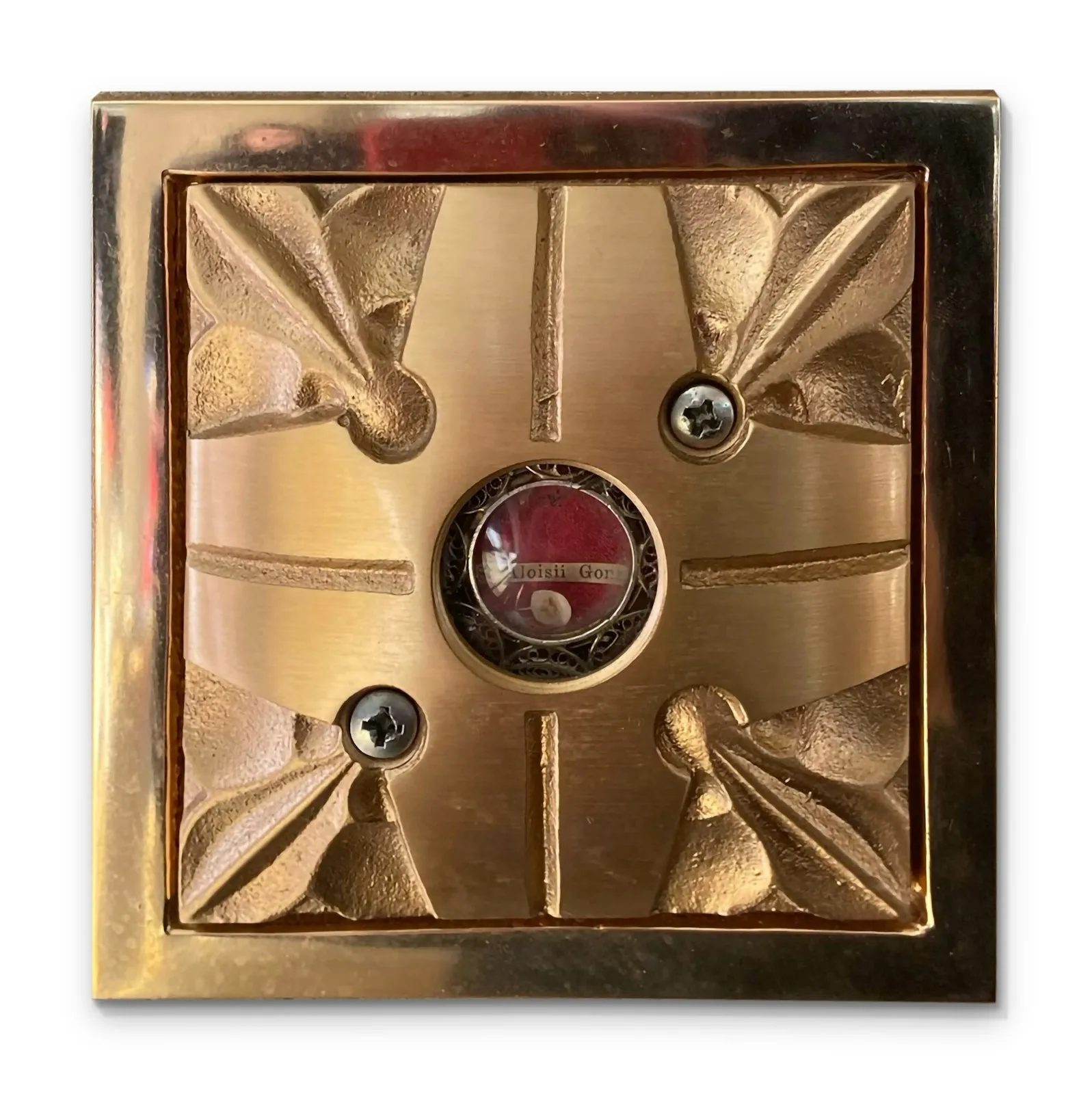
The first-class relics are among nearly 200 relics currently housed in the cathedral, which Father Mech hopes to find a way to display. The gold reliquaries are installed beneath each of the apostles’ statues. January 2024. Courtesy of Detroit Catholic
“People are already presently coming to pray [at] the grotto with the Blessed Mother,” Mech said. “We put some beautiful landscaping in this fall so people would feel welcomed, and in fact, we have used the site in a couple of ways for prayer services already.”
The grotto will also connect seamlessly with a garden walk that is being created around the cathedral’s plaza lawn, which will include art, benches, solar charging stations, a dog park, a bird sanctuary and pollination habitat.
Working alongside the U.S. Fish and Wildlife Service, the cathedral’s co-director of family ministries, Christine Broses, is spearheading the transformation of two previously empty lots on the corner of Trowbridge and John R Streets into green space for wildlife to thrive.
“We learned that the city of Detroit is a north, south, east, and west crossing for bird migration,” Broses said. “So a lot of birds fly over the city of Detroit, but they don’t have anywhere to stop and rest because there isn’t a lot of green space. Creating green space is really important for the city and for wildlife in general, and research shows hearing birds and having green space in neighborhoods helps improve people’s mental health.”
Last spring, Broses oversaw the planting of native flowers in the area, and the next step is to let the space grow wild, which will inevitably attract birds and bees over the coming years. Broses said the final step will be to add educational plaques and pathways to make the spot accessible to schools and families.
Mech wants the garden spaces and pathways to be welcoming and intends to build benches — something the neighborhood is currently lacking.
The statues, pictured in their final fixed locations above the cathedral’s pillars, are just one piece of an ever-developing project to turn the cathedral into a true apostolic center in the heart of Detroit, Father J.J. Mech said. Credit: Photo courtesy of Detroit Catholic
“We did a study of our neighborhood and found there is not a single park bench in any of the parks in our area,” Mech said. “We want to have park benches so people can come and rest and enjoy themselves. This will be a place where community can be built, and people will realize that the cathedral is not a fortress; we are actually unleashing the Gospel.”
And there is more.
In June, construction began on the Cathedral Arts Apartments, which will include four stories and 53 two-bedroom housing units for low-income Detroiters. The $19.7 million project is the joint effort of the Archdiocese of Detroit; MHT Housing, Inc.; and the city of Detroit and will include a community space and workforce training center.
At the end of the day, the vision of a “Cathedral of the Arts” — like the cathedrals of old — is about listening to the Holy Spirit and making a difference from the very small to the large scale, so that everyone who steps onto the property is transformed, Mech said.
“When we get people onto the campus, they start to see what we are doing, and they get involved,” he said. “Then, the Holy Spirit does the rest and helps them to get to know Our Lord in new and wonderful ways.”
Pilgrims on their way to Ugandan Martyrs’ Day on May 21, 2024. / Credit: St. Joseph’s Cathedral of Kakamega Diocese
ACI Africa, May 25, 2024 / 08:00 am (CNA).
One of Africa’s — and the world’s — largest religious gatherings will take place on June 3 in Kampala, Uganda, and one group from Kenya has already begun its more than 200-mile pilgrimage to arrive for the yearly event.
Ugandan Martyrs Day this year will draw anywhere from 500,000 to millions of Catholics and other Christians from across the continent of Africa.
Pilgrims from the Nzoia Deanery of the Diocese of Kakamega are traveling to Uganda’s Namugongo Shrine, where the event takes place, bringing with them various prayer intentions — among them, “praying that more people may embrace, in faith and fidelity, the call of God in their respective lives,” according to ACI Africa, CNA’s news partner in Africa.
Blessed and sent off on Tuesday, May 21, by Father Columban Odhiambo, the parish priest of St. Joseph the Worker Kongoni Parish in the Kakamega Diocese, the pilgrims will cover 18-25 miles each day.
Pilgrims to Uganda Martyrs’ Day 2024 from Nzoia Deanery of the Catholic Diocese of Kakamega in Kenya, with the parish priest of St. Joseph the Worker Kongoni Parish, Father Columban Odhiambo, on May 21, 2024. Credit: St. Joseph the Worker Kongoni Parish/Kakamega Diocese
In an interview with ACI Africa, Odhiambo said the intention to pray for the growth of vocations to the priesthood, religious life, and marriage was inspired by a May 11 priestly ordination, which the Kenyan Deanery hosted at St. Mark’s Nzoia Parish in the Kakamega Diocese. Nine deacons were ordained priests — seven for the diocese and two for the Order of Friars Minor Capuchin (OFM Cap).
The long pilgrimage to Namugongo, Odhiambo said, “is simply a spiritual journey. The pilgrims have personal intentions, and some have been given intentions by their parishes” to be included in their collective prayer intention.
The Kenyan pilgrims, who are being accompanied by two priests, had an opportunity to participate in the sacrament of confession and Mass before embarking on their spiritual journey to Namugongo. Along the way, they will meet dozens of other faithful walking from the Kakamega Diocese and, together, about 150 of them “will sing, pray the rosary, pray the Chaplet of Divine Mercy, and will go to confession,” Odhiambo told ACI Africa.
The priest said the deanery’s pilgrimage group of 19 is the largest number so far to make the pilgrimage. “Last year, we only had three,” he said.
A blessing of pilgrims who are on their way to Uganda Martyrs’ Day, May 21, 2024. Credit: St. Joseph the Worker Kongoni Parish/Kakamega Diocese
The Ugandan Martyrs’ Day dates back to the first decade of Christian presence in the East African nation when 45 men between the ages of 14 and 50 years old were killed between Jan. 31, 1885, and Jan. 27, 1887, because they would not renounce their faith.
Twenty-two of the martyrs were beatified in 1920 and canonized in 1964.
Singer-songwriter Garth Brooks (left), former NFL quarterback Tom Brady (right), and other celebrity guests will meet Pope Francis in an audience at Apostolic Palace on May 11, 2024, as participants in the Vatican’s World Meeting on Human Frater… […]
4 Comments
In the eyes of the Creator all human beings are equal. But religions are a different ball game.
Religions that say it is a positive good, as most do, to slaughter the lives of unborn children, are not the equal of the one and only religion that unambiguously says no we musn’t.
We read: “…the Mexican priest continued, ‘then there is only one divine truth, and therefore one religion is the true one’.”
The really basic question might NOT be “whether only one religion is the true one,” but whether ANY religion is true? On this urgent question we have this from St. Paul: “…if Christ be not risen, then vain is our preaching, vain too is your faith” (1 Cor 15:14). Faith?…
Belief in natural religion is one thing; “faith” in the person of Jesus Christ is uniquely another. Such that while all other religious beliefs are not equal, all such religions are equally lacking of the self-disclosed “divine truth”—in the person of the incarnate Jesus Christ.
What, then, of the so-called “pluralism” of religions and the half-truth parallelism of the Abu Dhabi Declaration (2019) which speaketh thusly: “”The pluralism and the diversity of religions [tolerated, not willed], colour, sex, race and language are willed by God in His wisdom, through which He created human beings”?
One is almost reminded of the more recent Fiducia Supplicans which irregularly offers a non-blessing “blessing” to non-couple “couples.”
How many arks did Noah build?
Jesus watched the actions of Noah’s day from his vantage point in heaven, and answered the unasked question: What terrible sin did the flood victims commit that they all died for it?
Answer: “They took no note”
Of what? Of Noah’s preaching about the coming end of a wicked world.







In the eyes of the Creator all human beings are equal. But religions are a different ball game.
Religions that say it is a positive good, as most do, to slaughter the lives of unborn children, are not the equal of the one and only religion that unambiguously says no we musn’t.
We read: “…the Mexican priest continued, ‘then there is only one divine truth, and therefore one religion is the true one’.”
The really basic question might NOT be “whether only one religion is the true one,” but whether ANY religion is true? On this urgent question we have this from St. Paul: “…if Christ be not risen, then vain is our preaching, vain too is your faith” (1 Cor 15:14). Faith?…
Belief in natural religion is one thing; “faith” in the person of Jesus Christ is uniquely another. Such that while all other religious beliefs are not equal, all such religions are equally lacking of the self-disclosed “divine truth”—in the person of the incarnate Jesus Christ.
What, then, of the so-called “pluralism” of religions and the half-truth parallelism of the Abu Dhabi Declaration (2019) which speaketh thusly: “”The pluralism and the diversity of religions [tolerated, not willed], colour, sex, race and language are willed by God in His wisdom, through which He created human beings”?
One is almost reminded of the more recent Fiducia Supplicans which irregularly offers a non-blessing “blessing” to non-couple “couples.”
How many arks did Noah build?
Jesus watched the actions of Noah’s day from his vantage point in heaven, and answered the unasked question: What terrible sin did the flood victims commit that they all died for it?
Answer: “They took no note”
Of what? Of Noah’s preaching about the coming end of a wicked world.
Is such a preaching going on today?