Russian Orthodox Patriarch Kirill makes the sign of the cross during the Easter Mass at the Christ The Saviour Cathedral on April 24, 2022 in Moscow, Russia. / Getty Images
Washington, D.C. Newsroom, Aug 25, 2022 / 05:37 am (CNA).
Patriarch Kirill of Moscow will not attend an interreligious summit in Kazakhstan in September, where it was hoped he would meet with Pope Francis to discuss a peaceful resolution to the six-month-long war in Ukraine.
The pope will travel to the Central Asian nation for the VII Congress of Leaders of World and Traditional Religions in the city of Nur-Sultan on Sept. 13-15.
The Russian Orthodox Church will send a delegation to the congress, but Kirill will not go, Metropolitan Anthony of Volokolamsk, the head of the Russian Church’s Department for External Church Relations, told RIA-Novosti.
There had been speculation that the two religious leaders — who met in Havana, Cuba, in 2016 — might meet in person, possibly in Jerusalem, to discuss Russia’s invasion of Ukraine, which Kirill has publicly supported.
“However, in the spring of this year, to our deep surprise, the Vatican unilaterally publicly announced that preparations for the meeting had been suspended, and that this meeting itself wouldn’t take place,” Metropolitan Anthony told RIA-Novosti.
The Holy See has said it stands ready to mediate peace talks between the two countries.
At the end of his general audience Wednesday, Pope Francis, marking the six-month anniversary of the fighting, asked for prayers for “the beloved Ukrainian people who have been suffering the horrors of war for six months now.”
If you value the news and views Catholic World Report provides, please consider donating to support our efforts. Your contribution will help us continue to make CWR available to all readers worldwide for free, without a subscription. Thank you for your generosity!
Click here for more information on donating to CWR. Click here to sign up for our newsletter.
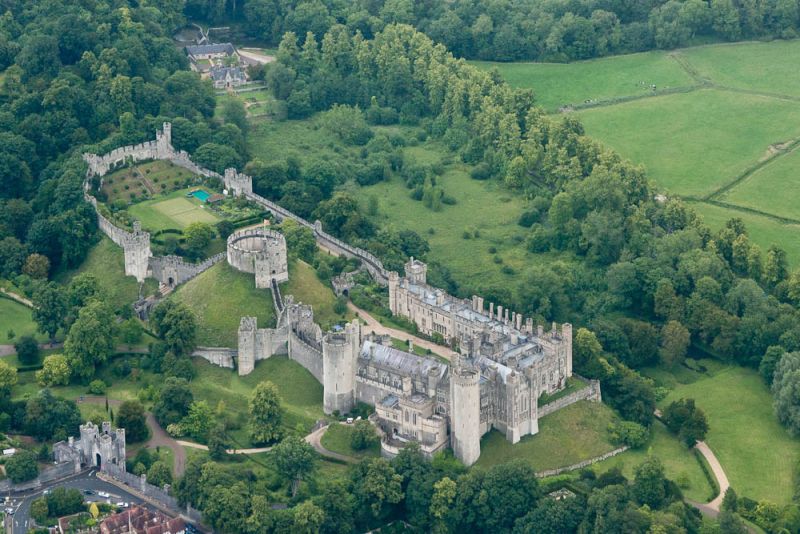
Arundel Castle in Sussex has been the seat of the Duke of Norfolk’s ancestors for 850 years. / Miles Sabin from Brighton, UK, CC BY-SA 2.0, via Wikimedia Commons
London, England, May 4, 2023 / 09:00 am (CNA).
The Earl Marshal of England is little known and rarely seen, but he oversees the world’s biggest spectacles. Queen Elizabeth’s funeral last year is reported to have attracted more than 4 billion viewers, making it perhaps the most-watched event in history. This was the finest moment for the current Earl Marshall, Edward Fitzalan-Howard, more formally known as His Grace the Most Noble Duke of Norfolk.
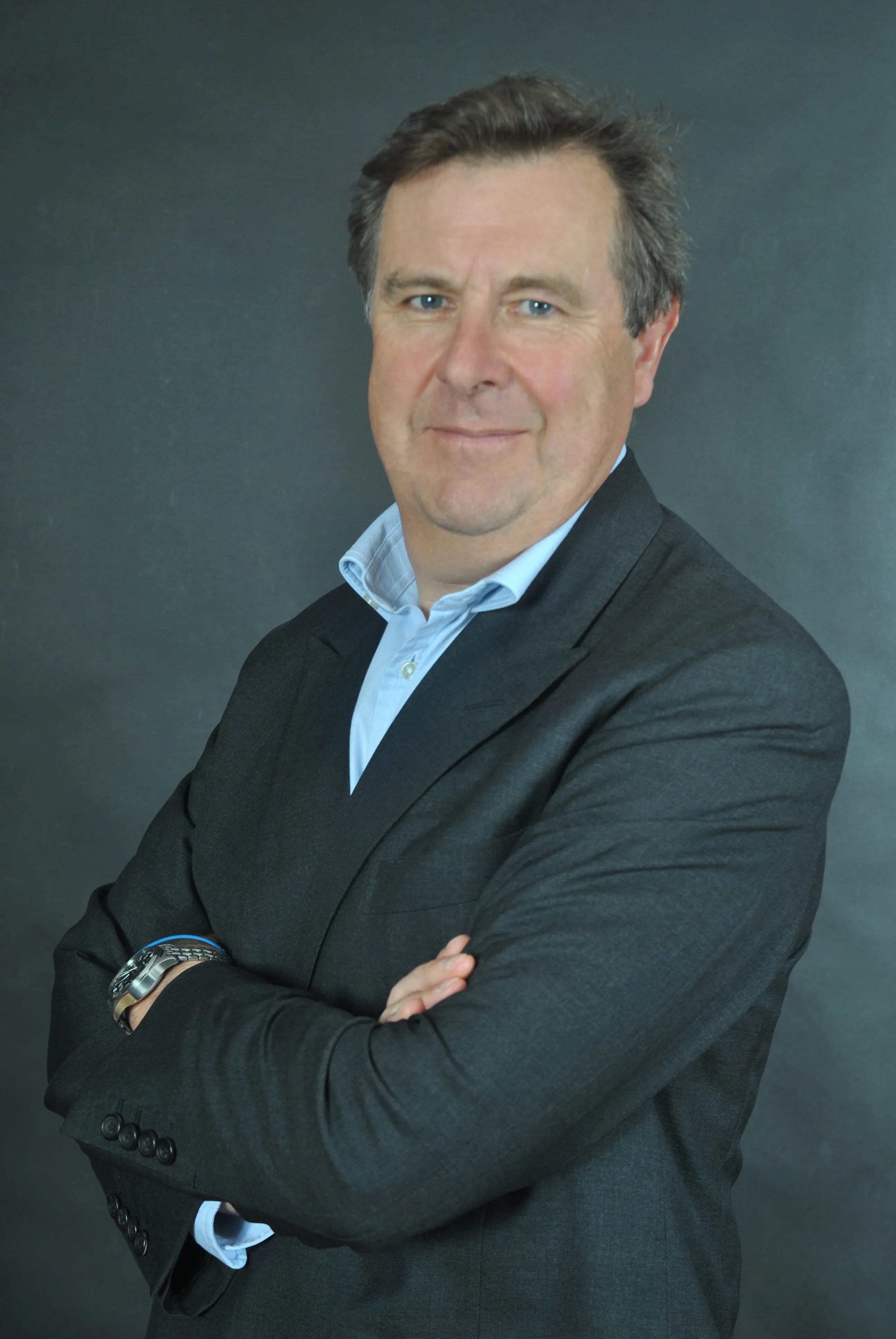
The 18th Duke of Norfolk, Edward Fitzalan-Howard, is the hereditary Earl Marshal of England and is the country’s premier lay Catholic. Photo courtesy of WIKIMEDIA PIC
The 18th Duke spent 20 years planning the late queen’s funeral but has had far less time to arrange the coronation of the United Kingdom’s new monarch, King Charles III, which will take place Saturday, May 6. Despite making the news for dangerous driving and his recent divorce and remarriage, Fitzalan-Howard will try to be as inconspicuous as possible at the coronation, just as he was at the queen’s recent funeral, which will be difficult for a man wearing the most extravagant uniform outside the military or the Church of England.
Since 1484 the Earl Marshal has supervised royal events through the College of Arms with assistance from quaintly named characters such as Garter King of Arms and Rouge Dragon Pursuivant. The payment these heralds receive is appropriately medieval.
Although it is often stated that the Dukes of Norfolk have held this position since 1672, the first Earl Marshal of the Howard family was John, 1st Duke of Norfolk, in 1483. A few other families have also had a turn, especially during the tumultuous Tudor era. The most peculiar choice was Henry VIII, made Earl Marshal by his father at the age of 3.
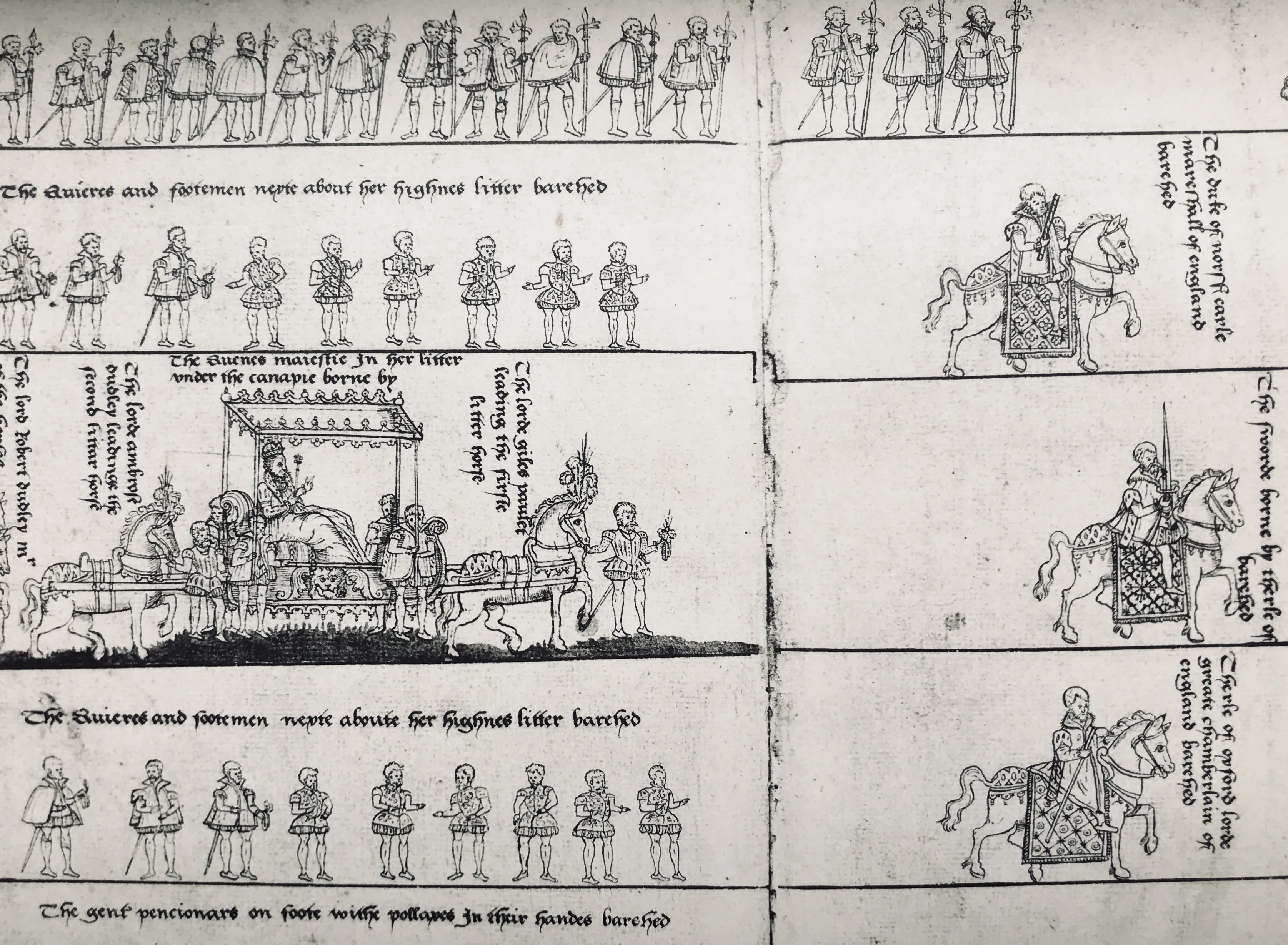
Queen Elizabeth proceeding to Westminster for her coronation in 1559 with the Duke of Norfolk at top right. PUBLIC DOMAIN
It’s not surprising that there is confusion bordering on bewilderment about this post. The Howard family has held different titles going back more than seven centuries. On occasion these have been stripped from them — most notably during the reign of Elizabeth I. The unrelentingly Catholic head of the family had his dukedom removed, along with all his income. It would have been little consolation at the time, but Philip Howard was eventually made a saint, canonized by Pope Paul VI in 1970.
Philip Howard, who should have been the 5th Duke of Norfolk, died at the Tower of London in 1595, accused of being a Catholic and a Jesuit conspirator. Philip’s father, Thomas Howard, 4th Duke of Norfolk, was beheaded at the same location despite denying being a Catholic before the axe came down. Similar fates befell the 4th Duke’s father and grandfather. It became a tradition among the Howards to suffer for being Catholic.
The Howard family tells us much about British history, especially Catholic history. The Dukes of Norfolk have had demotions — promotions have been difficult as they have been at the top for so long anyway. Some aspired to be kings, while others have been successful statesmen, generals, poets, and cardinals. One was committed to an Italian insane asylum. Most clung to their Catholicism, while a few did not. Others merely talked about converting. Duke Henry, appointed by Charles II when the monarchy was restored after Cromwell’s republic, told the diarist John Evelyn that he “will go to Church and become Protestant” but couldn’t bring himself to do so. His son did instead.
It is the Howards’ abilities and persistence that helped rehabilitate Catholics as acceptable members of British society.
One small step was a concession the 12th Duke obtained in 1824, when he was no longer required to deny Transubstantiation — a vital element of Catholic belief. After that date, they could perform their duties as Earl Marshal without needing a deputy to stand in for them. Previously, Catholic dukes had to step aside at the last minute in case the Protestant public gaze should be upon them.
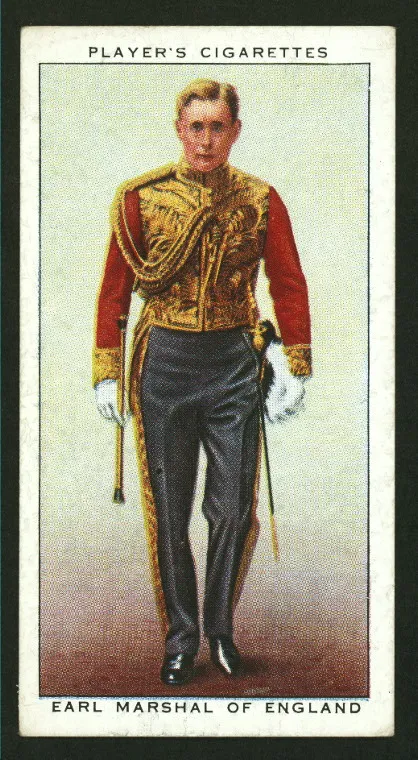
The 16th Duke of Norfolk, who organized Queen Elizabeth’s coronation, was prominent enough in his day to merit a cigarette card. Photo courtesy of Wikimedia Commons
Some confusion remains to this day. The Dukes of Norfolk’s ancestral home is in Sussex, far from Norfolk. For 850 years they have owned the magnificent Arundel Castle, recently robbed for relics of Mary Queen of Scots. They also own 16,000 prime acres of Sussex. In contrast, the Duke and Duchess of Sussex (better known as Prince Harry and Meghan Markle) own no land in that valuable county. Nor are they playing much of a part in the coronation. The Sussexes of Montecito do have a superior title though.
Part of the secret of the Dukes of Norfolk’s longevity has been keeping up with the times. When the present Duke was charged in court, he told the magistrate that he drives an elderly BMW because he likes “being simple and unpompous.” This is very different from the 16th Duke, who organized Queen Elizabeth’s coronation. When he led the England cricket team to Australia, he famously said: “Gentlemen, I wish this to be an entirely informal tour. You will merely address me as ‘Sir.’”
As is so often the case, the present 18th Duke of Norfolk is not a direct descendant of the 16th Duke. Descent in this family has often been confusing because of an absence of male heirs. If Norfolk had been in Scotland, things would have been different and a woman could have been the key organizer of King Charles III’s coronation. Since the Duke of Norfolk is not allowed to be a woman, there will probably never be a “Countess Marshal.”
“It has been disappointing to see how seldom a CPC designation has resulted in real consequences for those responsible for religious freedom violations,” U.S. Commission on International Religious Freedom Chairman Stephen Schneck told CNA. / Cre… […]



Leave a Reply