

CNA Staff, Oct 16, 2020 / 03:01 pm (CNA).- The Diocese of Richmond is set to pay a total of $6.3 million in settlements to more than 50 victims of clerical abuse, the bishop announced this week.
The announcement comes after the diocese celebrated its bicentennial July 11.
“With the celebration of a jubilee year comes another opportunity to work for justice — for acknowledgement of wrongs, reconciliation with those we have wronged, and attempts to repair the hurt we have caused,” Bishop Barry Knestout said in an Oct. 15 letter.
“Those three facets — confession, reconciliation and repair — are at the foundation of the Catholic Church’s sacrament of reconciliation which was the model for our entering into the Independent Reconciliation Program.”
The diocese during February 2020 started an Independent Reconciliation Program to offer help to alleged minor sexual abuse victims through an independent arbiter. On Oct. 15, the diocese released a report detailing the program’s conclusions.
Out of 68 claims initiated, 60 were submitted to the claims administrator. Of those alleged victims, 51 were given offers of payment, all of whom accepted.
According to the report, the settlements will be funded through the diocese’s self-insurance program, a loan, and “contributions from other religious orders, where appropriate.”
The settlements will not come from parish or school assets, the annual diocesan appeal, donor restricted contributions, or restricted endowments, the report states.
“The completion of this program is by no means the end of our efforts to provide for our diocese’s victim survivors. Our outreach is ongoing. We must, and we will, continue to meet victim survivors with support and compassion motivated by our shared love of Jesus Christ,” Knestout concluded, asking for continued prayers for victims of abuse.
If you value the news and views Catholic World Report provides, please consider donating to support our efforts. Your contribution will help us continue to make CWR available to all readers worldwide for free, without a subscription. Thank you for your generosity!
Click here for more information on donating to CWR. Click here to sign up for our newsletter.


According to the report, the settlements will be funded through the diocese’s self-insurance program, a loan, and “contributions from other religious orders, where appropriate.”
“The settlements will not come from parish or school assets, the annual diocesan appeal, donor restricted contributions, or restricted endowments, the report states.”
With all the “confession, reconciliation, and repair” going on in the Diocese of Richmond, it seems that transparency and simple honesty did not make the list. The Diocese’s “self-insurance program” is a fancy way of saying it is funded by, wait for it, the unrestricted contributions of parishioners. The “loan” will be paid, principal and interest by, wait for it, yes, that’s right, the unrestricted contributions of parishioners. Why will the payments not come from “parish or school assets, the annual diocesan appeal, donor restricted contributions, or restricted endowments”? Because these assets don’t belong to the Diocese but to the separate civil and/or canonical legal entities involved.
The Diocese’s verbal legerdemain leaves me very skeptical that it is going to “meet victim survivors with support and compassion”. If that were the case, there never would have been 50+ rape or sexual abuse victims to begin with. I have had significant experience, professional and personal, with Catholic dioceses throughout the U.S. for over 35 years on sexual abuse matters. The experience has been a bitter one, with “support and compassion” present primarily in public relations releases like the one here that are intended to manipulate the credulity and trust of the victims and anesthetize the laity into believing the problem has been solved. It hasn’t. The Catholic Church in this country is massively corrupt and has been for decades and even today is heavily infiltrated by homosexuals at all levels up to and including the highest.
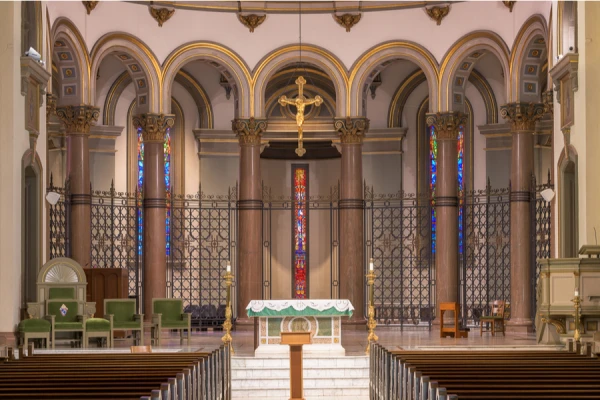
Look closely at the inscription on the architrave shown in this photograph:
https://travel.sygic.com/en/poi/cathedral-of-the-sacred-heart-poi:15150519
The Gilded Age New York millionaire Thomas Fortune Ryan who built this cathedral single-handedly knew what was most important. Sadly, the interior of this magnificent building has been vandalized by Vatican II liturgical Nazi’s and bears little resemblance to its original conception and design, a paradigm of the Catholic Church in Richmond and this country, if not the world.
Charles Flynn,
Exactly. Thank you for sharing that link.
In the end, money that could have been spent on worthwhile endeavors gets spent on attempting to fix injustices that should never have happened, and in many cases, most likely did not happen. The way these things are often described, it almost sounds as though they printed the money. The bottom line is that it has to come from somewhere, and it doesn’t matter if it comes from one’s front pocket, back pocket, left pocket, or right pocket.
Yes, I agree with you that the squandering of $4 billion by U.S. Catholic bishops, let alone the ravaged lives of innumerable Catholics, victims and loved ones, is a sordid tragedy of horrendous proportions, regardless of who pays for it. The even uglier reality is that the Satanic evil that underlies it has not diminished; in fact, it has metastasized. For over 35 years I have said that stories like this will continue as long as the priesthood continues to be a safe harbor for homosexuals and other psycho-sexual deviates. Make no mistake, they make up the predominant share of priests in today’s ape-Church.