Khartoum, Sudan, Jun 29, 2018 / 03:35 pm (CNA/EWTN News).- More than four-and-a-half years after a devastating civil war broke out in the world’s youngest country, a permanent ceasefire has been declared by South Sudan officials and rebel leaders.
But for the peace agreement to last, Catholic and world leaders stressed that the nation’s leadership must be ready to rebuild society.
Bishop Barani Hiiboro of Tombura-Yambio, president of the Sudan and South Sudan Catholic Bishop’s Conference, welcomed the ceasefire, according to Independent Catholic News, but added that “if it is to mean anything for the suffering people of South Sudan, then our leadership must face the task of rebuilding our broken pieces – social and political relationships, the fragile economy, and the infrastructure of our states, devastated by the conflict.”
President Salva Kiir of South Sudan met last week with rebel leader and former Vice President Riek Machar for the first time in two years. The talks were held in Khartoum, the capital of Sudan, where Sudanese President Omar al-Bashir helped broker the agreement, along with leaders of Ethiopia and Uganda.
Under the latest agreement, both sides are expected to withdrawal forces, release prisoners, and open avenues for humanitarian aid. A transitional government will be formed for a 36-month transition period, and the peace process will be monitored by the African Union and the Intergovernmental Authority on Development.
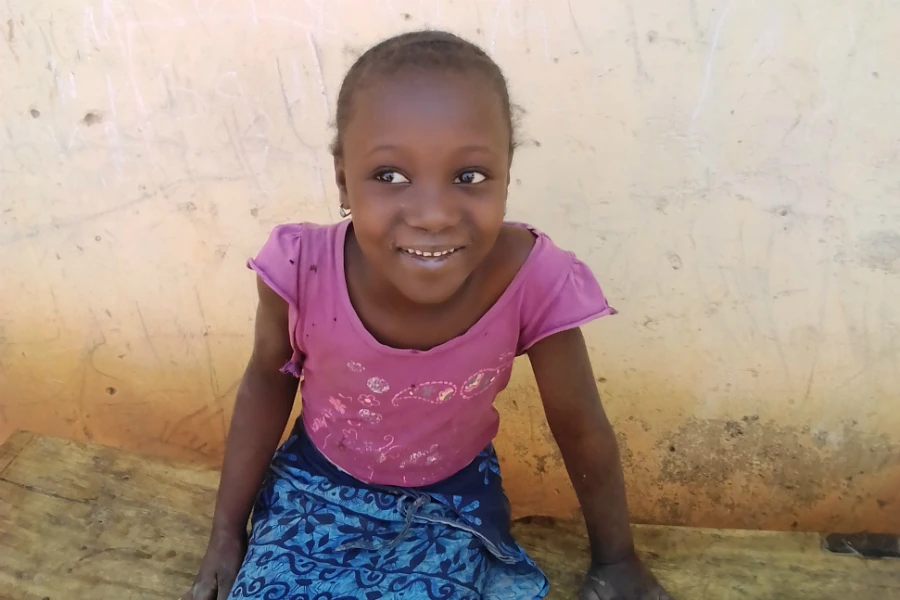
Less than two years after South Sudan gained independence in 2011, civil war broke out, when Machar was accused of attempting a coup. The violent conflict has created a massive famine and left hundreds of thousands dead and millions more displaced.
The United Nations had threatened to consider travel bans and asset freezes on South Sudanese leaders if the violence had not ended by the conclusion of June.
“This conflict has left millions of people across the country in desperate need of food, clean water, health care, sanitation, shelter and protection,” said Cathy Hynds, a local representative for the UK aid agency CAFOD, according to Independent Catholic News.
“[U]ltimately as the people of South Sudan mark seven years of independence, they need its leaders to redouble their efforts towards a true and lasting peace, as a first step to achieving prosperity; so that people can return to their homes, schools, farms and businesses, to rebuild their lives and communities.”
Numerous peace agreements have failed in the past, including the Agreement on Cessation of Hostilities signed in mid-December 2017. Both warring factions have been accused of violating terms of the agreements.
U.N. Assistant Secretary-General for Peacekeeping Operations Bintou Keita applauded the peace efforts but stressed the need for more work in an address to the U.N. Security Council on Thursday.
“I must reiterate that peace will only be sustained if the revitalized agreement is inclusive, fair, addresses the root causes of the conflict and engages all stakeholders, including women and youth,” she said, according to the Sudan Tribune.
If you value the news and views Catholic World Report provides, please consider donating to support our efforts. Your contribution will help us continue to make CWR available to all readers worldwide for free, without a subscription. Thank you for your generosity!
Click here for more information on donating to CWR. Click here to sign up for our newsletter.

Jerusalem, Dec 10, 2018 / 07:30 am (CNA).- Churches at the site along the banks of the Jordan river where Jesus is believed to have been baptized could reopen within a year, following progress on a project to clear thousands of landmines and other ordi… […]
The Coptic Orthodox Church said Pope Tawadros II is aware of the attack that happened March 12, 2024, in the Coptic monastery of St. Mark and St. Bishop Samuel the Confessor in Johannesburg, South Africa. / Credit: Lisa Maree Williams/Getty Imag… […]
Monica Biboso and her employer, Ester Rot, while celebrating Rosh Hashanah (the Jewish New Year) in the dining room of Kibbutz Be’eri in 2022. “I don’t feel like a hero because I saved Ester” during the Oct. 7, 2023, massacre, Biboso told CNA. “I would do anything to save her. I just treated her like my mother. Every child would do the same.” / Credit: Photo courtesy of Monica Biboso
Jerusalem, Oct 7, 2024 / 05:00 am (CNA).
One year has passed since Monica Biboso, a 36-year-old Filipino woman who has worked as a caregiver in Israel for over 10 years, was suddenly awakened by the noise of bombs and gunfire in Kibbutz Be’eri, close to the Gaza border.
In a conversation with CNA, Biboso’s eyes moistened as she recalled that day. Hamas fighters surrounded the house, shattered the windows, and set the home ablaze. She still has nightmares and jumps whenever someone knocks on the door of her room at the David Dead Sea Resort by the Dead Sea, where she has been displaced for the past year.
An outing in Sderot of the caregivers who worked at Kibbutz Be’eri on Sept. 5, 2023. Biboso and her employer were transferred to a hotel on the Dead Sea, along with the surviving residents of Kibbutz Be’eri, after the attack on Oct. 7, 2023. About 10 of Biboso’s colleagues joined them, while two died in the attack and five returned to the Philippines. Credit: Monica Biboso
During the Oct. 7, 2023, massacre in Israel that took the lives of almost 1,200 people, 101 civilians were killed in Be’eri and 30 hostages were taken to Gaza, 11 of whom are still being held in captivity.
Biboso not only survived, but she also managed to protect the elderly lady she was caring for — Ester Rot, who is 81 and has dementia. They were the only two survivors from their neighborhood.
“I have never stopped praying because I have always believed that God was there,” Biboso, a Catholic, told CNA. “All the time, I prayed to God and asked him that if my time had come, he would at least protect my children. But God did not want to call me yet, and I survived.”
Biboso is married to a fellow countryman she met in Israel who had returned to the Philippines just a few days before Oct. 7. The couple has two children, ages 7 and 5, who are growing up in the Philippines under the care of Biboso’s sister.
Monica Biboso with her family in the Philippines in April 2024: her husband, Roberto; her daughter, Sofya; and her son, Clarence. In the first few hours of the Oct. 7, 2023, massacre by Hamas, she managed to stay in touch with them, then her cellphone ran out of power. “When I was able to turn my phone back on, I found video messages from my children, crying, kissing and telling me to take care of myself.” Credit: Photo courtesy of Monica Biboso
In the first few hours of being locked in the house’s safe room, Biboso stayed in touch with her family, her Filipino colleagues in the kibbutz, and Rot’s children, but then her cellphone battery died.
“When I was able to turn my phone back on, I found video messages from my children, crying, kissing, and telling me to take care of myself,” she recalled.
Biboso, who was locked in the shelter with Rot for 16 hours, has been trying to forget the experience, but from the start it was clear it would never be possible.
“All the time, I carry my bag with my documents and important things. I am afraid of losing them again. Every night before going to sleep, I need to check outside and lock the door.”
For the past year, Biboso has been undergoing psychological therapy, which is helping her cope with the memories, fear, anguish, and nightmares — and to talk about what she went through.
“When I heard the sirens, I woke Mrs. Ester up, changed her, and dressed her quickly. I gave her her medicine and something to help her sleep, and we took refuge in the safe room of the house. I understood that the situation was serious, as I could hear the gunshots getting closer and closer,” Biboso recounted to CNA.
The closed caption television cameras that Rot’s children had previously installed in the house showed Hamas militants coming and going until they managed to break into the house.
Screenshot of camera footage from Ester Rot’s home at 10:51 a.m. on Oct. 7, 2023, in Kibbutz Be’eri, where Monica Biboso lived and worked as a caregiver for the elderly woman. Two armed men can be seen in the lower left of the screen near the home. Around 11 a.m., Hamas fighters managed to break into the house by blasting a hole with explosives. Shortly afterward they set fire to the house. Credit: Courtesy of Monica Biboso
“For the entire time I was locked in the shelter, I kept praying and saying to God, ‘Help us, I know it’s impossible to save us, but I know you can save us.’”
Around 11 a.m., the Hamas fighters broke into the house by blasting a hole with explosives.
“Maybe God heard me because they couldn’t open the shelter door. I was holding the handle from the inside. He gave me incredible strength.”
The door to the shelter where Monica Biboso and her employer, Ester Rot, were barricaded for 16 hours during the Hamas attack on Kibbutz Be’eri, Oct. 7, 2023. The photo was taken by Biboso when she had the chance to return and check the situation in January 2024. “For the entire time I was locked in the shelter, I kept praying and saying to God, ‘Help us, I know it’s impossible to save us, but I know you can save us,’” Biboso told CNA. “Maybe God heard me because they couldn’t open the shelter door. I was holding the handle from the inside. He gave me incredible strength.” Credit: Photo courtesy of Monica Biboso
Then they set fire to the house.
“We could barely breathe, it was so hot. We had no water, no food, nothing. I thought we were going to die, but I kept praying.”
When asked how she was able to survive, Biboso said: “God saved me. No one was able to help us. I was weak, I couldn’t breathe, my body was shaking, and I was lying on the floor, but I kept praying. Because of him, I survived. I truly believe that. He was with me the entire time I was in the shelter. I could feel it. Without God, I wouldn’t be here.”
The living room of Ester Rot’s home in Kibbutz Be’eri, where Monica Biboso lived and worked as a caregiver for the elderly woman. The house was completely burned down during the Hamas attack on Oct. 7, 2023. The photo was taken by Biboso when she had the chance to return in January 2024. Credit: Photo courtesy of Monica Biboso
Biboso and Rot spent a day in the hospital, then they were transferred to a hotel on the Dead Sea along with the surviving residents of Kibbutz Be’eri. About 10 of Biboso’s colleagues were among them. (Two others died in the attack and five returned to the Philippines.)
“Together with my husband, we decided it was best for me to stay, at least for the time being. I could never have left Mrs. Ester or allowed her to end up in a nursing home after surviving all this. She is like a mother to me,” said Biboso, who lost her own mother at the age of 16.
“I don’t feel like a hero because I saved Mrs. Ester,” Biboso added. “I would do anything to save her. I just treated her like my mother. Every child would do the same.”
“I knew that if I wanted to have any chance of healing and overcoming this trauma, I could only do it here,” she said. “In Israel, psychologists could help me because they understand the context.”
Ultimately, economic reasons also motivated Biboso to stay. Currently, her salary is the only stable income for her family, whom she was able to reunite with for some weeks in April.
Life at the hotel follows a fairly regular routine. “When we get up, I help Mrs. Ester with breakfast, give her a bath, take her for a walk, and do exercises. After lunch, we rest. When I can’t sleep, I crochet. It helps me relax.” Sometimes the two walk along the sea, take a swim, and spend time with friends.
Four months after Oct. 7, Biboso visited Kibbutz Be’eri together with Rot’s children. “It was very hard. I couldn’t stay there for long.” The house was completely destroyed by the flames.
“All my things were burned, everything was reduced to ashes,” Biboso recounted, “But my rosary didn’t burn. I found it beside my bed. It was a little burnt, but the beads were intact, and the cross was still a cross. My husband gave it to me and I used to pray with it every day before sleeping. I know I’m safe because of it.”
Monica Biboso’s rosary, the only one of her belongings left intact after the home of Ester Rot, the elderly woman she cared for and where she also lived in Kibbutz Be’eri, was set on fire by Hamas fighters during the Oct. 7, 2023, attack. “All my things were reduced to ashes,” Biboso recounted, “but my rosary didn’t burn. My husband gave it to me and I used to pray with it every day before sleeping. I know I’m safe because of it.” Credit: Photo courtesy of Monica Biboso
To this day, every night, Bibosa prays the rosary before bedtime. “In the Philippines, when my mother was alive, every day at 6 o’clock we prayed the rosary together before having dinner. I kept doing it.”
After Oct. 7, a nun living in Tel Aviv called Biboso every day, and they prayed together. “She’s helped me a lot. If I can’t sleep, I call her, and we pray together over the phone.”
“Prayer is a big help to me in healing, lightening the burden on my heart, and freeing my mind from negative thoughts,” Biboso said.
Ester Rot, the elderly woman with whom Monica Biboso works as a caregiver, on the shore of the Dead Sea. After surviving the massacre carried out by Hamas on Oct. 7, 2023, the two were displaced to the David Dead Sea Resort along with the other surviving residents of Kibbutz Be’eri. Credit: Photo courtesy of Monica Biboso
In mid-October, Biboso and Rot are expected to move to Kibbutz Hatzerim, where new housing units have been built for the Be’eri survivors.
“First, you need to have faith in God and be thankful for everything,” Biboso said. “You just need to trust him, and he will make a way to save you. This war will also end because of him. He will find a way to bring good out of it all.”
Leave a Reply