

 By
By The pontiff’s Aug. 26 general audience addressed the reasons for the Church’s recent liturgical reforms.
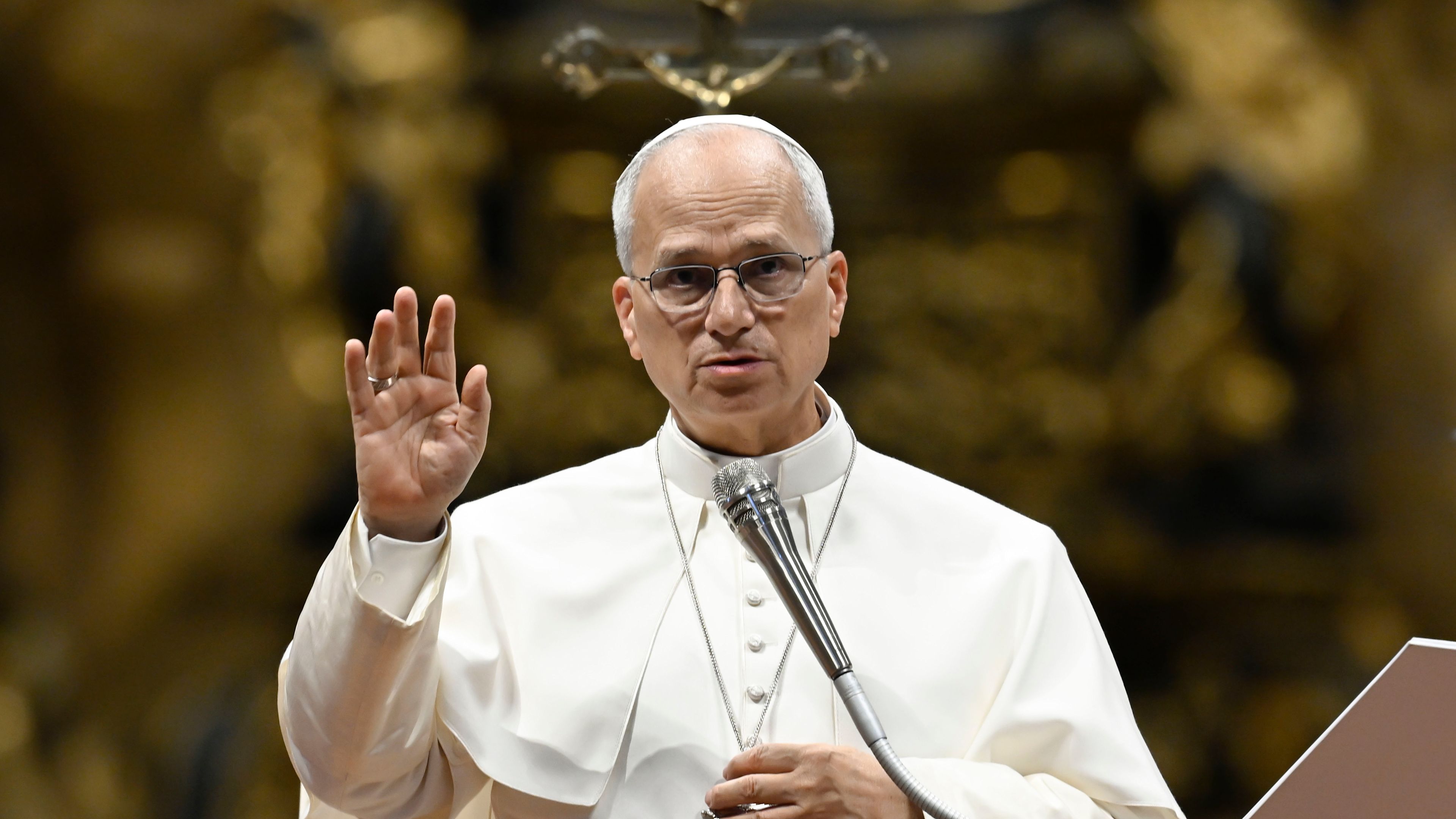
VATICAN CITY — Pope Leo XIV has described the liturgical reforms following the Second Vatican Council as necessary to encourage active participation by the faithful.
“Since the gestures and words of the sacred liturgy are critical to realizing this experience, the participation of the faithful cannot be passive,” Leo said. “The liturgical reform promoted by the Second Vatican Council is thus firmly rooted in the living tradition of the Church.”
During his general audience at the Vatican on Aug. 26, the pontiff concluded his summer catechesis on the Second Vatican Council’s constitution on the liturgy, Sacrosanctum Concilium. The audience was held in St. Peter’s Basilica because of Rome’s high summer temperatures.
The faithful cannot be passive during the liturgy
Leo defended the Council Fathers’ decision at the Second Vatican Council to reform the liturgy, citing a letter St. Paul VI wrote as Archbishop of Milan to encourage the faithful’s participation.
“Motivated by these convictions, the future Pope Saint Paul VI affirmed that the faithful ‘cannot and must no longer remain silent and passive. Their physical presence cannot be reconciled with their spiritual absence,’” Leo said.
The pope also explained that the liturgy has divine aspects that cannot change and human elements that can change to promote the faithful’s participation.
“When the Church carries out a reform of the liturgy — a constant process of development across the centuries — there is an important distinction to be made between the divine, immutable elements, and the human elements, which may undergo various modifications.”
“The need arose for the faithful to celebrate the liturgies more consciously and actively, not ‘as strangers and silent spectators,’ but participating fully in the salvific mystery,” Leo added
Liturgical reform began long before Vatican II
The church’s present liturgy was established in 1969 following the Second Vatican Council. It replaced the older Tridentine liturgy, standardized since the Council of Trent in 1570.
The Tridentine liturgy, also called the Traditional Latin Mass, was largely replaced after the council. Pope Benedict XVI allowed greater access to it in 2007, but Pope Francis restricted access in 2021.
The pope also explained that the liturgical reform began long before the Second Vatican Council, under several popes.
“The assertion that the faithful should not attend celebrations ’as strangers or silent spectators’ had already been raised in Pius XI’s Apostolic Constitution Divini Cultus.”
Leo also recalled Pope Pius XII’s reform of the Tridentine Holy Week liturgy in 1955, in which he “rescheduled to the hours corresponding to the events of Easter, after they had for centuries been brought forward to the morning hours.”
The pope also recalled the interventions of St. John XXIII, who called for the Second Vatican Council in 1959. Leo explained that John XXIII contributed to the church’s liturgical reform by simplifying “the rubrics of the Breviary and the Missal,… in which he referred the proposal of fundamental principles for a reform of the liturgy.”
“Indeed, since the liturgy is a living entity, throughout the centuries it has always been subject to developments and changes,” Leo added.
If you value the news and views Catholic World Report provides, please consider donating to support our efforts. Your contribution will help us continue to make CWR available to all readers worldwide for free, without a subscription. Thank you for your generosity!
Click here for more information on donating to CWR. Click here to sign up for our newsletter.


Cue the nattering nabobs of negativity complaining about “reverence “ , “banal hymns” , “bad homilies” and praying in the vernacular rather than silently in your head.
Do you believe Jesus Christ was a “nattering nabob of negativity” when He condemned irreverence?
Balderdash. The traditional meaning of active participation is to share, partake, PARTICIPATE in the knowledge and receipt of GOD’S GRACE in the SACRAMENT OF THE MASS. It has little to do with moving one’s body one way or another in an externally sensible manner.
Standing up and sitting down (versus a predominant kneeling at Low Mass of the UA), putting down and putting up kneelers (thereby forcing all to participate or join in hearing the banging sound of kneelers hitting wooden pews), patting our neighbors’ backs or hands or shoulders, sending a kiss of peace, singing silly songs composed by the St. Louis Jesuits? What effect do such things have on receipt of God’s grace???
As if that isn’t enough to do the job, how about chatting throughout Mass with one’s close neighbor, dressing in immodest clothes in order to “open oneself up” to closer contact with God, chewing gum, or scrolling the I-phone to follow sport scores during Mass, using the I-phone camera app to take a picture of your child standing beside you, or to text a dear friend. How about all that as active participation? Let me know if any of those do the job for you.
Not to mention those who “paticipate” in a giggling footrace towards the door after receiving the Eucharist, which they treat like chewing gum.
And for those who want to meditate with their encounter with Our Lord in the Eucharist, we are only allowed, typically, one to two minutes before interruption by announcements for the latest parish party where the whole sense of purpose of the mass is to entertain ourselves and worship “our community.”.