


 By
By Catholic and Confucian scholars emphasized their shared goals for humanity while acknowledging important theological differences between the two traditions.
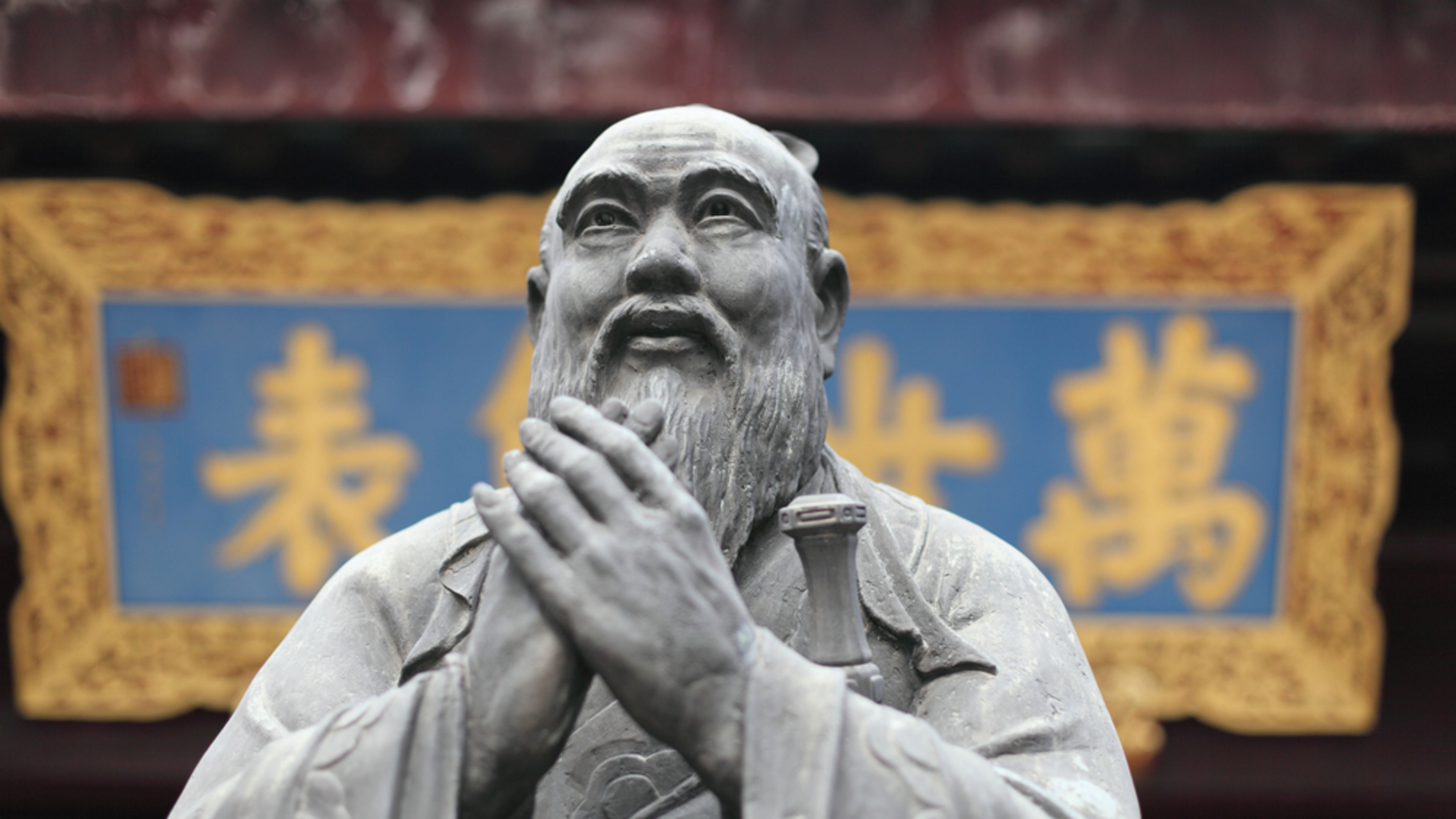
Catholic officials concluded their first-ever conference with Confucian thinkers this month, with both traditions coming together to spotlight their “shared convictions” for humanity in spite of the stark differences in their historical developments.
The Holy See’s Dicastery for Interreligious Dialogue and the Catholic Bishops’ Conference of Korea teamed up with the Sungkyunkwan Confucian Academy to hold the event at Sogang University in Seoul, South Korea, on Aug. 4–5.
A joint statement, approved by Catholic and Confucian scholars, recognized “our traditions arise from different religious and philosophical foundations” but that “our dialogue revealed important shared convictions.”
Both traditions expressed agreement that “human flourishing begins with the formation of virtuous, compassionate, and responsible individuals.” The statement added: “Personal transformation, ethical living, and care for others are the foundations of healthy families, communities, and societies.”
Scholars in both traditions agreed “a just and peaceful society depends on leadership rooted in integrity, humility, service, and concern for the common good” and “good institutions matter, but they can truly serve society only when guided by moral wisdom and public responsibility.”
There was also agreement that “care for the vulnerable, future generations, and our common home is both a moral and spiritual responsibility,” people are called toward solidarity, and hope requires people to “work together through the trials and imperfections of the present.”
With the growth of artificial intelligence, the scholars found similarities in the Confucian spirit of benevolence and the Christian value of love, which both point toward ensuring “all technological progress actively [enhances] human dignity and ethical values.”
Confucianism, rooted in the philosophy of fifth-century B.C. Chinese thinker Confucius, is a philosophical and ethical system focused on benevolence and harmony with an emphasis on living virtuously, adhering to tradition, and respecting one’s parents and ancestors, among other ideals.
Adherents often engage in ritual honor of their ancestors. Confucius discusses deities but focuses more heavily on the way one should live. His philosophy is influential in many East Asian countries. Many adherents follow other traditions as well, such as Buddhism or local religious traditions.
Christianity, and specifically Catholicism, has grown in some countries heavily influenced by Confucian thought in recent decades, particularly South Korea, Hong Kong, and Vietnam.
‘Datong’ and new heaven
Father Paulin Batairwa Kubuya, SX, who serves as the undersecretary for the dicastery, told EWTN News that Catholic dialogue with Confucianism is growing, although it is still not one of the religions that is technically under the dicastery’s jurisdiction for outreach. He said the need for dialogue is emphasized in the Second Vatican Council documents.
“But the idea behind the document Nostra Aetate is one of greater openness toward religious realities, and so this dialogue marks a moment when the conditions for officially beginning talks with the Confucians had matured,” he said. “And so we went there to Korea, one of the countries that still bears the marks of these religions.”
He said the theme of the conference was based on the Christian belief expressed in the Book of Revelation about the new heaven and the new earth and the Confucian idea of “Datong” — the “great unity” or “great harmony.”
“These describe an ideal state where everyone lives together in a society organized to care for the weak and the orphans — a place where everything is so beautiful,” Kubuya said.
“It is a city where the gates are never locked because there is security,” he said. “It’s the same as what is said about the New Jerusalem. There is no more death; there is openness — so there was that similarity between these two visions of these two religions. And those were the starting points, the reflections: so, as a society, how can we bring that vision to life?”
Cardinal George Jacob Koovakad, prefect of the dicastery, discussed the two concepts in his opening speech at the conference, according to Vatican News. He said Catholicism and Confucianism both emphasize a similar human aspiration.
“That our common life may be in harmony with a Way that is truly good and beautiful; an ethical justice lived in the warmth of friendship and mutual care; a peace that recognizes and promotes the dignity of every person and every community; a harmony born from differences, like the notes of music blending into a single melody or people from different places becoming one community,” he said.
Batairwa told EWTN News that during the conference, participants visited various religious sites, including a Buddhist temple that is influenced by Confucianism, a Confucian academy, and sites of Christian martyrdom.
The joint statement recognized that the two traditions view the ultimate reality, human fulfillment, and the transformation of society differently, but “these differences are not barriers to friendship; rather, they invite deeper listening, mutual learning, humility, and continued dialogue.”
Scholars in both traditions renewed commitments to deepen friendship and dialogue; to promote societies rooted in compassion, justice, harmony, and shared responsibility; and to work toward the flourishing of humanity together.
The conference had about 150 participants from more than a dozen countries. The groups are planning two additional conferences over the next four years: Indonesia in 2028 and Hong Kong in 2030.
If you value the news and views Catholic World Report provides, please consider donating to support our efforts. Your contribution will help us continue to make CWR available to all readers worldwide for free, without a subscription. Thank you for your generosity!
Click here for more information on donating to CWR. Click here to sign up for our newsletter.


Leave a Reply