


 By
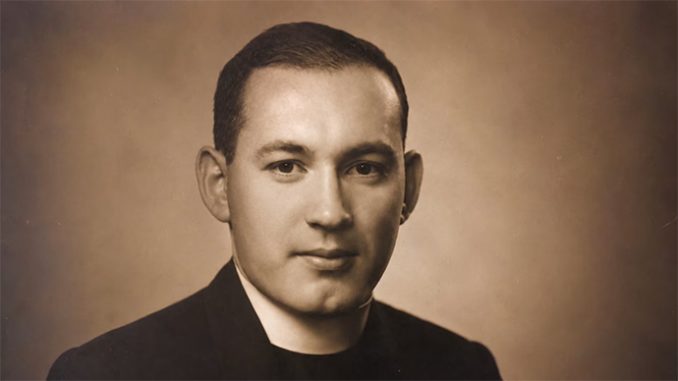
Chiclayo, Peru, Bishop Edinson Farfán Córdova announced that in the coming months his diocese will begin the cause for the beatification and canonization of Monsignor Juan Tomis Stack.
Tomis, an American missionary priest who was born and raised in Bridgeport, Connecticut, dedicated more than two decades of his life to northern Peru and has been cited by Pope Leo XIV on various occasions as a major inspiration for his own missionary vocation.
The announcement was made on Aug. 4 during Farfán’s homily for the feast of St. John Vianney, the patron saint of parish priests. At the Mass, Farfán highlighted the witness of the man who founded Chiclayo’s St. John Vianney Parish and asked the faithful to entrust the upcoming process to God.
“Everyone in our diocesan Church of Chiclayo knew Father Juan Tomis. I want to ask that we learn from him. If all goes well and the Lord accompanies and blesses us, the process for his beatification and canonization will begin before long,” the prelate stated.
The bishop also highlighted that Tomis left his home country to dedicate his life to the most needy in Peru.
“How beautiful that he was born in those lands. He came from the United States to serve these communities in Santa Cruz — in the highlands — and later in our beloved Chiclayo, which holds him so dear. I pray, through the intercession of St. John Vianney, that we may begin this process with joy, gratitude, and hope,” Farfán added.
The news comes just days after the presentation of the Spanish edition of the book “Bridgeport to Peru,” originally written in English in 1989 by Monsignor Stephen M. DiGiovanni under the title “Bridgeportʼs Peru.”
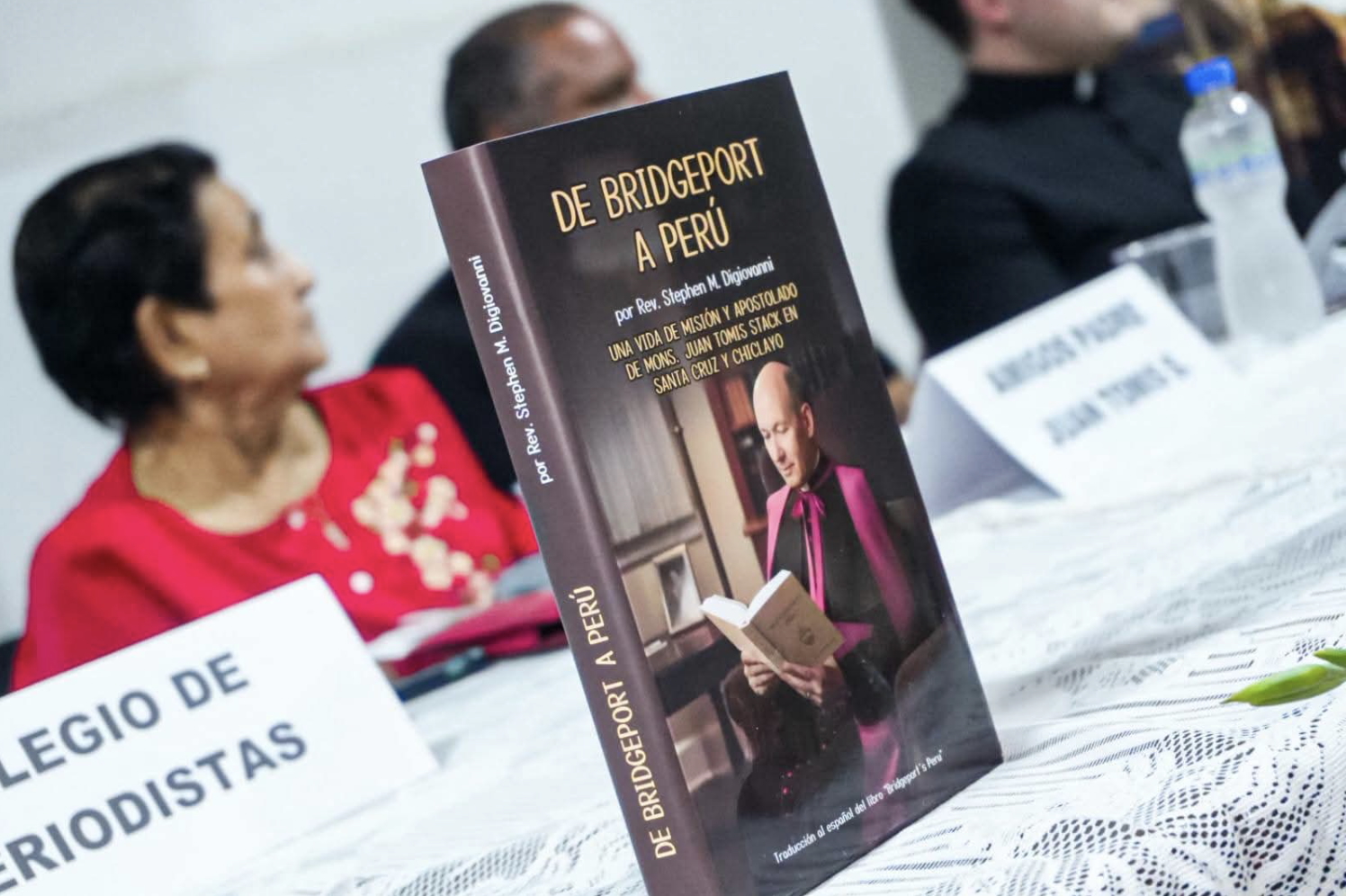
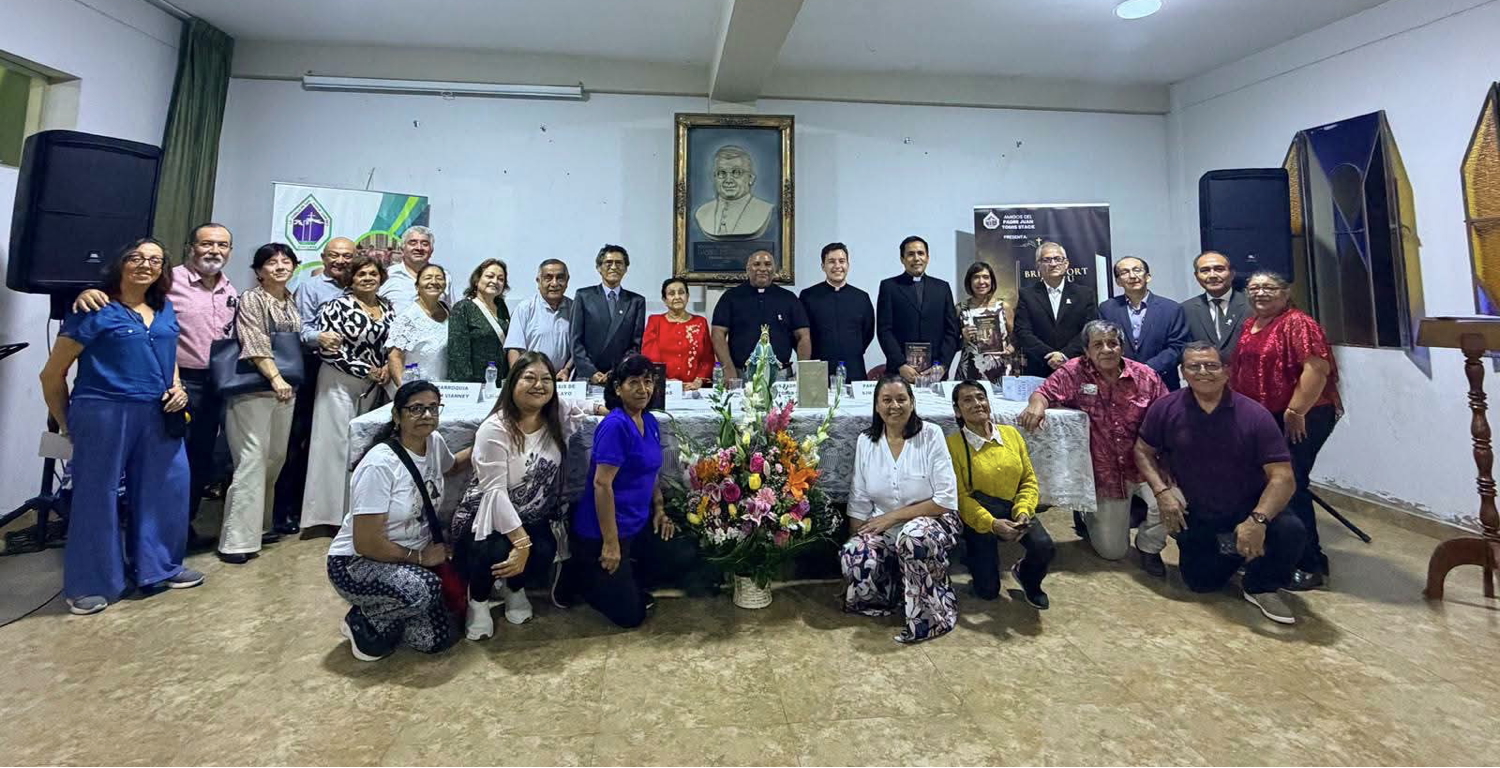
During the book’s presentation, organized by the Friends of Father Juan Tomis group, journalist and researcher Larcery Díaz explained that the translation “was born as a tribute of gratitude to mark the centennial of the birth of the man who was the guide and spiritual father to all the inhabitants of this area: Monsignor Juan Tomis Stack,” he stated.
Díaz recalled that it all began in 1963, when Bridgeport Bishop Walter Curtis, inspired by the Second Vatican Council, decided to send missionary priests to Latin America.
“The book tells us a story that began with a courageous ‘yes,’” Díaz noted. Among those first volunteers was “a young, enthusiastic priest of Slovak descent, filled with faith: Father Juan Tomis.”
The researcher recounted that the priestʼs early years were marked by enormous challenges in the province of Santa Cruz, Cajamarca.
The missionaries encountered a population lacking electricity and potable water, nearly impassable roads, high rates of childhood malnutrition, and strong resistance to any pastoral or social change.
In the face of these challenges, Tomis spearheaded road construction, fostered priestly vocations, helped build a clinic to care for the poorest, and worked to recover Church property that had been illegally occupied.
“Upon arriving during a cold winter, the missionaries faced a reality very different from what they had envisioned. Yet, it was their perseverance that allowed the seed of the Gospel to bear fruit on Peruvian soil,” Díaz noted.
In 1967, the mission relocated to Chiclayo, where Tomis founded St. John Vianney Parish, a community that, as Díaz recalled, he never wanted to turn into merely an institution.
“He did not want just an institution, but a ‘parish family.’ His tools were active charity and human kindness,” he explained.
From there, he spearheaded initiatives that remain etched in the memories of thousands of Chiclayo residents: the Useful Vacations program for children, the establishment of Scout troops, medical clinics, libraries, religious song festivals, and fondly remembered televised Masses.
“Father Juanʼs work transformed Chiclayo. That is undeniable,” the journalist affirmed.
His dedication was also recognized by the Holy See: In 1979, Pope John Paul II bestowed upon him the title of monsignor.
Tomis passed away on June 29, 1986. His funeral drew a crowd of some 20,000 people who accompanied the procession through the streets of Chiclayo, one of the largest outpourings of affection the city has ever seen.
“The outpouring of people from the entire community was spontaneous,” Díaz recalled, reading from an article he wrote 10 years after the priestʼs death.
“I can still see the thousands upon thousands of white handkerchiefs fluttering in the wind, bidding him a final farewell, Díaz recalled. “He was a priest who came to fulfill his duty, always bringing a delicate touch of tenderness, a warm spirit of love for his neighbor, and an unwavering devotion to the needy and the downtrodden,” he continued.
The journalist noted that Tomis “sowed love because he loved love, the hallmark of Christianity” and affirmed that his legacy lives on through the pastoral, social, and educational initiatives he spearheaded in Chiclayo.
At the conclusion of the book’s presentation, Díaz summarized the priestʼs impact in a sentence that takes on special significance today, following the announcement of his future cause for beatification.
“Today, as we open these pages, we do not merely read a historical chronicle; we reconnect with the friend, the teacher, and the guide. This book stands as a testament to how the love of God, when translated into service, can change the history of a community.”
This story was first published by ACI Prensa, the Spanish-language sister service of EWTN News. It has been translated and adapted by EWTN News English.
If you value the news and views Catholic World Report provides, please consider donating to support our efforts. Your contribution will help us continue to make CWR available to all readers worldwide for free, without a subscription. Thank you for your generosity!
Click here for more information on donating to CWR. Click here to sign up for our newsletter.

To follow Christ means to live self-sacrificially out of love for God and others. That’s all you need to know.
To follow Christ means to live self-sacrificially out of love for God and others. That’s all you need to know..
The beginning of this cause gives readers a concrete reason to revisit the sustained, local nature of Juan Tomis Stack’s service in northern Peru, rather than viewing the announcement as only a formal diocesan step. His long work as a missionary also shows why a cause can remain meaningful across communities and generations. It will be helpful to see how the diocese documents that pastoral legacy as the process develops.
The opening of this cause makes the local dimension especially meaningful: the diocese is preparing to begin a formal process for someone whose ministry was rooted in northern Peru. The account also preserves the wider context of Juan Tomis Stack’s life, from Bridgeport to more than two decades of service abroad. Keeping those places and that missionary continuity visible can help readers understand why the cause has significance beyond a single announcement.
The announcement gives the cause a meaningful local context: Juan Tomis served in northern Peru for more than two decades, while the diocese in Chiclayo is preparing to begin the formal process. It is also notable that his missionary witness has been cited as an inspiration for Pope Leo XIV’s own vocation. Keeping both the canonical steps and the human story in view can help readers understand why this cause matters beyond a single announcement.
The opening of Monsignor Juan Tomis Stack’s cause gives readers a concrete reason to look beyond the formal announcement and consider the long continuity of his service in northern Peru. More than two decades of missionary work suggests that the discernment will rest on a sustained local witness, not a brief public profile. It is also meaningful that his vocation helped inspire Pope Leo XIV; that connection may encourage people to learn more about how missionary accompaniment shapes a community over time. This moment invites careful remembrance of his ministry and its local legacy.
The opening of a cause for beatification gives readers a concrete moment to reflect on how local memory, pastoral service, and formal church recognition meet. Tomis’s more than two decades in northern Peru add important context: this was sustained missionary work rather than a brief association with the region. It will be worth following how the diocese documents that legacy and how people who knew his service contribute to the cause.
The opening of a beatification cause gives readers a helpful reason to look beyond a single announcement and consider the life being examined. Juan Tomis Stack’s more than two decades of service in northern Peru, alongside his roots in Bridgeport, makes the missionary dimension especially central to the story. It will be meaningful to see how the diocese documents that service and the wider spiritual influence attributed to him as the cause develops.
The opening of a cause is most meaningful when it also preserves the concrete story behind it: a priest from Bridgeport who gave more than two decades to northern Peru. The article makes clear that this was not a distant honorary association, but a sustained missionary commitment within a local church. That context helps readers understand why the diocesan announcement carries significance beyond the formal process itself.