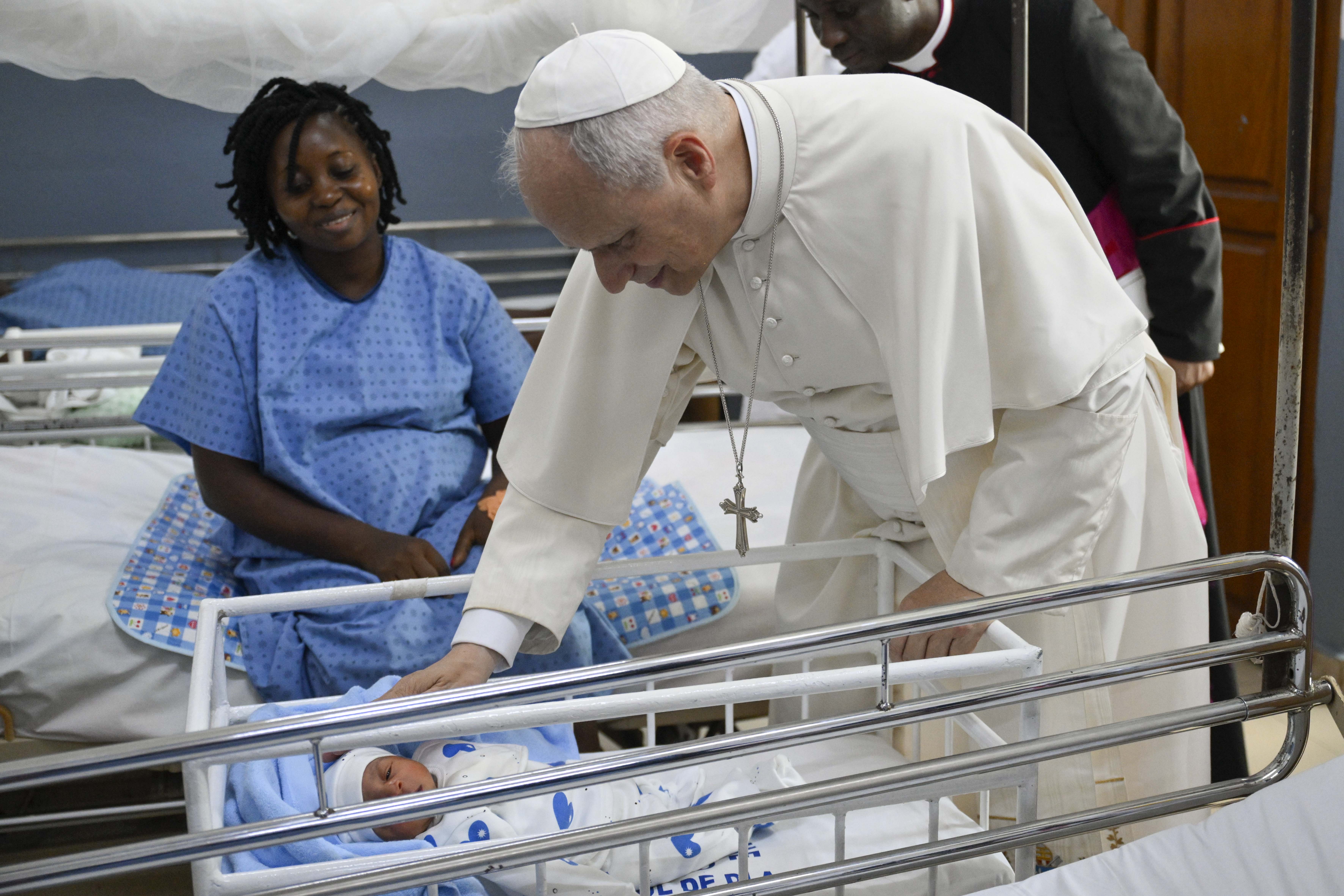
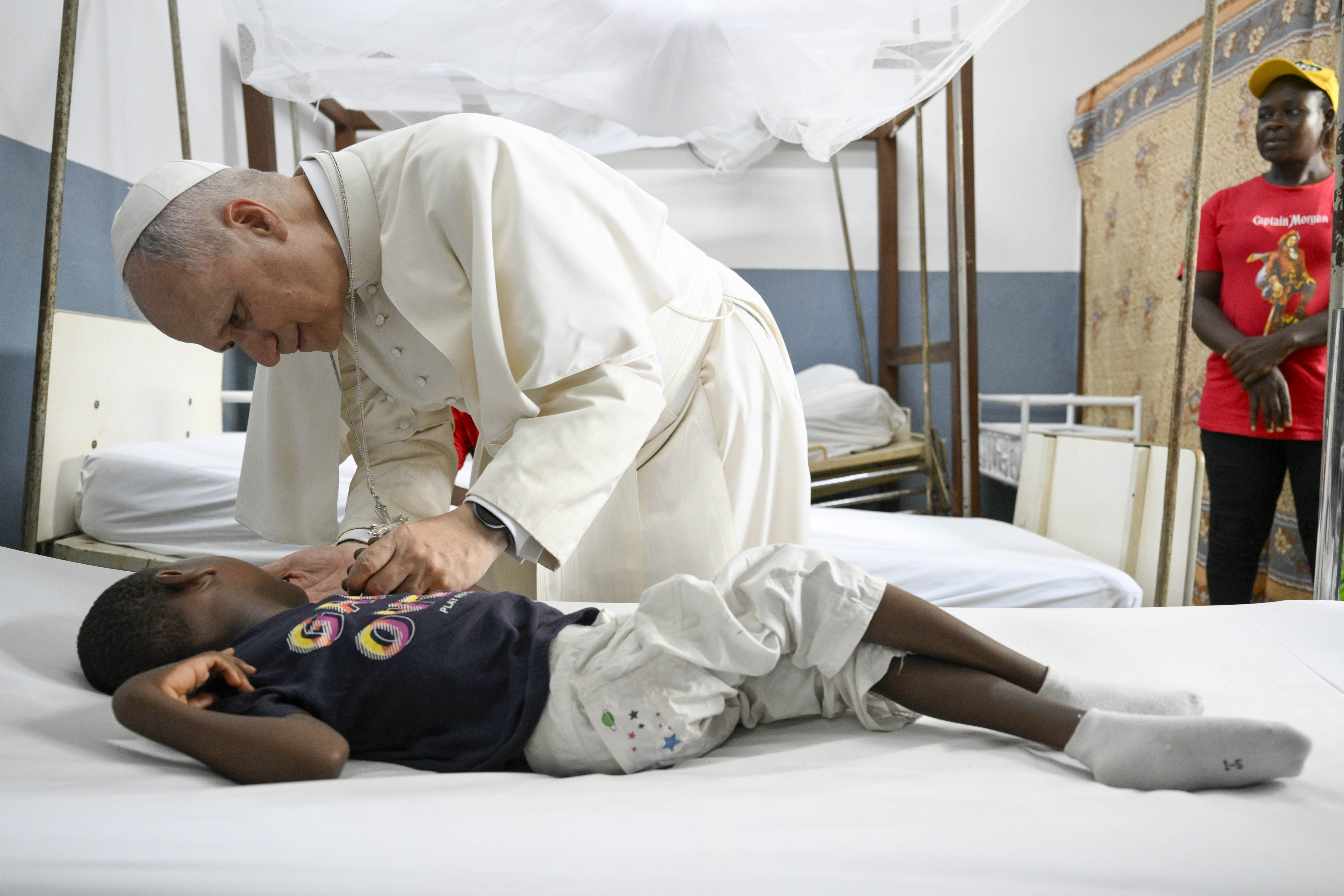
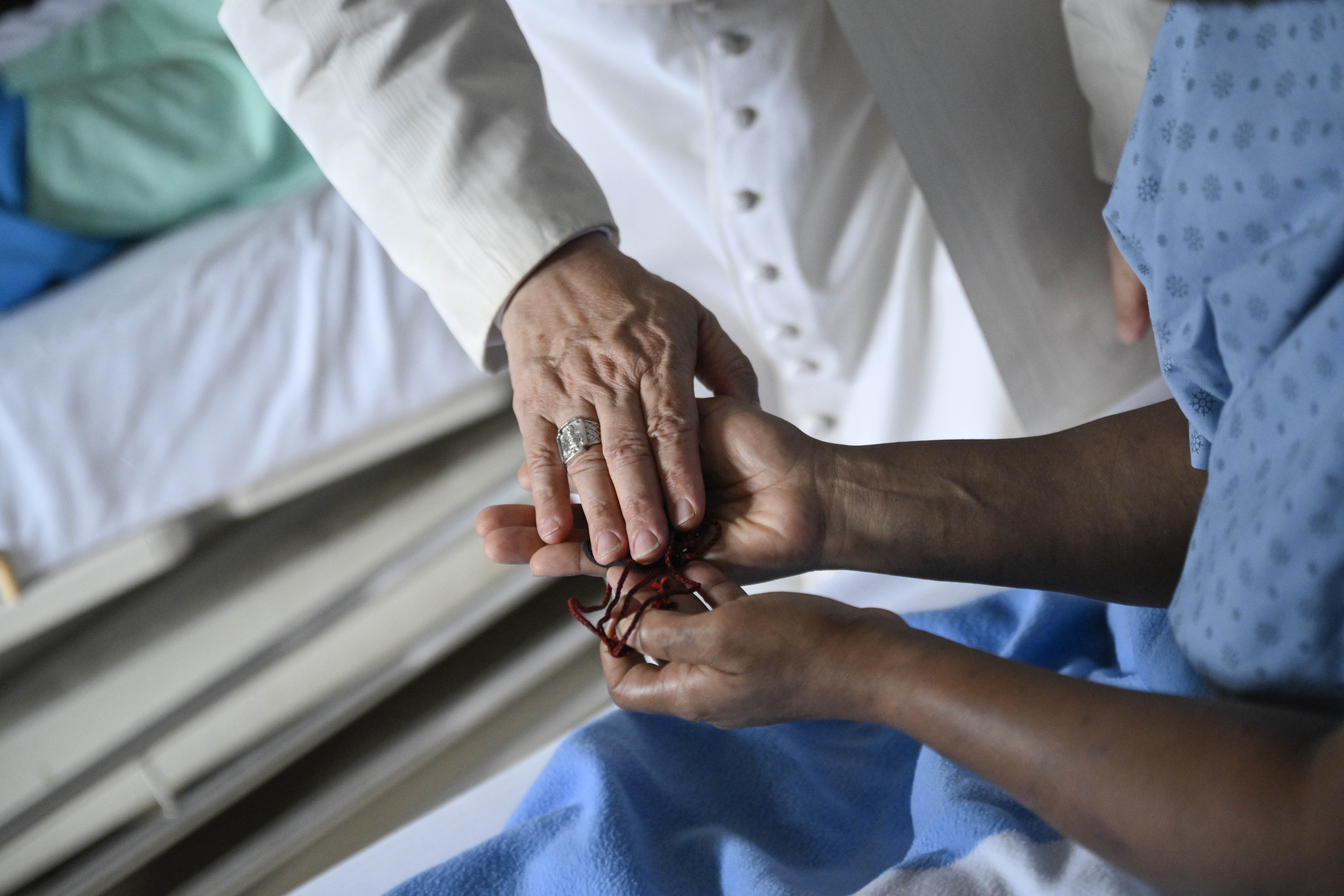
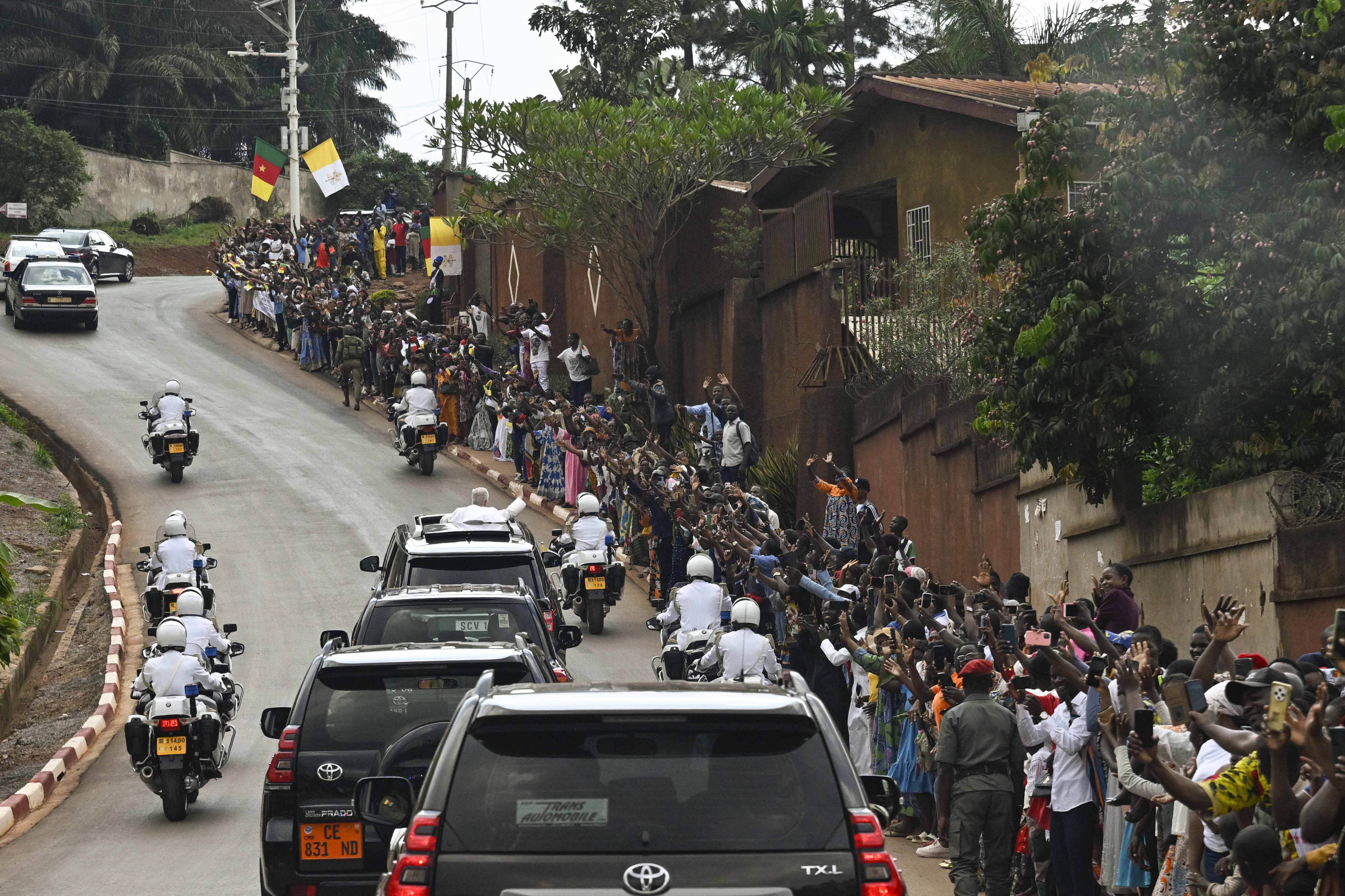
Pope Leo XIV continued his papal trip in Africa on April 17, holding Mass in Japoma Stadium in Cameroon, visiting a Catholic hospital, and meeting with students at the Catholic University of Central Africa.
The Holy Father arrived in Cameroon on April 15 and will depart for Angola on April 18, eventually finishing his first papal trip to the continent in Equatorial Guinea.
Here’s a look at some of the pope’s ongoing activities in Cameroon:
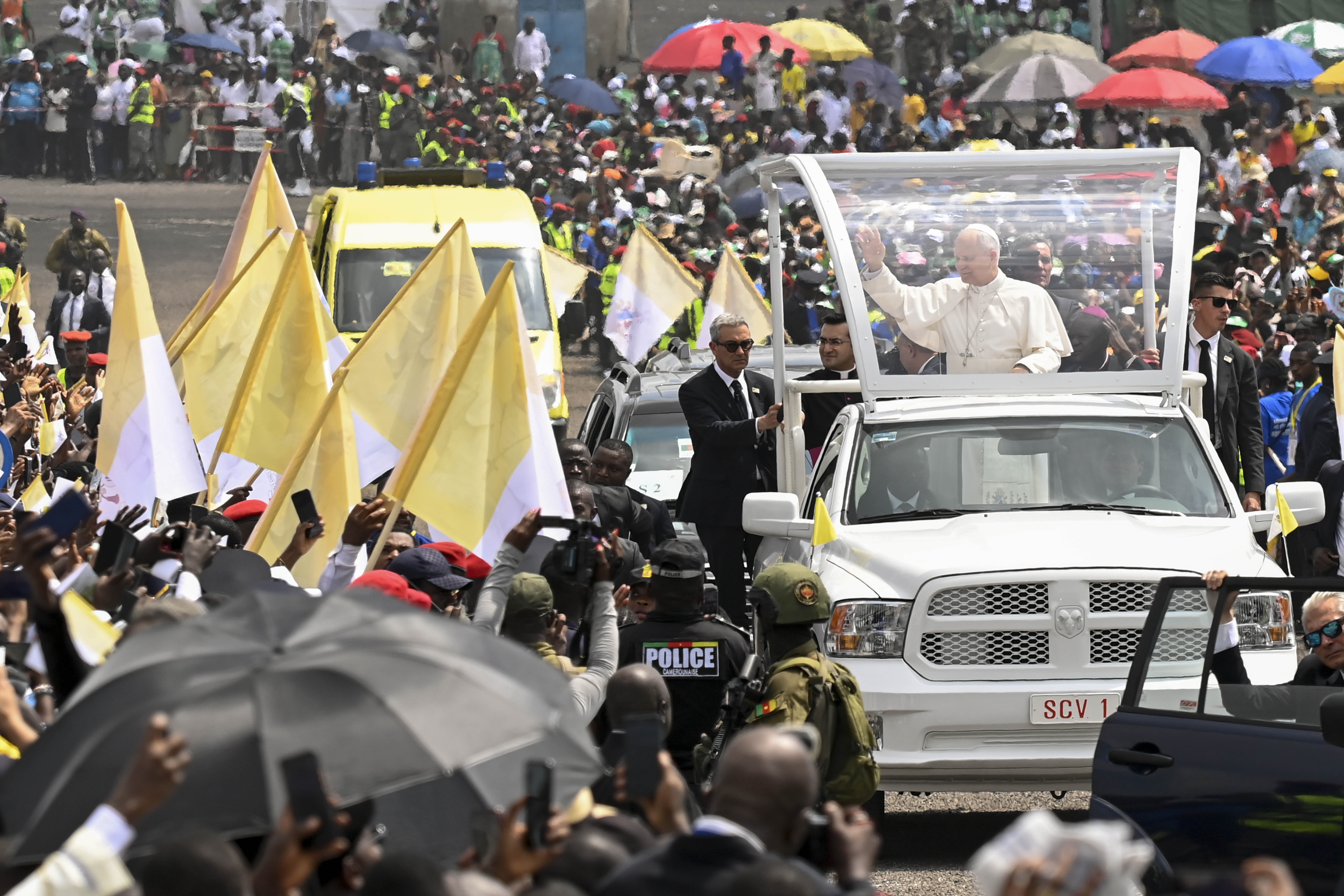
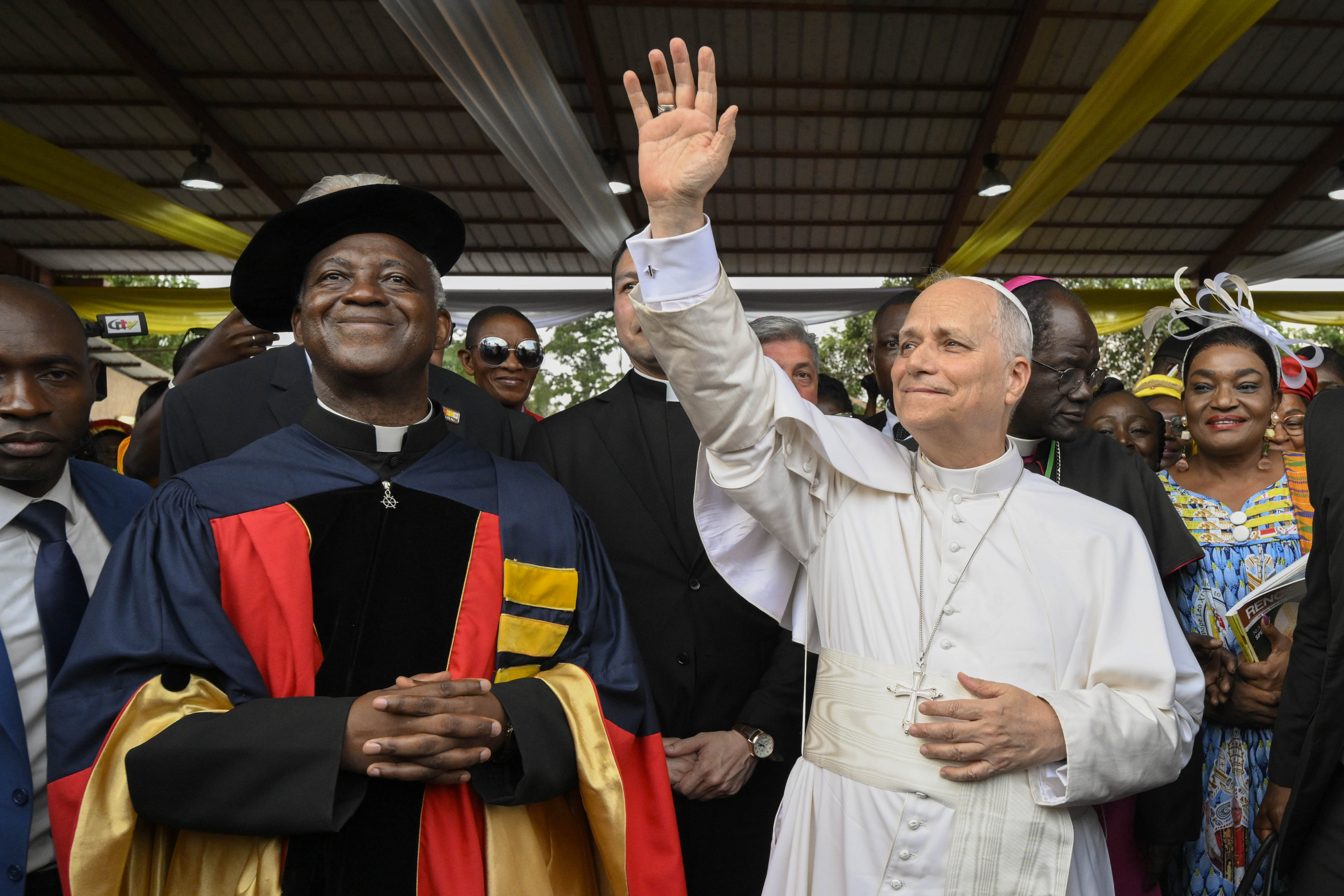
Pope Leo XIV greets crowds in Douala, Cameroon, on Friday, April 17, 2026. | Credit: Vatican Media
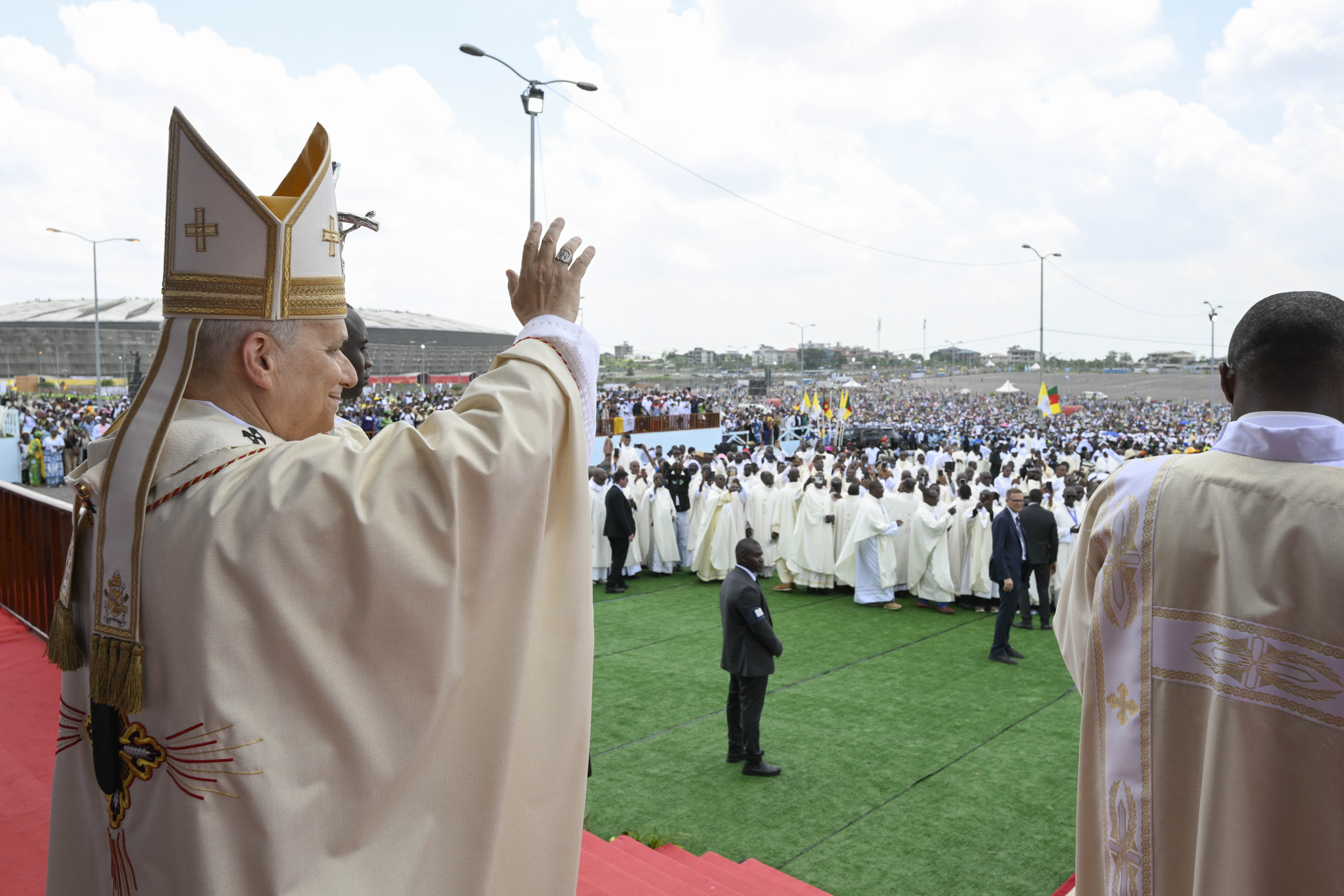
Pope Leo XIV greets clergy and thousands of faithful at Japoma Stadium in Douala, Cameroon, on Friday, April 17, 2026. | Credit: Vatican Media
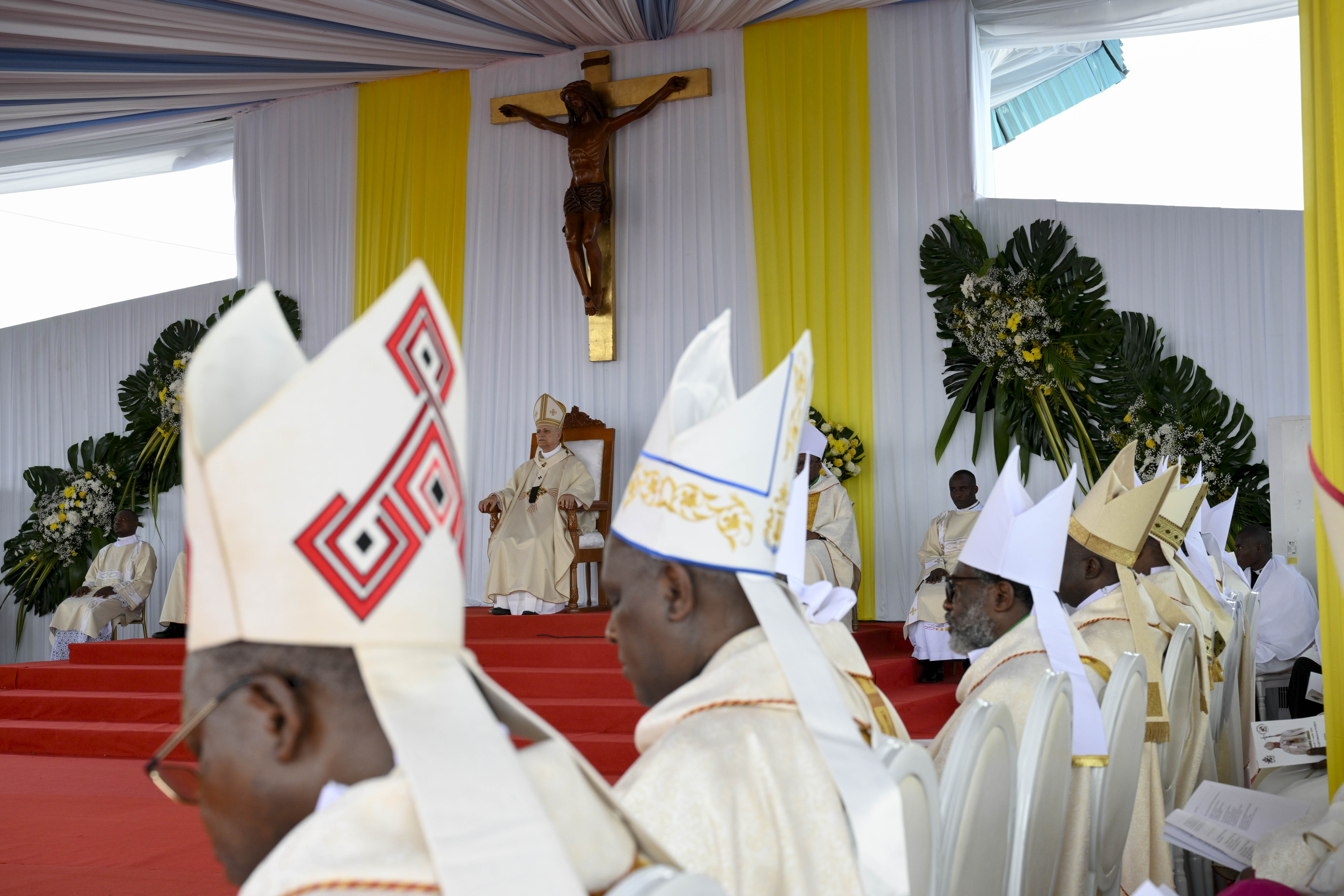
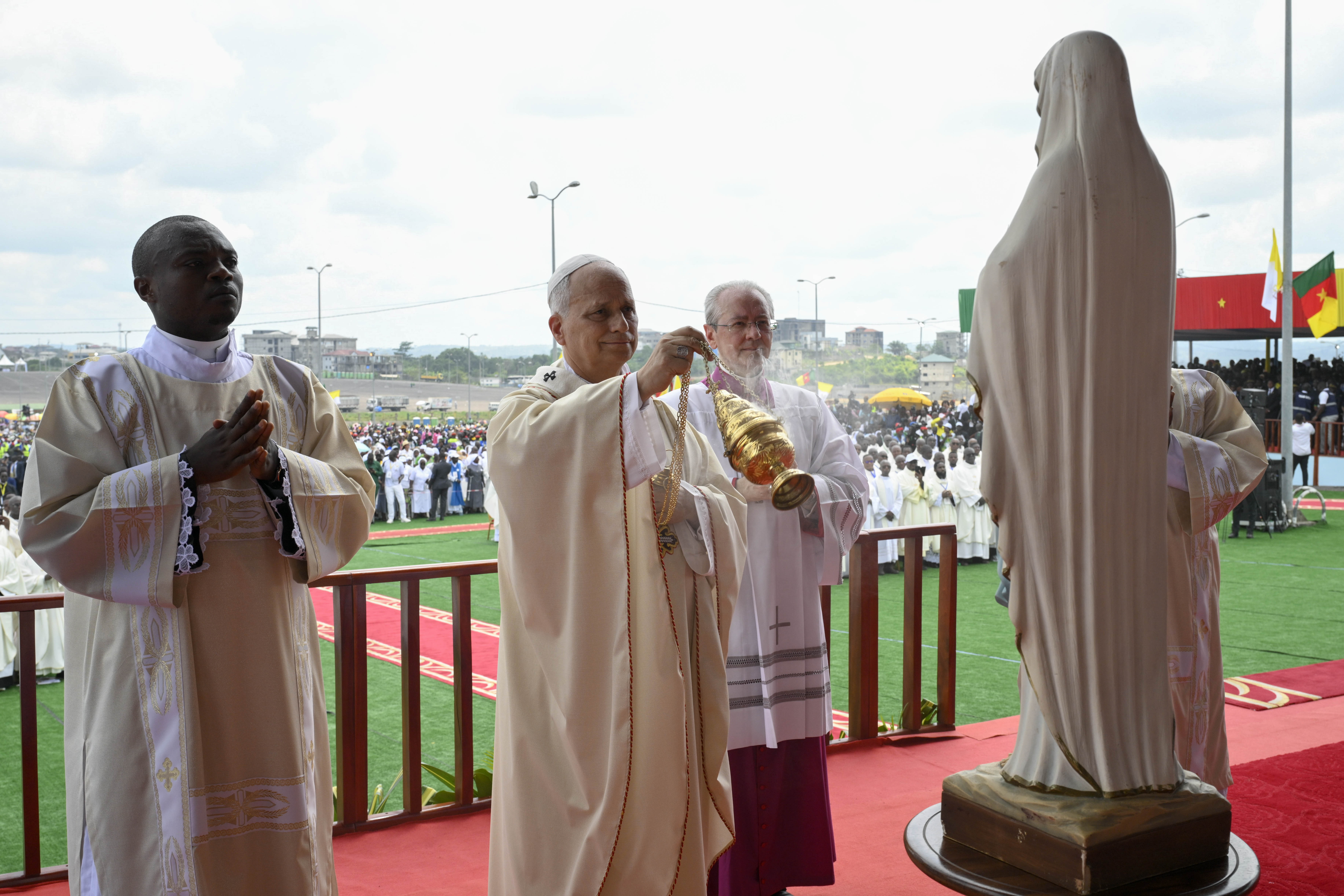
Pope Leo XIV presides at Mass in Japoma Stadium in Douala, Cameroon, on Friday, April 17, 2026. | Credit: Vatican MediaPope Leo XIV incenses a statue of the Blessed Mother at Japoma Stadium during Mass on Friday, April 17, 2026. | Credit: Vatican Media
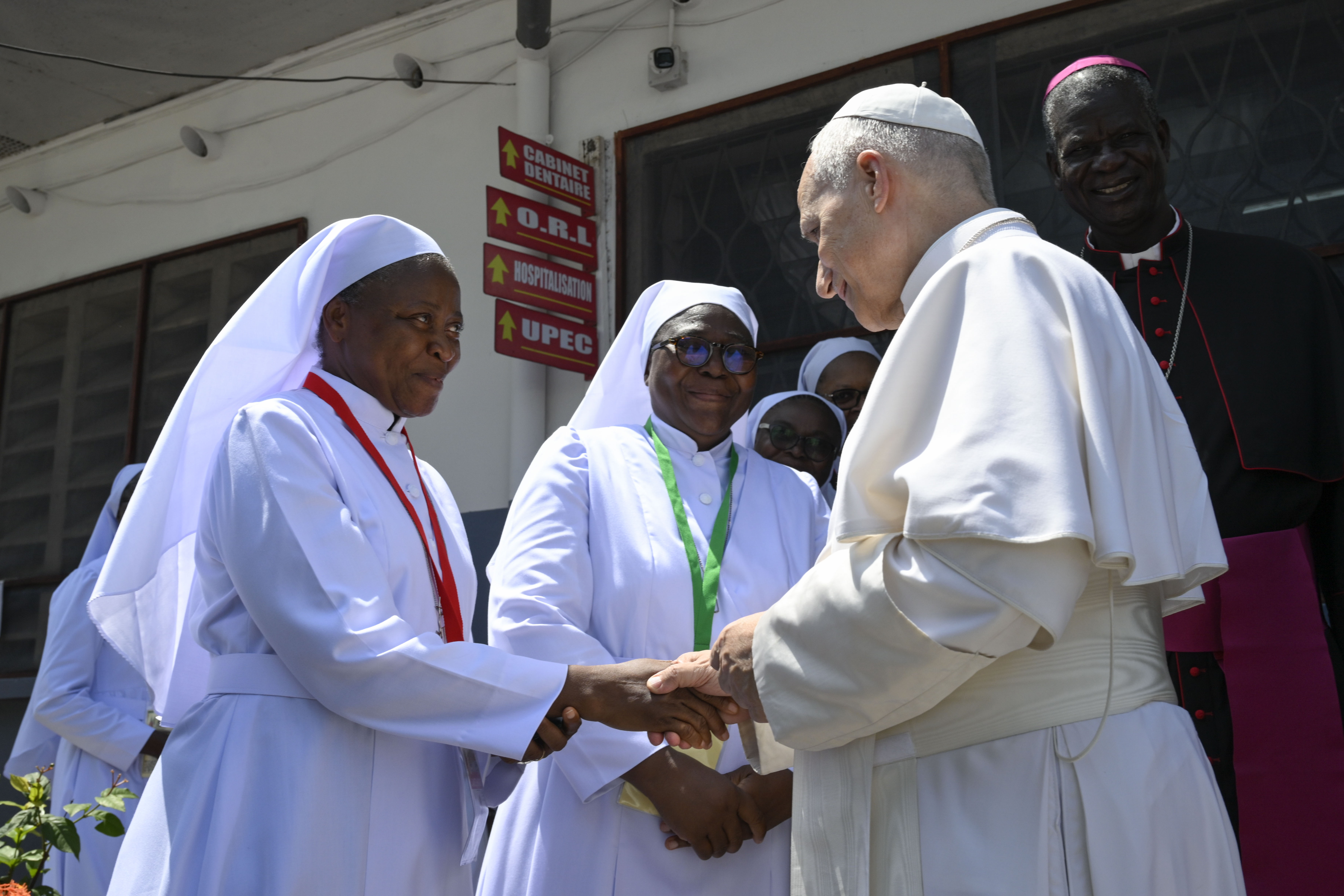
Pope Leo XIV greets religious sisters at St. Paul Catholic Hospital in Douala, Cameroon, on Friday, April 17, 2026. | Credit: Vatican Media
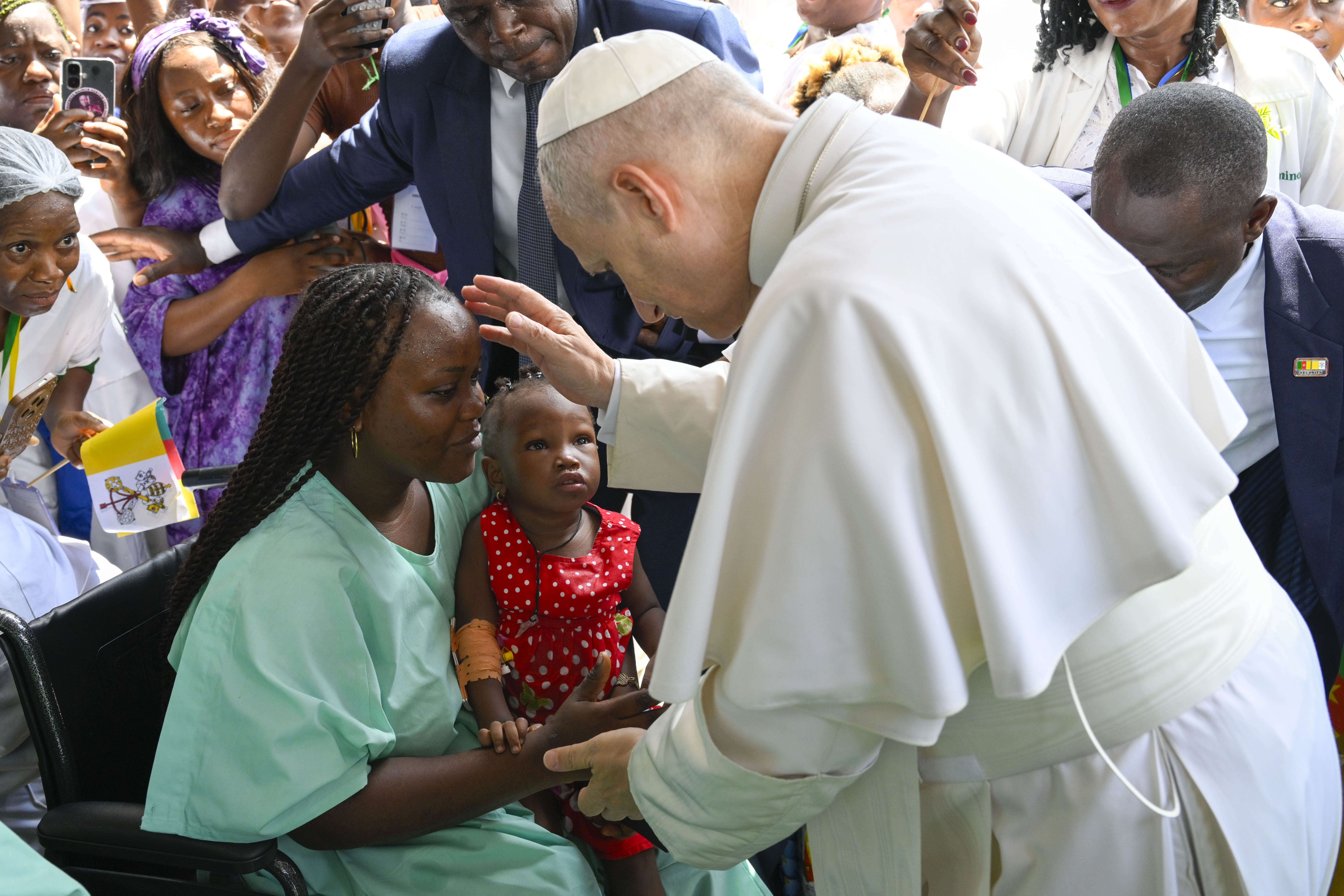
Pope Leo XIV blesses a mother and child at St. Paul Catholic Hospital in Douala, Cameroon, on Friday, April 17, 2026. | Credit: Vatican Media
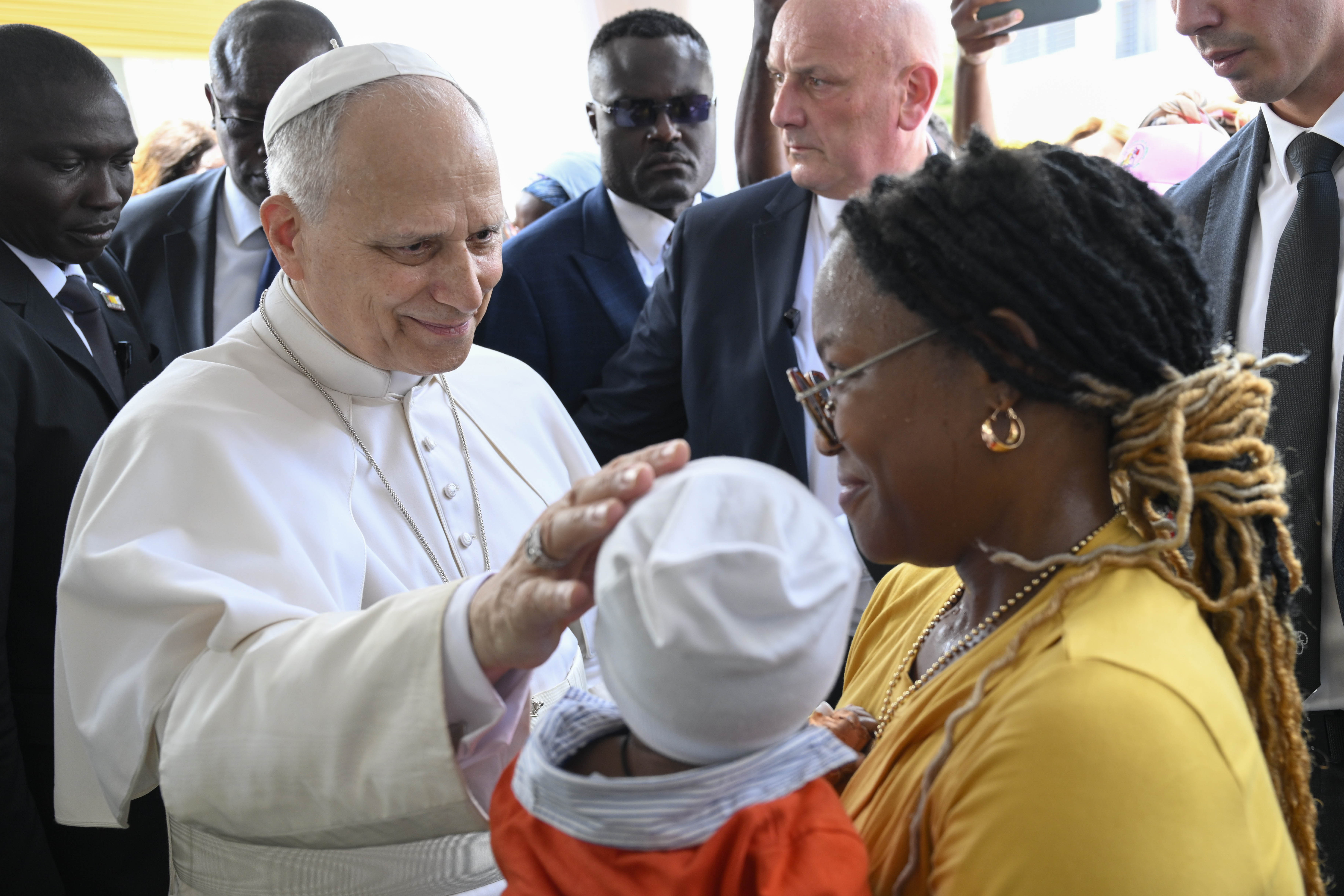
Pope Leo XIV blesses a newborn at St. Paul Catholic Hospital in Douala, Cameroon, on Friday, April 17, 2026. | Credit: Vatican Media
Pope Leo XIV blesses a child at St. Paul Catholic Hospital in Douala, Cameroon, on Friday, April 17, 2026. | Credit: Vatican Media
Pope Leo XIV offers a blessing to a patient at St. Paul Catholic Hospital in Douala, Cameroon, on Friday, April 17, 2026. | Credit: Vatican Media
Pope Leo XIV waves to crowds in Yaoundé, Cameroon, on Friday, April 17, 2026. | Credit: Vatican Media
Pope Leo XIV greets crowds at the Catholic University of Central Africa in Yaoundé, Cameroon, on Friday, April 17, 2026. | Credit: Vatican Media
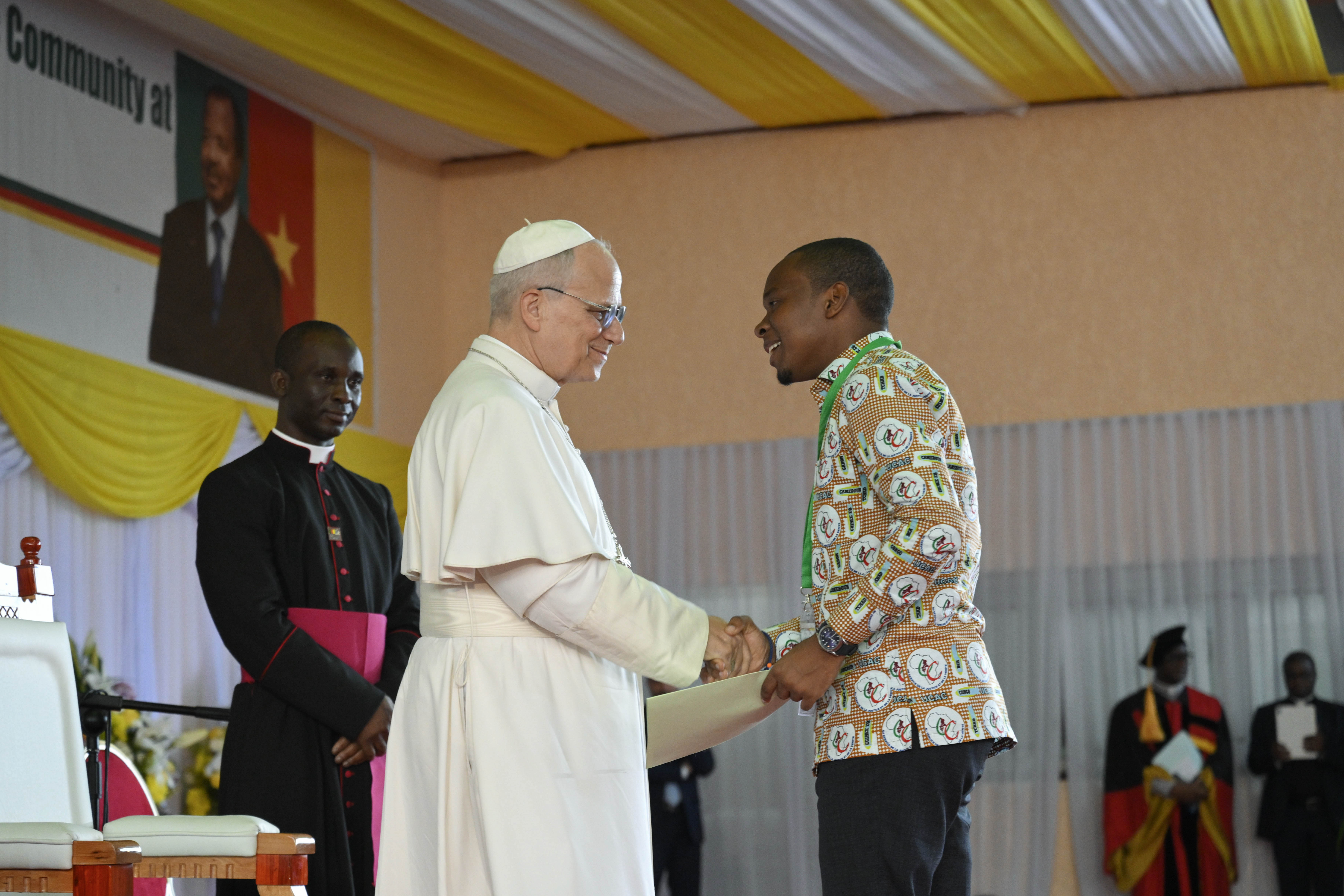
Pope Leo XIV greets a student at the Catholic University of Central Africa in Yaoundé, Cameroon, on Friday, April 17, 2026. | Credit: Vatican Media
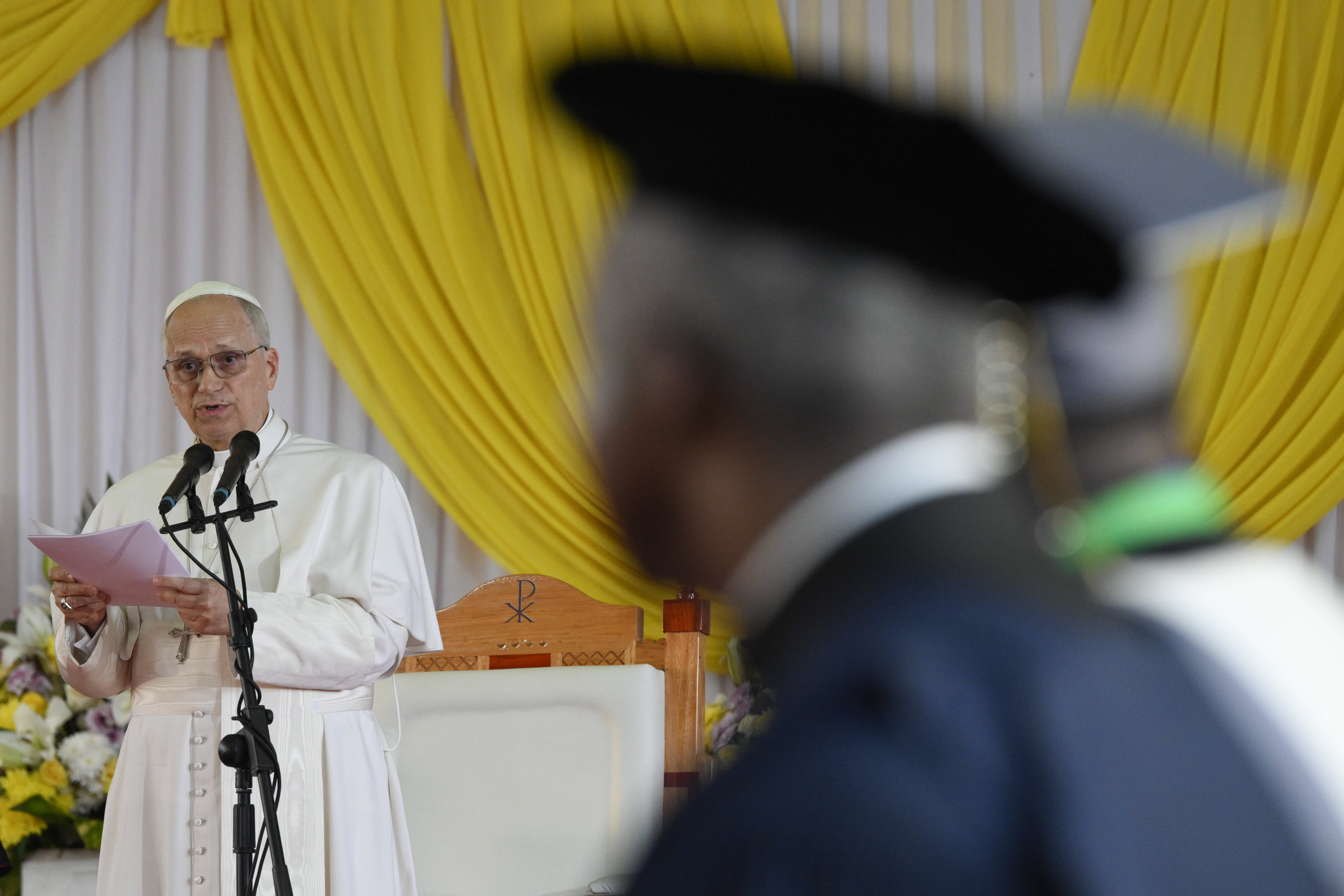
Pope Leo XIV speaks to students and dignitaries at the Catholic University of Central Africa in Yaoundé, Cameroon, on Friday, April 17, 2026. | Credit: Vatican Media
If you value the news and views Catholic World Report provides, please consider donating to support our efforts. Your contribution will help us continue to make CWR available to all readers worldwide for free, without a subscription. Thank you for your generosity!
Click here for more information on donating to CWR. Click here to sign up for our newsletter.
Pope Francis opens the Holy Doors at St. Peter’s Basilica to begin the Year of Mercy, Dec. 8, 2015. / L’Osservatore Romano.
Vatican City, May 18, 2023 / 08:00 am (CNA).
As Rome and the Vatican prepare for an influx of millions of people for a special year focused on hope, one experienced jubilee attendee is offering her advice for a fruitful pilgrimage.
“Watching people from all over the world praying… it’s an experience of the universal Church. For me, it reinforces my faith.”
The Vatican and the city of Rome are expecting an estimated 35 million people to flock to the Eternal City for the 2025 Jubilee Year of Hope — the first ordinary jubilee since the Great Jubilee of 2000.
A jubilee is a special holy year of grace and pilgrimage in the Catholic Church. It typically takes place once every 25 years, though the pope can call for extraordinary jubilee years more often, such as in the case of the 2016 Year of Mercy or the 2013 Year of Faith.
A central part of any jubilee are the Holy Doors. These doors, found at St. Peter’s Basilica and Rome’s other major basilicas, are sealed from the inside and only opened during a jubilee year. In 2016, Catholic dioceses also had their own Holy Doors.
The opening of the Holy Door symbolizes the offering of an “extraordinary path” toward salvation for Catholics during a jubilee. Pilgrims who walk through a Holy Door can receive a plenary indulgence under the usual conditions.
Jubilees have biblical roots, as the Mosaic era established jubilee years to be held every 50 years for the freeing of slaves and forgiveness of debts as manifestations of God’s mercy. The practice was reestablished by Pope Boniface VIII in 1300.
Jubilees are planned years in advance, with the 2025 Year of Hope being no exception. The theme was announced in January 2022. Now, the city of Rome is preparing to launch a number of infrastructure projects to make the experience better for pilgrims.
The Vatican said an estimated 20.4 million people attended Year of Mercy events at the Vatican over the course of 2016.
Lewis, who participated in the Jubilees of 1983, 1987, 2000, and 2016, noted that if people can plan their visit in nonpeak times it could be helpful but to be prepared for throngs regardless.
“If they can choose ‘the road less traveled’ that will probably augment their appreciation,” she said, noting that the busiest times will probably be the summer, holidays, and the opening and closing of the Holy Door.
“Be prepared for crowds. Bring patience along with your comfiest walking shoes,” Lewis added.
For the 2025 Jubilee, Rome has allocated approximately $2.5 billion to go into 87 public works projects, though this may increase to $4.3 billion.
The city is planning to improve its public transport and public bathroom facilities, repave roads, build underground parking and pedestrian underpassages, and clean up the area around the central Termini train station.
For the Jubilee Year in 2000, Rome built a large parking garage for tour buses under the nearby Janiculum Hill. Lewis said they also worked hard to make the ancient city a little bit more accessible for people in wheelchairs by adding sidewalk ramps and ramps at church entrances.
“The Vatican does a lot of work with the city — anything that can make the trip easier for a pilgrim,” she said. The Vatican and Rome “want to help make the trip enjoyable.”
Sometime early next year the pope will publish the official bull declaring the Jubilee and establishing the date for the opening of the Holy Door, which will likely be in December 2024.
Registrations for the Jubilee will open in September, the Vatican said.
Lewis said much of the practical tips she would offer individuals or families hoping to come to Rome for the Jubilee would be similar to the typical advice for any tourist to the Eternal City.
A digital “pilgrim’s card,” created by the Vatican, will be a useful tool, facilitating access to the most important sites connected to the Holy Year. An additional “service card” will also be available for a small price and will offer additional discounts to museums, transportation, and other services.
The Vatican also recently published the full list of themed Jubilee celebrations that will happen throughout 2025, such as the jubilees of families, artists, and seminarians.
Lewis recommended that families traveling with young children make sure that part of every day there is something for them and pointed out that Rome has greenspaces, parks, and playgrounds, good for a picnic or letting kids run around.
She also said it is important to emphasize the “spiritual celebration of pilgrimage” and the “difference between a pilgrimage experience versus being a tourist.”
Pope Francis presides over the funeral Mass for Pope Emeritus Benedict XVI in St. Peter’s Square on Jan. 5, 2023. / Vatican Media
Rome Newsroom, Jan 15, 2023 / 11:00 am (CNA).
It was widely anticipated that a major reform of the Diocese of Rome was coming, as Pope Francis has been thinking about it for some time.
But no one expected it to come when it did: On Jan. 6, one day after the funeral of Francis’ predecessor as Bishop of Rome, Pope Emeritus Benedict XVI.
With the reform, Pope Francis firmly took over the reins of the vicariate, or hierarchy, of the diocese. Everything is centralized, and everything must pass, at least formally, under the control of the pontiff.
Cardinal Angelo de Donatis, the pope’s vicar for the diocese, sees his role deeply diminished. The diocese’s auxiliary bishops strengthen their direct link with the pope. In the end, the pope has made it clear that he is the one who also formally presides over the Episcopal Council, a new body established as an “expression of synodality.”
Cardinal Angelo De Donatis. . Daniel Ibanez/CNA
The backstory
Before going into some details of the new decree, however, some background is necessary.
The last reform of the structure of the Vicariate of Rome was outlined by John Paul II in 1908, with the apostolic constitution Ecclesia In Urbe. For the new reform, Pope Francis copied and pasted several passages from that document. In some cases, these have been minimally rewritten to emphasize some details instead of others. In other cases, greater changes were made but these do little to alter the basic substance of things.
The reform presents two general characteristics of Pope Francis’ way of legislating: using councils or commissions and requiring those bodies to report directly to him.
It is clear that the pope is the bishop of Rome and that the pope’s vicar for the diocese is his auxiliary. Pope Francis, however, in this case, goes further, including with the constitution a decree that directly defines the areas of competence of the auxiliary bishops.
Pope Francis shows, in this way, a willingness to exercise greater personal control over everything that happens in the vicariate. At the same time, this choice also testifies to a “break” in the relationship of trust with his vicar, Cardinal de Donatsi.
Although Francis called de Donatis to preach retreats to the Roman Curia in 2014, he was never the pope’s candidate to succeed Cardinal Vallini as vicar. That was Cardinal Paolo Lojudice.
Pope Francis, however, wanted to first consult the parish priests of Rome, 80% of whom preferred de Donatis. It was impossible, therefore, for the pope not to listen to them. He appointed De Donatis vicar (and cardinal) and made Lojudice archbishop of the prestigious Diocese of Siena, and a cardinal, as well.
Last May, at the general assembly of the Italian Episcopal Conference, it seemed clear that Pope Francis preferred the appointment of Cardinal Lojudice as the new president of the CEI.
Cardinal Matteo Zuppi and Cardinal Augusto Paolo Lojudice. Francesco Pierantoni via Wikimedia (CC BY 2.0)/Pufui PcPifpef via Wikimedia (CC BY-SA 4.0).
The plan was to appoint Lojudice vicar of the Diocese of Rome to succeed Cardinal de Donatis, who had finished his five-year term, which would then have made Lojudice the primary contact person for the pope both in Rome and among the Italian bishops. De Donatis would have been appointed the new Penitentiary in place of Cardinal Mauro Piacenza, who has now turned 78.
The Italian bishops, however, preferred Cardinal Matteo Zuppi, archbishop of Bologna, who was not unwelcome to Pope Francis.
Lojudice didn’t become vicar for the Rome Diocese, either, as everyone assumed would happen. Meanwhile, the relationship of trust between de Donatis and the pope seemed to have been interrupted in 2020, when, at the beginning of the lockdown for COVID-19, de Donatis decided to close the churches of Rome. When Pope Francis later highlighted the inadvisability of closing churches, de Donatis withdrew the decree but announced that every decision had been made in agreement with the pope. There also have been other moments of friction in recent years.
The pope, however, now seems intent on changing the vicar this year when de Donatis’ mandate expires. An indication of this is the fact that in the decree in which the Pope defines the area and pastoral competencies of the auxiliary bishops, de Donatis is not mentioned as vicar. One might take his presence for granted, of course, but the general interpretation is that the change will be made.
What’s new
What are the novelties introduced by Pope Francis? First, the figure of the prelate general secretary disappears, while the vicegerente (or the deputy of the vicar) manages the offices of the General Secretariat. The prelate secretary also had the function of the moderator of the Curia. In this case, everything is entrusted to the vicegerente, who thus sees his functions and weight increase.
The pope chose the vicegerente from among the auxiliary bishops, and in this case, Baldassare Reina was selected. Bishop Reina does not come from the Diocese of Rome but was called from Agrigento. The pope’s logic is to break possible power chains by bringing in fresh and foreign forces.
The choice of a new parish priest is entrusted to a lengthy procedure which must then, in any case, be submitted to the pope, who acts as the true and proper bishop of Rome without relying on the vicar, who is left with the appointment of assistant parish priests.
Article 20 of the Constitution requests a report for each candidate for the priesthood or diaconate to be submitted before ordination. Also, in this case, the candidates must be presented by the cardinal vicar to the pope, and only after obtaining the Episcopal Council’s consent. Therefore, the vicar seems to be practically a commissariat: He does not choose the candidates but submits them to the pope and can submit them only after the Episcopal Council has endorsed the choice.
The council is defined as the “first organ of Synodality” and must meet “at least three times a month,” presided over by the pope. Only in the absence of the pope can the cardinal vicar preside over the council, which is made up of the vicegerent and the auxiliary bishops. However, the pope wants to receive “the agenda for each meeting as soon as possible.”
Finally, there is also the establishment of an Independent Supervisory Commission. This will have a regulation that must be “approved by the Pope” and six members appointed by the pope who can remain in office for a maximum of two five-year terms.
The service for the protection of minors and vulnerable people is also added, which “reports to the Episcopal Council, through the auxiliary bishop appointed by me,” the pope has decreed.
Pope Francis attends the Italian bishops’ plenary assembly in Rome on May 24, 2021. Vatican Media.
The effects of the reform
The constitution also redistributes the areas and offices of the Vicariate’s Curia, and the accompanying decree gives each auxiliary bishop a specific task.
Beyond the reorganization, it should be noted how the pope enters into action as the actual bishop of Rome. Everything must pass through the decisions of the pope, while before, the cardinal vicar enjoyed trust and discretion. For the first time, however, the pope’s vicar is defined as an “auxiliary.” He is, therefore, an auxiliary among the auxiliaries, with a considerable reduction in his weight.
With this centralization, Pope Francis probably wants to overcome the risk of having “abuses” within the Vicariate.
It is worth remembering that in June 2021, Pope Francis ordered an inspection of the Vicariate itself. It was an audit entrusted to the Auditor General of the Holy See, Alessandro Cassinis Righini. It was the first time the Vicariate sifted through the accounting books, registers, and cooperative societies.
However, the Pope, as a matter of practice, has sent an inspection to all the dicasteries of the Curia every time there is a reform or a new mandate. The review, therefore, already predicted the change of pace in the Vicariate, one that has led Pope Francis to be increasingly alone in command.
Vatican City, Jan 25, 2018 / 12:08 pm (CNA/EWTN News).- Cardinal Kevin Farrell is in charge of the World Meeting of Families being held in August, and he has said he hopes the event will revitalize family life, both in Ireland and around the world.
Leave a Reply