

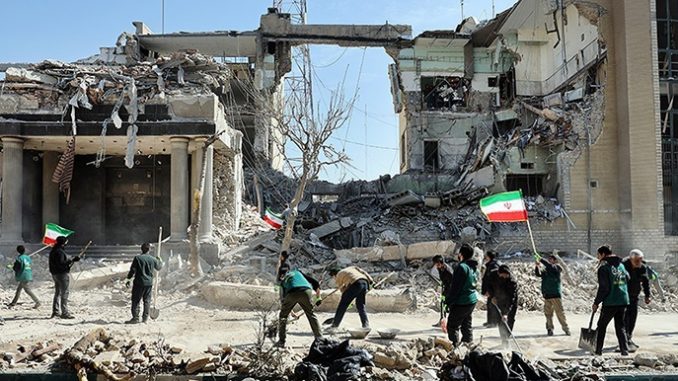
A recent appeal from Pope Leo XIV urged patient diplomacy amid rising tensions between Western powers and the Islamic Republic of Iran. His words reflected the Church’s perennial instinct toward peace. Through long decades of devastation, Christians learned the terrible arithmetic of modern war. Cities collapse, families fracture, and entire generations carry invisible wounds long after the guns fall silent.
Consequently, the Church habitually urges negotiation before confrontation and stability before chaos.
Nevertheless, moral seriousness requires an honest description of the regime involved. An accurate description of the Islamic Republic of Iran reveals a government whose rulers have accumulated immense bloodshed over several decades. Anyone who studies the documented record encounters a governing class responsible for systematic repression, ideological Quranic militancy, and an astonishing number of executions carried out through judicial theater.
Human rights organizations report that Iranian authorities conducted hundreds of executions during the past year alone. Amnesty International and Human Rights Watch have repeatedly documented the extensive use of capital punishment through secret trials and coerced confessions. Public hangings continue to function as instruments of intimidation within the regime’s legal structure. Through these practices, the Iranian government communicated to the world an unmistakable message about its authority and the cost of dissent.
Meanwhile, women who protest compulsory veiling laws experience arrest, imprisonment, and physical abuse. Journalists who investigate corruption frequently encounter detention and prolonged interrogation. Religious minorities endure property seizure, harassment, and incarceration. Christians and Baha’i adherents repeatedly face pressure from governmental security services. These conditions form an established pattern of essentially tyrannical governance.
The regime’s response to civic protest reveals the same pattern of severity. During 2022, the death of Mahsa Amini after detention by the morality police ignited nationwide demonstrations. Citizens across multiple cities demanded relief from oppressive social controls. Security forces answered those demonstrations with live ammunition, sweeping arrests, and long prison sentences. Global attention has ebbed and flowed and gradually faded while repression continued within the borders of Iran. Student activists, labor organizers, and independent thinkers remain vulnerable to arbitrary punishment.
Such a political order emerged in 1979. That year, the Islamic Revolution overthrew the Shah and introduced a theocratic structure under Ayatollah Ruhollah Khomeini. Khomeini articulated the doctrine of “velayat e faqih,” translated as “the guardianship of the jurist.” According to this doctrine, ultimate political authority belongs to an Islamic legal scholar who governs society through rigorous religious interpretation.
In practice, this doctrine concentrates extraordinary executive power within unelected clerical institutions. Elections occur periodically, sure, but a supervisory council filters candidates through Islamic screening. Political participation proceeds within narrow boundaries established by Islamic religious authorities. Citizens may vote among approved figures while genuine political opposition is forcefully excluded from the system.
Khomeini also shaped the ideological posture of the state. His speeches regularly described the United States as the “Great Satan” (Ruhollah Khomeini, speech during the Islamic Revolution, 1979) while Western civilization and the rights and privileges of Western flourishing have received consistent condemnation as being entirely morally decadent. Liberal democracy was framed as a morally and spiritually corrupting influence. Resistance to Western political and cultural influence was preached as a sacred obligation.
Later leaders continued similar themes. The most recent (and late) Supreme Leader, Ali Khamenei, repeatedly condemned Western cultural influence while presenting Islamic governance as the true bulwark against spiritual corruption. Official statements frequently portray any form of questioning or dissent as treachery against divine authority itself. Through this framework, internal criticism is immediately framed as rebellion against a sacred order.
Iran’s regional strategy also reveals terrible ideological ambition. Government support flows toward Islamic militant organizations operating throughout Lebanon, Syria, Iraq, and Yemen. Through financial assistance, military training, and strategic guidance, Iranian authorities encourage armed Islamic groups whose activities extend regional instability in the name of the Quran. Civilian populations frequently endure the consequences and pay the blood price of these proxy conflicts.
Consequently, a portrait of benevolent governance in Iran is naïve and farcical; the sheer weight of historical evidence demonstrates this fact. The ayatollahs presided over a religious system that produced extensive suffering among their own citizens while exporting Islamic theological conflict beyond their borders.
Furthermore, the theological foundations of the regime illuminate its political structure. Classical Islamic jurisprudence draws heavily from the Qur’an and the Hadith collections that record sayings attributed to Muhammad. Within these sources, divine command frequently appears as an absolute authority whose commands require submission rather than rational negotiation.
For example, the Qur’an instructs believers, “Fight them until there is no fitnah and the religion, all of it, is for Allah” (Qur’an 8:39, Surah Al-Anfal). Likewise, another passage commands, “Fight those who do not believe in Allah or in the Last Day… until they pay the jizyah with willing submission and feel themselves subdued” (Qur’an 9:29, Surah At-Tawbah). Through these instructions, the sacred text establishes a hierarchy between believers and those outside the Islamic community.
Hadith literature reinforces this dynamic. A well-known report preserved in Sahih Muslim records Muhammad declaring, “I have been commanded to fight the people until they testify that there is no god except Allah and that Muhammad is the Messenger of Allah” (Sahih Muslim 22). Another tradition recorded in Sahih al-Bukhari states, “Whoever changes his religion, kill him” (Sahih al-Bukhari 6922). These traditions entered classical jurisprudence and influenced centuries of Islamic political thought.
Within such a framework, authority derives directly from divine command rather than philosophical reasoning about natural law. Western political traditions developed through dialogue between revelation and rational inquiry. Greek philosophy, Roman jurisprudence, and Christian theology gradually produced the concept of natural law accessible through reason. As Joseph Ratzinger observed in Truth and Tolerance, Christianity uniquely united biblical faith with Greek rationality, creating “a synthesis between faith and reason that shaped the intellectual foundation of Europe.”
Islamic jurisprudence evolved along a different trajectory in which divine command receives priority over rational argument. Consequently, political structures shaped by strict interpretations of these texts frequently operate through hierarchical submission. A master issues commands, while subjects obey. Such theological premises easily translate into governmental structures in which clerical authorities exercise sweeping power over social life.
Within that context, dialogue with the regime encounters significant intellectual barriers. When political authority claims direct grounding in divine command, appeals to universal reason encounter resistance. Rational debate about human rights or pluralistic governance often appears to religious authorities as defiance against divine sovereignty.
This intellectual framework explains much of the regime’s domestic behavior. Authorities enforce religious norms through legal punishment, while dissent receives treatment as rebellion against sacred order. Public life revolves around obedience rather than deliberation.
Nevertheless, moral reflection still demands prudence and balance. Christian teaching affirms the dignity of every human person, including political leaders whose actions produce suffering. The death of any individual invites prayer for divine mercy. Catholic moral tradition consistently warns against the celebration of death, even when controversial rulers depart from this world.
At the same time, honesty requires acknowledgement of historical responsibility. The ayatollahs governed through a system whose policies resulted in imprisonment, execution, and repression across multiple decades. A sober moral assessment recognizes that record without romantic sentiment.
Many Iranian citizens themselves express longing for a different future. Iranian expatriates frequently describe aspirations for greater political freedom and economic opportunities. Internal dissidents speak about a desire to practice religious faith without coercion from state authorities. These testimonies reveal a population whose hopes extend beyond rigid ideological control.
Consequently, simplistic narratives about Western aggression fail to capture the full picture. Iranian citizens possess agency and aspirations independent of geopolitical propaganda. Their voices deserve careful attention.
Looking forward, the international community faces a complicated landscape. Diplomatic engagement remains necessary in order to prevent a regional catastrophe. Economic sanctions require evaluation for humanitarian consequences. Multilateral cooperation may encourage transparency while protecting vulnerable populations.
Christians also recognize the enduring power of prayer. History repeatedly reveals that divine providence reshapes societies in ways that human observers rarely anticipate. Believers thus pray for Iranian families who endured hardship under authoritarian rule. Christians intercede for political leaders whose decisions influence millions of lives. Such prayer expresses confidence that God remains active in human history.
Through all these considerations, the Church offers a consistent moral vision grounded in the Gospel of Jesus Christ. Peace arises through justice, truth, and conversion of heart. Political systems shaped by domination eventually collapse under the weight of their own contradictions. In contrast, societies shaped by moral law and human dignity gradually cultivate authentic flourishing.
We must approach this unfolding situation with sober discernment. Compassion toward suffering populations combined with an honest evaluation of ideological regimes whose policies inflicted grave harm. Faithful believers refuse sentimental illusions while also resisting reckless triumphalism.
Ultimately, the future of Iran belongs to its people under the mysterious guidance of divine providence. Should greater freedom emerge within that ancient civilization, Christians will welcome the transformation with gratitude. Meanwhile, the Church continues her mission of prayer, witness, and moral truth.
Through Christ alone, humanity discovers genuine liberation. Political revolutions rise and fall across centuries, while the Gospel quietly transforms hearts and cultures. In that eternal kingdom, every nation receives an invitation to reconciliation with God and to a civilization founded upon justice, mercy, and truth.
Related at CWR:
• “Islam, Iran, and the separation of church and state” (January 20, 2026) by Marcus Peter
• “Iran, the Quran, and the West” (January 17, 2026) by Marcus Peter
If you value the news and views Catholic World Report provides, please consider donating to support our efforts. Your contribution will help us continue to make CWR available to all readers worldwide for free, without a subscription. Thank you for your generosity!
Click here for more information on donating to CWR. Click here to sign up for our newsletter.

When the initial Khomeini was challenged to consider a constitutional government he responded: “I have a constitution; it’s the Qur’an.”
How can an eventual Western cultural evolution happen in an alternative universe where the will of God (Allah) does not permit a (Triune) Incarnation into human history? And, where acceptance of distinct natural law is dismissed as a fully separate autonomy from the autonomy of Allah who alone is great and, therefore, blasphemy?
The symmetrical comparison is not between the two scriptures—the Bible and the Qur’an. Islam substitutes a free Jesus Christ with the Qur’an, and substitutes Mary’s equally free “fiat” with Muhammad’s ostensible reception of dictations assembled after his death into the Qur’an— which is regarded as the very essence of a totally inscrutable and even self- contradictory God (the self-evident principle of non-contradiction is replaced by the “principle” of “abrogation”).
How does a nation-state (in the Western idiom) negotiate with an artifact of the pre-modern world? Maybe person to person? And yet, within the sectarian Islamic bubble — whose self-understanding is a “congregational theocracy”— what is a “person”?
Secular-ism is a scandal to a Muslim who believes. All “political” controversies are ultimately theological in origin, even in what’s left of real Western culture.Dialogue, yes, but does a fireman dialogue with a fire?
So, for the Church, today, how to evangelize in THIS fallen world?
Notice how this Pope remains silent about some acts if committed by Red or Green regimes, but quickly pontificates when it is the US that acts. See below a few examples of his silence:
Pope ‘cannot comment’ on Jimmy Lai’s imprisonment
Pope Leo XIV told EWTN News he “cannot comment” on Jimmy Lai, the Catholic founder and publisher of the outspoken pro-democracy tabloid Apple Daily, who was sentenced Feb. 9 on charges Chinese authorities say violate national security laws.
https://www.catholicworldreport.com/2026/03/03/pope-cannot-comment-on-jimmy-lais-imprisonment/
Islamic Child-Bride Revelations Prompt Swift Legislative Action in Italy
“Undercover Report Shows Imam Endorsing Marriage of Nine-Year-Old Girls
https://www.meforum.org/fwi/fwi-news/islamic-child-bride-revelations-prompt-swift-legislative-action-in-italy
Afghan Christians Fleeing Taliban Face Deadly Threats in Neighboring Muslim Countries
https://www.breitbart.com/faith/2026/03/09/exclusive-afghan-christians-fleeing-taliban-face-deadly-threats-in-neighboring-muslim-countries/
Two months after rejecting an appeal from exiled Iranian Crown Prince Reza Pahlavi to intercede on behalf of Iran’s persecuted Christians, Pope Leo XIV has issued a subtle rebuke censuring the U.S.-Israel strike on Tehran’s theocracy.
https://www.meforum.org/mef-observer/pope-leo-condemns-u-s-israel-operation-silent-on-irans-tyranny
Thanks for a sober and realistic account.
Pope Leo ought to stop interfering in geopolitical matters. He statements are inflammatory. The Vatican operates as if it were a temporal institution with a Secretary of State and sending “envoys” to other countries. Stay within the mission of the Catholic Church as commanded by Christ. Remember: the Second Person of the Trinity did not become incarnate in order to throw the Roman legions out of the middle east.
Challenging modern Bishops and Popes with traditional faith and reason is an affront to their initiatives. Can the Pope of Rome yet be the Vicar of God trying to serve 2-masters?
Well, in order to survive in the errant modern world, the papacy signed a concordat with Italy, and was conceded/awarded(?) the stature of at least a sovereign city-state in a new world of nation-states. No longer a Prisoner of the Vatican (109 acres) since the revolution of 1870.
The Holy See and the Vatican (city-state) are not the same thing but are inseparable–but not “two masters”. So, as for geopolitical matters, perhaps Pope Leo is constrained in any public comments he might make or not make, by the vulnerability of surrounded Christians–anywhere in the Middle East–against possible jihadist reprisals. (When Pope Benedict queried the Muslim world as a religion that enables terrorism [in Bavaria, The Regensburg Lecture, 2006], riots erupted across all of the Islamic world and a nun was murdered, in faraway Egypt.
Thinking interculturally(!), especially for the Church–not of the world but still in the world–we live in interesting times. For whatever it’s worth, or not, my comment on all this is the first listed, above.
The only envoys they ought to be sending are missionaries, which is what the Apostles were, and the Bishops are their successors.
The Pope is a bishop too. Just sayin’
Now that we are here what to do?demand a complete surrender? Put boots on ground and bail them out with a new Marshall plan? It seems our history in the Mid East is Togo in. Mess up and then leave before the work is done and stability gained. We must learn patience.tebuilding a fallen nation takes time and money and is not an easy task.
The cultural, theological divide between Christianity and Islam may (probably shall) never be resolved prior to the 2nd Coming of Jesus Christ.
One of my children visited Togo recently & said it was pretty nice.
“Political revolutions rise and fall across centuries, while the Gospel quietly transforms hearts and cultures”
Oh, is that why the cultures of North Africa and the Near East were once largely Christian but were made Moslem by the sword and remain so century after century? Is that why Spain, once under the sword of Islam became once again, for a while anyway, Christian?
For that matter, it seems as if the transformation of western culture by the Gospel reached its high point some time ago and has been deteriorating for a century or two. Nowhere in Marcus’s scheme of things, which reads in places like a paean to political liberalism, is there any clue he understands what is happening in his own culture and begs the question of why he thinks democracy and “deliberation” will solve all problems in Iran. How is it doing here?
This article ia a mix of summary historical facts and pious platitudes that lead where?
Negotiations with fanatics who are negotiating in bad faith, does not work. Perhaps a combination of negotiation and occasional massive ordnance gets their attention?
In principle Dr Marcus Peter presents a learned, reasonable interpretive resolution to the Iran war crisis we now face, with the prospect of drawing in Russia, which shares a long border with Iran, and China, N Korea who rely extensively on Iranian oil and specified armaments.
We can’t effectively reason with the unreasonable, for reasons as spelled out by Peter Beaulieu, and beyond the irrational, the fanatical.
Our best hope in this writer’s opinion was the Ba’athist secular Islamic governance philosophy began in Syria 1940 and then adopted by Saddam Hussein in Iraq, Hafez Assad in Syria.
That opening for the relative normalization with Islam was destroyed by the Bush administrations over the issue of power and control of oil resources. Although, it was unique, in the history of Islam, when we had Islamic nations which not only tolerated, but protected and strengthened Christian minorities [for multiple reasons Pope John Paul II was vehemently against both wars].
Iran is the worst case scenario of the fanatic ideology bent on destruction of the Christian West in consequence of a lunatic religious ideology of an expected 12th Imam, a Muslim Messiah who will bring peace to the world. Peace as we’re aware in radical Islam means the conversion to Islam. That peace is prophesied to be initiated by a world wide conflagration.
As to “Russia, which shares a long border with Iran”, that refers to the border with Turkmenistan and Uzbekistan, former Socialist Soviets with Russia, which are now technically independent. Although they maintain a close, ‘strategic’ relationship with Moscow. For example, when the U.S. requested use of Uzbekistan air bases for operations in Afghanistan Russia granted the approval.
Mention is made of the twelfth imam….The Shi’ites (only 15 percent of all Muslims) now wait for the return of the twelfth imam, the Mahdi, who is believed to have disappeared at the age of ten in 873 A.D. The Shi’ites cannot accept that the twelfth and final imam perished for if there is no imam, they say, the “world could not endure for the twinkling of an eye.” (citation in Omar, ed., “A Muslim View of Christianity,” Orbis, 2007).
Four points and a proposal:
FIRST, the Christian cannot help but notice the parallel to Bible verses linking time and eternity, that “with the Lord one day is like a thousand years and a thousand years like one day” (2 Pe 3:8), and that at the resurrection we will be changed “in an instant, in the blink of an eye” (1 Cor 15:52). One scholarly theory is that forced-convert Syrian scribes inserted such parts of Christianity into Islam to render it more palatable.
SECOND, within the devout Muslim mind, the modern world imposes an enormous burden of cognitive dissonance. The counterpart in the post-Christian West is the cerebral chaos imposed by the trench warfare of World War I–which buried all the facile hubris and assumptions of post-Enlightenment Europe. Even the great sociologist Max Weber—who stared the coming sliced-and-diced world straight in the eye—ended up in an asylum for a couple years (temporarily a lunatic?), allowed to read only bird books. From hence, the constructed ideologies of the objective “social sciences.” Today’s abysmal public budget deficits and the cognitive deficit of gender theory!
THIRD, the most likely contact point between witnesses to Christ and the followers of Islam (not between Christianity and Islam per se) is the overlap between the distinct, personal, inborn/implanted natural law (actually the Ten Commandments), and “fitrah”–entangled within the absorbing Qur’an and hadith. Fitrah, too, is the inborn-from-the-beginning orientation of the soul toward God—understood by Muslims as the very “germ of Islam” as from before any human history began. “There is not a child that he or she is born upon this fitrah, this original state of the knowledge of God. And his parents make him a Jew, a Christian, or a Zoroastrian . . . and if they are Muslims, Muslim” (from the hadith as reported by Bukhari: Sahih, I 34).
FOURTH, a key sticking point, then, is that Qur’anic reverence toward “the Law of Moses” fails to explicitly present the inseparable and prohibitive last six Commandments–resulting in a vacuum such that Islam rejects not only the redemptive Christ (the fulfillment of the Law) but also the universal and near-fatal mystery original to all of us (freedom and the “original sin”). Therefore, inevitable Islamic conquest of entire “world” of time, by either assimilation or jihad, or both.
PROPOSAL: As a lens for at least remedial understanding of Muslim cognitive dissonance and cultural rigidity, the Church’s interreligious dialogue cannot displace the role of cultural anthropology and history. We might even recall that during the equally existential crisis of the Crusades, many of the pre-modern knights were convinced that the eternal Charlemagne himself—like the Mahdi?—would return to the battlefield.
Today, the post-Christian (and post-natural law, as in abortion and euthanasia?) West meets pre-Christian (not chronologically) and anti-Incarnational Islam.
Christ wept at Gethsemani….
Pope Leo XIV is doing precisely what he is mandated to do as the Vicor of Christ and the leader of the Catholic Church. He is proposing, not imposing the ancient, consistant, truth and teaching of the Church. If it is seen and judged as “political” might that be because the criticism of his moral teaching, which is consistent with natural law as well, is from a merely “political”, even ideological world view?
Iran’s “theocracy” has perpetrated horrors equal to that of countless human governments over the expanse of history, clearly. But given the present state of Western culture and the moral character of the current U.S. administration, it seems clear that putting your trust in the East of Eden “wisdoms” of the world is still a fools endeavor.
The justifications for this war have been nullities from the Catholic standpoint: https://edwardfeser.blogspot.com/2026/02/the-us-war-on-iran-is-manifestly-unjust.html. There was no imminent attack on the US or any other country. The way Trump and his colleagues change the justifications from one minute to the next, contradicting themselves and each other, shows a real lack of respect for US voters. What has been said in this post about the drawbacks of Islamic regimes applies a fortiori to US allies like Saudi Arabia and Morocco, which are much more extreme in their attitude towards Christians.
“There was no imminent attack on the US or any other country.” False. There was incessant, asymmetrical attack by Iran directed at every other nation in the region, and U.S. interests and security everywhere in the world, and against their own citizens on a horrific and massive scale. This strike against Iran should have happened forty years ago. But better late than never.
If it was Israel that had tomahawks and used them to hit the Iran girl school and blow up children, should the US continue with Israel as “partner” in the new strategic plan/policy?
The US wants to contain destabilizing forces in the Middle East and so put three major warships right there, simultaneously, within scope of weaponry from its named major threat China?
Is Trump not going to investigate who used the tomahawks and the thermobaric capability, against the school girls?
Neither Israel or the USA targets civilians.
On the type of events we are witnessing, it wouldn’t be an effective and/or credible defense to charges on war crime, no matter who perpetrated the acts or what their intent was.
Excuse any duplication – I lost internet access when trying to post. There is extensive evidence from Gaza that Israel does target civilians. Even leaving aside bombing – Gaza is now a moonscape – as regards children specifically, deliberate sniper wounds have been recorded as well as deliberate blockage of baby formula and other desperately needed aid by the IDF when medical volunteers tried to bring it in – see testimony here https://www.gazahealthcareletters.org/usa-letter-oct-1-2025 from American healthcare volunteers in an open letter to President Trump. The IDF itself in a leaked document has admitted to a high civilian death toll and now accepts total figures not dissimilar to the Gaza Health Authority – see here https://www.aljazeera.com/news/2026/1/30/israel-accepts-gazas-70000-death-toll-a-record-of-denialism-lies
No, Miss Kathy. Those links are from biased sources. I understand all media has some bias, but AlJazeera?
Mrs Cracker, it is best to check multiple sources, and stay away from mainstream propaganda.
I agree, Agnieszka. But I look at the propaganda, too just to understand what’s being promoted. As in the case of Al Jazeera.
Whether these civilian deaths were due to a deliberate targeting or to carelessness, it is still a very wicked deed committed by US/Israel.
God is the avenger of innocent blood.
Beware, O Israel and America, God is just and the day of retribution will come.
“I tremble for my country when I consider that God is just”
–Thomas Jefferson
“I don’t know much about Hitler. Except that last thing, about the Jews. There has never been a country that put its heel down on the Jews that ever lived afterwards.”
— Huey Long
A mostly Gentile Christendom successfully kept the Jews in check for over a millennium.
If the Jews have, especially during the last century, successfully subverted, defeated or destroyed certain Gentile nations, this is because these nations abandoned the faith.
When they had a strong faith, they were vigilant in keeping it, and this vigilance naturally involved a monitoring of and a keeping in check Jewish power.
The Jews are certainly winning at present, but the Jewish triumph and vengeance over all the other nations is not something inevitable.
It can be prevented through the efforts of people of faith, good will, and courage.
No one here is interested in setting a heel on the Jews.
We are interested, however, in frustrating the works of injustice, many of which today emanate from that “Jewish State” (their words) known as Israel.
Therefore, love Justice, hate iniquity, and condemn the bombing of civilians, whether directly intended or brought about through a vicious, culpable negligence.
Thanks for the in-depth background. I noted that Pope Leo stated that war is the temptation of the devil—no doubt—but prior to WWII, in her warnings to Fatima’s Sister Lucia, Our Blessed Mother referenced sin as the trigger for war. We must cease offending God, and more urgently pray and fast for the conversion of Muslims. If each of us would spiritually “adopt” an Iranian and be public witnesses…live more virtuously…attend daily Mass when possible, participate in Rosary gatherings and public processions of the Eucharist—praying, too, for Pete Hegseth’s Protestant mentor—who allegedly opposes such public prayer—perhaps the tide would turn.
While all that is cited in the article is true, it seems to avoid mentioning the elephant in the room and the occasion for this war: Iran is dedicated, consistently, to the absolute destruction of the state of Israel and with its ability to build and deploy a nuclear weapon it could and would achieve that objective. THAT is the issue at hand. Why that is avoided here is unfathomable. This war is just, even though it is preventative and not responsive, contrary to Cardinal Tobin’s (political as always) stretching of theological truths. The fact that we have allowed this situation to go for this long, and have even enabled it under previous administrations, is suicidal. Donald Trump is not most people’s cup of tea, but he probably has correctly analyzed this threat, refused to kick this can down the road and has acted correctly. As with immigration responses, some blame must be shared with those who provided us with the problem in the first place. If the nuclear attack were to be launched against Israel as promised, what would the critics of this war say then? There is no reason to believe this outcome would not actually happen.
We need to conclude this war soon and get the economy back on track. I’ve lost over $25.000 in the stock market since the war started.
It’s a good time to invest, Mr William. Buy low, sell high.
It’s too late to sell, but too early to buy. Stand fast for now. I’ve lost $25,000 and will likely lose more. Just stay calm and drink Bourbon. Marines from Japan headed to the Middle East. 50 years ago, that would have been me. In those days Vietnam was the problem.
Mr William, I’ve known people to sell investments at the wrong time rather than holding on to quality funds for the longterm. Don’t watch your portfolio constantly. It just makes for more stress and hasty decisions.
If you really believe your investments aren’t performing overall as they should , talk to an advisor you trust about other options.
As you near retirement pull some out into fixed. At some point we’re going to get a real correction on this surge from all the printed money during the pandemic.
When I was younger, my neighboring farmer told me to invest in stock, and I thought he meant livestock!
Neither of you belongs anywhere near an investment portfolio. I’m sorry.
Paper money; I read that we’re spending 50 billion a week more than we’re taking in?
Yes, those tax cuts for the billionaires really were great. The height of irresponsibility.
It seems to me that the pope is advocating for diplomacy as prerequisite to a just war. But it might be too late for that now…By the way, I wonder what would happen if the US allows Israel to fight its own war. Is it morally unavoidable for the US partner (not just support) with Israel in this war?
Seems that Israel has, been in a war of sorts with Iran since 1979. Today’s widespread war, caused by Trump and Netanyahu, rages on with no end in sight.
As I read this article, I saw no mention of the two who started the war. Trump bypassed the U. S. Congress in violation of the Constitution. Interestingly, SCOTUS remained painfully silent.
Excerpts: “Faithful believers refuse sentimental illusions while also resisting reckless Trumpphalism.” I assume that means Trump.
“Ruhollah Khomeini. Khomeini articulated the doctrine of “velayat e faqih,” translated as “the guardianship of the jurist.” According to this doctrine, ultimate political authority belongs to an Islamic legal scholar who governs society through rigorous religious interpretation.”
Seems rigorous needs no explanation.
“The Qur’an instructs believers, “Fight them until there is no fitnah and the religion, all of it, is for Allah” (Qur’an 8:39, Surah Al-Anfal). Likewise, another passage commands, “FIGHT those who do not believe in Allah or in the Last Day… until they pay the jizyah with willing submission and feel themselves subdued” (Qur’an 9:29, Surah At-Tawbah). Through these instructions, the sacred text establishes a hierarchy between believers and those outside the Islamic community.”
A mind numming and contorted form of forced evangelism. “Death to the American devils.”
“Believers must pray for Iranian families who endured hardship under authoritarian rule. Christians intercede for POLITICAL LEADERS whose decisions influence millions of lives. Such prayer expresses confidence that God remains active in human history.”
“Believers thus pray for Iranian families who endured hardship under authoritarian rule. Christians intercede for political leaders whose decisions influence millions of lives.”
Some conclusions…
Trump’s campaign promised he would be the president of peace. “No more wars. No more nation building. At a press conference, he was asked if he knew when the war would end. “I will feel it in my bones.” Did he really mean “bone spurs?” “Short-term pain leads to long-term. success”
Say that to the parents of their deceased hero sons and daughters. Note, none of Trump’s sons or daughters have been exposed to the Iranian war. I wonder why?
GOP Congress on War Powers: The House syncophants defeated this presidential constraint by a thin margin, favoring a “slouch to autocracy mentality.”
MTG – The president has lied to us.
– MAGA is in freefall. Self-destructing.
– Demands Lindsey Graham be sent ‘to the front lines’ after disgusting Middle East war.
Fini – “I am your retribution!” Targeting those who objected to his policies and wild pardons.
Trump has openly displayed his thirst for POWER. A convicted criminal sitting at the Resolute desk has destroyed our balance of federal agencies. Weaponizing critical INDEPENDENT, DOJ (Bondi), FBI (Patel), ( DOD/W (Hethseg), HLS, (Noem)…
His penchant for hatred, “Joe Biden is a walking corpse and a lunatic, frivolously subpoening Chairman Powell, incessantly lying, Childishly name calling.
SCOTUS “Absolute immunity.”
There is much controversy relative to the mid-term election. Can we get it right?
“Seems that Israel has, been in a war of sorts with Iran since 1979.”
Goodness, I wonder why? Could it because Iran, since the radical Islamic revolution in 1979, has been an open and avowed enemy of Israel, declaring that its goal was to wipe it off the face of the earth?
In the words of Google/AI:
So, there’s that…
There is much controversy relative to the mid-term election. Can we get it right?
There is no “we”.
morganD: Why would someone so devoid of knowledge of American government, and recent history, indulge such a prideful display of such a willingness to be truth-challenged?
Not a fan of Trump’s crudeness, but do you really choose to remain oblivious to the vile, venomous insults, not merely towards politicians, but to a large segment of Americans including me, considering my voting patterns, made by Biden, Obama, both Clintons, and most every Democrat in Congress?