

 By
By Restoration work is progressing rapidly on two 13th-century historic mural reliefs at the ancient Mar Behnam and Sarah Monastery.
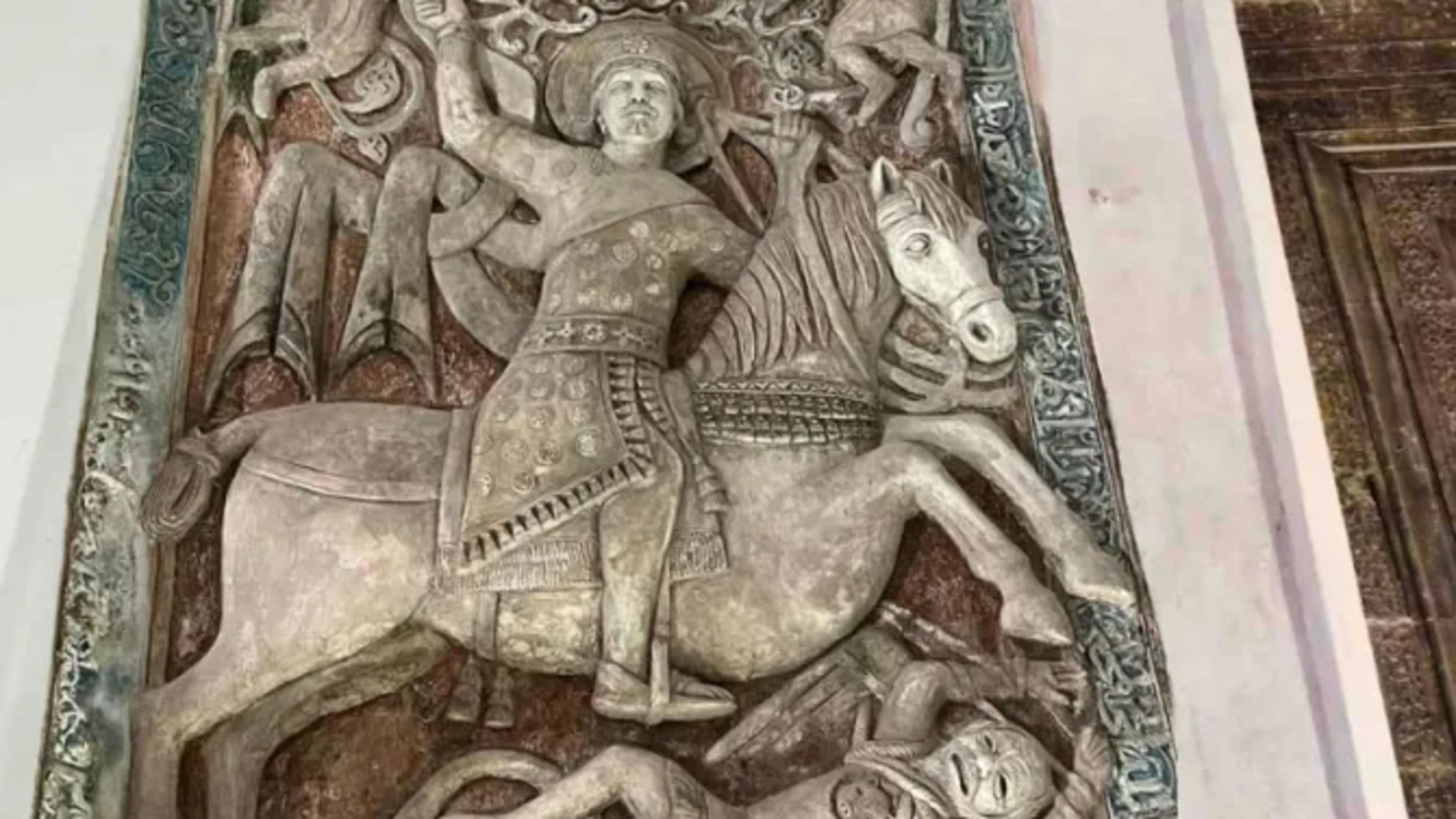
Restoration work is progressing rapidly on two 13th-century historic mural reliefs at the ancient Mar Behnam and Sarah Monastery in Iraq. The effort is being led by the monastery’s administration in collaboration with the French organization Mesopotamia after the artworks suffered extensive destruction at the hands of ISIS.
The monastery was featured in an EWTN News special on Iraq marking 10 years since the rise of ISIS and examining Christianity in Iraq a decade after the extremist group’s occupation. The report highlighted both the destruction inflicted on Christian heritage and the steady efforts toward restoration, with Mar Behnam Monastery standing as a visible sign of endurance and renewal.
The murals, depicting the “Martyrdom of Mar Behnam” and “Saint Sarah,” face one another inside the monastery church and are considered unique in both scale and artistic detail.
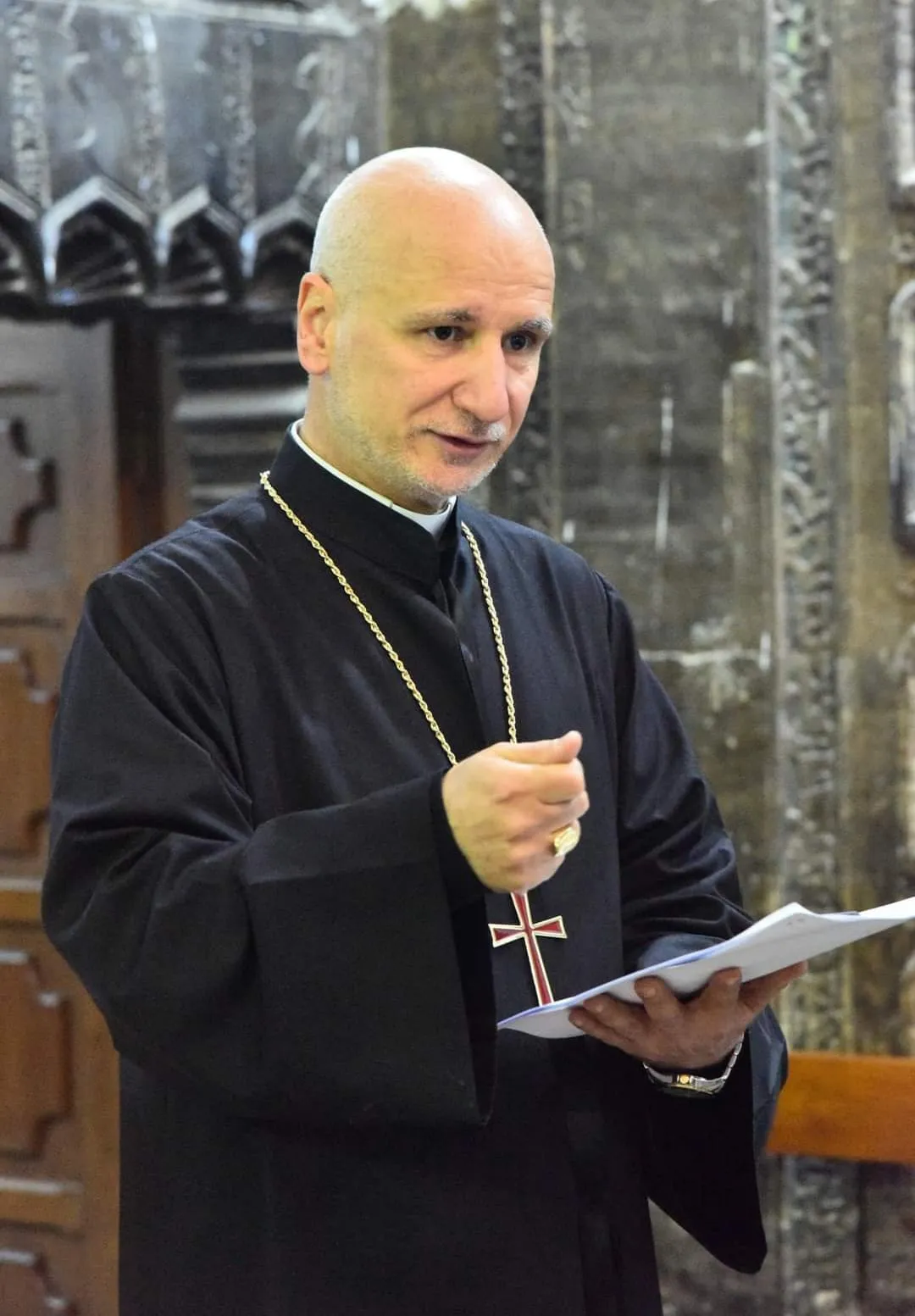
No other monastery today contains comparable works in terms of size, age, and creative intricacy. They have long been objects of popular devotion in addition to their historical value, as Chorbishop Mazen Mattoka, the monastery’s superior, explained to ACI MENA, the Arabic-language sister service of EWTN News.
ISIS militants devastated the two plaster murals in an attempt to erase Christian heritage and obliterate artworks that had withstood centuries of challenges. Despite the severity of the damage and the high cost of restoration, multiple coordinated efforts, which Mattoka describes as guided by divine providence, have worked to lift the dust and darkness of ISIS from the sacred images.
Mattoka believes providence led French journalist Pascal Makosian to visit the monastery and recognize the profound pain caused by the vandalism.
Through his organization, Mesopotamia, Makosian undertook the restoration project under the sponsorship of the Syriac Catholic Archdiocese of Mosul, in consultation with the Nineveh Antiquities Inspectorate and with the work of local artists.
The murals are distinguished by rich symbolic colors: royal blue framing the inscriptions as a symbol of heaven; red signifying martyrdom; and green representing continuity and eternal life. Their uniqueness is further deepened by encoded theological meaning. At the center, Mar Behnam is depicted mounted on his horse; below him appears a scene symbolizing the defeat of evil; and above, two angels carry the martyred saint into the kingdom, representing resurrection.
The mural of St. Sarah measures approximately 2 meters (6.6 feet) in height and nearly 1 meter (3.3 feet) in width, appearing modest beside the larger Mar Behnam mural, which extends nearly 4 meters (13.1 feet) in length and 2 meters (6.6 feet) in width. Both are framed by inscriptions in Arabic and Syriac, according to Mattoka.
Extensive damage
The two plaster murals suffered destruction estimated at nearly 80%, according to sculptor Thabet Michael, head of the restoration team. He explained that ISIS left little more than the outer frame intact, from which the restoration process began.
Michael had participated in the previous restoration of the murals in 2011, gaining experience that proved essential in confronting current challenges — particularly the complete disfigurement of sculptural features and the erasure of facial details.
He praised the French team’s study of the murals and their history, as well as the preparation of a comprehensive photographic archive. By consulting the oldest available images — including photographs taken by foreign travelers in 1904, despite their lack of color and facial detail — restorers were able to approximate the original appearance as closely as possible.
Approaching the original
The restoration was carried out using the same original raw materials — gypsum mixed with lime — with additional elements to enhance cohesion and durability. The murals’ original colors, which had faded over centuries, were restored using comparable pigments. Surviving fragments of colored sections were analyzed to achieve shades closest to the original work, created by Syriac artists of Tikriti origin known for their mastery of sculpture, calligraphy, and ornamental design.
Michael emphasized the necessity of returning to historical sources and studying them carefully in order to reach satisfactory results in restoring any historic artwork. He added that the completed work reflects the Atabeg artistic style prevalent at the time of the murals’ creation, blended with local Iraqi elements and inspired by Assyrian civilization.
This story was first published by ACI MENA, the Arabic-language sister service of EWTN News. It has been translated and adapted by EWTN News.
If you value the news and views Catholic World Report provides, please consider donating to support our efforts. Your contribution will help us continue to make CWR available to all readers worldwide for free, without a subscription. Thank you for your generosity!
Click here for more information on donating to CWR. Click here to sign up for our newsletter.

Leave a Reply