

 By
By Adm. Brian Christine, a practicing Catholic, talked about the state of the pro-life movement and how his faith guides him.
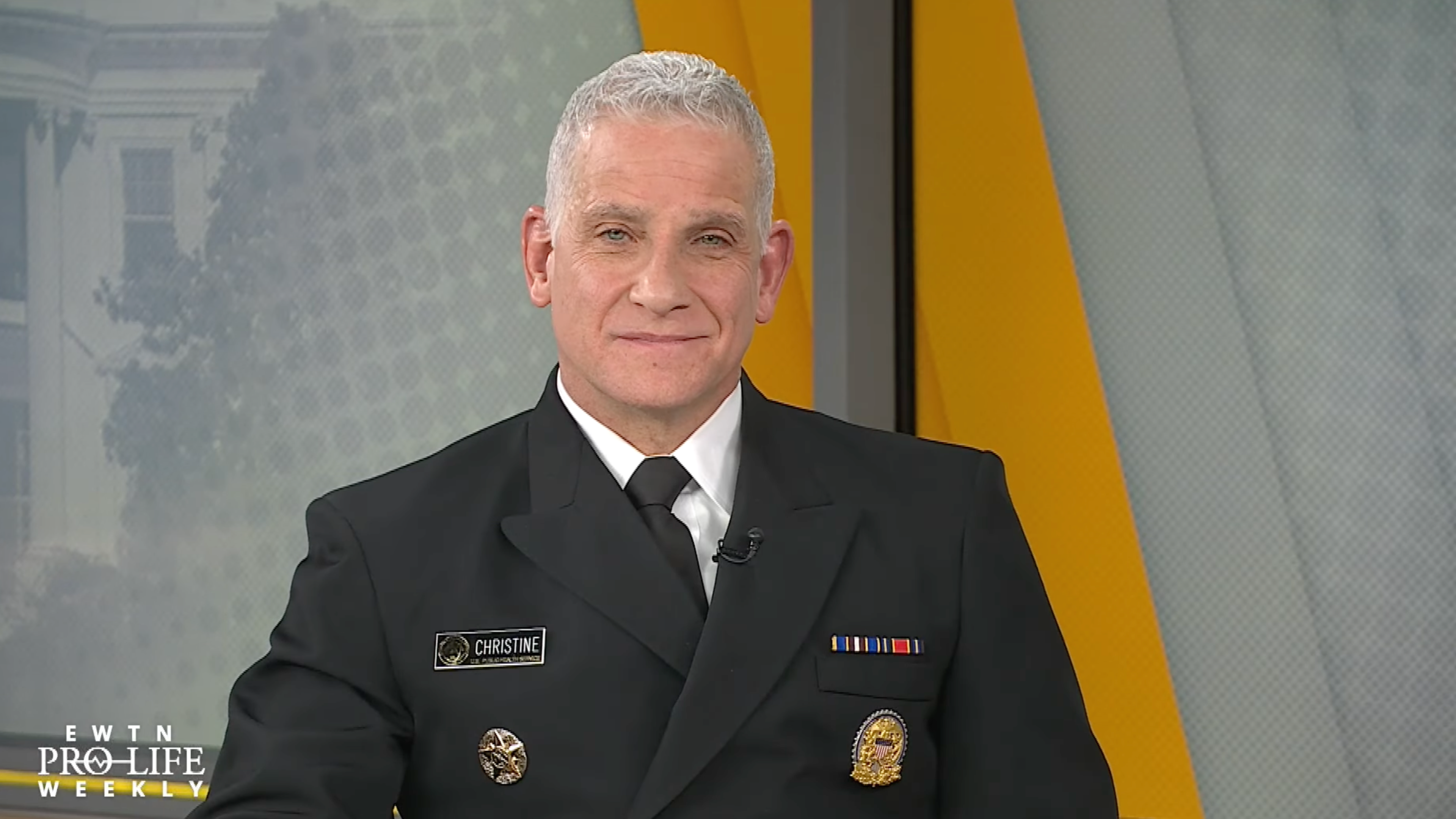
Adm. Brian Christine, assistant secretary for health at the Department of Health and Human Services (HHS) and a practicing Catholic, talked about the state of the pro-life movement as well as his own faith in an interview on “EWTN Pro-Life Weekly” on Wednesday.
Christine, a practicing Catholic, said the HHS values religious freedom.
“We are not going to allow health care practitioners to be disparaged or be discriminated against because of their faith,” he told host Abigail Galvan. “We faithful don’t have to check our faith at the door to practice medicine or science.”
For his part, Christine said his faith and the example of the saints guides him.
“My Catholic faith guides me,” he said. “Every decision that I make — I don’t set my faith aside at the door.”
When asked if he had a particular devotion, Christine said he takes inspiration from many saints.
“I don’t have a patron saint — I have a whole cloud of witnesses,” he said. “I have a whole cloud of saints because I need them. I’m really devoted to St. Peter the Apostle — I’ve made so many mistakes in my life. I’ve fallen so many times. But you get back up and St. Peter could deny the Lord, and yet there he is, the rock of the Church, the first pontiff, the first Holy Father.”
“St. Thomas More, who really stood strong to serve in government and yet ultimately did what was right, and he paid the ultimate price,” Christine said.
Christine said he also looks to a more recent blessed, Blessed Clemens August Graf von Galen, the archbishop of Münster in Germany in the 1930s and 1940s, and how he spoke out against euthanasia in his time.
“He was known as the Lion of Münster because [of] his homilies against the Nazi T4 program, which was the euthanasia of those the Nazis considered undesirable for life or unworthy of life,” Christine said. “He preached such strong homilies against the T4 program that the Nazis ultimately stopped that program.”
Abortion pill
Chemical abortions make up nearly two-thirds of U.S. abortions and are being mailed across state lines, even to states where unborn children are protected throughout pregnancy. Due to easy access to the abortion drug, mifepristone, abortion rates are climbing, making it a key issue in the pro-life movement.
But action against chemical abortions has stalled in the Trump administration, which promised an investigation into the safety concerns for women surrounding the abortion pills.
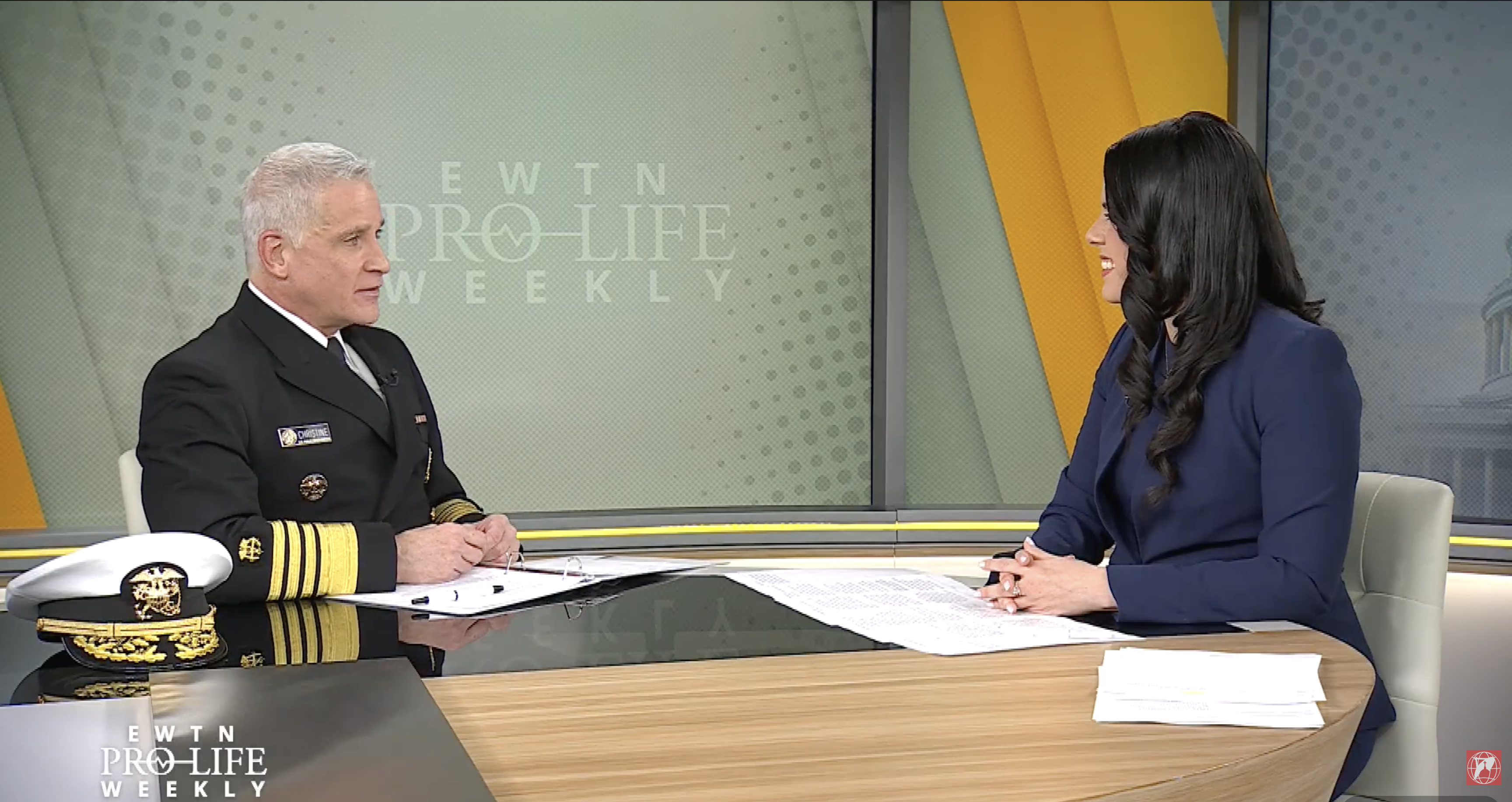
When asked about this, Christine said that “data is being collected” and a review is “ongoing,” saying “the commissioner of the FDA [Food and Drug Administration], Dr. Marty Makary, has certainly committed to doing a review of the safety of mifepristone.”
“That review is ongoing because we want to make sure we have the best data about the potential harm of mifepristone so that women can make truly informed-consent decisions,” Christine continued. “If women are considering using that drug, they need to understand what the implications may be.”
Compassionate mental health care
For the HHS, “compassionate mental health care” for minors suffering from gender dysphoria “is incredibly important to the country,” Christine said.
“It’s incredibly important to those most vulnerable, these minors who suffer from gender dysphoria, because gender dysphoria is a real condition, a mental health condition,” Christine said.
Referring to an HHS study, Christine said that “using castrating chemicals — that is not the way to treat these vulnerable children.”
“If you use the mental health support, the vast majority of these children are going to be very happy in their own skin,” he continued. “We don’t need to be cutting off body parts.”
“We don’t need to be giving them chemicals that are going to cause irreversible harm for the rest of their life,” Christine said. “We have been very strong about this in the Trump administration. We have been led by [HHS] Secretary [Robert] Kennedy, and we’re never going to back away from these things.”
If you value the news and views Catholic World Report provides, please consider donating to support our efforts. Your contribution will help us continue to make CWR available to all readers worldwide for free, without a subscription. Thank you for your generosity!
Click here for more information on donating to CWR. Click here to sign up for our newsletter.

Leave a Reply