

Australia’s Jan Ruff-O’Herne’s most distinguished accolade of all may lie in the future, if she is one day to share the title of “saint” with Mary MacKillop.
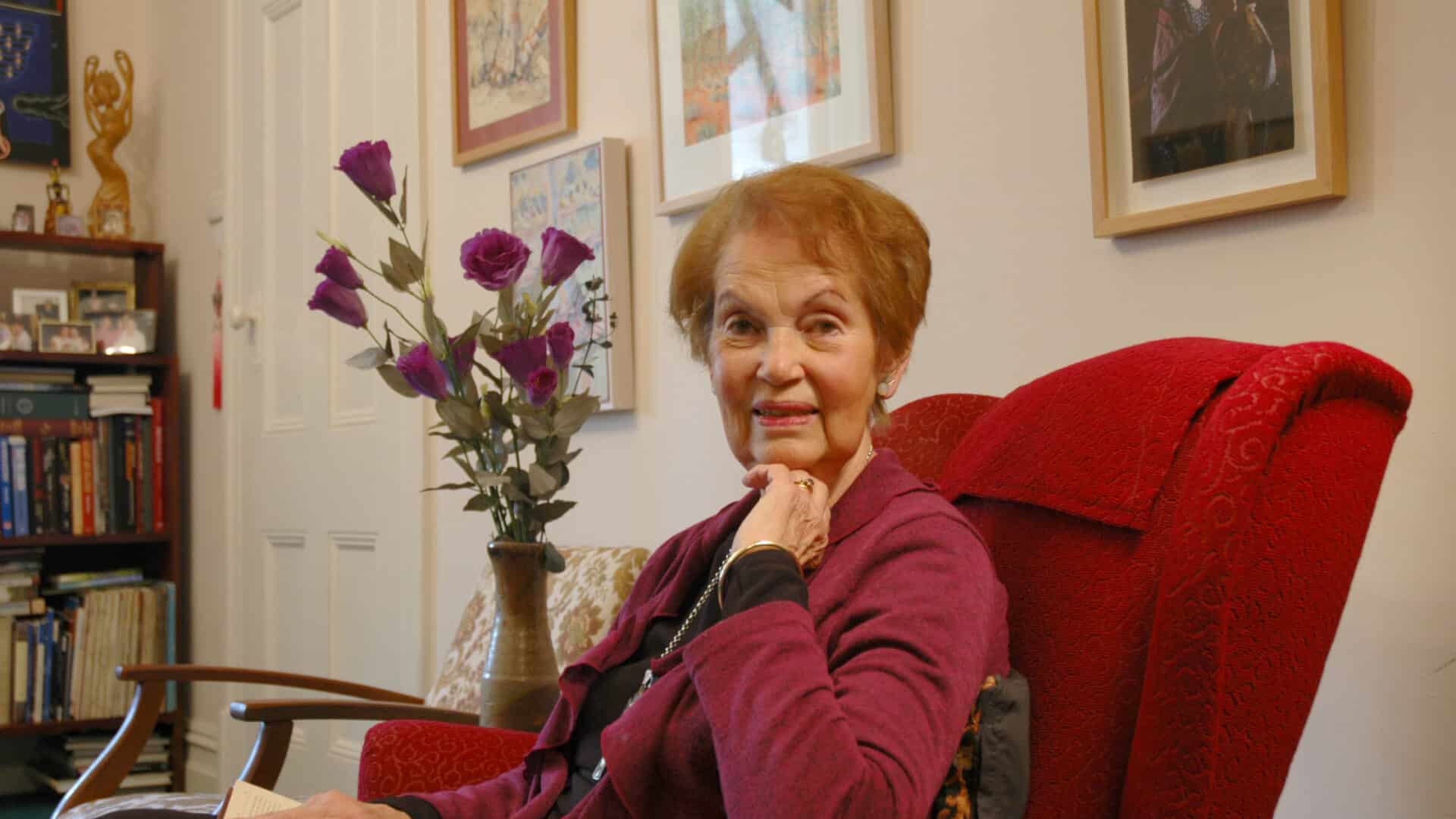
Before she died at the age of 96 in 2019 in an Adelaide nursing home, Jan Ruff-O’Herne had collected a cupboard of distinctions — the Order of Orange-Nassau, from the Netherlands; two Australian Centenary Medals; and an RSL ANZAC Peace Prize. She was an officer of the Order of Australia and a dame commander of the Order of St. Sylvester.
The most distinguished of all may lie in the future, if she is one day to share the title of “saint” with Mary MacKillop.
Father Roderick O’Brien, a retired priest in the Adelaide Archdiocese, is campaigning to make her virtues and her holiness better known.
Foremost among these was a heroic capacity for forgiveness.
And she had a lot to forgive — wounds that stayed with her for the whole of her long life.
“Jan is a model for all kinds of people; people who have suffered rape and other forms of abuse, civilian victims of war, refugees, migrants, teachers, carers, spouses, advocates, artists, women, and Franciscans,” O’Brien said.
Ruff-O’Herne’s painful but edifying story began in the Dutch East Indies, now known as Indonesia. She was born in Java in 1923 and grew up in a tightly knit, happy Catholic family. She went to a Franciscan primary school and was trained as a teacher in a Franciscan teachers’ college.
The idyllic years didn’t last.
The Imperial Japanese Army invaded in March 1942 and her whole family was interned in a prison camp. In February 1944, the 21-year-old was sent, with six other young women, to a brothel for Japanese soldiers, sardonically named “The House of the Seven Seas.”
The Japanese euphemism for them was “comfort women,” but they were brutalized sex slaves. For the next three months, every day, every night, she was raped and beaten. A doctor checked her weekly for venereal disease. He raped her, too. It was hell. Even then, amid her torment, Ruff-O’Herne somehow did not despair.
“Her faith seems to me to have been so well grounded, first in a loving, faith-filled family, and then in her Franciscan formation,” O’Brien explained to The Catholic Weekly.
In 2007, Ruff-O’Herne testified about her experience to a subcommittee of the U.S. House of Representatives in Washington, D.C.: “During the time in the ‘comfort station,’ the Japanese had abused me and humiliated me. I was left with a body that was torn and fragmented everywhere. The Japanese soldiers had ruined my young life. They had stripped me of everything. They had taken away my youth, my self-esteem, my dignity, my freedom, my possessions, and my family.
“But there was one thing that they could never take away from me. It was my religious faith and love for God. This was mine and nobody could take that away from me. It was my deep faith that helped me survive all that the Japanese did to me.”
After the war, Ruff-O’Herne bottled up her torment.
She met Tom Ruff, a British soldier who fought in Burma. They were married in England in 1946 and migrated to Adelaide in 1960.
He was aware of her appalling story but they never talked about it. They just loved each other.
“I wasn’t dirty. I wasn’t soiled. I wasn’t different. Not in Tom’s eyes,” she told an ABC interviewer in 2001. “I was just beautiful in Tom’s eyes and he was beautiful to me.”
But those bitter days had scarred Ruff-O’Herne psychologically, medically, and sexually. She eventually had two daughters, but only after several miscarriages and an operation. For 50 years she was silent.
Coping with the trauma of rape was not the only cross in her life. In 1975 Tom suffered brain damage after being hit by a car.
Instead of putting him into a nursing home, she left primary teaching, which she loved, to care for him until he passed away in 1995.
“I had married Tom for better or worse. I’d had the better, this was the worse,” she wrote.
She got on with life — a loving mum, an enthusiastic member of the parish choir, a secular Franciscan. No one knew what she had been through.
Then in the early 1990s, she saw that Korean “comfort women” were demanding an apology from the Japanese government. It was a light bulb moment for her. She joined them in their campaign and testified at the International Public Hearing on Japanese War Crimes in Tokyo in December 1992.
In 1994 she published a memoir, “Fifty Years of Silence,” about her experiences.
Astonishingly, Ruff-O’Herne was not bitter. In her mind, the road to healing had to pass through forgiveness.
in an updated and revised edition of her book in 2008, she describes an electrifying moment in Kyoto in 2003. She was seated between two elderly gentlemen at a reconciliation dinner who had both been soldiers during World War II. One of them admitted that he had taken advantage of the “comfort stations.” This is what happened next:
“These soldiers were given sex slaves in the same way as they were given a packet of cigarettes. It was quite chilling to be sitting next to this man who had raped innocent young girls. We looked each other in the eye and I told him that I had forgiven him. This may seem strange, but we embraced. I, as a victim, had made the first move, and he was able to respond. It was healing for both of us.”
O’Brien is so sure Jan Ruff-O’Herne should be declared a saint that he is writing articles about her virtues — faith, hope, love, friendship, poverty, and forgiveness.
The most recent appeared in this year’s issue of the Journal of Australian Catholic Historical Society. He told The Catholic Weekly that he prays for her intercession from above.
This story was first published by The Catholic Weekly and has been adapted and reprinted by EWTN News with permission.
If you value the news and views Catholic World Report provides, please consider donating to support our efforts. Your contribution will help us continue to make CWR available to all readers worldwide for free, without a subscription. Thank you for your generosity!
Click here for more information on donating to CWR. Click here to sign up for our newsletter.
Leave a Reply