

Angela Franks, Ph.D., is Associate Professor of Theology at the Catholic University of America and the President of the Academy of Catholic Theology for 2025–26. Her study and writing focus on identity, the body, the Trinity, Christology, and the thought of John Paul II and Hans Urs von Balthasar.
Body and Identity: A History of the Empty Self, the first volume of her two-volume work on body and identity, was recently published by the University of Notre Dame Press. Dr. Franks recently corresponded about the book.
CWR: You begin by noting that “body and identity” are at the heart of contemporary culture and crisis, and that your book aims to “provide the deeper history and context.” What is your approach, and what is the arc, if you will, that it follows?
Angela Franks: The word “identity” is batted about quite a bit, but few have tried to define it. In addition, it has become a bit of a scholarly truism that identity is a modern notion, that pre-modern people did not have an understanding of identity.
In fact, in Body and Identity, I show that, while the word “identity” is used the way we use it now only recently, the different meanings signaled by the word have been addressed for centuries, going back to the ancient Greeks. I tease out three meanings of the term: identity through time, the true self, and our awareness of ourselves.
The second one, who we really are, is the key, but modern philosophy has become agnostic as to its existence, despite all our “authenticity” language. What “authenticity” usually means is the imperative to create your true self out of your changing emotions about yourself, which is incoherent. As identity has become more precarious, the body has been pressed into service to fill in the hole left by identity.
I trace how this has happened, from antiquity and the Middle Ages through modern secularism to today. I argue that the original disruptor of identity was none other than Christianity, which shifted identity from structures like family and city to God’s unique call to each individual. The structures remain important for identity, but they are no longer primary.
This liquifying tendency of Christianity is secularized in early modernity and becomes a pursuit of freedom from structures and for self-creation. Simultaneously, secularism also removes the identity-content provided by Christianity and leaves us with an empty self.
CWR: Why are the terms “liquid bodies” and “empty selves” so essential to this work? What do they mean in your study?
Franks: As I was following our gender crises, it became clear to me that problems that are interpreted as body problems are really identity problems. The body is a distraction from and a scapegoat for deeper questions about who I am.
Deeper study of the history of identity convinced me that the modern self is not robust, self-confident, and all the other agentic qualities that many people believe characterize modern individualism. Rather, the modern self is a narcissistic self. Christopher Lasch’s work, as well as contemporary research on narcissism, demonstrates that the narcissist has a brittle and empty self, which requires all the psychological shoring up that we associate with narcissism—bluster, self-absorption, damaged relational abilities, and so forth.
These actions built a defensive wall around the inner empty core. And because the problem of narcissistic identity is so intractable, we turn to the body to create the missing self. If we can’t be good, we can at least look good. But in order to utilize the body as a malleable tool in our self-construction, it must be liquid, that is, changeable, flexible, and unfixed.
I say “we,” by the way, because this isn’t just a problem for those people over there. Pathological narcissism is real but relatively rare; what I am describing is the fact that, as Lasch argues, our modern Western culture encourages narcissistic strategies in everyday life. We are all on the narcissism spectrum.
CWR: You write “primarily as a philosophically trained theologian,” and this work “unabashedly engages in intellectual history…” Can you give examples or reflect on how the first relates to the second?
Franks: Many books already exist that provide a history of the “self” or “identity.” Yet, because they are mostly written by philosophers, they show almost no sense of the centrality of Christianity in developing the metaphysics of the person.
This crucial work was done in the fourth through eighth centuries after Christ, precisely to find the language that was adequate to the mystery of the incarnate Son of God. Without those theologians, we would barely use the word “person,” much less have a robust sense of what the term might mean.
So part of my work here was to recover the impact of Christianity, both pro and con, on our identity situation. Nevertheless, about eighty percent of the authors I treat are philosophers, so I was grateful for my training in philosophy at Catholic University. I think I spent all of my time as a philosophy grad student trying to get away with writing theology papers, and this book ended up being almost entirely philosophy!
CWR: The contemporary culture, as you explore in depth, is “preoccupied with the body” and also “emphasizes appearance over reality.” This suggests that there is a deep incoherence and conflict at work in the dominant culture. What has shaped and informed these two points of focus? And what are the challenges involved in both?
Franks: I call this feature of our culture “doxic,” its obsession with appearance. Because of the philosophical changes that I trace, appearance and reality are bifurcated; indeed, we often believe there is no reality at all, only appearance. The early thought of Judith Butler on sexual differentiation is transparent on this point: There is no male or female reality, just the acting out or else the parody of socially sanctioned gender scripts.
This way of thinking makes our body all surface, no depth. John Paul II states that the body expresses the person, which gives the body a personal depth. Butler argues that the body expresses nothing. For her, we are created from the outside in, while for John Paul II, our bodies—the outside—express the inside—our personal core.
If you follow him, then your task is to express yourself truthfully with your body. If you follow Butler, your body is a project that creates yourself. This makes the body of much more identity-significance, but also the stakes are higher for the body if you fail in the work of self-creation.
Hence, we tend both to idolize and demonize our bodies.
CWR: In chapter six, you ponder the “empty selves in literature.” Who are some of the authors considered, and what do they suggest about the modern empty self?
Franks: This chapter was one I felt passionately about, that it needed to be in the book, and I’m grateful to the press that I didn’t get any pushback on that score. In fact, people generally say it is their favorite chapter.
I wanted to show that the changes in our ideas occur alongside changes in our imagination, in a virtuous—or vicious!—circle. And literature is the most straightforward source for showing those changes in imagination.
I treat Jane Austen, whose entire body of work is preoccupied with the question of outward appearance not aligning with interior reality. Her novels, in particular Mansfield Park, show the quintessentially modern man who deflects identity-formation from interior growth to exterior show. Her bad guys are not virtuous, but they look virtuous.
I also examine vampire and zombie literature, on the theory that a book on liquid bodies and empty selves must address vampires and zombies. I don’t even like those books and films very much, but I made it easier for myself by focusing on T. S. Eliot, whose early poems are filled with zombies.
And my favorite factoid in the book is that Pope Benedict XIV had a 1757 document with a heading entitled De vanitate Vampyrorum (“On the Vanity of Vampires”)!
Lastly, I present C. S. Lewis’s novel Till We Have Faces, which I think is a neglected masterpiece that precisely addresses the empty self, using the metaphor of a veiled face.
CWR: While your book provides a narrative of decline, it emphasizes that you are considering the question of what people are really seeking. How do these complicated problems reflect the inner desire we have for God and eschatological completion? Do many of the serious ills we see today—transgenderism, for example—flow from an almost desperate grasping for beatitude and eternity in this temporal realm?
Franks: I didn’t want the book to be a simple narrative of decline, and in a future book, I will show how modern impulses toward liquidity and emptiness have good instincts buried in them, if we can tease out the gold from all the dross.
All men desire the good, but often in very maladjusted and false ways. Pointing out error is essential, but people are only really won over when they are given something positive to love. We need to say no to what is bad, but only in the context of a larger yes to what is good. So, yes, there are real problems with how modernity rejected classical metaphysics and reduced the self to liquid desire and self-creation.
Much of the story of modern thinking is, however, its running to wild extremes with Christian truths. The dignity of all human beings or the importance of man’s rational freedom—these are conceptual gifts Christianity gave to the world. The same is true of identity and of the true core of the self, which is more than the family into which I was born and all the other kinds of group identity, as important as those are.
A modern Western person really desires to have her individuality recognized, and that is a Christian inheritance. The ways our culture legitimates pursuing that individuality are generally deeply flawed, but the instinct is not. The gift we Christians can give to people in the throes of identity crises is the affirmation of each person’s deep worth and individuality, which is God-bestowed.
This is good news, because constant self-construction is exhausting and inherently contradictory. We don’t need to manufacture our identity; we can receive it from God, who loves each one of us as a unique person.
CWR: While your book is published by an academic press, I think that a wide range of readers will benefit from it. What do you hope readers will learn from it? And what will your second volume focus on?
Franks: I hope that any educated layperson would benefit from thinking more deeply about the history and the analyses of current culture in the book. I think it’s fine to skip sections that get into some detail about thinkers that a reader may not have encountered before. The overall arc of the history should still be intelligible.
I hope that people put the book down with a deeper appreciation for the complex history of how we got to where we are today. It wasn’t just modern universities, or HR departments, or changes in twentieth-century anti-discrimination law, or all the other things people tag as “responsible” for our current identity crises. Those all might be important factors, but the seeds of our situation were sown much longer ago.
In the book, for example, I spend a lot of time with John Locke and his writing in the 1600s. In addition, thinking about the central role of Christianity in all this should help us to pursue better solutions. It’s understandable, in our liquid age, that Christians emphasize the solidity of Christianity’s institutions, liturgies, teaching, and so forth. Traditional Christian denominations like Catholicism can be a real refuge for people fleeing the worst excesses of liquid modernity.
But Christianity has never been primarily solid, and if we double down on its solidity, we end up misunderstanding other theological truths, such as the development of doctrine and so forth. And, on the identity front, we won’t be able to affirm what is genuine in people’s instinct for liquidity.
In a future book, I will present solutions to some of the problems I have raised in this book, including the question of what is good in our instinct for liquidity. Here I love a passage from Jean Pierre de Caussade’s Abandonment to Divine Providence, in which he describes a soul that trusts in God as “liquid as water,” having “no more consistence and rigidity than molten metal.” That flexibility to follow God’s lead, encapsulated in the evangelical counsel of poverty, is the true value of liquidity.
(Editor’s note: This interview was posted originally on the “What We Need Now” site and is posted here with kind permission.)
If you value the news and views Catholic World Report provides, please consider donating to support our efforts. Your contribution will help us continue to make CWR available to all readers worldwide for free, without a subscription. Thank you for your generosity!
Click here for more information on donating to CWR. Click here to sign up for our newsletter.

“Traditional Christian denominations like Catholicism can be a real refuge…”
Catholicism is not a denomination. It is the One True Church.
The contemporary culture, as you explore in depth, is ‘preoccupied with the body’ and also ’emphasizes appearance over reality’ (Angela Franks).
A chief of medicine intimated that appearance is everything, when enquiring about choices for management positions. Franks offers the most pointed, expository explanation of its cultural etymology.
Liquidity of the inner person also would speak to the universal attempt to verify what you wish to convey by appearance. Whereas we may presume a person who knows their true identity realizes that in the humanness of Christ. Prior to Christ we identify an authentic realization of humanness in Marcus Tullius Cicero who measured his actions by the principles of natural law.
Does an integrated person care about appearance? Certainly to a degree lest we stand out as eccentric.
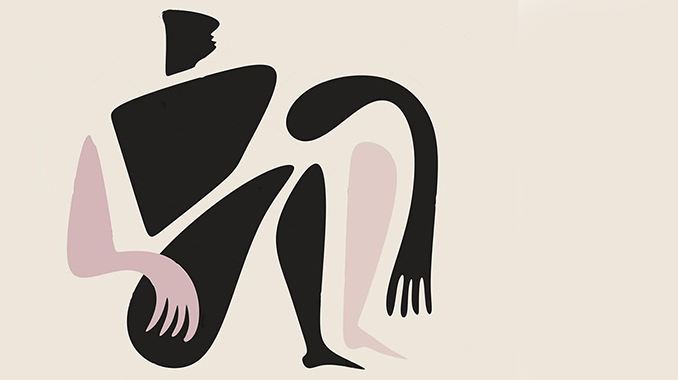
I know the old saying, “never judge a book by its cover” but what a hideous cover this book has.
Perhaps. As a designer myself (who has read much of the book), it captures well the seriously wrong view of the human person critiqued within.
A curious choice of wording, and conceptually false: ” I argue that the original disruptor of identity was none other than Christianity, which shifted identity from structures like family and city to God’s unique call to each individual.”
What “shift”? Christ’s call is fully personal because communitarian, and fully communitarian because personal, and even more–as the entire “communion of saints” of past, present and future within the Beatific Vision. In the meantime: the Church is always sacramentally Eucharistic rather than any identarian “denomination”.
All this rather than, specifically, the definition of “family” as being only at the pre-Christian level of nuclear or extended blood-relationship, tribal or clan, or even as Aristotle’s Classical and self-sufficient “city.”
I get the contrast between “identity” and “fluidity”, but surely the quoted Jean Pierre de Caussade—on being “as liquid as water” toward God—also had something in mind other than, say, invertebrate…
“If we have abandoned ourselves, there is only one rule for us: the duty of the present moment. [and then!] The soul is as light as a feather, [yes] as fluid as water, simple as a child and as lively as a ball in responding to all the impulses of grace [….] let us walk blindly along the clear straight path [!] of duty” (“Abandonment,” Chapter IV, n. 6).