The Dispatch

“I Am Not a Racist!”

January 19, 2026 Father Jerry J. Pokorsky 41

In our highly politicized culture, sin is rarely discussed as a violation of God’s law. Even more rarely do we acknowledge sinful inclinations as the interior sources of sinful acts. Instead, we often reduce moral […]

No Picture
News Briefs

Catholic women discuss beauty, difficulty, redemptive nature of Church’s teachings on sexuality

January 18, 2026 EWTN News 0
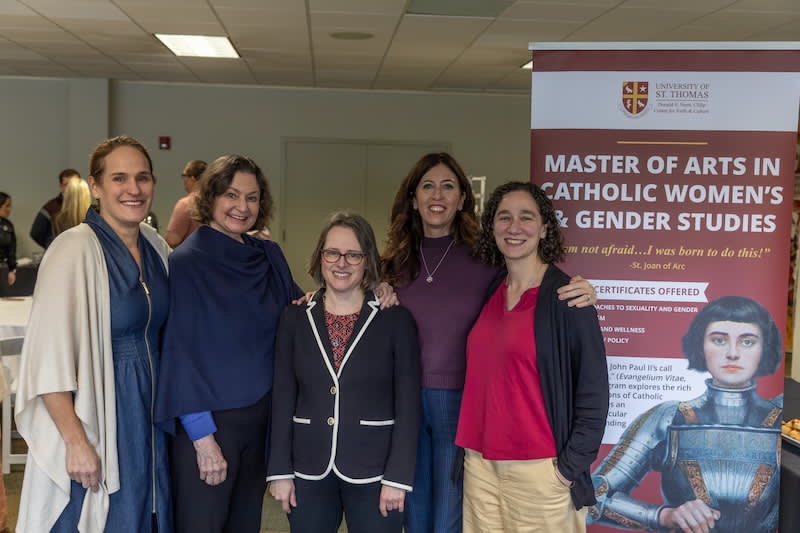
Keynote speakers at “The Beauty of Truth: Navigating Society Today as a Catholic Woman” conference, held Jan. 9-10, 2026, in Houston (left to right): Erika Bachiochi, Mary Eberstadt, Angela Franks, Pia de Solenni, and Leah Sargeant. | Credit: Photo courtesy of the University of St. Thomas

Jan 18, 2026 / 10:26 am (CNA).

This past week, nearly a quarter of U.S. states sued the federal government for defining biological sex as binary, the U.S. Supreme Court heard arguments for and against legally allowing males to compete against females in sports, and a Vatican official called surrogacy a “new form of colonialism” that commodifies women and their children.

These are just the latest legal and cultural effects of a “mass cultural confusion” surrounding the meaning and purpose of the human body, and particularly women’s bodies, according to Leah Jacobson, program coordinator of the Catholic Women’s and Gender Studies Program at the University of St. Thomas in Houston.

On Jan. 9–10, the program sponsored a symposium titled “The Beauty of Truth: Navigating Society Today as a Catholic Woman,” which brought together a group of Catholic women who have used their gifts of intellect and faith to serve as what Jacobson calls an “antidote” to the “chaos and confusion” of the cultural moment.

The speakers presented on a wide range of topics concerned with the beauty, truth, and necessity of the Church’s teachings on human sexuality in many realms.

‘Every act is an act of human subtraction’

In one of the first talks, writer Mary Eberstadt argued that the question “Who am I?” became harder to answer due to the widespread use of the birth control pill, which has led to huge increases in abortion, divorce, fatherlessness, single parenthood, and childlessness. These effects led to a reduction in the number of people in an individual’s life, which, she argued, resulted in widespread confusion over gender identity and the meaning and purpose of the body.

While she acknowledged that not everyone has been affected equally, “members of our species share a collective environment.”

“Just as toxic waste affects everyone,” she said, the reduction in the number of human connections “amounts to a massive disturbance to the human ecosystem,” leading to a crisis of human identity.

“The number of people we can call our own” became smaller, she said. “Each of these acts is an act of human subtraction,” Eberstadt said. “I’m not trying to make a point about morality, but arithmetic.”

Eberstadt also attributed the decline in religiosity to this decline in the number of human connections modern people experience.

“The sexual revolution subtracted the number of role models,” she said. “Many children have no siblings, no cousins, no aunts or uncles, no father, yet that is how humans conduct social learning.”

“Without children, adults are less likely to go to church,” she said. “Without birth, we lose knowledge of the transcendent. Without an earthly father, it is hard to grasp the paradigm of an earthly father.”

‘A love deficit’

“Living without God is not liberating people,” she continued. “It’s tearing some individuals apart, making people miserable and lonely.”

When the sexual revolution made sex “recreational and not procreative, what it produced above all is a love deficit,” Eberstadt said.

At the same time, secularization produced “troubled, disconnected souls drifting through society without gravity, shattering the ability to answer ‘Who am I?’”

“The Church is the answer to the love deficit because Church teachings about who we are and what we’re here for are true,” she said.

She concluded with a final note on hope, saying “it is easy to feel embattled, but we must never lose sight of the faces of the sexual revolution’s victims,” she said, “who are sending up primal screams for a world more ordered than many of today’s people now know; more ordered to mercy, to community and redemption.”

The Church’s teachings were ’truly beautiful’ but ‘very, very hard to live’

Erika Bachiochi, a legal scholar and fellow at the Ethics and Public Policy Center who teaches a class for the graduate program, shared her experience as a mother of seven who tried to live according to the Church’s “difficult” teachings.

As her children began to arrive at “a breakneck pace” and each pregnancy was “a bit of a crucible,” Bachiochi said being a mother was “very hard” for her, partly due to wounds from her youth (among other troubles, her own mother had been married and divorced three times), and partly because of a lack of community.

Echoing Eberstadt’s “arithmetic” problem, Bachiochi described having very few examples of Catholic family life and a very small support system.

Bachiochi said she believes God heals us from our wounds through our “particular vocations,” however.

Of motherhood, she said: “I think God really healed me through being faithful to teachings that I found quite hard, but truly beautiful. I was intellectually convinced by them and found them spiritually beautiful, but found them to be very, very hard to live.”

“Motherhood has served to heal me profoundly,” she said, encouraging young mothers to have faith that though it might be difficult now, there is an “amazing future” awaiting them.

“It’s really an incredible gift that Church has given me … the gift of obedience,” she said.

She also said by God’s grace, she was given an “excellent husband” and has found that “just as the Church promises, that leaning into motherhood, into the little things, the daily needs, the constant requests for my attention, has truly been a school of virtue.”

The Catholic Women’s and Gender Studies Program is a new part of the Nesti Center for Faith and Culture at the University of St. Thomas, a recognized Catholic cultural center of the Vatican’s Dicastery for Culture and Education.

[…]

No Picture
News Briefs

Pope Leo XIV urges prayers for peace in Democratic Republic of the Congo

January 18, 2026 EWTN News 1
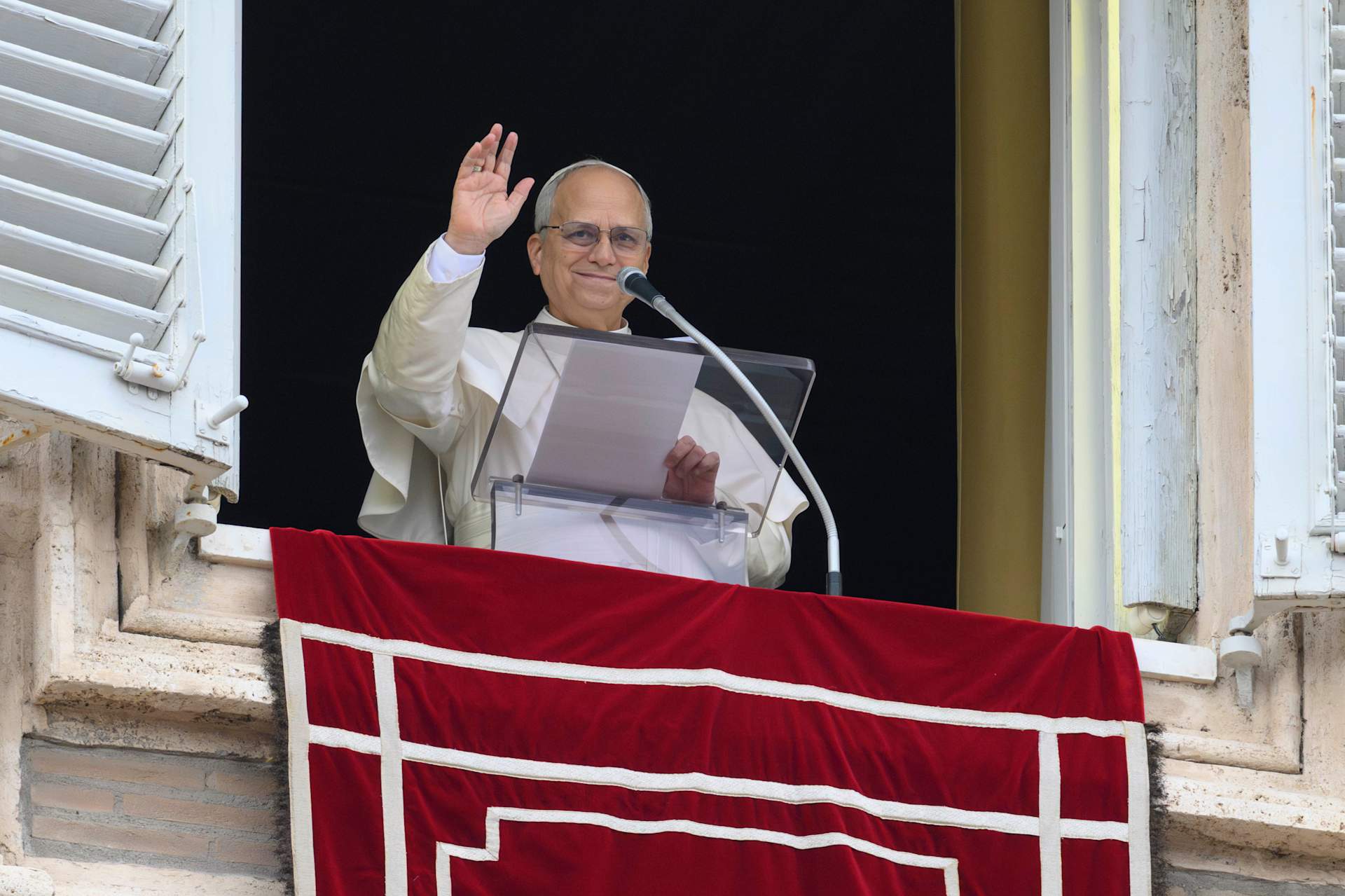
Pope Leo XIV waves to crowds in St. Peter’s Square after praying the Angelus on Jan. 18, 2026. | Credit: Vatican Media

Jan 18, 2026 / 09:44 am (CNA).

Pope Leo XIV on Sunday urged prayers for peace in the Democratic Republic of the Congo as violence in the country’s east continues to drive families from their homes and across borders.

“Many have been forced to flee their country – especially to Burundi – due to violence, and they are facing a serious humanitarian crisis,” the pope said after praying the Angelus in St. Peter’s Square on Jan. 18. “Let us pray that dialogue for reconciliation and peace may always prevail among the parties in conflict.”

Leo also assured those affected by severe flooding in southern Africa of his prayers.

The pope also marked the start of the Week of Prayer for Christian Unity.

“During these days, I invite all Catholic communities to deepen their prayers for the full, visible unity of all Christians,” Leo said, recalling that “the origins of this initiative date back two centuries,” and noting that Pope Leo XIII “greatly encouraged it.”

The theme for this year’s observance is drawn from St. Paul’s Letter to the Ephesians: “There is one body and one Spirit, just as you were called to the one hope of your calling” (4:4). The prayers and reflections, the pope said, were prepared by “an ecumenical group coordinated by the Armenian Apostolic Church’s Department of Interchurch Relations.”

In his reflection before praying the Angelus, Leo connected the call to peace and unity with a warning against what he described as a culture of appearances, urging the faithful to follow the example of St. John the Baptist, who stepped aside once he had pointed others to Christ.

The day’s Gospel reading (Jn 1:29-34), the pope noted, shows John identifying Jesus as the Messiah: “Behold, the Lamb of God, who takes away the sin of the world!” (v. 29). John’s humility remains a needed witness, Leo said, because “approval, consensus and visibility are often given excessive importance, to the point of shaping people’s ideas, behaviors and even their inner lives.”

“This causes suffering and division, and gives rise to lifestyles and relationships that are fragile, disappointing and imprisoning,” the pope said.

Instead of chasing what he called “substitutes for happiness,” Leo said Christians should remember that “our joy and greatness are not founded on passing illusions of success or fame, but on knowing ourselves to be loved and wanted by our heavenly Father.”

Leo emphasized that God’s love is not about spectacle but about closeness and compassion: “The love of which Jesus speaks is the love of a God who even today comes among us, not to dazzle us with spectacular displays, but to share in our struggles and to take our burdens upon himself.”

He concluded by urging believers to resist distractions and cultivate prayer and simplicity: “Let us not waste our time and energies chasing after appearances,” he said, encouraging Catholics to make time each day, when possible, for silence and prayer — “to withdraw into the desert,” in order to meet the Lord.

This story was first published in two  parts by ACI Prensa, CNA’s Spanish-language news partner. It has been translated and adapted by CNA.

[…]

No Picture
News Briefs

Over 40 parishioners in South Africa archdiocese face excommunication after disruptive protests

January 18, 2026 EWTN News 0
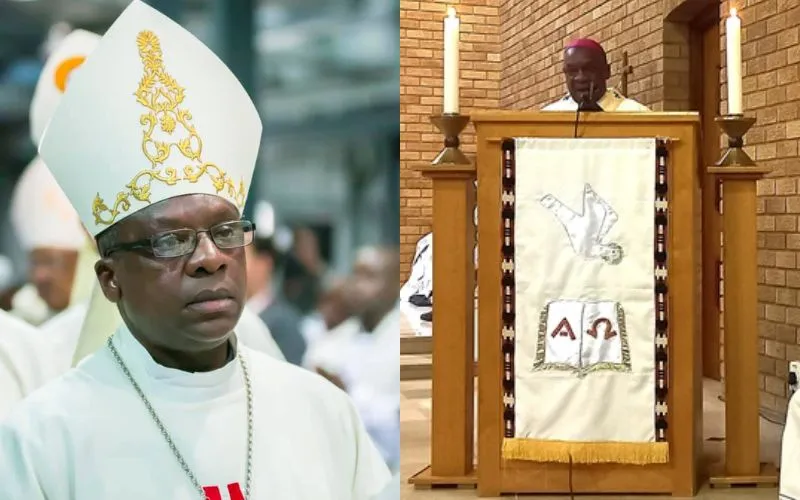
Archbishop Dabula Mpako of the Archdiocese of Pretoria. | Credit: Photos courtesy of Southern African Catholic Bishops’ Conference (SACBC)

Jan 18, 2026 / 07:00 am (CNA).

Archbishop Dabula Mpako of South Africa’s Catholic Archdiocese of Pretoria has issued a canonical decree requiring a group of parishioners who reportedly incited a series of protests at the Cathedral of the Sacred Heart in the archdiocese to undergo a “rehabilitative process” or be penalized — including the possibility of excommunication.

In the decree circulated on Jan. 11, Mpako described the events of December 2025 in which some parishioners of the cathedral are said to have organized demonstrations, inciting other parishioners to participate in them. He said that they disrupted Mass to protest a pastoral decision that was made by the bishop concerning “a pastor of the archdiocese.”

The actions of Dec. 7 and Dec. 28, Mpako said, “seriously harmed ecclesial communion and the good name of the Church” as well as the freedom of the archbishop in the legitimate exercise of his pastoral office.

He said that penalties will include possible excommunication that “is reserved for those who, after due warning, persist in the schismatic behavior of inciting revolt against the lawful authority of the bishop.”

Parishioner protests

On Dec. 7, a group of approximately 42 parishioners are said to have unlawfully assembled in front of the cathedral and conducted a public protest “denouncing the diocesan bishop for a legitimate pastoral decision concerning the pastor.”

The group is said to have made false and defamatory public assertions regarding the reasons for the bishop’s decision and to have incited opposition, resistance, and hostility against the bishop.

Mpako said the protesters caused public scandal and disturbance to the ecclesial order. He claimed that prior to the Dec. 7 event, the same group “instrumentalized” the celebration of Mass by engaging in coordinated protest actions during the sacred liturgy, thereby gravely violating the sanctity of divine worship and the reverence owed to the Eucharistic celebration.

Afterward, the individuals are said to have disseminated photographs and videos of the demonstration through social media platforms, further propagating false accusations and aggravating scandal among the faithful.

The same group reportedly wrote and sent letters of appeal to certain Church authorities based on what the bishop claims are false and defamatory public assertions regarding his decision.

The parishioners are said to have encouraged others to attach their digital signatures to the allegations.

On Dec. 28, a smaller number of the same individuals reportedly staged another protest at the conclusion of Pretoria’s jubilee year celebration.

Mpako said these actions seriously harmed the reverence owed to sacred worship and that in their conduct, the parishioners violated 11 canon laws, including failure to preserve communion with the Church.

He said the parishioners also violated the law that speaks about “illegitimate and harmful expression of opinions contrary to reverence toward pastors and the common good of the Church.”

Among the canonical penalties that may be given, the archbishop highlighted interdict, meaning that protesters may be barred from receiving the sacraments and sacramentals, and from participating in liturgical actions as ministers.

The other penalty falls under Penal Remedies and Penances, and includes public reprimand, withdrawal of permission to hold ecclesiastical office, and the imposition of pious or charitable works.

Other penalties include suspension from ecclesiastical offices, excommunication, as well as “just penalties for sacrilege” given the sacrilegious abuse of the Mass the parishioners reportedly may have committed.

The archbishop, however, proposed a corrective and rehabilitative process, saying that he desires “the conversion, reconciliation, and pastoral restoration of the offenders.”

The process he suggested includes a public retraction and apology requiring those responsible to retract the false accusations made publicly; remove scandalous content from social media; and issue an apology “in a manner determined by the diocesan authority.”

He also advised that for a determined time, participants in the protests may be barred from liturgical ministries, leadership roles, and public ecclesial functions. The parishioners are also to refrain from organizing or participating in public demonstrations related to ecclesiastical governance.

Mpako further directed mandatory participation in sessions on ecclesiology, the theology of episcopal authority, the nature of obedience and communion, as well as the sacredness of the liturgy.

As for “spiritual rehabilitation,” the archbishop said the protesters must engage in mandatory spiritual direction, acts of penance, and prayers for ecclesial unity, as assigned. “If any step is refused or neglected, the ordinary will proceed to impose canonical penalties as warranted.”

Further, he added: “This decree takes effect immediately upon notification and is to be communicated to the individuals concerned in the most expedient manner.”

This story was first published by ACI Africa, the sister service of EWTN News in Africa.

[…]