


Washington, D.C. Newsroom, Dec 11, 2025 / 13:00 pm (CNA).
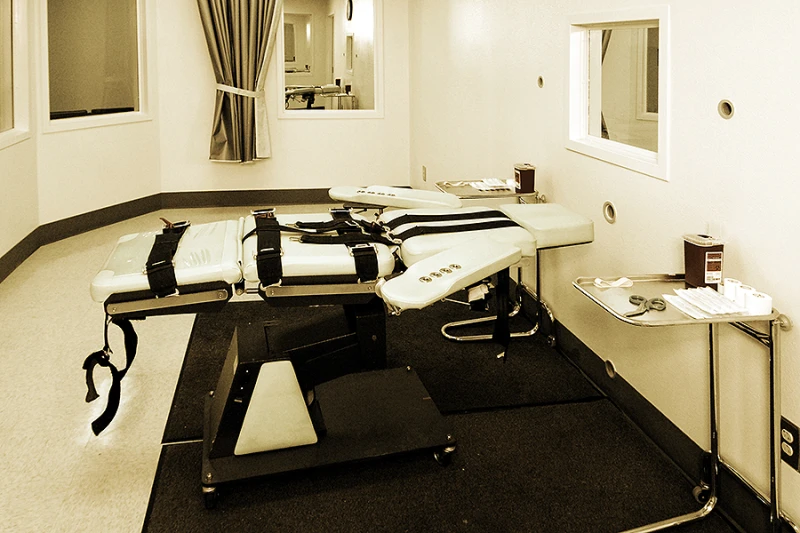
A majority of Catholic voters in the United States support the death penalty for convicted murderers in spite of the Catechism of the Catholic Church calling capital punishment “inadmissible,” according to a poll published by EWTN News and RealClear Opinion Research.
The survey of 1,000 Catholic voters between Nov. 9 and Nov. 11 found that 55% support the death penalty “for a person convicted of murder.” Only 20% said they oppose the death penalty in such situations, and another 25% are unsure.
Based on the poll, Catholics who attend Mass regularly are much more likely to say they oppose the death penalty than Catholics whose attendance is less frequent.
Among Catholics who attend Mass at least once per week, 52% say they support the death penalty for convicted murderers, 26% say they oppose it, and 22% are unsure. For Catholics who attend less than once per week, 57% say they support the death penalty, just 16% oppose it, and 27% are unsure.
Although many Catholics still support the death penalty, a 2024 analysis of The Association of Religion Data Archives’ General Social Survey shows a decline in Catholic support for the death penalty in recent decades, especially among those who attend weekly Mass.
The Catechism, per the 2018 revision, states: “The Church teaches, in the light of the Gospel, that ‘the death penalty is inadmissible because it is an attack on the inviolability and dignity of the person,’ and she works with determination for its abolition worldwide.”
Prior to the Francis pontificate revising the language, the text stated that the Church “does not exclude recourse to the death penalty, if this is the only possible way of effectively defending human lives against the unjust aggressor.”
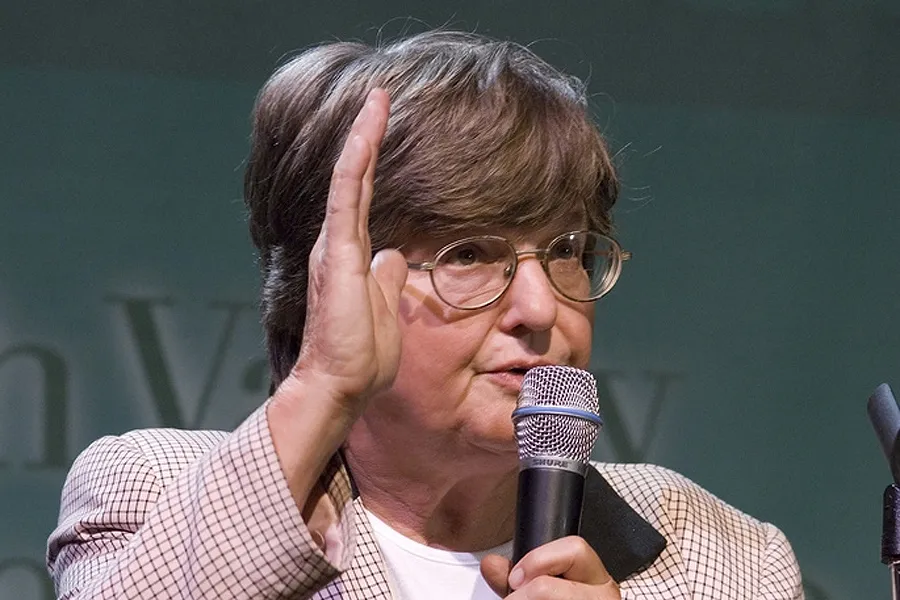
Sister Helen Prejean, CSJ, who serves on the advisory board for the U.S. Campaign to End the Death Penalty, told CNA that many Catholics remain “pro-life for innocent life,” such as the lives taken through abortion, but when a person is guilty of a serious crime, “people readily say ‘yeah, they should die.’”
The revision to the Catechism, she said, recognizes that taking life “is against human dignity” and “the Gospel of Jesus calls us to give that dignity — not just to innocent people — but even to the guilty.”
Prejean said when people are asked whether they support the death penalty for serious crimes, “most of the time, people say yes.” Yet, she said when polls give an alternative for life in prison, the support drops significantly. She noted that juries have been less likely to impose the death penalty recently because “most people really want to have a chance to give people life.”
With one in four Catholics saying that they are “unsure” whether they would support the death penalty in certain situations, Prejean said “that’s where the seed can grow.”
“There’s a part of their soul that hasn’t said ‘yes’ to this and they’re thinking about it,” she said.
Prejean, whose vocation was depicted in the 1995 movie “Dead Man Walking,” said she became active in opposition to the death penalty after communicating with a person who was on death row and attending his execution. Prior to that experience, she said she often did not think about the subject, but “we grow in moral issues by experiences of the faithful.”
“Once you have a personal connection with somebody, they’re not a category anymore,” she said. “They’re a person.”
Krisanne Vaillancourt Murphy, the executive director of the Catholic Mobilizing Network, told CNA that “defending the sacred dignity of life, while core to our beliefs, is not always easy.”
“But even when it’s hard to understand, our Church gives us good guidance and has definitively said that capital punishment has no place in our society,” said Murphy, whose organization works closely with the United States Conference of Catholic Bishops (USCCB) to oppose the death penalty.
“Given its firm commitment to human dignity and the sacred value of life, it is clear that the Catholic Church is not backing down from its pro-life position on the death penalty,” she added. “More formation and catechesis are needed to increase awareness and deepen understanding of the Church’s teaching on capital punishment so it can be applied in a meaningful way in the lives of Catholics.”
Murphy noted that Pope St. John Paul II, Pope Benedict XVI, and now Pope Leo XIV all hold a pro-life view on capital punishment. American Church leadership, including the newly elected USCCB president, Archbishop Paul Coakley, have called for the abolition of the death penalty.
“Any disconnect between Church doctrine and polling is a reminder that more education and formation on the life issue of ending the death penalty remains worthy,” she said. “After all, human lives hang in the balance.”
If you value the news and views Catholic World Report provides, please consider donating to support our efforts. Your contribution will help us continue to make CWR available to all readers worldwide for free, without a subscription. Thank you for your generosity!
Click here for more information on donating to CWR. Click here to sign up for our newsletter.



For the record, yes, St. John Paul II remarked that the USE of capital punishment should be “very rare, if not practically non-existent” (“The Gospel of Life,” 1995, n. 56). Largely a segue to his greater point in the next paragraph! Likely intended for a European Union audience where the death penalty is already prohibited as a condition for EU membership. Wrote the pope:
“If such great care must be taken to respect every life, even that of criminals and unjust aggressors, the commandment ‘You shall not kill’ has absolute value [!] when it refers to the INNOCENT PERSON [italics]. And all the more so in the case of weak and defenseless human beings, who find their ultimate defense against the arrogance and caprice of others in the absolute binding force of God’s commandment” (n. 57).
QUESTION: Does the new and ambivalent word “inadmissible” merely tighten this prudential judgment? When asked about “The Gospel of Life,” Cardinals Ratzinger and Dulles clarified, thusly:
RATZINGER: “Clearly the Holy Father has not altered the doctrinal principles…but has simply deepened (their) application…in the context of present-day historical circumstances” (National Review, July 10, 1995, p. 14; First Things, Oct. 1995, 83). In a July 2004 letter to the luminary and former-cardinal McCarrick—a letter intended for all of the bishops but which came to light only when later leaked to the press—he wrote: “Not all moral issues have the same moral weight as abortion and euthanasia….There may be a legitimate diversity of opinion even among Catholics about waging war and applying the death penalty, but not however with regard to abortion and euthanasia.”
DULLES concluded that traditional teachings on “retributive justice” and “vindication of the moral order” are not reversed by John Paul II’s strong “prudential judgment” about effective crime prevention. He simply remained silent on these teachings. (“Seven Reasons America Shouldn’t Execute”, National Catholic Register, 3-24-02).
QUESTION: Why does the mud-wrestling term “inadmissible” feel so much like the admissible (say what?) “spontaneous, informal, non-liturgical” blessings (!) of “irregular couples [as couples]”—in the widely rejected “Fiducia Supplicans”?
Clearly Bergoglio’s novelty break with Traditional Church teaching on capital punishment has “not been received” by most Catholics. And for good reason.
And I wouldn’t take Prejean’s advice on moral issues. She openly states that she “refused to condemn women who have abortions” meaning she’s not pro-life, only pro-criminal.