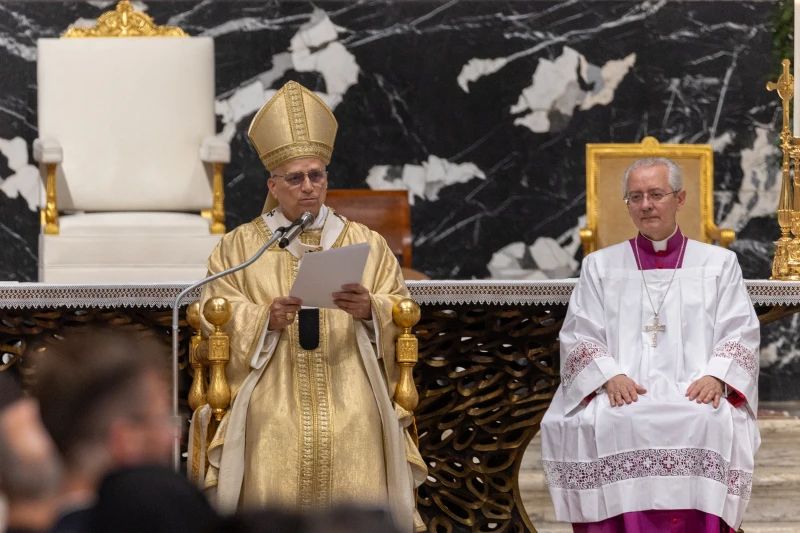
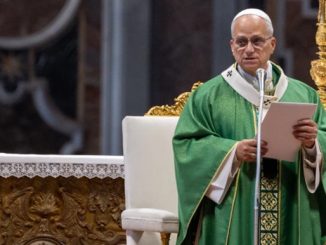
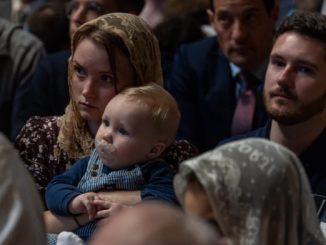
Pope Leo XIV speaks to participants in the Jubilee of Synodal Teams and Participatory Bodies on Oct. 24, 2025, in the Paul VI Audience Hall at the Vatican. / Credit: Vatican Media
Vatican City, Oct 27, 2025 / 11:30 am (CNA).
Pope Leo XIV drew l… […]
Father Vladimír Jukl who was born 100 years ago, was a secretly ordained Catholic priest in communist Czechoslovakia, and endured imprisonment and torture. He was a key figure in the underground Catholic resistance and inspired thousands through… […]
In my previous essay, I proposed the idea of a “1531 Project” as a possible Catholic intervention into the contemporary culture wars over how properly to tell the story of American history. In this essay, […]
Pope Leo XIV celebrates a Mass of episcopal consecration at the Altar of the Chair in St. Peter’s Basilica on Oct. 26, 2025. / Credit: Daniel Ibanez/CNA.
Vatican City, Oct 26, 2025 / 18:24 pm (CNA).
Bishops should be humble servants and men of prayer — not possession, Pope Leo XIV said at a Mass to consecrate a new bishop on Sunday.
“This is the first lesson for every bishop: humility. Not humility in words, but that which dwells in the heart of those who know they are servants, not masters; shepherds, not owners of the flock,” the pontiff said Oct. 26.
The pontiff personally consecrated Mons. Mirosław Stanisław Wachowski a bishop during a Mass at the Altar of the Chair in St. Peter’s Basilica.
Wachowski was appointed apostolic nuncio — the pope’s diplomatic representative — to Iraq in September. Nuncios are usually also archbishops.
The 55-year-old Wachowski, originally from Poland, has been in the diplomatic service of the Holy See since 2004. He has also served in the Secretariat of State in the section for relations with states, and was appointed undersecretary for relations with states — similar to a deputy foreign minister — in October 2019.
Reflecting on Wachowski’s background growing up in a farming family in the Polish countryside, the pope said, “From your contact with the earth, you have learned that fruitfulness comes from waiting and fidelity: two words that also define the episcopal ministry.”
“The bishop is called to sow with patience, to cultivate with respect, to wait with hope,” Leo continued. “He is a guardian, not an owner; a man of prayer, not of possession. The Lord entrusts you with a mission so that you may care for it with the same dedication with which the farmer cares for his field: every day, with constancy, with faith.”
Pope Leo XIV places the bishop’s miter on Archbishop Mirosław Stanisław Wachowski, the new apostolic nuncio to Iraq, as part of his episcopal ordination during a Mass in St. Peter’s Basilica on Oct. 26, 2025. Credit: Daniel Ibanez/CNA.
The pontiff also reflected on the role of a nuncio, who, as the papal representative is “a sign of the concern of the Successor of Peter for all the Churches.”
“He is sent to strengthen the bonds of communion, to promote dialogue with civil authorities, to safeguard the freedom of the Church, and to foster the good of the people,” he underlined.
“The Apostolic Nuncio is not just any diplomat: he is the face of a Church that accompanies, consoles, and builds bridges,” he added. “His task is not to defend partisan interests, but to serve communion.”
The pope said, Wachowski is being asked to be a father, a shepherd, and a witness of hope in Iraq, “a land marked by pain and the desire for rebirth.”
“You are called to fight the good fight of faith, not against others, but against the temptation to tire, to close yourself off, to measure results, relying on the fidelity that is your hallmark: the fidelity of one who does not seek himself, but serves with professionalism, with respect, with a competence that enlightens and does not flaunt itself.”
He remarked on the longstanding presence of Christianity in Mesopotamia, which, according to tradition, can trace its roots to St. Thomas the Apostle, and his disciples Addai and Mari.
“In that region, people pray in the language that Jesus spoke: Aramaic. This apostolic root is a sign of continuity that the violence, which has manifested itself with ferocity in recent decades, has not been able to extinguish,” the pope said.
“Indeed, the voice of those who have been brutally deprived of their lives in those lands does not fail,” he added. “Today they pray for you, for Iraq, for peace in the world.”
Vatican City, Oct 26, 2025 / 08:10 am Pope Leo XIV said at a Mass on Sunday that no one in the Church “should impose his or her own ideas” and asked that tensions between […]
Are we living in apocalyptic times? No one can answer this question definitively, though many quarters of both society and the Church suggest responses. Perhaps the more important question is the perpetual issue: How shall […]
Pilgrims participate in a Pontifical Mass in the Extraordinary Form of the Roman Rite, celebrated by Cardinal Raymond Leo Burke at the Papal Basilica of Saint Peter, the Vatican, Saturday, Oct. 25, 2025 / Credit: Daniel Ibáñez/CNA
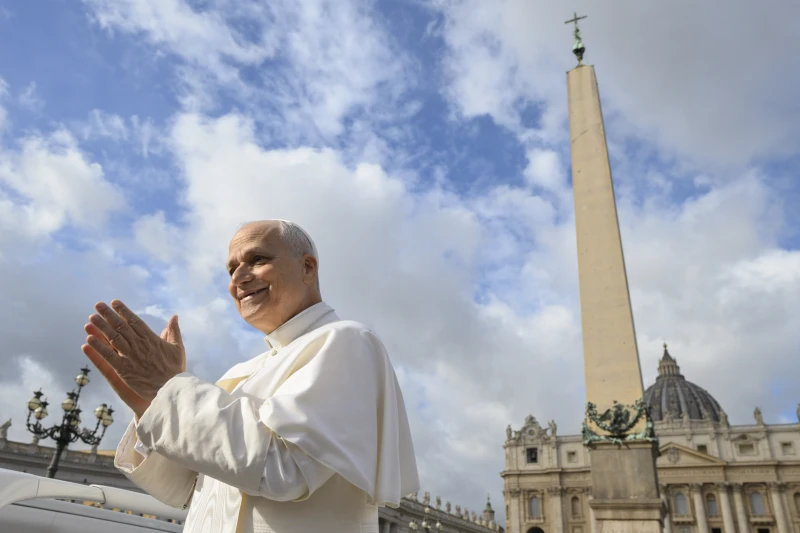
Pope Leo XIV claps with pilgrims during an audience for the Jubilee of Hope in St. Peter’s Square on Oct. 25, 2025. / Credit: Vatican Media.
Vatican City, Oct 25, 2025 / 13:00 pm (CNA).
Pope Leo XIV on Saturday said the key to living in a difficult time, when the Church’s teachings are often challenged, is to embrace the hope that is “not knowing.”
“As pilgrims of hope, we must view our troubled times in the light of the resurrection,” the pope said in an audience with jubilee pilgrims in St. Peter’s Square Oct. 25.
Leo brought attention to Nicholas of Cusa — a Catholic cardinal and theologian from Germany, who lived in the 15th century — as a model for how to live one’s faith “during a turbulent era that involved serious spiritual divisions.”
The pope described Nicholas of Cusa as “a great thinker and servant of unity” who “can teach us that hoping is also ‘not knowing.’”
“As St. Paul writes, ‘How can one hope for what one already sees?’” Leo said. “Nicholas of Cusa could not see the unity of the Church, shaken by opposing currents and divided between East and West. He could not see peace in the world and among religions, at a time when Christianity felt threatened from outside.”
But instead of living in fear like many of his contemporaries, Nicholas chose to associate with those who had hope, the pontiff explained.
Nicholas, Leo said, “understood that there are opposites to be held together, that God is a mystery in which what is in tension finds unity. Nicholas knew that he did not know, and so he understood reality better and better. What a great gift for the Church! What a call to renewal of the heart! Here are his teachings: make space, hold opposites together, hope for what is not yet seen.”
Pope Leo said the Church is experiencing the same thing today: questions challenging the Church’s teaching, from young people, from the poor, from women, from those without a voice or who are different from the majority.
“We are in a blessed time: so many questions!” he said. “The Church becomes an expert in humanity if it walks with humanity and has the echo of its questions in its heart.”
“To hope is not to know,” Leo underlined. “We do not already have the answers to all the questions. But we have Jesus. We follow Jesus. And so we hope for what we do not yet see.”