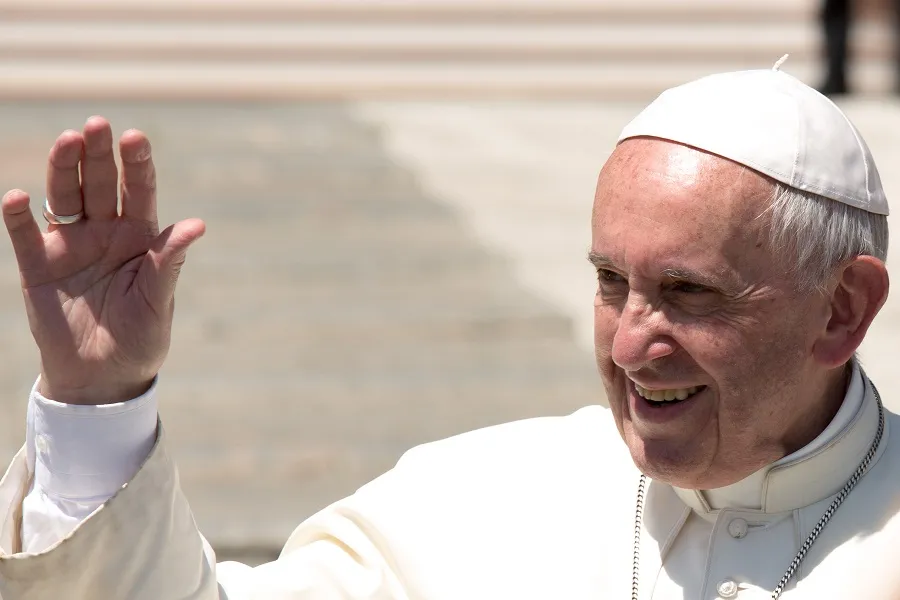
Vatican City, Sep 17, 2017 / 09:30 am (CNA/EWTN News).- On Sunday Pope Francis spoke about the limitless love of God, and how it leads him to forgive us time and time again; something we must strive to do for others, no matter how many times they’ve sinned against us.
“The forgiveness of God is a sign of his overwhelming love for each of us; it is the love that leaves us free to move away, like the prodigal son, but that awaits our return every day; it is the enterprising love of the shepherd for the lost sheep; it is the tenderness that welcomes every sinner who knocks at his door.”
“Heavenly Father, our father, is full and full of love and wants to offer it to us, but he cannot do it if we close our hearts to love for others,” the Pope said Sept. 17.
Continuing, Francis pointed out how Jesus teaches us this in the Our Father, when he directly links the forgiveness we ask of God with the forgiveness we give to our brothers and sisters in the words: “Forgive us our trespasses as we forgive those who trespass against us.”
In his Angelus address Sunday Pope Francis reflected on the day’s Gospel reading from Matthew, where St. Peter asks Christ: “Lord, if my brother sins against me, how often must I forgive? As many as seven times?”
To Peter, seven already seems like the maximum amount of times we should forgive the same person, Francis said. And maybe to us it seems like twice is already a lot.
But Christ’s response is that we must forgive seven times seventy times, “that is to say always. You always have to forgive,” he said. Christ confirms this by telling a parable, the Pope continued, a parable which shows “the inconsistency of the one who was forgiven before and then refuses to forgive.”
The king in the parable is a generous man who when his servant begs for forgiveness of a large debt he has compassion on him and forgives him.
The servant on the other hand refuses to forgive a much smaller debt of a fellow servant and “behaves in a ruthless way,” having him thrown in prison.
“The incoherent attitude of this servant is also ours when we refuse forgiveness to our brothers,” the Pope said. “While the king of the parable is the image of God who loves us with a love so abundant of mercy from embracing us, loving us and forgiving us continually.”
“Since our Baptism God has forgiven us, remitting an insoluble debt: original sin. But that’s the first time. Then, with unlimited mercy, He forgives us all the faults as soon as we show even a little sign of repentance,” the Pope said. “God is so merciful.”
When we are tempted to behave as the servant did toward his fellow servant, closing off our hearts to those who have offended us and come to apologize, we must remember the words of the Heavenly Father, he stated.
He told the ruthless servant: “I forgave you your entire debt because you begged me to. Should you not have had pity on your fellow servant, as I had pity on you?”
“Anyone who has experienced the joy, peace, and inner freedom that comes from being forgiven can open themselves to the possibility of forgiving in turn,” he noted.
Concluding, Francis turned to the Blessed Virgin Mary, who he said “helps us to be more and more aware of the gratuitousness and greatness of the forgiveness received from God.”
May she help us to become as “merciful as He is, the good Father: slow to anger and great in love.”
 […]
[…]


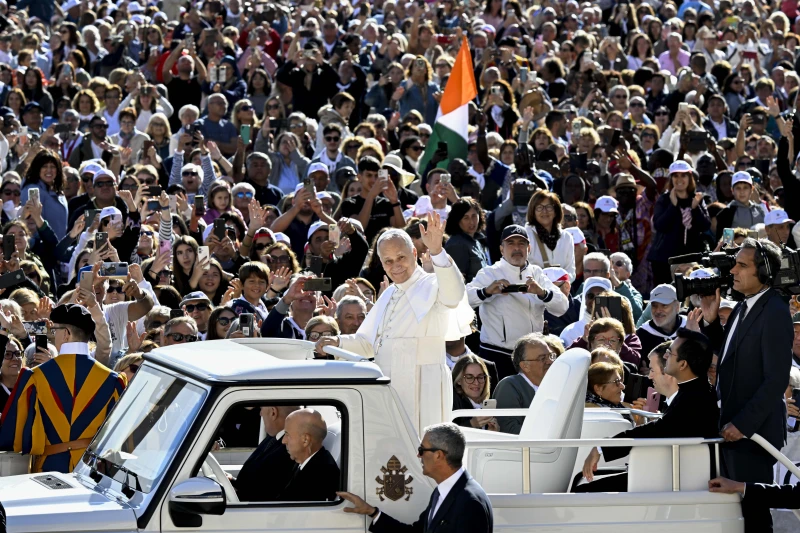


We’ve transitioned from an Apostolic Church proclaiming Christ and repentance to a sinful world, men and women responsible for evil – to empathetic samaritans treating the wounded. The field hospital analogy. As if sins are really psychic/emotive wounds that a little salvific friendship can heal.
With that approach we transform Christianity into a social services support consortium. Love as revealed by Christ is realized in togetherness. At this stage there’s little difference seen and heard from Church leadership. For example, very little is said about offering self, or assuming the committed approach to faith in Christ of the martyr Churches in Africa.
When a Roman pontiff proclaims during an ordinary address to the Church that All are welcome, people make their own decisions in life – What are we to understand if not those living in ‘irregular unions’, inclusive of homosexual, don’t require repentance or conversion to Apostolic doctrine?
For a concise reading of Pope Leo’s position on Church inclusion and differences in life choices I submit the following:
Speaking with Crux Senior Correspondent Elise Ann Allen for her new biography Leo XIV: Citizen of the World, Missionary of the 21st Century [Penguin Peru], the pope said his approach mirrors that of Pope Francis: an open door rooted in dignity and respect for all, but without doctrinal revision.
“What I’m trying to say is what Francis said very clearly when he would say, todos, todos, todos,” Pope Leo explained. “Everyone’s invited in, but I don’t invite a person in because they are or are not of any specific identity. I invite a person in because they are a son or daughter of God.” “It’s very important to understand how to accept others who are different than we are, how to accept people who make choices in their life and to respect them” (Kasmir Nema, RVA News September 22, 2025).
Oh dear, the sidestepped difference between a choice/decision and a moral judgment…
“A separation, or even an opposition, is thus established in some cases between the teaching of the precept, which is valid and general, and the norm of the individual conscience, which would in fact make the final decision [a choice and no longer a ‘moral judgment’?] about what is good and what is evil. On this basis, an attempt is made to legitimize so-called ‘pastoral’ solutions contrary to the teaching of the Magisterium, and to justify a ‘creative’ hermeneutic according to which the moral conscience [?] is in no way obliged, in every case, by a particular negative precept [thou shalt not…]” (Veritatis Splendor, papal encyclical of 1993, n. 56).
Accepting and respecting individual people as persons is one thing, but another is endorsing a sociological “identity” committed to the gay lifestyle, as is the lack of charity by withholding conceptual and moral clarity. Also, the broader problem of–anyone–sacrilegiously receiving of the sacrificial Eucharist. Christ wept at Gethsemani.
This non-amnesiac comment is offered in the spirit of Pope Francis’ lay/ecclesial synodal dialogue.
They are wise and compassionate. Society needs Good Samaritans.