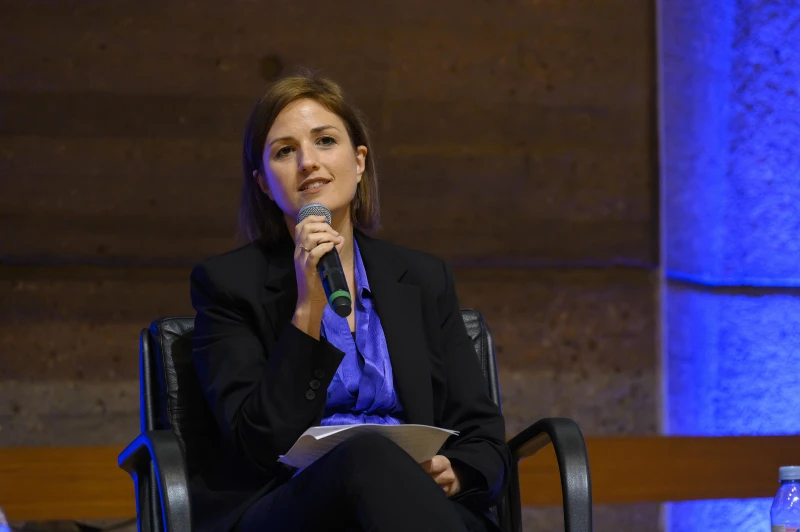
To mark the day, Marta Petrosillo, editor-in-chief of the Aid to the Church in Need (ACN) Religious Freedom Report highlighted the current challenges Christians around the world face.
While the idea of facing persecution for one’s beliefs may seem impossible to some, Petrosillo emphasized in a press release that “it is a reality for hundreds of millions of people all over the world.” She said having days that put a spotlight on people who have experienced violence because of their religion or beliefs is important because “there’s sometimes a tendency to overlook this phenomenon.”
Petrosillo explained that there are three different kinds of religious persecution: persecution perpetuated by the state, persecution caused by religious extremism — such as jihadist groups — and persecution caused by ethno-religious nationalism.
Currently, the continent Petrosillo sees as a main concern is Africa, where in recent years religious persecution has skyrocketed.
“We see many jihadist groups perpetrating more attacks, including in countries where interfaith relations were not a problem,” she said. “Take the Democratic Republic of Congo, for instance. Historically, there have not been problems between faith communities, and it is majority Christian, but we just witnessed a major attack on Christian faithful.”
She added: “This is definitely something that is spreading in many parts of Africa, and it tends to spread from one country to another.”
Petrosillo also pointed out the situation in Burkina Faso: Where 10 years ago it was not among the countries of concern, “nowadays, it is unfortunately one of the places in the world where more jihadist attacks happen.”
Other areas with worsening situations include Asia, the Middle East, and Latin America. Petrosillo also sees concerns with religious freedoms being violated in the West.
“During the past years we saw an increase of attacks against some faith groups, vandalism against churches, and an increase of antisemitic and anti-Islamic episodes because of the war in Gaza,” she said.
“Then there is an effort to exclude religion from the public square, including what Pope Francis called ‘polite persecution.’ We are also concerned about disrespect for conscientious objections of people working in the health sector.”
Every two years ACN releases its Religious Freedom Report (RFR), which first began in 1999 with the aim of raising awareness and to report on violations of religious freedom.
“What makes it special is that the RFR is the only report produced by an NGO [nongovernmental organization] that covers the situation in all the countries in the world and for all faith groups, because if religious freedom is denied for one group, sooner or later, it will also be denied to others,” Petrosillo explained. “And for ACN, it is important that religious freedom is granted equally to all.”
This year’s report, according to Petrosillo, continues to show the worsening trend of religious freedom violations in countries around the world. However, she said she remains hopeful, as she sees “improvements in the increasing awareness, both from civil society and some governments, of what is happening.”
“This can be the game changer in order to act against the violation of religious freedom,” she said.
ACN’s most recent Religious Freedom Report, issued in June 2023, can be found here. The new report will be out Oct. 21.
If you value the news and views Catholic World Report provides, please consider donating to support our efforts. Your contribution will help us continue to make CWR available to all readers worldwide for free, without a subscription. Thank you for your generosity!
Click here for more information on donating to CWR. Click here to sign up for our newsletter.
The trailer of the upcoming Russell Crowe movie “The Pope’s Exorcist” indicates that the film might not do justice to the Italian exorcist Father Gabriel Amorth or the rite of exorcism as practiced in the Catholic Church, according to an exorcist organization Amorth himself helped to found.
The International Association of Exorcists on March 7 voiced concern that the film seems to fall under the category of “splatter cinema,” which it calls a “sub-genre of horror.”
The Vatican, the statement said, is filmed with a high-contrast “chiaroscuro” effect seen in film noir.
This gives the film a “‘Da Vinci Code’ effect to instill in the public the usual doubt: Who is the real enemy? The devil or ecclesiastical ‘power’?” the exorcists’ association said.
While special effects are “inevitable” in every film about demonic possession, “everything is exaggerated, with striking physical and verbal manifestations, typical of horror films,” the group said.
“This way of narrating Don Amorth’s experience as an exorcist, in addition to being contrary to historical reality, distorts and falsifies what is truly lived and experienced during the exorcism of truly possessed people,” said the association, which claims more than 800 exorcist members and more than 120 auxiliary members worldwide.
“In addition, it is offensive with regard to the state of suffering in which those who are victims of an extraordinary action of the devil find themselves,” the group’s statement added. The statement responded to the release of the movie trailer and promised a more in-depth response to the film’s April 14 theatrical release.
Father Gabriele Amorth, chief exorcist of Rome, speaks to CNA on May 22, 2013. Steven Driscoll/CNA
Amorth, who died at age 91 in 2016, said he performed an estimated 100,000 exorcisms during his life. He was perhaps the world’s best-known exorcist and the author of many books, including “An Exorcist Tells His Story,” reportedly an inspiration for the upcoming movie.
Several of Amorth’s books are carried by the U.S. publisher Sophia Institute Press. The publisher’s newly released book “The Pope’s Exorcist: 101 Questions About Fr. Gabriele Amorth” is an interview in which the priest addresses many topics ranging from prayer to pop music.
Michael Lichens, editor and spokesperson at Sophia Institute Press, voiced some agreement with the exorcist group.
“The International Association of Exorcists is right to be concerned and I’m thankful for their words,” Lichens told CNA. “My hope is that audiences will remember that Father Amorth is a real person with a great legacy and perhaps a few moviegoers will look up an interview or pick up his books.”
“This was a man who included St. Padre Pio and Blessed Giacomo Alberione as mentors, as well as Servant of God Candido Amantini, who was his teacher for the ministry of exorcism,” he said. “Father Amorth fought as a partisan as a young man and grew to fight greater evil as an exorcist. His life is an inspiration and I know that his work and words will still reach many.”
Amorth was born in Modena, Italy, on May 1, 1925. In wartime Italy, he was a soldier with the underground anti-fascist partisans. He was ordained a priest in 1951. He did not become an exorcist until 1986, when Cardinal Ugo Poletti, the vicar general of the Diocese of Rome, named him the diocesan exorcist.
The priest was frequently in the news for his comments on the subject of demonic forces. In an interview with The Sunday Telegraph in 2000, he said: “I speak with the devil every day. I talk to him in Latin. He answers in Italian. I have been wrestling with him, day in, day out, for 14 years.”
The movie “The Pope’s Exorcist” claims to be “inspired by the actual files of the Vatican’s chief exorcist.” The Sony Pictures movie stars the New Zealand-born actor Russell Crowe as Amorth. Crowe’s character wears a gray beard and speaks English with a noticeable accent.
“The majority of cases do not require an exorcism,” the Amorth character says in the movie’s first trailer. A cardinal explains that Crowe’s character recommends 98% of people who seek an exorcism to doctors and psychiatrists instead.
“The other 2%… I call it… evil,” Crowe adds.
The plot appears to concern Amorth’s encounter with a particular demon. Crowe’s character suggests the Church “has fought this demon before” but covered it up.
“We need to find out why,” he says.
The trailer shows short dramatic scenes of exorcism, including a confrontation between Amorth and a girl apparently suffering demonic possession.
The International Association of Exorcists said such a representation makes exorcism become “a spectacle aimed at inspiring strong and unhealthy emotions, thanks to a gloomy scenography, with sound effects such as to inspire only anxiety, restlessness, and fear in the viewer.”
“The end result is to instill the conviction that exorcism is an abnormal, monstrous, and frightening phenomenon, whose only protagonist is the devil, whose violent reactions can be faced with great difficulty,” said the exorcist group. “This is the exact opposite of what occurs in the context of exorcism celebrated in the Catholic Church in obedience to the directives imparted by it.”
CNA sought comment from Sony Pictures and “The Pope’s Exorcist” executive producer Father Edward Siebert, SJ, but did not receive a response by publication.
Amorth co-founded the International Association of Exorcists with Father René Laurentin in 1994. In 2014 the Catholic Church recognized the group as a Private Association of the Faithful.
The association trains exorcists and promotes their incorporation into local communities and normal pastoral care. It also aims to promote “correct knowledge” about exorcism ministry and collaboration with medical and psychiatric experts who have competence in spirituality.
Exorcism is considered a sacramental, not a sacrament, of the Church. It is a liturgical rite that only a priest can perform.
Hollywood made the topic a focus most famously in the 1973 movie “The Exorcist,” based on the novel by William Peter Blatty.
“Most movies about Catholicism and spiritual warfare sensationalize,” Lichens of Sophia Institute Press told CNA. “Sensationalism and terror sell tickets. As a fan of horror movies, I can understand and even appreciate that. As a Catholic who has studied Father Amorth, though, I think such sensationalism distorts the important work of exorcism.”
“On the other hand, ‘The Exorcist’ made the wider public more curious about this overlooked ministry. That is a good thing that came out, despite other reservations and concerns,” he continued. “Still, I would love it if a screenwriter and director spoke to exorcists and tried to show the often-quotidian parts of the ministry.”
An unhealthy curiosity can be a problem, Lichens said.
“When I work as a spokesperson for Amorth’s books, I am always concerned about inspiring curiosity about the demonic,” he told CNA. “As Christians, we know we have nothing to fear from the demonic but curiosity might lead some to want to seek out the supernatural or the demonic. Father Amorth has dozens of stories of people who found themselves afflicted after party game seances.”
Lichens encouraged those who are curious to read more of Amorth’s writings, some of which are excerpted on the Catholic Exchange website. Sophia Institute Press has published “Diary of an American Exorcist” by Monsignor Stephen Rosetti and “The Exorcism Files” by the American lay Catholic Adam Blai.
“First and foremost, Father Amorth was involved in a healing ministry,” Lichens said. “Like other exorcists, his work often involved doctors in physical and mental health because the goal is to bring healing and hope to the potentially afflicted.”
“Those of us who read Amorth might have been excited to read firsthand accounts of spiritual warfare, but readers quickly see a man whose heart was always full of love for those who sought his help,” he added.
The International Association of Exorcists, for its part, praised the 2016 documentary “Deliver Us,” saying this shows “what exorcism really is in the Catholic Church and “the authentic traits of a Catholic exorcist.” It shows exorcism as “a most joyful event,” in their view, because through experiencing “the presence and action of Christ the Lord and of the Communion of the Saints,” those who are “tormented by the extraordinary action of the devil gradually find liberation and peace.”
Washington D.C., Oct 10, 2017 / 04:41 pm (CNA/EWTN News).- After US President Donald Trump asked Congress to pass stricter immigration laws if they plan to grant legal status to certain undocumented immigrants, one bishop said Trump’s proposals would hurt the vulnerable.
“The Administration’s Immigration Principles and Policies do not provide the way forward for comprehensive immigration reform rooted in respect for human life and dignity, and for the security of our citizens,” Bishop Joe Vasquez of Austin, chair of the migration committee at the U.S. bishops’ conference, stated Oct. 10.
In an Oct. 8 letter to House and Senate leaders, President Trump pushed for the passage of stricter immigration laws and tougher enforcement, as part of Congress passing a version of the Dream Act.
The latest version of the Dream Act was introduced this summer by Sens. Lindsey Graham (R-S.C.) and Dick Durbin (D-Ill.). It would grant permanent legal status to young immigrants who came to the U.S. illegally as children, who do not have a criminal record, who have lived in the U.S. for at least four years, and who meet other requirements.
When Congress failed to pass such a bill several years ago, the Obama administration announced in 2012 a program, Deferred Action for Childhood Arrivals (DACA), to delay the deportation of eligible immigrants who were brought to the U.S. illegally as children, giving them time to apply for a continued stay in the U.S.
However, on Sept. 5, Trump ended the DACA program, saying it was the duty of Congress to address the matter. Any DACA-related legislation that would address the issue of Dreamers residing in the U.S., he said in Sunday’s letter, must be accompanied by stricter immigration policies in the name of national security.
In the letter to Congress, Trump cited an investigation of U.S. immigration laws which he ordered and which recently concluded. That investigation, he said, discovered weaknesses in the immigration system that needed addressing in the name of national security.
Trump called for the completion of a wall along the U.S.-Mexico border. The House in July approved a spending bill with $1.6 billion in border wall funding, but the Senate did not act on it. Currently, around 700 miles of the approximately 2,000 mile-long U.S.-Mexico border have a border fence.
Trump also supported stricter laws on the handling of unaccompanied minors who arrive at the U.S.-Mexico border. The number of unaccompanied minors coming from Central America rose sharply in recent years, peaking at over 50,000 in the 2014 fiscal year, falling in 2015 and rising once again to 47,000 in FY 2016. There have been around 38,500 unaccompanied children apprehended at the border in 2017, the administration said.
The administration in August ended a parole program for minors who were not eligible for refugee status to enter the U.S. Parents of such minors could have been eligible to apply for their child’s acceptance in the program, where they would have been vetted, if accepted, and granted legal entry into the U.S.
Also in Trump’s policy proposals to Congress were stricter standards for granting asylum, speeding up the removal of those denied asylum, hiring more immigration enforcement officials, attorneys, and judges, and requiring an E-Verify system for employers.
Bishop Vasquez said that the proposals for stricter immigration standards would hurt vulnerable populations such as refugees and unaccompanied minors.
The proposals “are not reflective of our country’s immigrant past, and they attack the most vulnerable, notably unaccompanied children and many others who flee persecution,” Bishop Vasquez said. “Most unfortunately, the principles fail to recognize that the family is the fundamental building block of our immigration system, our society, and our Church.”
Furthermore, he said, Congress should pass a version of the Dream Act immediately, regardless of whether other policy goals are fulfilled. Time is of the essence here, he said, because DACA protections will soon expire and young immigrants who benefitted from the program could lose their legal work permits in March 2018, being vulnerable to deportation and family separation.
However, Alfonso Aguilar, president of the Latino Partnership for Conservative Principles, said Trump’s proposals are more of a “wish list to be in negotiations” rather than a hard set of demands that must be met for any Dream Act to be signed into law.
“I don’t think that President Trump expects that Congress include every single of those 70 proposals in an immigration bill,” he told CNA.
Aguilar at one point during the 2016 campaign supported Trump as a candidate, but withdrew his support in September during the campaign because of Trump’s “restrictionist” immigration speech and plan to deport undocumented immigrants without criminal records.
Aguilar also noted that in his letter to Congress, Trump proposed “allowing, basically, an immigration officer at the border to remove any unaccompanied minor back to their home country.”
The passage of the Dream Act is still on the table and has its supporters in both parties, Aguilar said.
“From my conversations in Congress and with some in the White House, I think there’s a general understanding that the consensus has to be based on legislation that provides relief to Dreamers, and then resources for some interior enforcement and some border security,” he said. Trump, he said, is “committed” to the passage of “legislation that provides relief to Dreamers.”
In other immigration policies Trump called for on Sunday, the President is not taking the extreme positions that some make him out to be taking, Aguilar said.
For instance, he said Trump is not calling for an end to green cards for family members of citizens or lawful permanent residents, but just wants them limited to immediate family members and not extended family.
Calling for an E-Verify system is “a way for employers to know that the person applying for the job has legal status,” Aguilar said.
The U.S. Conference of Catholic Bishops has already been outspoken about some issues that Trump addressed in his policy proposals.
Regarding the border wall proposal, Bishop Vasquez said in January that the construction of a wall “will put immigrant lives needlessly in harm’s way,” making them “more susceptible to traffickers and smugglers.”
Bishops have also advocated for the U.S. to accept unaccompanied children coming to the U.S.-Mexico border from Central America, saying that many are fleeing violence in their home countries and that sending them back home could be akin to sending a child back into a “burning building.”
There is “abuse” within the system when it comes to asylum requests, Aguilar said, but “that doesn’t mean we have to reduce the limits of refugees.”
Rather, he said, policy should focus on accepting those who should be coming to the U.S., and securing the country against the entry of those who shouldn’t be entering.
“Making those rules more strict, making it harder, doesn’t mean that we’re not going to be a compassionate country and grant asylum to people who really deserve it,” he said of Trump’s proposal of stricter laws on the entry of unaccompanied minors.
“The idea is to ensure that those people who are getting asylum are people who really deserve it.”
Denver Newsroom, Apr 22, 2020 / 12:40 am (CNA).- In the face of the ongoing coronavirus pandemic, Courage International has announced that it will host online its annual conference to support Catholics who minister to people with same-sex attraction.
Courage International is a Catholic group for those who experience same-sex attraction and are seeking to live chaste and faithful lives. Its Truth and Love Conference seeks to provide practical and spiritual guidance on the topics of homosexuality and sexual identity to pastoral ministers and lay professionals.
While it was originally scheduled to take place in the Diocese of Arlington, the conference will instead take place for its several hundred participants on the online platform Zoom on April 27-29.
Ann Schneible, communications director for Courage, told CNA that when people register for the conference, they will be given a secure code and detailed instructions on how to participate.
During each talk, she said, participants will be able to type questions directly into Zoom. These questions will then be answered by the speakers during the Q&A period at the end of each presentation.
All of the participants will be invited to Monday’s keynote address and the following plenary sessions on Monday and Wednesday. On Tuesday, registrants will be able to choose talks from one of three tracks – pastoral care, mental health, and sexual identity.
The theme of this year’s conference is called “Be not afraid: Affirming the truth about sex and identity.” It will mark the 100th birthday of Pope John Paul II and declare him the official patron of the Truth & Love initiative, the section of the Courage ministry focusing on providing resources to those who minister to people with same-sex attraction.
Schneible said the title is inspired by the beginning words of his 1978 inaugural homily: “Do not be afraid. Christ knows ‘what is in man.’ He alone knows it.”
Schneible explained, “This theme is relevant to our work because whenever we are ministering to someone who experiences same-sex attractions or questions about their gender identity, the compassion we show cannot be separated from the truth about human dignity and authentic happiness. With Pope Saint John Paul II as our patron, we pray for his intercession as we continue to speak the truth fearlessly and with love.”
Father Philip Bochanski, executive director of Courage International, told CNA that the writings and messages of John Paul II are important to the Church’s understanding of human dignity, sexuality, and the human body. He said the pope also had a way of sharing the truth with an essence of love.
“He was able to perceive the trends in the way that the culture looks, and how to answer those kinds of cultural misunderstandings with the perennial truth that comes from the gospel through the Church,” he said.
“He did it with such compassion. That’s [why] he’s going to be our model. Not just what to say, but how to say it. How to speak the truth in love.”
The list of speakers at the virtual conference will include experts in pastoral care, theology, and mental health. Speakers include Bishop John Keenan of Paisley, a Courage chaplain in Scotland; Helen Alvaré, a professor of law at Antonin Scalia Law School of George Mason University; and Suzanne Baars, a licensed professional counselor and marriage and family therapist.
[Bishop Keenan will] talk about his experience over the last few years as a chaplain and how that has affected his understanding of pastoral ministry. We’re going to have Helen Alvare… talk about some of the legal implications of the legislation that’s being passed … about sexual orientation and gender identity and how that might affect parishes and schools and other institutions,” he said.
Bochanski also highlighted some of Tuesday’s talks, which will be divided into three separate categories: pastoral care, health care, and gender identity discordance.
He said the first track, pastoral care, will look at conveying Church teaching and creating a welcoming environment in parishes and schools. It will also examine how those in pastoral ministry can come to understand the experience of those with same-sex attraction.
The second track, on mental health care, will be directed toward health professionals. He said it will review a psychological experience, involving family dynamics, relationships, and self-identity, of those with same-sex attraction.
The third track will analyze gender discordance – when people view themselves as a different gender than their biological sex. The talks will include insight from healthcare professionals on genetics and body chemistry, as well as a philosophical perspective, Bochanski added.
“I think it reflects the reality that people, in general, are multifaceted and need to be supported and nourished on different levels simultaneously. We tried to keep in mind all those different aspects of pastoral care and family life and just the different ways that we’re going to encounter people so that the folks who participate are going to be equipped for all of those,” he said.
Para. 4 – violence PERPETRATED by the state
I’m waiting to see this report in the so-called mainstream media.
