The lithography of St. Peter and Paul in Missale Romanum by unknown artist with initials F.M.S (19. cent.) and printed by Typis Friderici Pustet. (Renáta Sedmáková | us.fotolia.com)
Readings for Sunday, June 29, 2025: • Acts 12:1-11
• Psa 34:2-3, 4-5, 6-7, 8-9
• 2 Timothy 4:6-8, 17-18
• Matthew 16:13-19
One denied Christ after having been chosen by him. The other was chosen by Christ after he had spent much time and energy persecuting Christians. One was a businessman with a large, impetuous personality. The other was a rabbi whose emotional passion was equaled by his stunning intellect.
Both men were flawed; both were transformed by encountering Christ. Both were martyred for their faith in Christ. Both, according to tradition, died in the city of Rome nearly forty years after the Resurrection of their Lord.
After Jesus, it is Peter and Paul who dominate the New Testament and whose leadership set the course for the early Church. Peter is mentioned well over two hundred times in the New Testament, while close to half of the books in the New Testament are attributed to Paul. The Acts of the Apostles, an account written by Luke of key events in the early Church, is essentially divided between what might be called the “acts of Peter” (chapters 1-12) and the “acts of Paul” (chapters 13-28).
Each of today’s three readings reveals something of how the hearts and lives of these two great Apostles were met, filled, and transformed by Jesus Christ. The reading from the Gospel of Matthew is well known, describing the dramatic conversation that took place in the region of Caesarea Philippi. Standing in front of a massive one-hundred-foot high wall of rock marked with shrines and statues of pagan gods, Jesus asked two questions of his disciples: “Who do people say that the Son of Man is?” and “But who do you say that I am?” Peter’s confession that Jesus is the Christ, the Son of the living God, did not come from superior intellect or human cleverness, but from faith and the revelation of the Father: “For flesh and blood have not revealed this to you, but my heavenly Father” (cf., Catechism, par. 552).
Peter, of course, struggled with faith, eventually denying Jesus on the cusp of the Crucifixion. But after being reaffirmed as head apostle by the Risen Lord (cf., Jn 21), Peter emerged as a man both humble and assured, his confidence placed fully in Christ, not himself. Benedict XVI, reflecting on this change, said, “From the naïve enthusiasm of acceptance, passing through the sorrowful experience of denial and the weeping of conversion, Peter succeeded in entrusting himself to that Jesus who adapted himself to his poor capacity of love” (General Audience, May 24, 2006). This journey was possible for Peter because “he was constantly open to the action of the Spirit of Jesus.”
That openness is readily evident in the account, found in Acts 12, of Peter’s miraculous escape from prison. Like Jesus, he was arrested and imprisoned during the time of the Passover. And although Peter escaped death on that occasion, the episode described by Luke is evidently meant to “echo” the death and resurrection of Jesus, for Peter is delivered from the darkness of prison and certain death by an angel of the Lord.
Prior to his encounter with the risen Christ on the road to Damascus, Paul was a zealous persecutor of the Church. Blinded and lying on the road, the stunned Paul asked, “Who are you, Lord?” (Act 9:5). Given an answer and directives, he spent the rest of his life preaching the Gospel, competing in “the race,” one of his favorite metaphors for the Christian life. “His existence,” stated Benedict XVI, “would become that of an Apostle who wants to ‘become all things to all men’ (1 Cor 9:22) without reserve” (General Audience, Oct 25, 2006).
Both Peter and Paul are key witnesses to the reality and veracity of Jesus Christ. Their witness was two-fold: through living, first-hand encounters with the Lord and through their acceptance of martyrdom. “By martyrdom,” the Fathers of the Second Vatican Council explained, “a disciple is transformed into an image of his Master…” (Lumen Gentium, 42). May their bold witness encourage us to be likewise transformed by and for the Savior.
(This “Opening the Word” column originally appeared in the June 29, 2008 issue of Our Sunday Visitor newspaper.)
If you value the news and views Catholic World Report provides, please consider donating to support our efforts. Your contribution will help us continue to make CWR available to all readers worldwide for free, without a subscription. Thank you for your generosity!
Click here for more information on donating to CWR. Click here to sign up for our newsletter.
Carl E. Olson is editor of Catholic World Report and Ignatius Insight. He is the author of Did Jesus Really Rise from the Dead?, Will Catholics Be "Left Behind"?, co-editor/contributor to Called To Be the Children of God, co-author of The Da Vinci Hoax (Ignatius), and author of the "Catholicism" and "Priest Prophet King" Study Guides for Bishop Robert Barron/Word on Fire. His recent books on Lent and Advent—Praying the Our Father in Lent (2021) and Prepare the Way of the Lord (2021)—are published by Catholic Truth Society. The Most Asked Questions about Faith, Reason, Jesus, and the Bible, co-authored with Fr. Robert Spitzer, S.J., will be published by Ignatius Press in Fall 2026. He is also a contributor to "Our Sunday Visitor" newspaper, "The Catholic Answer" magazine, "The Imaginative Conservative", "The Catholic Herald", "National Catholic Register", "Chronicles", and other publications. Follow him on X (formerly Twitter) @carleolson.
Seminarians at Good Shepherd Major Seminary in Nigeria’s Kaduna state where four students were kidnapped and one, Michael Nnadi, was killed in 2020. / Credit: Good Shepherd Major Seminary Kaduna/ Facebook
ACI Africa, Jan 26, 2024 / 11:40 am (CNA).
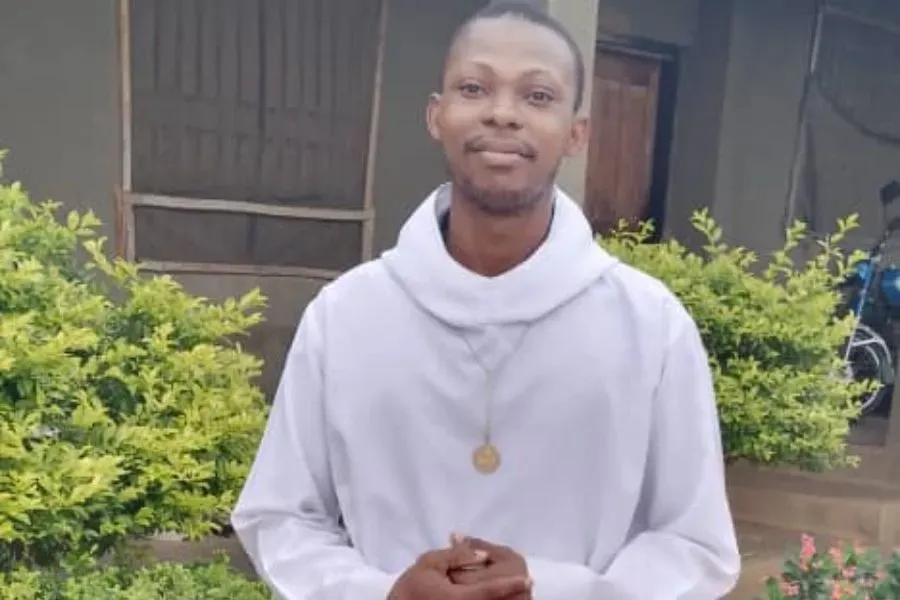
Last year, 2023, was a difficult year for Brother Peter Olarewaju, a postulant at the Benedictine monastery in Nigeria’s Ilorin Diocese who was kidnapped alongside two others at the monastery. Olarewaju underwent different kinds of torture and witnessed the murder of his companion, Brother Godwin Eze.
After his release, Olarewaju said his kidnapping was a blessing, as it had strengthened his faith. He even said that he is now prepared to die for his faith.
“I am prepared to die a martyr in this dangerous country. I am ready any moment to die for Jesus. I feel this very strongly,” Olarewaju said in an interview with ACI Africa, CNA’s news partner in Africa, on Nov. 26, 2023, days after he was set free by suspected Fulani kidnappers.
The late Brother Godwin Eze who was kidnapped from the Benedictine monastery in Nigeria’s Ilorin Diocese and murdered by his kidnappers in October 2023. Credit: Benedictine monastery, Eruku
The monk’s testimony is not an isolated case in Nigeria, where kidnapping from seminaries, monasteries, and other places of religious formation has been on the rise. While some victims of the kidnappings have been killed, those who survived the ordeal have shared that they have come back stronger — and ready to die for their faith.
Seminarian Melchior Maharini, a Tanzanian who was kidnapped alongside a priest from the Missionaries of Africa community in the Diocese of Minna in August 2023, said the suffering he endured during the three weeks he was held captive strengthened his faith. “I felt my faith grow stronger. I accepted my situation and surrendered everything to God,” he told ACI Africa on Sept. 1, 2023.
Father Paul Sanogo (left) and Seminarian Melchior Maharini (right) were kidnapped from their community of Missionaries of Africa in Nigeria’s Diocese of Minna. Credit: Vatican Media
Many other seminarians in Nigeria have been kidnapped by Boko Haram militants, Fulani herdsmen, and other bandit groups operating in Africa’s most populous nation.
In August 2023, seminarian David Igba told ACI Africa that he stared death in the face when a car in which he was traveling on his way to the market in Makurdi was sprayed with bullets by Fulani herdsmen.
Seminarian Na’aman Danlami died when the Fulanis attacked St. Raphael Fadan Kamantan Parish on the night of Sept. 7, 2023. Credit: Photo courtesy of Aid to the Church in Need
In September 2023, seminarian Na’aman Danlami was burned alive in a botched kidnapping incident in the Diocese of Kafanchan. A few days earlier, another seminarian, Ezekiel Nuhu, from the Archdiocese of Abuja, who had gone to spend his holidays in Southern Kaduna, was kidnapped.
Two years prior, in October 2021, Christ the King Major Seminary of Kafanchan Diocese was attacked and three seminarians were kidnapped.
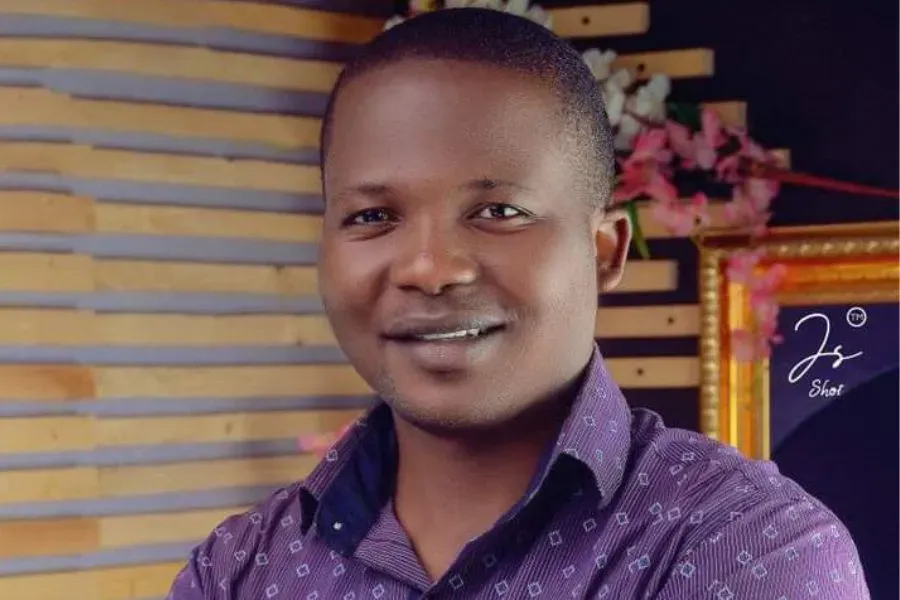
Seminarian David Igba during a pastoral visit at Scared Heart Udei of the Catholic Diocese of Makurdi. Credit: David Igba
In one attack that attracted global condemnation in 2020, seminarian Michael Nnadi was brutally murdered after he was kidnapped alongside three others from Good Shepherd Major Seminary in the Diocese of Kaduna. Those behind the kidnapping confessed that they killed Nnadi because he would not stop preaching to them, fearlessly calling them to conversion.
After Nnadi’s murder, his companions who survived the kidnapping proceeded to St. Augustine Major Seminary in Jos in Nigeria’s Plateau state, where they courageously continued with their formation.
The tomb of seminarian Michael Nnadi, who was brutally murdered after he was kidnapped alongside three others from the Good Shepherd Major Seminary in the Catholic Diocese of Kaduna in 2020. Credit: Father Samuel Kanta Sakaba, rector of a Good Shepherd Major Seminary in Kaduna
As Christian persecution rages in Nigeria, seminary instructors in the country have shared with ACI Africa that there is an emerging spirituality in Nigerian seminaries that many may find difficult to grasp: the spirituality of martyrdom.
They say that in Nigeria, those who embark on priestly formation are continuously being made to understand that their calling now entails being ready to defend the faith to the point of death. More than ever before, the seminarians are being reminded that they should be ready to face persecution, including the possibility of being kidnapped and even killed.
Father Peter Hassan, rector of St. Augustine Major Seminary in the Archdiocese of Jos, Plateau state, said that seminaries, just like the wider Nigerian society, have come to terms with “the imminence of death” for being Christian.
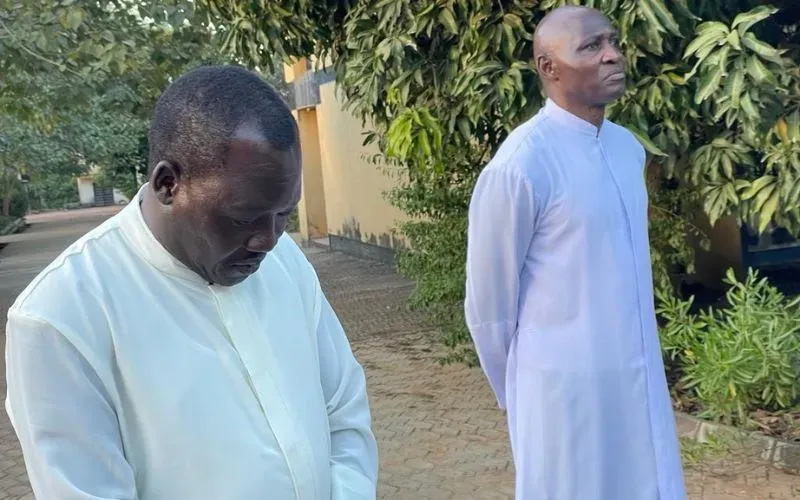
Father Peter Hassan, rector of St. Augustine Major Seminary in Jos, Nigeria, walks with an unnamed companion. Credit: Father Peter Hassan
“Nigerian Christians have been victims of violence of apocalyptic proportions for nearly half a century. I can say that we have learned to accept the reality of imminent death,” Hassan said in a Jan. 12 interview with ACI Africa.
He added: “Nevertheless, it is quite inspiring and comforting to see the many young men who are still ready to embrace a life that will certainly turn them into critically endangered species. Yet these same young men are willing to preach the gospel of peace and embrace the culture of dialogue for peaceful coexistence.”
Shortly after Nnadi’s kidnapping and killing, St. Augustine Major Seminary opened its doors to the three seminarians who survived the kidnapping.
Hassan told ACI Africa that the presence of the three former students of Good Shepherd Major Seminary was “a blessing” to the community of St. Augustine Major Seminary.
“Their presence in our seminary was a blessing to our seminarians, a wake-up call to the grim reality that not even the very young are spared by those mindless murderers,” Hassan said.
Back at Good Shepherd, seminarians have remained resilient, enrolling in large numbers even after the 2020 kidnapping and Nnadi’s murder.
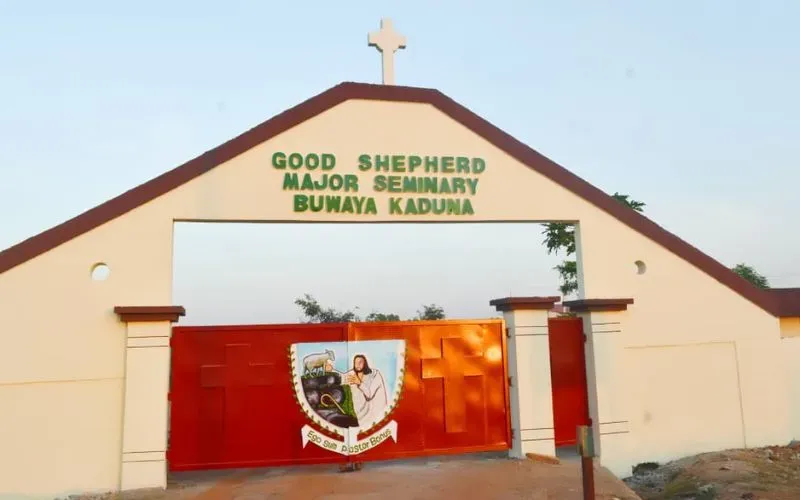
Good Shepherd Major Seminary in Kaduna, Nigeria. Credit: Father Samuel Kanta Sakaba, rector of a Good Shepherd Major Seminary in Kaduna
In an interview with ACI Africa, Father Samuel Kanta Sakaba, the rector of Good Shepherd Major Seminary, said that instructors at the Catholic institution, which has a current enrollment of 265 seminarians, make it clear that being a priest in Nigeria presents the seminarians with the danger of being kidnapped or killed.
ACI Africa asked Sakaba whether or not the instructors discuss with the seminarians the risks they face, including that of being kidnapped, or even killed, to which the priest responded: “Yes, as formators, we have the duty to take our seminarians through practical experiences — both academic, spiritual, and physical experiences. We share this reality of persecution with them, but for them to understand, we connect the reality of Christian persecution in Nigeria to the experiences of Jesus. This way, we feel that it would be easier for them to not only have the strength to face what they are facing but to also see meaning in their suffering.”
“Suffering is only meaningful if it is linked with the pain of Jesus,” the priest said. “The prophet Isaiah reminds us that ‘by his wounds, we are healed.’ Jesus also teaches us that unless the grain of wheat falls on the ground and dies, it will remain a single grain, but that it is only when it falls and dies that it yields a rich harvest. Teachings such as these are the ones that deepen our resilience in the face of persecution.”
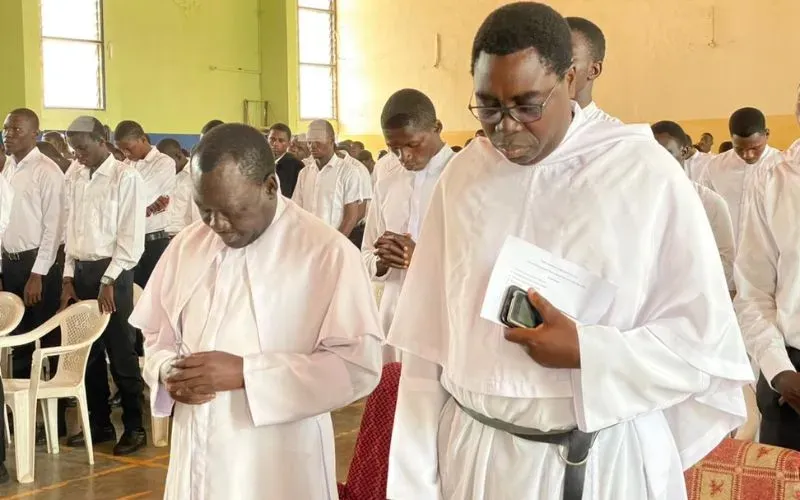
Seminarians and their instructors at St. Augustine Major Seminary in Jos, Nigeria. Credit: Father Peter Hassan
Sakaba spoke of the joy of those who look forward to “going back to God in a holy way.”
“Whatever happens, we will all go back to God. How joyful it is to go back to God in a holy way, in a way of sacrifice.” he said. “This holiness is accepting this cross, this pain. Jesus accepted the pain of Calvary, and that led him to his resurrection. Persecution purifies the individual for them to become the finished product for God. I believe that these attacks are God’s project, and no human being can stop God’s work.”
However, the rector clarified that those who enroll at the seminary do not go out seeking danger.
“People here don’t go out putting themselves in situations of risk,” he said. “But when situations such as these happen, the teachings of Jesus and his persecution give us courage to face whatever may come our way.”
Sakaba said that although priestly formation in Nigeria is embracing the “spirituality of martyrdom,” persecution in the West African country presents “a difficult reality.”
“It is difficult to get used to pain. It is difficult to get used to the issues of death … to get familiar with death,” he said. “No one chooses to go into danger just because other people are suffering; it is not part of our nature. But in a situation where you seem not to have an alternative, the grace of God kicks in to strengthen you to face the particular situation.”
Sakaba said that since the 2020 attack at Good Shepherd Major Seminary, the institution has had an air of uncertainty. He said that some of the kidnappers who were arrested in the incident have been released, a situation he said has plunged the major seminary into “fear of the unknown.”
“It hasn’t been easy for us since the release,” Sabaka told ACI Africa. “The community was thrown into confusion because of the unknown. We don’t know what will happen next. We don’t know when they will come next or what they will do to us. We don’t know who will be taken next.”
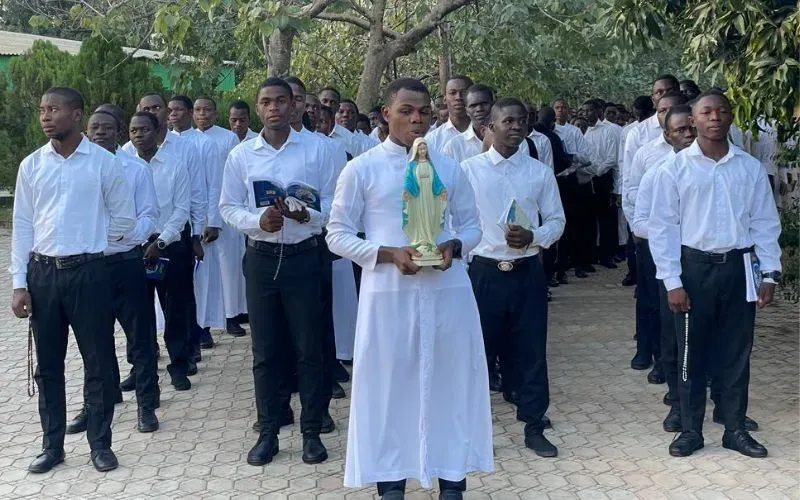
Seminarians at St. Augustine Major Seminary in Jos, Plateau state, Nigeria, during a Marian procession. Credit: Father Peter Hassan
In the face of that, however, Sabaka said the resilience of the seminary community has been admirable. “God has been supporting, encouraging, and leading us. His grace assisted us to continue to practice our faith,” he said.
The jihadist attacks, which continue unabated in communities surrounding the seminary, do not make the situation easier.
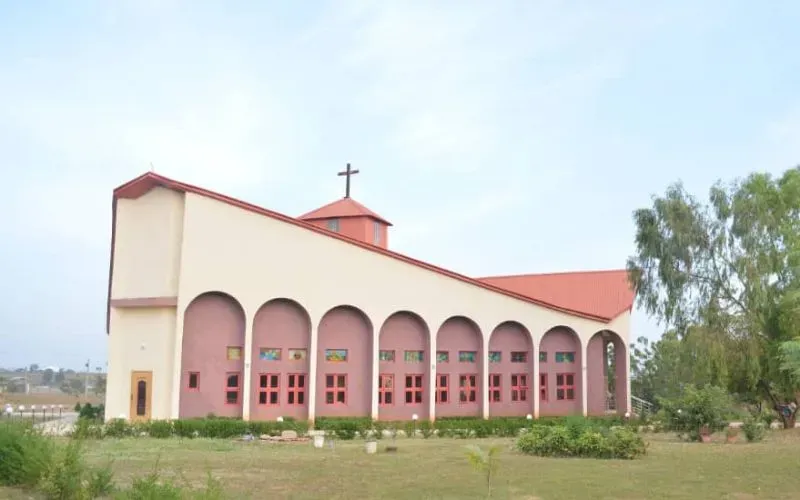
Church at the Good Shepherd Major Seminary in Kaduna, Nigeria. Credit: Father Samuel Kanta Sakaba, rector of Good Shepherd Major Seminary in Kaduna
“Every attack that happens outside our community reminds us of our own 2020 experience. We are shocked, and although we remain deeply wounded, we believe that God has been leading us,” he said.
This story was first published by ACI Africa, CNA’s news partner in Africa, and has been adapted by CNA.
The bigger the unit you deal with, the hollower, the more brutal, the more mendacious is the life displayed. So I am … against all big successes and big results; and in favor of the […]
Today’s liturgical commemoration demands the answer to a fundamental question: Have you accepted the challenge to be a long-distance runner for Christ? […]
Theology has it that God doesn’t suffer, neither can any of us augment his happiness. It can’t be refuted. Nonetheless there remains the mystery of love which you reveal in Benedict’s sermon, That the full grandeur of revelation that has inflicted the wounds in the heart of God himself. I omit “as it were” since Benedict speaks analogously, whereas there remains the mystery of divine love radiating from the Son. It’s as if God entered this life as flesh and blood with human emotions to reveal his anguished love. He always loved those who were his own in the world. When the time came for him to be glorified by you, his heavenly Father, he showed the depth of his love (Eucharistic Prayer IV). If the Father cannot be moved emotively he does so in his Son, a singular divine Person a mystery we will never fully fathom. And it seems that mystery is related to sinfulness found in Peter and Paul, and in David who committed adultery with Bathsheba then murdered Uriah her husband. David repented became saintly wrote the Psalms. Then there’s Mary Magdalene 7 demons cast out He appears to her first. Is a mystery being revealed? When he unexpectedly grasps grievous sinners not the righteous to thrust Virgil’s poetry into stark reality, Omnia vincit amor et nos cedamus amori.
The only essay that interest’s me today is this one. To continue with the mystery of a God who cannot suffer. Who nevertheless suffers in the divine person in Christ. Yes, in his human nature. Although yes, as a singular divine person. That the love the Father has for us finds a way to express that love through a human nature intertwined with the divine though distinctly separate. Who can fully explain or comprehend the hypostatic mystery of the Incarnation? Who can refuse to acknowledge God, who created the human passions does not love passionately as revealed in the suffering Christ?
It seems the Apostle Paul touches on this when he speaks of his being revealed a mystery unsure whether he was in his body or out. That words were revealed that could not be spoken. We don’t and cannot know what Paul experienced, spoken in a hidden language. We do know that afterward Paul perceived the world as worthless refuse compared to the love of Christ. That truth was first revealed to him when on the journey to Damascus Christ appeared and told him it is Jesus of Nazareth who you are persecuting. What more intimate realization of this mystery is given us than when we receive the living resurrected Christ in the Holy Eucharist?
The verses Matthew 16:13-19 invite us to wrestle and reason with the Lord. Indeed some verses are “hard teachings”, yet they are designed to give greater comprehension and love for God. He guilds us in truth, we search for it as gold.
In the mind of many the lesson is well settled. This would be on both sides of the fence. An exploration of the said verses should be a voyage of discovery for some and hopefully it may be embarked on!
Isaiah 1:18 “Come now, let us reason together, says the Lord: though your sins are like scarlet, they shall be as white as snow; though they are red like crimson, they shall become like wool.
Proverbs 27:17 Iron sharpens iron, and one man sharpens another.
To live in the spiritual anointing of both Peter and Paul, I very highly recommend that you read and re-read the short book “Coached by Joan of Ark” by Alexandre Havard. You will discover that, with all due respect to all the many great Saints, Saint Joan brings the synthesis of both Peter and Paul better than anyone.
Read and see that she is among the very best Saints to open our eyes so we stop accepting false love, false compasssion, false charity and false respect as holy, so we stop being the Devil’s little helpers. Also, as testified by Father Chad Ripperger, Saint Joan is the nemesis of treason motivated by ambition, which also immensely infects the Church and the world. Pray to Peter, Paul and Joan and stand up with the Holy Courage and Absolute Truth of Christ. Meekness never equals weakness.












Happy feast. Saints Peter and Paul – Pray for us.
We received these two great disciples for the “Price of One”!
Theology has it that God doesn’t suffer, neither can any of us augment his happiness. It can’t be refuted. Nonetheless there remains the mystery of love which you reveal in Benedict’s sermon, That the full grandeur of revelation that has inflicted the wounds in the heart of God himself. I omit “as it were” since Benedict speaks analogously, whereas there remains the mystery of divine love radiating from the Son. It’s as if God entered this life as flesh and blood with human emotions to reveal his anguished love. He always loved those who were his own in the world. When the time came for him to be glorified by you, his heavenly Father, he showed the depth of his love (Eucharistic Prayer IV). If the Father cannot be moved emotively he does so in his Son, a singular divine Person a mystery we will never fully fathom. And it seems that mystery is related to sinfulness found in Peter and Paul, and in David who committed adultery with Bathsheba then murdered Uriah her husband. David repented became saintly wrote the Psalms. Then there’s Mary Magdalene 7 demons cast out He appears to her first. Is a mystery being revealed? When he unexpectedly grasps grievous sinners not the righteous to thrust Virgil’s poetry into stark reality, Omnia vincit amor et nos cedamus amori.
The only essay that interest’s me today is this one. To continue with the mystery of a God who cannot suffer. Who nevertheless suffers in the divine person in Christ. Yes, in his human nature. Although yes, as a singular divine person. That the love the Father has for us finds a way to express that love through a human nature intertwined with the divine though distinctly separate. Who can fully explain or comprehend the hypostatic mystery of the Incarnation? Who can refuse to acknowledge God, who created the human passions does not love passionately as revealed in the suffering Christ?
It seems the Apostle Paul touches on this when he speaks of his being revealed a mystery unsure whether he was in his body or out. That words were revealed that could not be spoken. We don’t and cannot know what Paul experienced, spoken in a hidden language. We do know that afterward Paul perceived the world as worthless refuse compared to the love of Christ. That truth was first revealed to him when on the journey to Damascus Christ appeared and told him it is Jesus of Nazareth who you are persecuting. What more intimate realization of this mystery is given us than when we receive the living resurrected Christ in the Holy Eucharist?
Thank you. God has given you good gifts which you have not buried!
Today’s Mass felt particularly poignant.
An insightful article. A blessing.
The verses Matthew 16:13-19 invite us to wrestle and reason with the Lord. Indeed some verses are “hard teachings”, yet they are designed to give greater comprehension and love for God. He guilds us in truth, we search for it as gold.
In the mind of many the lesson is well settled. This would be on both sides of the fence. An exploration of the said verses should be a voyage of discovery for some and hopefully it may be embarked on!
Isaiah 1:18 “Come now, let us reason together, says the Lord: though your sins are like scarlet, they shall be as white as snow; though they are red like crimson, they shall become like wool.
Proverbs 27:17 Iron sharpens iron, and one man sharpens another.
Much appreciation.
To live in the spiritual anointing of both Peter and Paul, I very highly recommend that you read and re-read the short book “Coached by Joan of Ark” by Alexandre Havard. You will discover that, with all due respect to all the many great Saints, Saint Joan brings the synthesis of both Peter and Paul better than anyone.
Read and see that she is among the very best Saints to open our eyes so we stop accepting false love, false compasssion, false charity and false respect as holy, so we stop being the Devil’s little helpers. Also, as testified by Father Chad Ripperger, Saint Joan is the nemesis of treason motivated by ambition, which also immensely infects the Church and the world. Pray to Peter, Paul and Joan and stand up with the Holy Courage and Absolute Truth of Christ. Meekness never equals weakness.
As St. Cyril of Alexandria put it, “apathos epathe.”