 Bishop Robert Barron spoke on political commentator Tucker Carlson’s show on June 2, 2025. / Credit: CNA/EWTN News
Washington, D.C. Newsroom, Jun 4, 2025 / 16:29 pm (CNA).
Bishop Robert Barron sat down with conservative political commentator Tucker Carlson this week to talk about the Catholic faith and discuss some hot cultural topics. Carlson, an Episcopalian, began the June 2 interview by saying that his friends urged him to have Barron on his show.
“I don’t think I’ve ever received more texts about any guest than I did about you,” Tucker told Barron. “From Catholics I know, from non-Catholics I know.”
Barron, founder of Word on Fire Catholic ministries and bishop of the Winona-Rochester Diocese in Minnesota, and Carlson discussed a wide range of subjects, including how to find happiness, prayer, grace, persecution, technology, and the future of the Church.
Finding happiness
The interview began with a discussion about happiness. Carlson cited falling birth rates and increased suicides as evidence of a widespread lack of happiness in the culture.
“The joy of life” comes when “you forget about yourself and you lose yourself in some great value,” Barron said.
“God is the highest good, the ‘summum bonum.’ That’s why you love the Lord your God. That’s the First Commandment. But when the culture has lost that, which ours is in danger of, you, by definition, become unhappy,” Barron said.
In order to find happiness, people must let go of their egos and pursue “the good,” he said. “The ego is like a black hole … that will draw everything into itself, suck all of life and light and energy into itself. Nothing can escape.”
People who feel unhappiness have “lost a sense of God” and therefore lost “the supreme good,” according to Barron. “The best people are those who breathe life into a room. And that happens because they’re not preoccupied with the ego. They’re captivated by some objective good, and they want to show it to you.”
What is true freedom?
The discussion turned to the topic of freedom.
If we focus too much on choices in our lives, we will “get lost,” Barron said.
“I thought the whole point of the West was choices,” Carlson responded.
“But, you have to know what your choice is for,” Barron said. “When you deify choice itself, when you say, ‘Autonomy, that’s my God.’ No, choice is for some good.”
He continued: “The idea is to order freedom. Freedom is not an end in itself. Freedom is ordered towards some good. When it’s disordered, it tends to collapse in upon itself.”
“The whole point of America, I thought, was choice and freedom for its own sake,” Carlson responded.
“Well, and I would argue it’s not for its own sake,” Barron said. “If that happens to us, something’s gone wrong.”
Of the founding fathers, Barron said they didn’t “have the full Catholic imagination as I would like it, but they certainly had a sense of the objective good, and that the purpose of life is to find that good and be ordered toward it.”
“An ordered freedom is what they were interested in, not freedom for its own sake.”
“Your freedom has to be disciplined and directed,” he continued.
“Our culture, it’s … banks to a river, the river has energy. It’s going somewhere. You knock down the banks. You say, ‘Oh, I don’t want to be limited. Don’t set limits to my freedom.’ It just floods the fields.”
When asked by Carlson what are the banks that we’ve demolished, Barron said: “The life of the mind, the moral good, religious good, aesthetic … When that’s lost, the banks are knocked down.”
Barron explained: “The goal for the Bible is not autonomy, it’s theonomy.”
“God, ‘theos,’ … becomes the law of my life … When God becomes the norm of my life, I become more myself. I find who I really am. If I jettison God and I say, ‘No, I’m the leader of my own life,’ I get lost.”
“What does Jesus say? ‘The one who loses himself will find it. The one who’s trying to hang on to himself is going to lose it.’ Lose your freedom in God’s greater freedom, and you become now authentically free.”
Prayer and God’s transcendence
Barron spoke of prayer as a way to let go of ego. “Prayer is a conscious exercise in overcoming autonomy. It’s a conscious exercise to say, ‘I want to get out of my preoccupations. I’m placing myself in the presence of God.’”
Prayer is a way to “overcome” and “calm the mind,” Barron explained. He highlighted that the rosary is a “meditative prayer” that can really help the mind “open up to a deeper consciousness or a deeper awareness.”
When distraction occurs during prayer, Barron instructed people to “acknowledge” it. “Don’t try to fight it,” he said. “Acknowledge it and then go back.”
Related to the topic of the transcendent nature of God, Barron said: “You’re not going to find him in the world … you can’t say things like, ‘Oh, there’s no evidence for God,’ as though he’s a chemical reaction.”
“God is, at the same time, as transcendent as you can imagine, not a thing in the world, and as imminent as you can imagine. He’s higher than anything I could imagine, and he’s closer to me than I am to myself. Now, figure that one out,” Barron said.
When Carlson asked if God needs our sacrifice, Barron responded firmly: “He doesn’t require it.”
“How could the one who made the entire universe from nothing possibly need anything from it?” Barron said. “It’s just a logical contradiction.”
“He wants the openness of heart signaled by the sacrifice, because he wants us to be alive. And when we say, Lord, ‘I’m opening my heart to you. I’m ordering my life to you in this great sacrifice of praise,’ God delights because now we’re going to find the joy he wants us to have.”
God “needs nothing,” Barron said. “We eat the body and drink the blood of Jesus. We consume the sacrifice. It’s for our benefit, not for God’s.”
Christian persecution
During the interview, Barron highlighted the fact that the 20th century has been “the worst century for Christian martyrs [in] all of Christian history.”
“Now, around the world, we are by far the most persecuted religion,” he said. “It’s a crime. It’s an outrage. We talk in a demure way about religious liberty in our country, which is indeed under threat, but you want the real threat to religious liberty? It’s in different parts of the world. People are being killed for their Christian faith.”
Barron pointed to the late-19th-century Pope Leo XIII, who believed “the devil would have a unique control over the 20th century,” so he formulated “the famous St. Michael prayer … asking for the protection of Michael, the archangel.”
“It’s hard to argue” that Leo XIII’s premonition was not real, Barron explained. “If you believe in the devil, as I do, and you see what happened in the 20th century, it’s hard to imagine it wasn’t to some degree.”
Religion and violence
When asked if Christianity leads to violence, Barron said: “It’s one of the myths of enlightenment historiography that religion is the problem.”
There was a “careful study of all the great wars” conducted, Barron said. “And the conclusion was something like 8% could be traced to a religious cause.”
“There’s the totality of human dysfunction. God’s response to that is not to more violence. It’s to respond with forgiving love. That’s Christianity … It’s not a religion of violence,” he said.
Technology and faith
In the course of the more-than-hourlong interview, Barron and Carlson discussed digital technology, social media, and artificial intelligence.
“We’re all addicted to [them],” Barron said in reference to smartphones. “Those machines were designed to be addictive.”
He highlighted a program whereby priests have given up their phones for a whole year as a part of a study. Barron said the result was that “they all feel liberated.”
“They all come back saying, ‘It was the best year of my life, and I read books again, and I talked to people. I cultivated friendship. I played games. I played sports … That’s almost an illustration of Augustine’s ‘incurvatus in se,’ that I’m ‘caved in’ over my iPhone.”
Barron mentioned another study that found a “direct correlation between screen time and depression,” which he said he finds “perfectly plausible.”
“Look how unhealthy it’s making our young kids,” Barron said. “I think taking those things out of the hands of our kids would be a great idea, at least to some degree.”
Later in the interview, however, Barron said “technology is not bad in itself.” It becomes a problem when “you couple technology with a sheer celebration of autonomy or a bracketing of God.”
Artificial intelligence is “frightening” Barron said. “It [has] to be grounded in a moral vision … or it will become a Frankenstein’s monster.”
We cannot try to “become God” and “decide to dictate terms to reality. It’ll turn on us and wreck us,” Barron said.
Pope Leo XIV and the future of the Church
When asked what changes Pope Leo XIV may make as the new pontiff, Barron said “I don’t know.” But he did share that he thinks the pope has “made some interesting gestures” so far.
Pope Leo’s use of Latin and his appearance in the mozzetta on the loggia after his election was a “gesture toward more traditional Catholics,” Barron said.
At the end of the interview, Carlson ran a paid advertisement of the Catholic prayer app Hallow, a sponsor of the podcast interview, offering listeners a three-month free trial with the code “TUCKER” at Hallow.com/Tucker and promoting the app’s consecration to Jesus through St. Joseph.
[…]




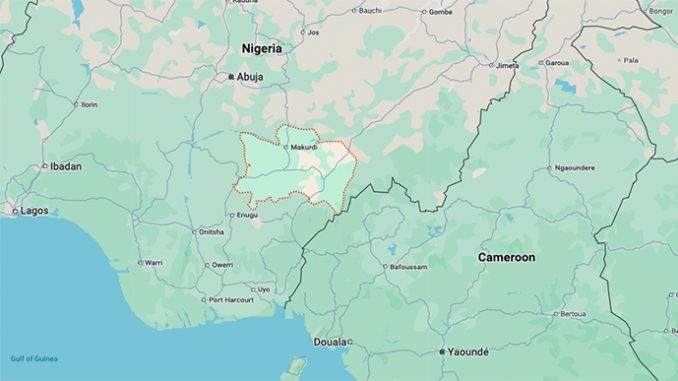



Praying for the victims and their families, that the hostages will be released unharmed, that those who are responsible for this heinous crime will be held accountable, and that there will be a lasting Peace in Nigeria.🙏
But isn’t Islam a religion of peace?
Diogenes- and the Crusades?
The Crusades were 700 years ago. Hopefully some minds have been opened in that time frame??? There is no excuse for this sort of UNPROVOKED behavior in the modern era. Let people worship as they will. But tolerance is not a quality that Islamists value. The era when Islam conquered an held a large chunk of Europe have been too soon forgotten.
Give it a rest “Br.Jaques”.
That was my first thought too, Br. Jacques. Not to mention the St. Bartholomew Day massacre, countless pogroms right into the 20th century, Northern Ireland, etc., etc.
We can look at most religions & find examples of violence committed. It’s more about the darkness in our hearts than the doctrines of our faith.
First thoughts often are not the best ones. Familiarize yourself better with the meaning of Jihad and the history of Islam. Armed belligerence against the infidels characterizes Islam from the Mohammed’s time until the present. Unlike many other religions, and specifically Christianity, Islam provides the justification for the violence that its adherents have engaged in.
My first thought wasn’t about Islam but about what all human beings share in their hearts. Christians need to be honest about their own past also.
Let’s remember that the Catholic Church has not institutionaled violence against others. It is NOT a tenet of our faith. On the other hand, fatwas ARE institutionalized in Islam. It is essential to their faith. So is jihad. No recognized mullah or imam has stood up and condemned violence. Violence is a central part of the religion of Islam.
The New Testament surely doesn’t advocate violence & neither does Christ. It’s not a tenet of our Faith. But the Church is comprised of broken human beings like you & me & Church authorities have had a hand in instances of sectarian violence in the past.
Sectarian violence is not built into the Church but it’s definitely escaped a few times.
The Crusades were a belated response to Islamic aggression against and persecution of Christians.
The Crusades were a perfectly justifiable and moral response to over 850 Muslim attacks in Western Europe. Your ignorance of history is appalling.
Several scholars have debunked the long-peddled untruth about the Crusades. See for example, this debunking by military historian R. Ibrahim in
https://www.raymondibrahim.com/2015/02/12/the-truth-about-the-crusades/
And in this interview https://www.raymondibrahim.com/2024/10/04/video-the-truth-about-the-crusades/
Ibrahim observes, “The truth, of course, is very different from the Fake History being peddled by the NYT and friends. The Crusades were a militant response to more than four centuries of jihadist aggression that saw three-quarters of the Christian world swallowed up by Islam. The particular Muslim invasions (between 1071 and 1095) that occasioned the First Crusade were actually motivated by noble — indeed, altruistic — sentiments. During that period and in the decades before it, hundreds of thousands of Eastern Christians (Armenians, Greeks, Syrians, etc.) were killed or enslaved, and tens of thousands of churches were ritually desecrated, torched, and/or turned into mosques. Think what “ISIS” did to Christians and other minorities in Iraq and Syria in the 2010s, but times a hundred, and for decades.
Nor were atrocities limited to Asia Minor or its indigenous Christians: “As the Turks were ruling the lands of Syria and Palestine, they inflicted injuries on [European] Christians who went to pray in Jerusalem, beat them, pillaged them, [and] levied the poll tax [jizya],” writes Michael the Syrian, a contemporary. Moreover, “every time they saw a caravan of Christians, particularly of those from Rome and the lands of Italy, they made every effort to cause their death in diverse ways.” Such was the fate of one German pilgrimage to Jerusalem. According to one of the pilgrims:
Accompanying this journey was a noble abbess of graceful body and of a religious outlook. Setting aside the cares of the sisters committed to her and against the advice of the wise, she undertook this great and dangerous pilgrimage. The pagans captured her, and in the sight of all, these shameless men raped her until she breathed her last, to the dishonor of all Christians. Christ’s enemies performed such abuses and others like them on the Christians.”
See also this scholarly interview by CWR of a professor on the subject of Christian Slavery under Islam which covers the origins of the Crusades as the Christian Greek Roman Emperor Alexius I Comnenos called for help from the West against the Muslim attacks against the Christian Roman Empire and how Pope Urban II gave him this help by organizing the First Crusade:
https://www.catholicworldreport.com/2020/12/16/the-forgotten-history-of-christian-slavery-under-islam/
https://www.thepostil.com/author/dario-fernandez-morera/
There was enslavement of Christians and all sorts of other people by the Berbers, Arabs, and Ottomans.
Over a million Europeans were kidnapped into slavery but many times more Africans were marched into slavery on the Trans Sahara route. Some were sold to Christians as well as to Muslims and Jews. Slavery was an equal opportunity venture.
Please continue to pray for us it is our mother land.
I prayed for Africa just this morning.
🙂
Islam is incompatible with civilized society. To expect anything else is a fool’s errand.
See this scholarly interview on Christian Slavery under Islam by Father Connolly of CWR, with a contemporary illustration of the slave market in Islamic Constantinople:
https://www.thepostil.com/christian-slavery-under-islam-a-conversation-with-dario-fernandez-morera/
and historian R. Ibrahim account of just now another atrocity vs Christians in Egypt:
https://www.raymondibrahim.com/2025/05/29/video-nightmarish-attack-on-egypts-christians-oh-world-do-you-see/?jetpack_skip_subscription_popup
Video Nightmarish Attack on Egypt Christians “Oh World—Do You See?!”
Didn’t US Congressman Scott Perry tell the world that USAID was the main sponsor of terrorism in Sub-Saharan Africa. Why is everyone pretending about it? What is General Langley and his men in Africom doing in the midst of the genocide going on in Nigeria and the rest of the region. You can tell that the US does not want Africa to grow. Imagine that Gen Langley lied against Ibrahim Traore( the only good news from that region) in order to find reason to invade BurkinaFaso and destroy the little good the young man has done. What a shame!
It’s hard for me to understand exactly what’s going on in Burkina Faso today but it does seem there’s more alliance with Russia & less with France. Very sad overall health & well being situation there. I wish more was being done to alleviate that.
It is absurd and a traversed reply on the martyrdom of Christians by their brothers from Ibrahim’s son Ishmael.The article under scrutiny is between the two faiths not nations. Was Scott Perry advancing a religious issue or a state’s interest? In the so-called Holy Quran, some Ayas expressly recommend the slaying of non-believers, refer to others as infidels not worthy of living,recommend the enslaving of non believers!
Islam is divided between those that engage in terrorism and those that support terrorism. To denounce terrorism in the public domain is to sign a death warrant.