Denver Newsroom, Nov 11, 2020 / 05:10 pm (CNA).- Ordinarily, a news analysis attempts to bring some context or expertise to a situation, in order to assess why something has happened, what might happen next, and whether any of it will prove to be important.
A news analysis often speculates about what newsmakers will do: At CNA, analysis considers often what the pope might do, or USCCB leaders, or bishops of prominent dioceses.
But this analysis will speculate about what ordinary Catholics – people who practice the faith and love the Lord and try to follow Jesus – will do after the publication of the Vatican’s McCarrick Report.
To do that, some context in this analysis will be personal. There is a reason I offer this personal narrative. Please bear with me.
I began working for the Catholic Church in 2005, while I was in canon law school. After finishing my canon law degree, in 2007 I began working regularly on cases involving clergy misconduct.
I have sat with priests guilty of sexual assault and coercion, of grooming young men, of acting with serial disregard for the promises of their priesthood and the spiritual health of their victims. I have also sat with priests falsely accused of those things. I have seen problems ignored, and I have seen problems treated with the attention they deserve.
I have seen priests get justice, and I have sometimes seen them face terrible injustice. I have seen victims mistreated, and victims treated with compassion and respect. I have seen cases in which every rule and protocol is followed, and cases in which most of them are ignored.
Before the initial McCarrick allegations were made public in June 2018, I had already seen some things. As friends dealt with grief and shock, I told some cynically “Now you know why I’m ticked off all the time.”
I had not known about McCarrick, but I knew about clerical abuse, and about the sins of omission and commission that allow it to happen.
The 449 pages of the McCarrick Report detail a story decades long, in which institutional and personal failures allowed a man who abused his power to act with serial and serious immorality — to, put simply, hurt people.
It includes accounts of both cowardice and courage, of institutional blindspots exploited by a manipulator, of naïveté, misplaced kindness, and ill-placed trust, of dysfunction, bureaucratic ineptitude, and malice. The report demonstrates that sin begets sin – it recounts stories of abusers who were themselves abused. It depicts the exploitation of crises for personal gain.
The report documents the damage wrought by a crippling bias towards institutional self-preservation, ironic for a Church that follows a crucified Lord.
There are few heroes: A mother who tried her best to speak out. A priest who blew the whistle to protect seminarians. A cardinal who came to realize, only over time, that he needed to make clear a serious problem.
The McCarrick Report also traces a broad trend of growing awareness of the importance of addressing abuse allegations, and addressing them properly. An increased understanding that presuming on good will is not helpful in the presence of manipulators. Efforts, often faltering, and sometimes failing, to learn from previous mistakes. But even amid that trend, there are appalling personal failures at every stage of McCarrick’s career.
The report does not document, or seem even to consider seriously, how McCarrick’s ambiguous and unmonitored financial situation enabled his decades of abuse. It mentions briefly his ability as a fundraiser, but offers no forensic analysis of his discretionary accounts. U.S. dioceses maintain records of those accounts, and to date have given no indication they plan to release them.
The report addresses bishops who lied for McCarrick, and about him, to the Holy See, but it does not ask why those bishops were willing to lie. It does not give serious attention to McCarrick’s social networks and their influence on the life of the Church – mention is made of a friend leaking high-level documents to McCarrick in the Vatican, but no attention is given to what influence networks that friend has. Many analysts have said it does not address whether there remain in ministry bishops who were gravely negligent, or even who compounded or facilitated cover-ups.
It brings many things to light, but the report is not a complete account of the McCarrick affair. A complete account may never emerge. Further, the Vatican’s report does not seem to consider present-day implications of McCarrick’s life and ministry, nor to draw lessons for the Church beyond McCarrick.
Questions remain, and those questions are very likely to go unanswered. Catholics who hope to see particular individuals brought to justice are likely to go disappointed.
And new scandals will inevitably emerge.
Since the retirement of Theodore McCarrick, there have already been some institutional reforms designed to prevent a situation like McCarrick’s from happening again. Institutional audits in U.S. dioceses, review boards, the promulgation of Vos estis lux mundi. Pope Francis or the U.S. bishops may well add more layers of policy reform.
But Pope Francis has emphasized that policy reform can not substitute for personal integrity. And the McCarrick Report demonstrates how much personal integrity actually matters. The report will likely bring statements from bishops committing to that personal integrity, and it might even inspire real conversion to that effect among some bishops and Church leaders.
Inevitably, though, there will be new failures in the Church’s life, because the Church is both human and divine: The mystical Body of Christ protected in certain ways by the Holy Spirit, and a community of sinners, each of them in need of a savior, few of them yet saints.
The Church is always and everywhere holy— its members are not usually so.
That paradox is a challenge to every believer.
But the future for the Church in the U.S. seems to depend a great deal on how ordinary Catholics respond to disappointment, discouragement, and somewhat unresolved scandal.
Religious disaffiliation is on the rise in the U.S. – a growing number of Americans identify themselves with no religion, or have no religious practice. And many ordinarly practicing Catholics are out of the habit of going to Sunday Mass, because of the pandemic. It will be unsurprising if the McCarrick scandal exacerbates religious disaffiliation, especially among young Catholics, who say in surveys that they prioritize the perceived personal integrity of leaders ahead of institutional affiliation.
Within the Church, there is a small but growing pocket of Catholics who are increasingly strident toward the authority of the pope and of U.S. bishops. In crises past, pockets like those have eventually become schisms. That seems practically unlikely in the contemporary U.S., but it is not impossible or unprecedented — there are more than 25,000 members of the “Polish National Catholic Church,” a schismatic group that began in the U.S in the early 20th century.
The point is that scandals have the capacity to discourage the practice of the faith, to foster cynicism, anger, bitterness, or indifference.
Hence the personal narrative.
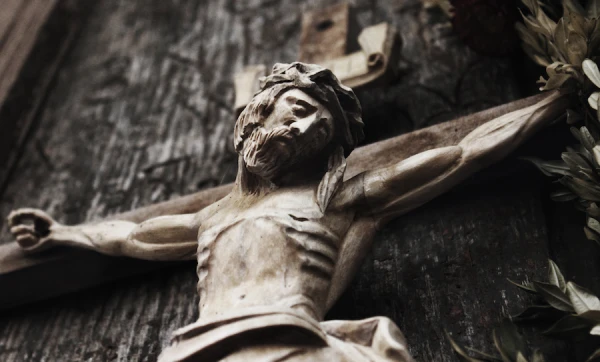
My own experience has taught me that confronting the oft-disappointing humanity of the Church is an exercise in accepting that disappointment is real, and that it can be only be relieved by embracing the cross, and the Crucified Savior.
In the spiritual life, moments of disappointment present a choice: One can nurture anger or indifference, or one can turn to Christ on the cross.
One of those choices brings life, the other does not.
That’s true for the spiritual life, and for the mission of the Church itself.
A movement of Catholics who respond to crisis with an increase of prayer, fasting, charity, and evangelization is counter-intuitive. It is also a counter-witness to the “black eye for the Church” contained in the McCarrick Report. It is confounding, and compelling.
Catholics who seek holiness in times of scandal tend often to be conduits of Christian renewal.
Making such a choice, I’ve learned by my failures, is easier said than done.
There is very little saccharine or romantic about following Jesus, especially when confronted with the sinfulness of the Church’s own leaders. There is often more setback than progress.
Humility helps – remembering our own failures tends to put the sins of others in perspective. Confession and the Eucharist help all the more.
Embracing the cross does not mean accepting or tolerating the presence of sin in the Church. Rather it means both assiduously calling for reform and repenting seriously for one’s own sins and shortcomings. Maintaining communion with the Church, even while helping to rebuild it.
The mission of the Gospel probably has very little to do with tweeking existing policy. A statement of regret from the U.S. bishops’ conference is unlikely to spark a renewal of faith in Jesus Christ.
In the wake of the McCarrick Report, renewal of the Church likely has most to do with whether ordinary Catholics will turn to Christ, and embrace his suffering on the cross. That isn’t easy. But it is the path to eternal life, and, in this life, its consequences might well be surprising.

[…]






I wish two things:
1. That the Vatican cease defining itself as a State. We are a Church. We exist in the world but are not of this world. States are creations of this world.
2. Stop interfering in the temporal affairs of the United States. As a Catholic, I find the Vatican’s statements unwelcome.
The Vatican has been both the Church and a city-state ever since the 1929 Lateran Treaty recognized the papacy as more than a “prisoner of the Vatican” (a consequence of the revolutionary loss of the Eternal City and the historically curious papal states to the new and larger nation-state of Italy, in 1870). https://en.wikipedia.org/wiki/Vatican_City
The status as a state among states renders possible an ear and a voice among the current political idiom of nation-states, although membership in the United Nations remains that of a non-member Permanent Observer State, since 1964.
This distinctive membership restriction is surely a good thing, since it protects the Vatican and the universal Catholic Church from being identified as just another member among the 193 member states–as you correctly argue should never be the case.
Cardinal Parolin, the architect of Communist-Party-Secret-Accords is a man who should not be posturing about governing with “wisdom,” etc.
And citizens faithful to Christ have no interest in getting “dialogued” by the apostate-and-homosexual-art-curator Spadaro.
The word obtuse seems apt.
CHRIS: You say it better than I. Thanks
@ Peter Beaulieu. Always thought it curious too that the Church became the equivalent of a nation. Although the title was modified to papal states. Certainly an oddity on the surface.
You’re probably aware that Pippin King of the Franks ceded the territories it had wrenched from the expanding Germanic Lombards. At the time during the 8th century it also benefited the papacy to rely on Frankish protection rather than the Eastern Byzantine empire due to imposition of taxes, and growing disagreement on doctrine examples, iconoclasm, filioque clause.
It can be argued either way whether Italian unification during the late 19th century resulting in the loss of the papal states benefited Catholicism. The transition from a temporal power [we even had a warlord Pope Julius II expanding territory] to a visibly more spiritual authority. From the day of revolutions of Pius IX to the despotic political movements of Pius XII the greatly territorially reduced Vatican State seemed a greater presence for the advocation of justice.
Deacon, I’m not sure if my understanding is correct. If you have time, please clarify for me. Thanks. My understanding is that Vatican City is a “state” like any other nation–a very tiny State, but still a state with a seat and vote at the United Nations and the right to offer opinions, defend itself, send troops to war, provide aid for nations experiencing a disaster or conflict, etc.
But Holy Mother Church is a Church, THE Holy Catholic Church that Jesus Christ Himself founded.
One question that I have–is the Pope the “president” or “mayor” of Vatican City, or are other leaders, perhaps even non-clergy or non-religious, elected or appointed? Or is Vatican City a monarchy with no other leadership than a king (the Pope?).
The latter Mrs. Whitlock. The Pope is the Head of State. He probably has infinitely more power when it comes to the Vatican City/State than the King of Great Britain and Northern Ireland who is a Head of State. He can name and depose at will. He answers to no human person.
Yes “ in the World but not of the World” I’ve been saying this for a long time, but that said the reality is that the Vatican IS a state and as such must operate as one. Unfortunately the Pope has to wear two hats as both head of State and head of Church. Not an easy task and not of his making. Thus he has an obligation to act as a voice and mediator in temporal affairs. Not to take sides or make alliances like other nations do is very difficult. To study the position of the Papacy during the Second World War illustrates how difficult this can be.
Perhaps one day we will have to abandon the Vatican and become a pilgrim people, but until then we must operate within this very messy and imperfect arrangement and allow the Pope to make mistakes just like any other temporal ruler.
And, yet, there’s a difference between the Vatican and the Holy See.
These two terms are not interchangeable. Here are the new details about how all this fits together: https://www.loc.gov/item/global-legal-monitor/2023-06-05/vatican-city-state-pope-francis-issues-new-constitution/
I wouldn’t advocate abandoning the Vatican. The Vatican is no larger than any major university campus in the USA. I just think we need to stop thinking of the Pope as Head of State. He is a moral/spiritual leader of Catholics and the Catholic Church. He should be seen as if he were a CEO. There are probably bishops in the USA who have control over large swarths of real estate but have no temporal authority. The Pope is simply Bishop of Rome – primus inter pares.
Most Catholics do not know tht DT saved the NY Catholic schools. During the Wuhan virus crisis, the NY Catholic schools were dire need of funds. They needed billions to survive. The Cardinal called DT for help to save the Catholic schools: “We need billions or we will have to close.” President DT picked up the phone and in 15 minutes he raised billions. Thus he saved the Catholic schools. Amazing. See his speech at the annual Al Smith Catholic dinner for October 2024 in the presence of the Cardinal. His speech starts at min. 29:00; during the speech he looks at the Cardinal and recollects this episode at min 56ff.
https://www.youtube.com/watch?v=cAwbHmrplak
Okay let’s ignore his lack of morals; his admiration of dictators; his desire to become one; his racist attitude; his threats of violence toward those who disagree with him;
May God have mercy on him and all of us who will lose precious rights under his presidency. I pray for his soul and all who voted for him
Dont bother praying for me, darling. I will pray for you. How sad that you have swallowed whole all of the untrue and slanderous propaganda about Trump which was spread around by the DEMs and their media minions. This is my third time voting Trump , and I am thrilled that he won. I have a Masters Degree,live in an urban area of a blue state, and am not remotely uninformed. Had more people not believed the untruths about him the last election, the country and the world would have likely been saved a lot of pain these last 4 years.
In this election, Trump gathered not only an electoral win but ALSO the popular vote by close to 5 million votes people who are sick of being disparaged and demeaned. A joke about being a dictator is just that–a joke. If you imagine its ok to disparage half the population of the country you need to check your thought processes. I have NEVER heard Trump make a racist remark ( another lie). And if by your fear of “losing precious rights” you are talking about the preservation of abortion, you are on the wrong forum. Trump has never suggested taking away ANY rights from any citizen( unlike the Dems, who have used censorship and lawfare with abandon and continue to do so with abandon against Trump and his lawyers). Maybe Dem governors could speak to their people about the recent election results, and liberal loss, with a tad less hysteria. It might help them.
silly and untrue description of the president. He never threatened violence against those who disagreed with him.. where did you get that? Peace? .. only under him has there been peace, not under biden or obama. How is he racist? He funded black universities, which obama refused to do. Admiration of dictators? I don’t even know how to deal with that one… check your facts.
Well, 72 million people disagree with you. What’s the probability that they’re all wrong and you are right? That would be zero according to my math.
Wisdom? We shall see. All this talk of revenge and retribution is hardly wise. Trump has an opportunity to be statesmanlike. Let’s hope that he takes the high road for a change.
I have never heard Trump talk about revenge. Although, WINNING is the best revenge I suppose. The only people talking about revenge and fighting are the democrats right now. Like the govs of California, NY and Illinois. What news media are you watching?? Take a look at something with more balance.
What virtue postering from the morally bankrupt socialist left!
I’d be happy if the Vatican tended to its own wisdom instead of lecturing others.
Given their Marxist march towards a full embrace of moral relativism, wisdom is something they they can’t even stumble over.
silly and untrue description of the president. He never threatened violence against those who disagreed with him.. where did you get that? Peace? .. only under him has there been peace, not under biden or obama. How is he racist? He funded black universities, which obama refused to do. Admiration of dictators? I don’t even know how to deal with that one… check your facts.
Did Pope Francis not call to congratulate Pres Trump? Why not?..he called Biden, and on other occasions too.
I don’t want to be negative. Lord forgive me.
Who cares if the Vatican is a state or a reclgious conclave of murmuring old MEN? We need to focus and renew our hopes for a saner world. I hope Trump will forge that new path , but his vial rhetoric and actions cause me pause. I may need help from God.
Cardinal Prolin: ““We wish him great wisdom, because this is the main VIRTUE of RULERS according to the Bible,” Note the word VIRTUE. Colossians 3:12 – “Therefore, as God’s chosen people, holy and dearly loved, clothe yourselves with compassion, kindness, humility, gentleness and patience.” UNfortunatly, I saw none of this during Trump’s campaign or in his daily life. “VIRTUE”?
I still remain hopefull that November 5, 2024 will not be “a day that will live in infamy”. FDR
Colossians 3:12 – “Therefore, as God’s chosen people, holy and dearly loved, clothe yourselves with compassion, kindness, humility, gentleness and patience.” Unfortunately, I saw none of this during Trump’s campaign or in
his daily life.”
To be fair, regular readers here have not witnessed any of those qualities in your hateful TDS posts either. Maybe people in glass houses shouldn’t throw stones.
So the countless acts of personal charity by Trump, to total strangers as well as friends, do not count as any sort of virtue in your applied understanding of scriptual admonishments? And is virtue better served by your propensities for insulting characterizations that seem to infect most of your commentary?
Enough with the hand-wringing; it’s unbecoming for a man.