In his new book, “A Short History of the Roman Mass” (Ignatius Press, Sept 2024), Father Michael Lang, a priest of the Oratory of St. Philip Neri and professor of theology, offers a detailed and accessible overview of the historical development of the Mass from its origins to the present day.
In an interview with ACI Prensa, CNA’s Spanish-language news partner, Lang, who is from London, shared his motivations for writing the book and the importance of the liturgy in the life of the Catholic Church.
“I am certainly passionate about liturgy; it is my main research interest,” said Lang, who holds a doctorate in theology from the University of Oxford and is a former consultant to the Holy See. He also explained that his passion for liturgy has been a constant driving force in his academic and pastoral life.
This interest led him to explore in depth the history of Christian worship, moving away from his initial studies in patristics to focus on the Roman rite of the Mass.
“This book is really the abbreviated and more popular version of a larger monograph I published in 2022 on the history of the stable core of the rite, beginning with the origins of the Eucharist and ending at the Council of Trent in the 16th century,” he said.
The priest emphasized that the basic structure of the Mass and its evolution over time are key elements in his work: “I focus on the basic structure of the Mass. I answer [the questions], ‘Why is the structure of the Mass the way it is? How did it develop? How did the pieces come together?’”
Continuity of today’s Mass with Jesus at the Last Supper
Through his research, Lang seeks to show how, despite historical and cultural transformations, “the essential continuity … takes us back to the time of the apostles and to Jesus at the Last Supper.”
Asked about the relevance of this topic today, Lang stressed that “the liturgy of worship is really at the heart of what the Church does: It is the worship of God from which everything else flows.”
“As Vatican II so rightly said, especially the Eucharist, the Mass, is the most important act of worship and the most important of the sacraments.”
He also said that understanding historical development is crucial to full participation in the liturgy.
“History is very important to our understanding of the faith. We believe that God revealed himself in history… and the history of the Church is important to us,” Lang explained.
According to the priest, this historical awareness also “helps you enter into the prayers of the Mass, it helps you to make these prayers your own, to make them part of your own spiritual life.”
The aim of the book, according to the author, is to provide Catholics with a tool that will enable them to better understand the liturgy and, consequently, to participate more consciously in it.
“I hope that my little book will help readers to have an idea of this and that it will make their participation in the Mass more fruitful,” Lang concluded.
This story was first published by ACI Prensa, CNA’s Spanish-language news partner. It has been translated and adapted by CNA.
If you value the news and views Catholic World Report provides, please consider donating to support our efforts. Your contribution will help us continue to make CWR available to all readers worldwide for free, without a subscription. Thank you for your generosity!
Click here for more information on donating to CWR. Click here to sign up for our newsletter.
Pope Francis on Palm Sunday 2022 / Daniel Ibanez/CNA
Vatican City, Apr 10, 2022 / 06:10 am (CNA).
Pope Francis said on Palm Sunday 2022 that nothing is impossible for God, who has the power to end the war in Ukraine, even if it looks like the e… […]
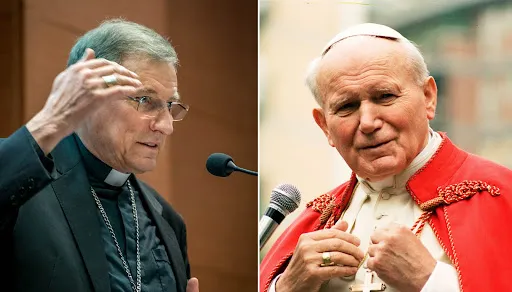
Archbishop Zbigņevs Stankevičs of Riga, Latvia (left), speaking during a Catholic conference in Warsaw in May 2022 on the natural law legacy of John Paul II (right.) / Photos by Lisa Johnston and L’Osservatore Romano
Warsaw, Poland, Jun 9, 2022 / 09:17 am (CNA).
Constant cooperation and dialogue among Catholic, Lutherans, Orthodox, and other Christian denominations have been crucial to protect life and family in the Baltic nation of Latvia, Archbishop Zbigņevs Stankevičs of Riga, Latvia, said during a recent Catholic conference in Warsaw.
In his speech, Stankevičs shared his personal ecumenical experience in Latvia as an example of how the concept of natural law proposed by St. John Paul II can serve as the basis for ecumenical cooperation in defending human values.
The metropolitan archbishop, based in Latvia’s capital, is no stranger to ecumenical work and thought. In 2001, he became the first bishop consecrated in a Lutheran church since the split from Protestantism in the 1500s. The unusual move, which occurred in the church of Evangelical Lutheran Cathedral in Riga, formerly the Catholic Cathedral of St. Mary, signaled the beginning of Stankevičs’ cooperation with the Lutheran church in Latvia, a cooperation that would ultimately become a partnership in the cause of life and the family. Since 2012, the archbishop has served on the Pontifical Council for Promoting Christian Unity.
“I would like to present this ecumenical cooperation in three experiences in my country: the abortion debate, the civil unions discussion, and the so-called Istanbul convention,” Stankevičs began.
Entering the abortion debate
Ordained as a priest in 1996, Stankevičs struggled to find proper consultation for Catholic couples on natural family planning. It was then that he decided to create a small center that provided natural family planning under the motto “let us protect the miracle [of fertility].”
This involvement in the world of natural family planning would lead him into the heart of the abortion debate in Latvian society, and, ultimately, to the conclusion that moral discussions in the public square benefit from a basis in natural law, something emphasized in the teachings of John Paul II.
“I knew that theological arguments would not work for a secular audience, so I wanted to show that Catholic arguments are not opposed to legal, scientific, and universal arguments, but rather are in harmony with them,” Stankevičs said.
“[A] few years later our parliament introduced the discussion to legalize abortion. No one was doing anything so I decided to do something. I consulted some experts and presented a proposal that was published in the most important secular newspaper in Latvia,” the archbishop said.
Stankevičs’ article, “Why I was Lucky,” used both biological and theological arguments to defend human life. He noted that his own mother, when pregnant with him, was under pressure to get an abortion; “but she was a believer, a Catholic, so she refused the pressure.”
After the Latvian parliament legalized abortion in 2002, the different Christian confessions decided to start working together to protect the right to life and the family.
In Latvia, Catholics comprise 25% of the population, Lutherans 34.2%, and Russian Orthodox 17%, with other smaller, mostly Christian denominations making up the remainder.
“We started to work together by the initiative of a businessman in Riga, a non-believer who wanted to promote awareness about the humanity of the unborn,” the archbishop recalled.
“Bringing all Christians together in a truly ecumenical effort ended up bearing good fruits because we worked together in promoting a culture of life: From more than 7,000 abortions per year in 2002, we were able to bring it down to 2,000 by 2020,” he said.
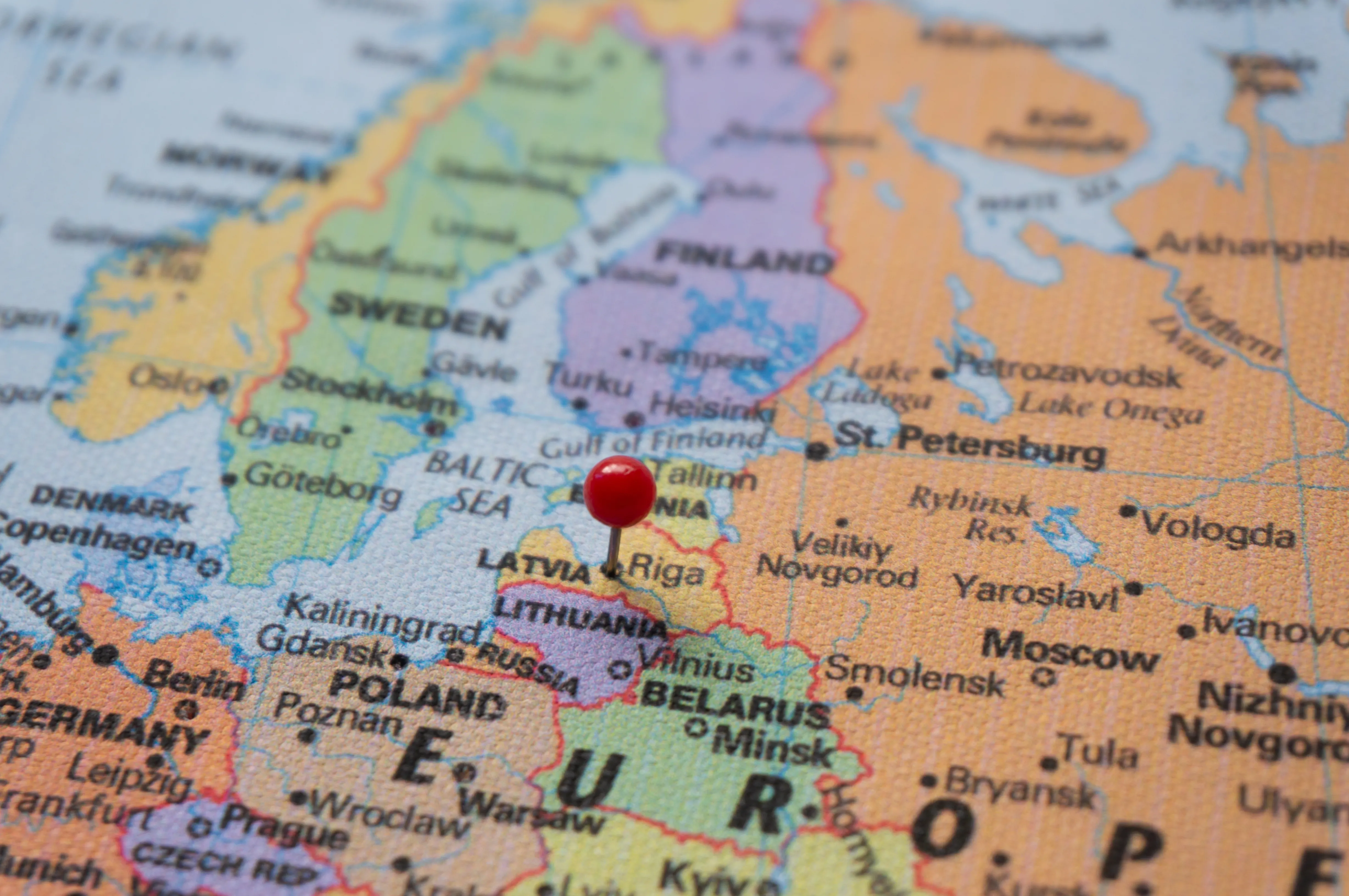
Map of Riga, the capital of Latvia. Shutterstock
Ecumenical defense of marriage, family
Regarding the legislation on civil unions, another area where Stankevičs has rallied ecumenical groups around natural law defense of marriage, the archbishop said that he has seen the tension surrounding LGBT issues mount in Latvian society as increased pressure is brought to bear to legalize same-sex unions.
Invited to a debate on a popular Latvian television show called “One vs. One” after Pope Francis’ remark “who am I to judge?” was widely interpreted in Latvian society as approving homosexual unions, Stankevičs “had the opportunity to explain the teachings of the Catholic Church and what was the real meaning of the Holy Father’s words.”
After that episode, in dialogue with other Christian leaders, Stankevičs proposed a law aimed at reducing political tensions in the country without jeopardizing the traditional concept of the family.
The legislation proposed by the ecumenical group of Christians would have created binding regulations aimed at protecting any kind of common household; “for example, two old persons living together to help one another, or one old and one young person who decide to live together.”
“The law would benefit any household, including homosexual couples, but would not affect the concept of [the] natural family,” Stankevičs explained. “Unfortunately the media manipulated my proposal, and the Agency France Presse presented me internationally as if I was in favor of gay marriage.”
In 2020, the Constitutional Court in Latvia decided a case in favor of legalizing homosexual couples and ordered the parliament to pass legislation according to this decision.
In response, the Latvian Men’s Association started a campaign to introduce an amendment to the Latvian constitution, to clarify the concept of family. The Latvian constitution in 2005 proclaimed that marriage is only between a man and a woman, but left a legal void regarding the definition of family, which the court wanted to interpret to include homosexual unions.
The Latvian bishops’ conference supported the amendment presented by the Men’s Association, “but most importantly,” Stankevičs explained, “we put together an ecumenical statement signed by the leaders of 10 different Christian denominations supporting the idea that the family should be based on the marriage between a man and a woman. The president of the Latvian Jewish community, a good friend, also joined the statement.”
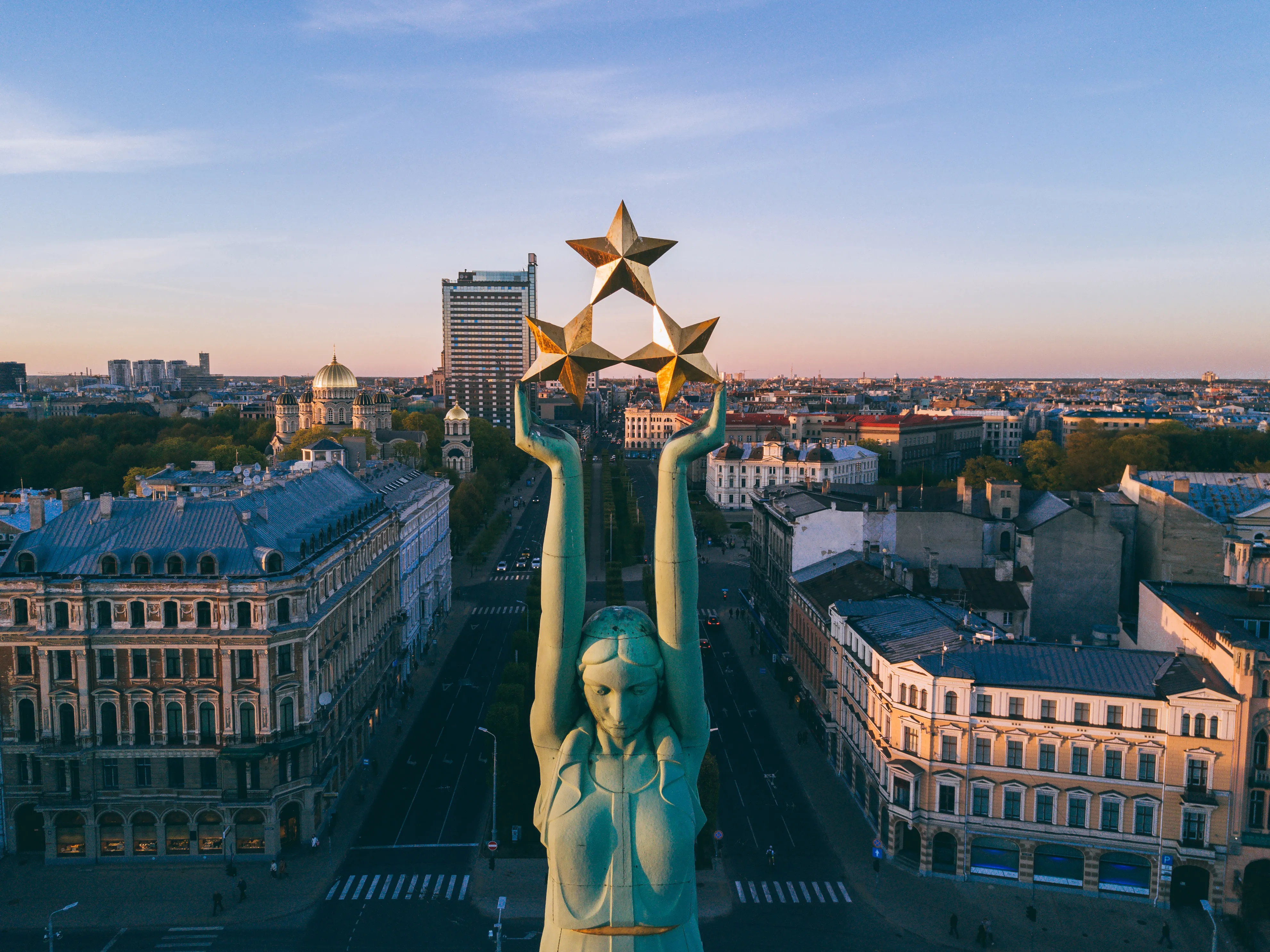
The Freedom Monument in Riga, Latvia, honors soldiers who died during the Latvian War of Independence (1918-1920). Shutterstock
According to Stankevičs, something strange happened next. “The Minister of Justice created a committee to discuss the demand of the constitutional court, and it included several Christian representatives, including three from the Catholic Church, which worked for a year.” But ignoring all the discussions and proposals, the Minister of Justice ended up sending a proposal to parliament that was a full recognition of homosexual couples as marriage.
The response was also ecumenical: Christian leaders sent a letter encouraging the parliament to ignore the government’s proposal.
According to Stankevičs, the proposal has already passed one round of votes “and it is very likely that it will be approved in a second round of votes, with the support of the New Conservative party. But we Christians continue to work together.”
Preventing gender ideology
The third field of ecumenical cooperation mentioned by Stankevičs concerned the Istanbul Convention, a European treaty which the Latvian government signed but ultimately did not ratify.
The treaty was introduced as an international legal instrument that recognizes violence against women as a violation of human rights and a form of discrimination against women.
The convention claims to cover various forms of gender-based violence against women, but Christian communities in Latvia have criticized the heavy use of gender ideology in both the framing and the language of the document.
The word “gender,” for instance, is defined as “the socially constructed roles, behaviors, activities, and attributes that a given society considers appropriate for women and men,” a definition that allows gender to be defined independent of biological sex and therefore opens the document to the question of whether it really is aimed at the protection of women.
Christian communities also question the biased nature of the committee designated to enforce the convention.
The governments of Slovakia and Bulgaria refused to ratify the convention, while Poland, Lithuania, and Croatia expressed reservations about the convention though it was ultimately ratified in those countries, a move the government of Poland is attempting to reverse.
“When we found out that the Latvian parliament was going to ratify it, I went to the parliament and presented the common Christian position,” Stankevičs explained. As a consequence of that visit, the Latvian parliament decided not to ratify the convention, Stankevičs said, crediting the appeal to the unity provided by the common Christian position argued via natural law.
“In conclusion,” the archbishop said, “I can say that in Latvia we continue to defend the true nature of life and family. But if we Catholics would act alone, we would not have the impact that we have as one Christian majority. That unity is the reason why the government takes us seriously.”
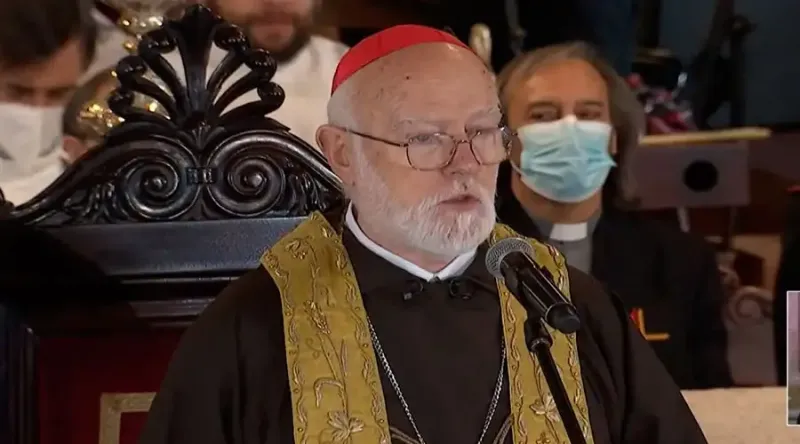
Cardinal Celestino Aós Braco of Santiago de Chile peaches at a Te Deum service marking Chile’s independence, Sept. 18, 2022 / Iglesia de Santiago
Santiago, Chile, Sep 19, 2022 / 13:06 pm (CNA).
Cardinal Celestino Aós Braco of Santiago de Chile said in a Te Deum prayer service marking the country’s independence that neither violence nor corruption will build Chile.
The prelate encouraged living centered on Christ to bear good fruit and working together for the common good.
The cardinal gave a homily at the ecumenical Te Deum that was held Sept. 18 in the Santiago Metropolitan Cathedral in the presence of the president of Chile, Gabriel Boric, and his ministers of state.
Chile’s Fiestas Patrias marks the anniversary of the first meeting of the country’s post-colonial government in 1810.
“Violence does not build. The violent neither make a present nor a future for Chile, nor do the corrupt build it,” the prelate said.
“We cannot make the other person who doesn’t think like us into an enemy. The people voted in the plebiscite and it’s wrong to do violence with insults or threats to those who voted one way or the other,” he stressed.
In a Sept. 4 plebiscite, 62% of voters rejected a draft constitution that created a right to abortion and euthanasia and was supported by Boric.
The cardinal also encouraged people to live the authentic freedom that comes from Christ, to face the current “cultural, ideological, economic, and social slaveries.”
The archbishop of Santiago stressed that the large voter turnout in the plebiscite is an impressive fact, “but political participation does not end or stop there.”
“Christians should get involved in politics because it is a lofty form of charity. Among us all we have to build Chile, a country of brothers, where no one is unnecessary and no one is marginalized,” he emphasized.
In his homily, Aós encouraged always seeking “prayer, Sunday Mass, and the sacraments, which are not a luxury, but a necessity for all” in order to bear good fruit, united with God.
“There is an unequivocal criterion, by their fruits you shall know them,” the cardinal said.
“The person who lives in violence, who slanders or insults his adversary, who violates marital fidelity, who kills life, who falsifies or lies, does he bear fruit from the good tree or from the bad tree, always peace and good, unity and harmony,” or does he produce “bitterness, disunity, hatred?” the cardinal asked.
The prelate encouraged getting involved in politics to defend the people’s essential rights, such as “dignity, the equality of citizens, seeking the common good, justice and peace, favoring democratic participation, acting with honesty and transparency in the administration of public goods, caring for and fostering life, family, marriage, the right of parents to educate their children, social justice and solidarity, and the defense of peace.”
The archbishop of Santiago noted that “religious freedom is a right of every human being.” Hostility or contempt for religion is not a healthy separation of church and state but virulent secularism, he said.
Aós said that “the big question is what kind of fruit have you borne this year, what are you going to change to bear good fruit. Faith and works are important, it’s not enough to have ideas and beliefs, you have to put them into practice.”
“Let’s not tire of doing good, because if we don’t give up we will reap the fruits at some point,” he remarked.
This story was first published by ACI Prensa, CNA’s Spanish-language news partner. It has been translated and adapted by CNA.
Ever sincere & serious Catholic is marked by their passion for and absorbtion in Holy Mass; yet general knowledge of the origins of this uniquely important liturgy & the significance of its key components is rare. This book can help us to develop beyond the typical instinctive love of a routine, repetitive, religious ritual to a far deeper, participatory involvement of our heart and mind and soul.
As the author of this short review, Diego López Marina, says Fr Michael Lang’s book provides Catholics: “with a tool that will enable them to better understand the liturgy and, consequently, to participate more consciously in it.”
As a lay Catholic with qualifications & wide experience in Christian theology I’m in awe of the perfection of the liturgy of Holy Mass. In every healthy congregation we begin with a sincere, trinitarian welcome to each other. We then acknowledge that none of us can approach God’s Holiness except by confessing our sins and confidently assuring one another of God’s mercy for all who are truly repentant.
Then, being newly shriven, we are confident to approach The Throne with loud exclamations of God’s Glory; recalling that Christians began singing ‘Gloria in Excelsis Deo’ before 128 AD. That brings us to the place where we can feast on the soul food of God’s Word: Epistles read and Psalms sung to prepare the way for The Good News of God Himself, welcomed by our cry of: “Glory to You, O Lord!”
Reverently marking our minds, lips, and hearts with the Cross of Jesus Christ – we’re proclaiming – “We believe – We will tell others – We will forever love Christ’s Word”. How precious it is to listen to the Apostles’ account of Jesus’ teachings & life of miracles that confront the world with Eternal Truth, in texts that have come to us from the very start of Christian community, still fresh & vibrant today. “Praise to You, Lord Jesus Christ!”
The earliest known creed – the old Roman – dates back to about 110 AD and we join together in loudly procliming our unchanging Catholic Christian faith in its descendant Nicene or Apostles Creed. This is all a grand and meaningful preparation for our approaching the table of The Lord as shriven, praising, worshipful, Gospel informed, orthodox believing Catholics.
How wonderful: Catholics have been singing ‘The Sanctus’ from before 96 AD.
Jesus, our King, calls us to His table to feed on His Holy Body and drink His Precious Blood, so that we can have LIFE in Him and He can LIVE in us. Oneness with Christ is our guarantee of eternal life with God & all those who love God (the whole point of our faith & of The Catholic Church).
We pray out loud ‘The Our Father’ – given us by Jesus Christ, to express His Peace to all our sisters & brothers. Since every Catholic who has ever lived is incorporate in the One Savior, we are given a very potent reason to persevere in loving & serving each other. This is the love that will demonstrate to the world that Jesus Christ is truly The Son of God, given to save us (see, e.g., John 17:23)
As a passionate human: incorporation in this amazing love is highly addictive. As a highly trained academic: the logic of the liturgy of Holy Mass is mightily convincing.
Hopefully the book reviewed will draw clergy & lay together to contemplate the unique wonders we celebrate together in every Holy Mass.
Yes, we read: “How wonderful: Catholics have been singing ‘The Sanctus’ from before 96 AD.”
AND, regarding the threefold “Sanctus” at the beginning every Mass, then near the end we have the culminating Doxology, immediately prior to our sacramental incorporation into Communion: “Through [!] Him, and with Him [!!], and in Him [!!!], O God, almighty Father, in the unity of the Holy Spirit, all glory and honor is yours, forever and ever. Amen.”
Surely, St. Augustine was onto something when he saw from Christ: “You will not change me into yourself, as you change food into your flesh, but you will be changed into me [!]” (Confessions, Bk. 7, Ch. 10). It is “IN” Him that, at each Mass, we join Christ to ultimately give honor and glory to the Father.
So, about Synodality vs/plus (?) Eucharistic Adoration, it’s almost as if, in some neglected sense, “time is [NOT] greater than space.”
Yes, dear Peter D. Beaulieu:
“It is ‘IN’ Him that, at each Mass, we join Christ to ultimately give honor and glory to the Father.”
After who-knows how many millenia of humanity’s futile religiosities, Jesus Our LORD gives us the one & only Way to come confidently into Father GOD’s Awesome Presence.
With two massive consequences, we hope & pray:
1) that at Holy Mass every person will overflow with overwhelming gratitude;
2) that each of us will be whole-hearted to lovingly lead others to The Way.
The logic of this liturgy enacts the most profound reality in (& far above) our cosmos (independently of the authenticity of the celebrant & their assistants).
Understanding Christ’s provision, no proper Catholic will ever hang their head.
Seeking to hear & lovingly follow King Jesus Christ; blessing from marty
Thank you for that Dr. Rice. The reality of the words of institution of our Lord believed is where I found the freedom that Jesus promises those who continue in His Word – knowing the truth and the truth setting us free. Indeed, this body has been given for us – this blood has been shed for us – for the remission of sins.
I wanted to ask you if you know when Roman Catholic theology began teaching that only venial sins are forgiven here in the Eucharist? Whenever that took place, I suppose Mary was sought after 53 times in a singular prayer session to intercede for the one praying at their point of death.
If you don’t have faith in what Jesus is testifying to us in the Eucharist by giving the Father’s children the very body and blood Mary already provided us through her completed intercession, we remain in bondage to unbelief and sin; we are not free, if we don’t believe Christ’s body and blood have been given to us in the Eucharist – for the remission of sins. Just what does the Roman Catholic person who prays the Rosary want Mary to do at the time of their death that Jesus giving of His body and blood has not already completed?
Dear Jeff Lahman, I’m sure you are right, for in John 6:53-59 Jesus assures us of the necessity for true believers to eat His flesh and drink His blood. That is a challenging but foundational part of Christ’s salvific ministry to humankind.
Saint Paul, in 1 Corinthians 11:23-29, shows us that – from the very start – believers in Jesus Christ gathered together to do that. This scripture also reveals that – from the very start – some received the Sacred Body & Precious Blood of Christ worthily, whilst others received in an unworthy state.
As you observe, at Holy Mass today, those not shriven of serious sin cannot depend on The Penetential Rite for forgiveness. They should have accessed sacramental penance, in a spirit of true repentance & firm resolve to reform & make restitution where possible, PRIOR TO receiving Holy Communion at Holy Mass.
Thus: unshriven Catholic murders, adulterers, robbers, etc., etc. and those with forbiden allegiances to mafia, freemasonry, satanism, witchcraft, etc., etc. are committing sacrilege by insisting on receiving Holy Communion.
Sadly, no Australian archbishop, bishop, or priest, that I’m aware of, is game to preach this eternal truth. They just permit the unshriven to commit sacrilege without warning them of the serious consequences for their eternal souls.
Paul taught the Corinthian church that: to do this is sinning against the Body & Blood of The LORD; bringing them under GOD’s judgement.
Perhaps this is one reason why we see judgment so clearly impacting The Church?
I love Fr. Lang’s works, especially “Turning Towards the Lord,” but I must say George Weigel’s lead endorsement on Amazon had me reaching for my liturgical revolver. Whatever the value of his insights on other aspects of the Church, on the liturgy Mr. Weigel is to be avoided.







Ever sincere & serious Catholic is marked by their passion for and absorbtion in Holy Mass; yet general knowledge of the origins of this uniquely important liturgy & the significance of its key components is rare. This book can help us to develop beyond the typical instinctive love of a routine, repetitive, religious ritual to a far deeper, participatory involvement of our heart and mind and soul.
As the author of this short review, Diego López Marina, says Fr Michael Lang’s book provides Catholics: “with a tool that will enable them to better understand the liturgy and, consequently, to participate more consciously in it.”
As a lay Catholic with qualifications & wide experience in Christian theology I’m in awe of the perfection of the liturgy of Holy Mass. In every healthy congregation we begin with a sincere, trinitarian welcome to each other. We then acknowledge that none of us can approach God’s Holiness except by confessing our sins and confidently assuring one another of God’s mercy for all who are truly repentant.
Then, being newly shriven, we are confident to approach The Throne with loud exclamations of God’s Glory; recalling that Christians began singing ‘Gloria in Excelsis Deo’ before 128 AD. That brings us to the place where we can feast on the soul food of God’s Word: Epistles read and Psalms sung to prepare the way for The Good News of God Himself, welcomed by our cry of: “Glory to You, O Lord!”
Reverently marking our minds, lips, and hearts with the Cross of Jesus Christ – we’re proclaiming – “We believe – We will tell others – We will forever love Christ’s Word”. How precious it is to listen to the Apostles’ account of Jesus’ teachings & life of miracles that confront the world with Eternal Truth, in texts that have come to us from the very start of Christian community, still fresh & vibrant today. “Praise to You, Lord Jesus Christ!”
The earliest known creed – the old Roman – dates back to about 110 AD and we join together in loudly procliming our unchanging Catholic Christian faith in its descendant Nicene or Apostles Creed. This is all a grand and meaningful preparation for our approaching the table of The Lord as shriven, praising, worshipful, Gospel informed, orthodox believing Catholics.
How wonderful: Catholics have been singing ‘The Sanctus’ from before 96 AD.
Jesus, our King, calls us to His table to feed on His Holy Body and drink His Precious Blood, so that we can have LIFE in Him and He can LIVE in us. Oneness with Christ is our guarantee of eternal life with God & all those who love God (the whole point of our faith & of The Catholic Church).
We pray out loud ‘The Our Father’ – given us by Jesus Christ, to express His Peace to all our sisters & brothers. Since every Catholic who has ever lived is incorporate in the One Savior, we are given a very potent reason to persevere in loving & serving each other. This is the love that will demonstrate to the world that Jesus Christ is truly The Son of God, given to save us (see, e.g., John 17:23)
As a passionate human: incorporation in this amazing love is highly addictive. As a highly trained academic: the logic of the liturgy of Holy Mass is mightily convincing.
Hopefully the book reviewed will draw clergy & lay together to contemplate the unique wonders we celebrate together in every Holy Mass.
Yes, we read: “How wonderful: Catholics have been singing ‘The Sanctus’ from before 96 AD.”
AND, regarding the threefold “Sanctus” at the beginning every Mass, then near the end we have the culminating Doxology, immediately prior to our sacramental incorporation into Communion: “Through [!] Him, and with Him [!!], and in Him [!!!], O God, almighty Father, in the unity of the Holy Spirit, all glory and honor is yours, forever and ever. Amen.”
Surely, St. Augustine was onto something when he saw from Christ: “You will not change me into yourself, as you change food into your flesh, but you will be changed into me [!]” (Confessions, Bk. 7, Ch. 10). It is “IN” Him that, at each Mass, we join Christ to ultimately give honor and glory to the Father.
So, about Synodality vs/plus (?) Eucharistic Adoration, it’s almost as if, in some neglected sense, “time is [NOT] greater than space.”
Yes, dear Peter D. Beaulieu:
“It is ‘IN’ Him that, at each Mass, we join Christ to ultimately give honor and glory to the Father.”
After who-knows how many millenia of humanity’s futile religiosities, Jesus Our LORD gives us the one & only Way to come confidently into Father GOD’s Awesome Presence.
With two massive consequences, we hope & pray:
1) that at Holy Mass every person will overflow with overwhelming gratitude;
2) that each of us will be whole-hearted to lovingly lead others to The Way.
The logic of this liturgy enacts the most profound reality in (& far above) our cosmos (independently of the authenticity of the celebrant & their assistants).
Understanding Christ’s provision, no proper Catholic will ever hang their head.
Seeking to hear & lovingly follow King Jesus Christ; blessing from marty
Thank you for that Dr. Rice. The reality of the words of institution of our Lord believed is where I found the freedom that Jesus promises those who continue in His Word – knowing the truth and the truth setting us free. Indeed, this body has been given for us – this blood has been shed for us – for the remission of sins.
I wanted to ask you if you know when Roman Catholic theology began teaching that only venial sins are forgiven here in the Eucharist? Whenever that took place, I suppose Mary was sought after 53 times in a singular prayer session to intercede for the one praying at their point of death.
If you don’t have faith in what Jesus is testifying to us in the Eucharist by giving the Father’s children the very body and blood Mary already provided us through her completed intercession, we remain in bondage to unbelief and sin; we are not free, if we don’t believe Christ’s body and blood have been given to us in the Eucharist – for the remission of sins. Just what does the Roman Catholic person who prays the Rosary want Mary to do at the time of their death that Jesus giving of His body and blood has not already completed?
Dear Jeff Lahman, I’m sure you are right, for in John 6:53-59 Jesus assures us of the necessity for true believers to eat His flesh and drink His blood. That is a challenging but foundational part of Christ’s salvific ministry to humankind.
Saint Paul, in 1 Corinthians 11:23-29, shows us that – from the very start – believers in Jesus Christ gathered together to do that. This scripture also reveals that – from the very start – some received the Sacred Body & Precious Blood of Christ worthily, whilst others received in an unworthy state.
As you observe, at Holy Mass today, those not shriven of serious sin cannot depend on The Penetential Rite for forgiveness. They should have accessed sacramental penance, in a spirit of true repentance & firm resolve to reform & make restitution where possible, PRIOR TO receiving Holy Communion at Holy Mass.
Thus: unshriven Catholic murders, adulterers, robbers, etc., etc. and those with forbiden allegiances to mafia, freemasonry, satanism, witchcraft, etc., etc. are committing sacrilege by insisting on receiving Holy Communion.
Sadly, no Australian archbishop, bishop, or priest, that I’m aware of, is game to preach this eternal truth. They just permit the unshriven to commit sacrilege without warning them of the serious consequences for their eternal souls.
Paul taught the Corinthian church that: to do this is sinning against the Body & Blood of The LORD; bringing them under GOD’s judgement.
Perhaps this is one reason why we see judgment so clearly impacting The Church?
Dr. Rice, Thank you, again!
I love Fr. Lang’s works, especially “Turning Towards the Lord,” but I must say George Weigel’s lead endorsement on Amazon had me reaching for my liturgical revolver. Whatever the value of his insights on other aspects of the Church, on the liturgy Mr. Weigel is to be avoided.
At 63 pages, this is pretty superficial. I guess it depends on what you want.
I’d go with Adrian Fortescue’s “The Mass:A Study of the Roman Liturgy.”
Oh I’m sorry. I looked at the wrong book with the same title. I still recommend Fortescue’s book, but Fr. Lang’s book seems like a worthy read.