Pope Francis this week called on the faithful to a conversion of heart that extends Christian charity to all of God’s creation and urged them to commit themselves to protecting the environment.
The Holy Father made the remarks as part of a papal message delivered ahead of the World Day of Prayer for the Care of Creation. That observance, established by the pope in 2015, is held on Sept. 1 every year.
Christians, the pope said, bear witness to their faith in part “by caring for the flesh of suffering humanity.” Christianity acknowledges that “everything is ordered to the glory of God,” Francis said; the spirit of “universal fraternity and Christian peace,” he argued, “should also be extended to creation.”
The Holy Spirit “guides us and calls us to conversion,” Francis said, “to a change in lifestyle in order to resist the degradation of our environment and to engagement in that social critique which is above all a witness to the real possibility of change.”
Care for creation, the pope said, is not merely an ethical issue but a theological one, one that is marked by the “act of love” in which God created human beings.
“To hope and act with creation, then, means to live an incarnational faith, one that can enter into the suffering and hope-filled ‘flesh’ of others, by sharing in the expectation of the bodily resurrection to which believers are predestined in Christ the Lord,” the pope said.
By living out this imperative, “our lives can become a song of love for God, for humanity, with and for creation, and find their fullness in holiness,” he wrote.
The theme for the 2024 day of prayer is “Hope and Act with Creation,” with the motif drawn from St. Paul’s Letter to the Romans.
The pope said in 2015 that the day offers the faithful “a fitting opportunity to reaffirm their personal vocation to be stewards of creation, to thank God for the wonderful handiwork which he has entrusted to our care, and to implore his help for the protection of creation as well as his pardon for the sins committed against the world in which we live.”
The establishment of the day in 2015 was also seen as a sign of unity with the Orthodox Church, which established Sept. 1 as a day to celebrate creation in 1989.
If you value the news and views Catholic World Report provides, please consider donating to support our efforts. Your contribution will help us continue to make CWR available to all readers worldwide for free, without a subscription. Thank you for your generosity!
Click here for more information on donating to CWR. Click here to sign up for our newsletter.
Belvedere College, Dublin / Pjposullivan via Wikimedia (CC BY 4.0)
Denver Newsroom, Jul 28, 2021 / 10:07 am (CNA).
Following the leak of the Irish Jesuits’ draft inquiry into sexual abuse committed by a deceased member, the order on Monday ackno… […]
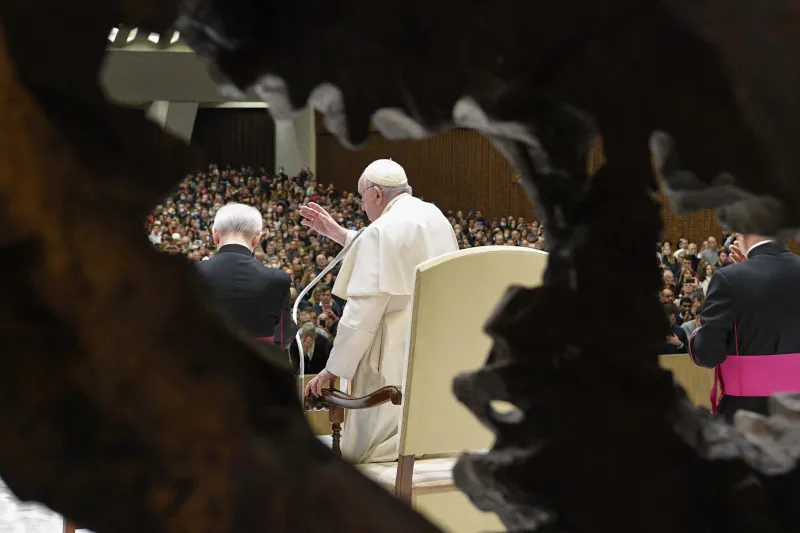
Pope Francis waves during the weekly general audience in the Vatican’s Paul VI Hall on Dec. 28, 2022. / Credit: Vatican Media.
Vatican City, Dec 28, 2022 / 10:30 am (CNA).
Pope Francis Wednesday published a message on St. Francis de Sales, a saint who teaches us that “devotion [to God] is meant for everyone, in every situation.”
The pope’s apostolic letter, titled Totum amoris est, or “Everything Pertains to Love,” was published on Dec. 28, the 400th anniversary of St. Francis de Sales’ death in 1622.
The title comes from the preface of the Swiss saint’s book “Treatise on the Love of God,” in which he wrote that “In Holy Church, everything pertains to love, lives in love, is done for love and comes from love.”
St. Francis de Sales was a priest and bishop who taught against Protestant heresies and encouraged holiness in all people, no matter their vocation. He is known for his spiritual writings, including two books that are still widely read today: “An Introduction to the Devout Life” and “Treatise on the Love of God.” In 1877, he was proclaimed a Doctor of the Church.
“On this anniversary of the fourth centenary of his death, I have given much thought to the legacy of Saint Francis de Sales for our time,” Pope Francis said in his apostolic letter. “I find that his flexibility and his far-sighted vision have much to say to us.”
“Today he bids us set aside undue concern for ourselves, for our structures and for what society thinks about us, and consider instead the real spiritual needs and expectations of our people,” the pope noted.
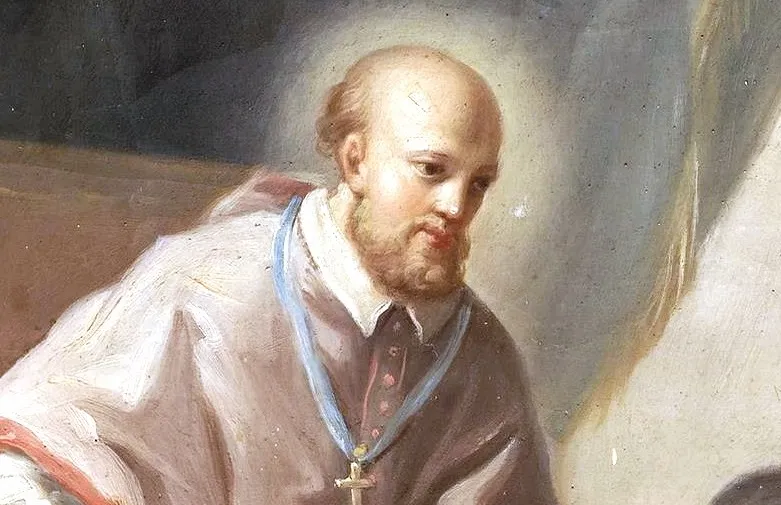
Saint Francis de Sales, painted by Francisco Bayeu y Subías. Wikimedia (CC0)
Commenting on St. Francis de Sales’ teachings, Pope Francis said “devotion is meant for everyone, in every situation, and each of us can practice it in accordance with our own vocation.”
“As Saint Paul VI wrote on the fourth centenary of the birth of Francis de Sales, ‘Holiness is not the prerogative of any one group, but an urgent summons addressed to every Christian: “Friend, come up higher” (Lk 14:10). All of us are called to ascend the mountain of God, albeit not each by the same path.’”
“Devotion,” Paul VI said, quoting St. Francis, “must be practiced differently by the gentleman, the craftsman, the chamberlain, the prince, the widow, the young woman, the wife. Moreover, the practice of devotion must be adapted to the abilities, affairs and duties of each.”
False Devotion
In his letter, Pope Francis reflected on what St. Francis de Sales called “false devotion” and its relevance for our spiritual lives today.
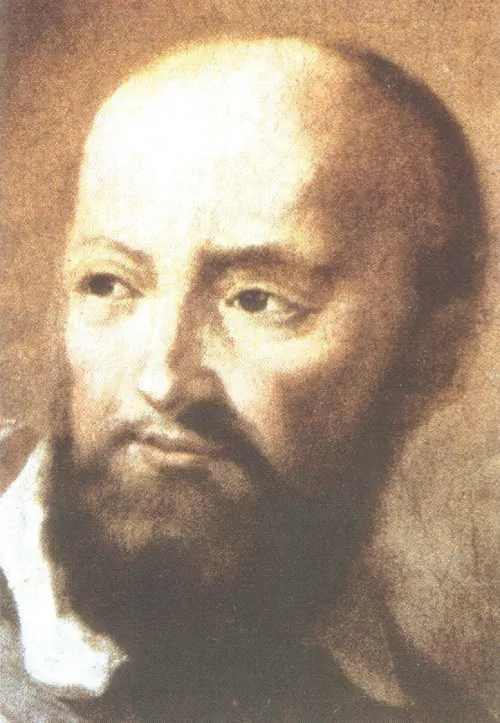
Saint Francis de Sales. Kelson / Wikimedia (CC0)
“Francis’ description of false devotion is delightful and ever timely. Everyone can relate to it, since he salts it with good humor,” the pope explained.
De Sales wrote: “Someone attached to fasting will consider himself devout because he doesn’t eat, even though his heart is filled with bitterness; and while, out of love for sobriety, he will not let a drop of wine, or even water, touch his tongue, he will not scruple to drench it in the blood of his neighbor through gossip and slander. Another will consider himself devout because all day long he mumbles a string of prayers, yet remains heedless of the evil, arrogant and hurtful words that his tongue hurls at his servants and neighbors. Yet another will readily open his purse to give alms to the poor, but cannot wring an ounce of mercy from his heart in order to forgive his enemies. Another still will pardon his enemies, yet never even think of paying his debts; it will take a lawsuit to make him do so.”
“All these,” Pope Francis said, “of course, are perennial vices and struggles, and they lead the saint to conclude that ‘all these fine people, commonly considered devout, most surely are not.’”
True Devotion
The pope explained that St. Francis de Sales taught that true devotion, instead, is found in “God’s life dwelling within our hearts.”
“True and lively devotion presupposes the love of God; indeed, it is none other than a genuine, and not generic, love of God,” the saint said.
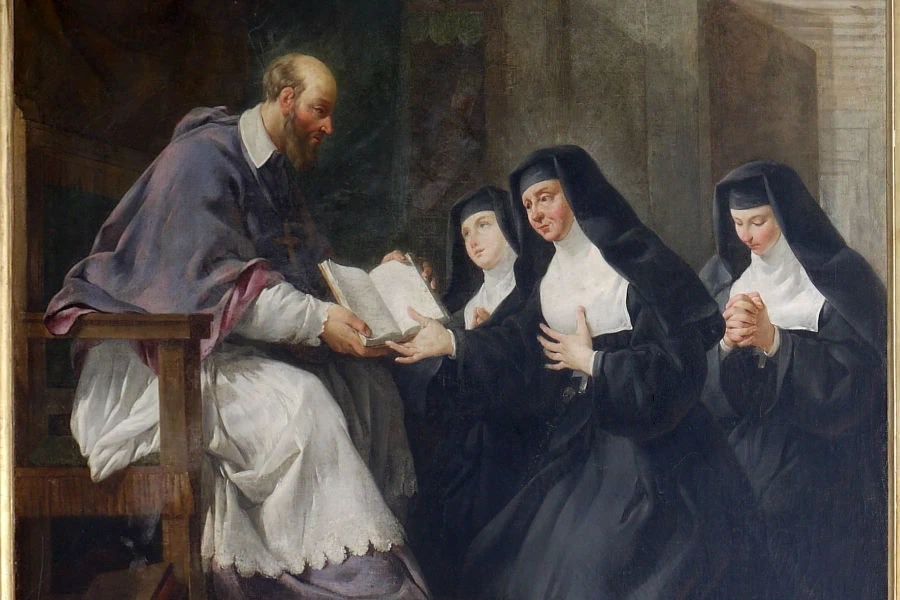
Saint Francis de Sales giving Saint Jeanne de Chantal the rule of the order of the Visitation /. null
Pope Francis said: “In Francis’ lively language, devotion is ‘a sort of spiritual alertness and energy whereby charity acts within us or, we act by means of it, with promptness and affection.’ For this reason, devotion does not exist alongside charity, but is one of its manifestations, while at the same time leading back to it.”
“Devotion is like a flame with regard to fire: it increases the intensity of charity without altering its quality,” the pope said, adding a quote from St. Francis de Sales, who said: “Charity is a spiritual fire that, when fanned into flame, is called devotion. Devotion thus adds nothing to the fire of charity but the flame that makes charity prompt, active and diligent, not only in the observance of God’s commandments but also in the exercise of his divine counsels and inspirations.”
“Understood in this way, devotion is far from something abstract,” the pope said. “Rather, it becomes a style of life, a way of living immersed in our concrete daily existence. It embraces and discovers meaning in the little things: food and dress, work and relaxation, love and parenthood, conscientiousness in the fulfillment of our duties. In a word, it sheds light on the vocation of each individual.”
Love
Pope Francis also reflected on St. Francis de Sales’ teachings on love as “the first act and principle of our devout or spiritual life.”
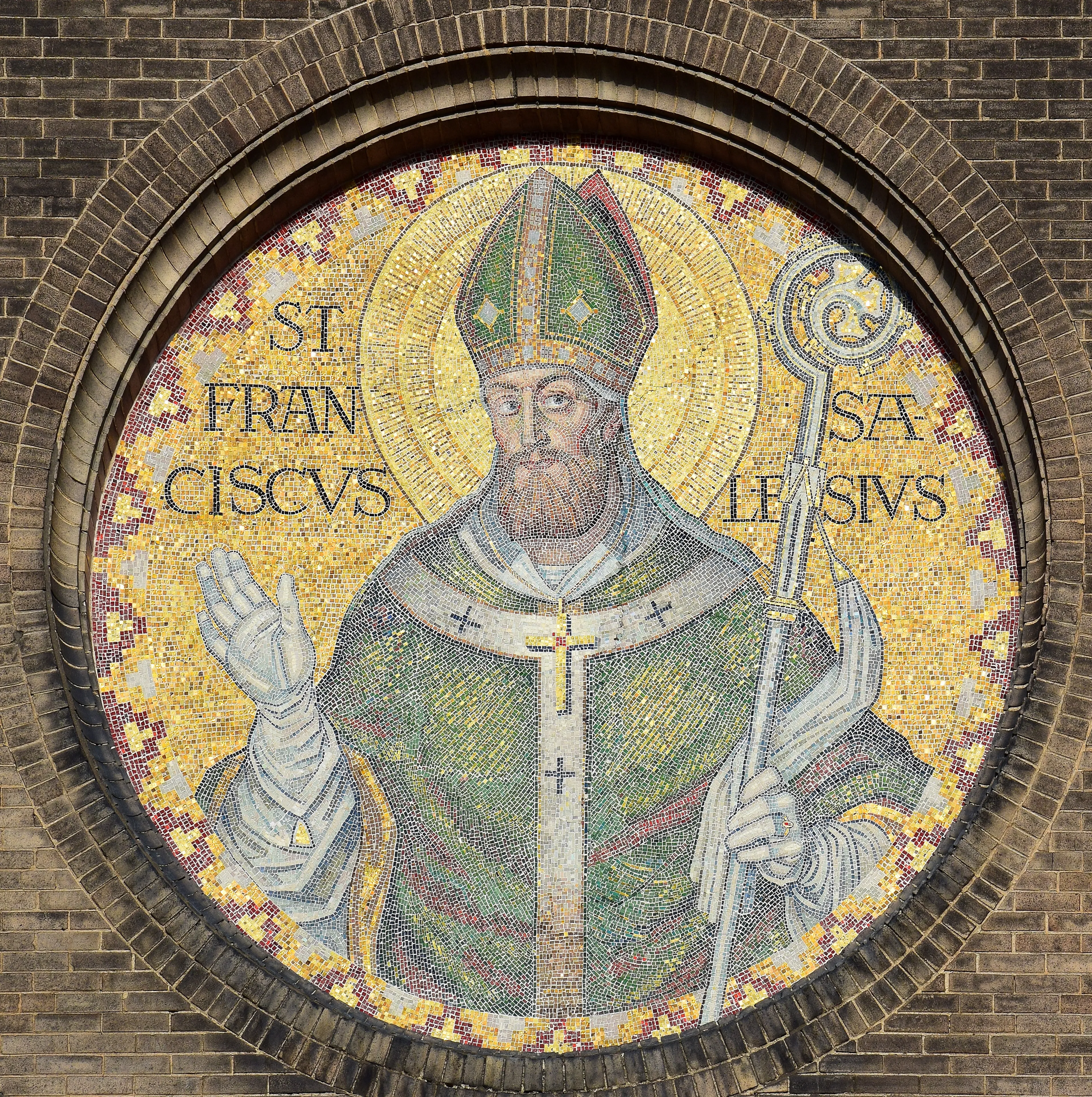
Mosaic of Sales on the exterior of St. Francis de Sales Oratory in St. Louis, Missouri. RickMorais / Wikimedia (CC BY-SA 4.0)
“The source of this love that attracts the heart is the life of Jesus Christ,” he explained. “‘Nothing sways the human heart as much as love,’ and this is most evident in the fact that ‘Jesus Christ died for us; he gave us life through his death. We live only because he died, and died for us, as ours and in us.’”
“These words are profoundly moving; they reveal not only a clear and insightful understanding of the relationship between God and humanity, but also the deep bond of affection between Francis de Sales and the Lord Jesus,” the pope said. “The ecstasy of life and action is no abstract reality, but shines forth in the charity of Christ that culminates on the cross. That love, far from mortifying our existence, makes it radiate with extraordinary brightness.”
On the other hand, the perennial Catholic Church might recall that “charity”—like “faith” and “hope”—is a distinct theological virtue…
And, then might still propose that well-advised care for creation is about “love”—especially for future generations of persons on planet earth. This distinction could not be made to appear as endorsing a secularist legal conflation to classify trees, for example, as persons.
But, also, what about this part of the linked “papal message”:
The idea of Joachim of Flora (1135-1202) was actually condemned at the Synod of Arles (A.D. 1263, a real synod!) because it split/periodized the unity of the Blessed Trinity into a sequence of three historical ages: the Age of the Father (Old Testament), the Age of the Son (from Christ until A.D. 1260), then to be followed by the Age of the Spirit (happily ever after!). With Joachim, who needs Hegel or Marx?
Joachim enthusiasts might conclude that the prophet Joachim simply got the date wrong by seven centuries. That the start date for the final Age of the Holy Spirit was not A.D. 1260—but our current moment as finally revealed in the so-called “spirit of Vatican II,” and now with our Teilhardian experts and “facilitator” bishops of fluid synodality!
What, then, of Jesus Christ as “the same yesterday, today, and forever” (Heb 13:8)?
Planet Earth is thirsting for love and tender care. Cooperating and collaborating with companion species can be a win-win situation. Lord teach us to love and pray.



On the other hand, the perennial Catholic Church might recall that “charity”—like “faith” and “hope”—is a distinct theological virtue…
And, then might still propose that well-advised care for creation is about “love”—especially for future generations of persons on planet earth. This distinction could not be made to appear as endorsing a secularist legal conflation to classify trees, for example, as persons.
But, also, what about this part of the linked “papal message”:
“At a time of violent conflicts between the Papacy and the Empire, the Crusades, the outbreak of heresies and growing worldliness in the Church, Joachim [!] was able to propose the ideal of a new spirit of coexistence among people, based on universal fraternity and Christian peace, the fruit of a life lived in the spirit of the Gospel” https://www.vatican.va/content/francesco/en/messages/cura-creato/documents/20240627-messaggio-giornata-curacreato.html
“Joachim?”
The idea of Joachim of Flora (1135-1202) was actually condemned at the Synod of Arles (A.D. 1263, a real synod!) because it split/periodized the unity of the Blessed Trinity into a sequence of three historical ages: the Age of the Father (Old Testament), the Age of the Son (from Christ until A.D. 1260), then to be followed by the Age of the Spirit (happily ever after!). With Joachim, who needs Hegel or Marx?
Joachim enthusiasts might conclude that the prophet Joachim simply got the date wrong by seven centuries. That the start date for the final Age of the Holy Spirit was not A.D. 1260—but our current moment as finally revealed in the so-called “spirit of Vatican II,” and now with our Teilhardian experts and “facilitator” bishops of fluid synodality!
What, then, of Jesus Christ as “the same yesterday, today, and forever” (Heb 13:8)?
Planet Earth is thirsting for love and tender care. Cooperating and collaborating with companion species can be a win-win situation. Lord teach us to love and pray.