Cardinal Wilton Gregory speaks at an interview in Rome on April 11, 2024. / Credit: “EWTN News Nightly” screen shot
Rome Newsroom, Apr 18, 2024 / 15:00 pm (CNA).
As the Catholic Church’s first African American cardinal was honored at a U.S. seminary in Rome, he recalled the legacy of faith and perseverance of Black Catholics in America, including at a time when they were not accepted by U.S. seminaries.
Cardinal Wilton Gregory, the archbishop of Washington, received this year’s Rector’s Award at an April 11 banquet at the Pontifical North American College, where seminarians from across 99 dioceses in the U.S. live while studying for the priesthood in Rome.
In an interview with CNA before the award ceremony, Gregory pointed out that in the 19th century, African Americans who had a vocation to the priesthood were sent to study in Rome and then to serve as missionaries in Africa because at the time they were not allowed to enter U.S. seminaries.
“Being in Rome reminds me also that Rome is the place that provided a seminary education and formation for Augustus Tolton, the first African American priest to serve openly in the United States,” Gregory said.
Tolton “came to Rome because Rome … was willing to take him on as a seminarian when no other seminary in the United States would accept that.”
Venerable Augustus Tolton, a former slave turned Catholic priest, is now on the path to sainthood in the Catholic Church. He studied in Rome near the Spanish Steps at the Pontifical Urban University, run by the Vatican’s Congregation for the Propagation of the Faith, from 1880 to 1886, when he was ordained in the Archbasilica of St. John Lateran.
Tolton offered his first Mass in St. Peter’s Basilica on April 25, 1886. One hundred and thirty-four years later, Pope Francis made Gregory the first African American cardinal in a ceremony in the same basilica in 2020.
“I know that the honor that was given to me by Pope Francis rested solidly on the faith of African American Catholics,” Gregory told CNA.
“Even in times when we weren’t respected, or understood, or honored, we remained faithful.”
“And the fact that I can enjoy the office, knowing that it rests on the quality of goodness, faith, and charity of the African American community, humbles me deeply,” the cardinal said with tears in his eyes.
Gregory has led the Archdiocese of Washington since 2019. He said that navigating a U.S. presidential election year as the archbishop requires prudence.
“We’re living in a very divisive moment, both in our political life in the United States, but sometimes also … in our Church,” he said.
“In the United States, we’re struggling with trying to be one people — one people with a common purpose, a common future. And sometimes the rhetoric gets to be so hostile and so vitriolic that it causes us to step back and say, ‘Is this really the nation that is the land of the free and the home of the brave?’”
The cardinal, who will be in Rome for the month leading up to the U.S. election as a delegate in the Synod on Synodality, said that his task is “difficult, but not impossible.”
“As the archbishop of Washington, I have to focus on the fact that in spite of all of the differences that are at play, I have wonderful people in my archdiocese. And people have great generosity and devotion to the country and to the Church.”
Gregory recently made headlines for calling President Joe Biden a “cafeteria Catholic” in an Easter interview on “Face the Nation,” explaining that Biden “picks and chooses dimensions of the faith to highlight while ignoring or even contradicting other parts.”
While he did not receive a response from the White House to the comments, the cardinal said that “the overwhelming response was positive” from the Catholics in his archdiocese.
“I respect the president. I believe that he is a sincere man of faith, I really do believe that. I would just ask that he would somehow find a way to better allow his personal religious convictions to engage in the public forum,” Gregory said.
Gregory said that he hopes that the Eucharistic revival in the U.S. will lead American Catholics to “draw closer together as a family of faith around the altar that Christ sets for us.”
“The emphasis on the Real Presence also should generate the next question: If Christ is really present and I receive him in the Eucharist, what does that demand of me?” he said.
“His Eucharistic presence is a gift of unquestionable importance. But it’s also a challenge that those of us who dine with him must live like him and have the same values that he expressed in the Gospels as his legacy of faith and love.”
If you value the news and views Catholic World Report provides, please consider donating to support our efforts. Your contribution will help us continue to make CWR available to all readers worldwide for free, without a subscription. Thank you for your generosity!
Click here for more information on donating to CWR. Click here to sign up for our newsletter.
Washington D.C., Sep 26, 2020 / 04:30 pm (CNA).- Judge Amy Coney Barrett pledged to serve all Americans with impartiality if confirmed to the Supreme Court, following her nomination by President Donald Trump on Saturday.
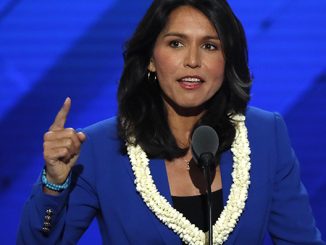
Tulsi Gabbard speaks in Des Moines, Iowa, August 2019. / CJ Hanevy / Shutterstock
Washington, D.C. Newsroom, Oct 11, 2022 / 15:00 pm (CNA).
Former Hawaii congresswoman and 2020 presidential candidate Tulsi Gabbard announced Tuesday that she is … […]
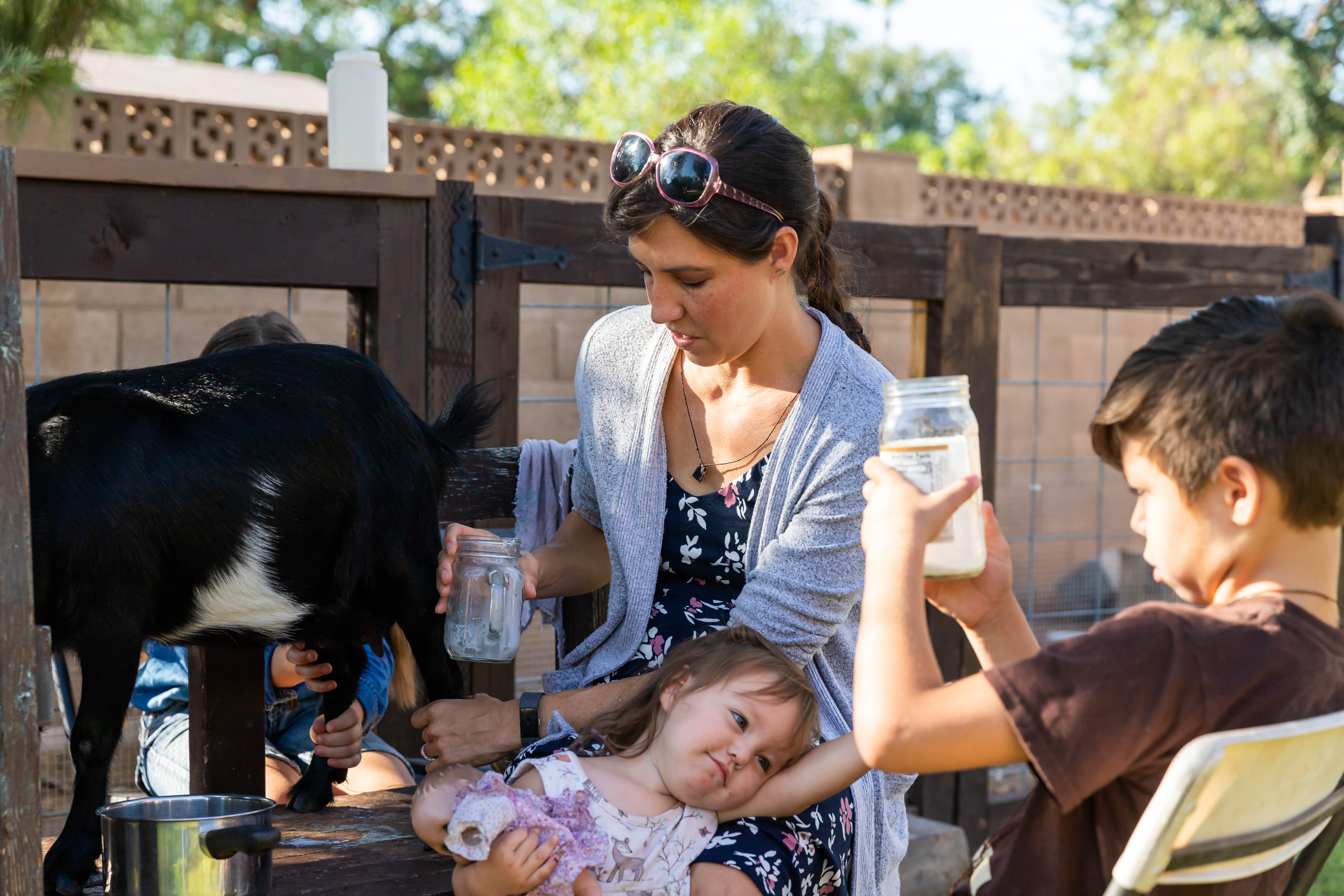
Maureen McKinley milks one of her family’s goats in their backyard with help from three of her children, Madeline (behind), Fiona and Augustine on Monday, Aug. 2, 2021. McKinley and her family own two goats, chickens, a rabbit, and a dog. / Jake Kelly
Denver Newsroom, Aug 10, 2021 / 16:32 pm (CNA).
With five children ages 10 and under to care for, and a pair of goats, a rabbit, chickens and a dog to tend to, Maureen and Matt McKinley rely on a structured routine to keep their busy lives on track.
Chores, nap times, scheduled story hours – they’re all important staples of their day. But the center of the McKinleys’ routine, what focuses their family life and strengthens their Catholic faith, they say, is the Traditional Latin Mass.
Its beauty, reverence, and timelessness connect them to a rich liturgical legacy that dates back centuries.
“This is the Mass that made so many saints throughout time,” observes Maureen, 36, a parishioner at Mater Misericordiæ Catholic Church in Phoenix.
“You know what Mass St. Alphonsus Ligouri, St. Therese, St. Teresa of Avila and St. Augustine were attending? The Traditional Latin Mass,” Maureen says.
“We could have a conversation about it, and we would have all experienced the exact same thing,” she says. “That’s exciting.”
Recent developments in the Catholic Church, however, have curbed some of that excitement. On July 16, Pope Francis released a motu proprio titled Traditiones custodis, or “Guardians of the Tradition”, that has cast doubt on the future of the Traditional Latin Mass (TLM) – and deeply upset and confused many of its devotees.
Pope Francis’ directive rescinds the freedom Pope Benedict XVI granted to priests 14 years ago to say Masses using the Roman Missal of 1962, the form of liturgy prior to Vatican II, without first seeking their bishop’s approval. Under the new rules, bishops now have the “exclusive competence” to decide where, when, and whether the TLM can be said in their dioceses.
In a letter accompanying the motu proprio, Pope Francis maintains that the faculties granted to priests by his predecessor have been “exploited to widen the gaps, reinforce the divergences, and encourage disagreements that injure the Church, block her path, and expose her to the peril of division.”
Using the word “unity” a total of 15 times in the accompanying letter, the pope suggests that attending the TLM is anything but unifying, going so far as to correlate a strong personal preference for such masses with a rejection of Vatican II.
Weeks later, many admirers of the “extraordinary” form of the Roman rite – the McKinleys among them – are still struggling to wrap their minds and hearts around the pope’s order, and the pointed tone he used to deliver it.
Maureen McKinley says she had never considered herself a “traditionalist Catholic” before. Instead, she says she and her husband have just “always moved toward the most reverent way to worship and the best way to teach our children.”
“It didn’t feel like I became a particular type of Catholic by going to Mater Misericordiæ. But since the motu proprio came out, I feel like I have been categorized, like I was something different, something other than the rest of the Church,” she says.
“It feels like our Holy Father doesn’t understand this whole group of people who love our Lord so much.”
McKinley isn’t alone in feeling this way. Sadness, anger, frustration, and disbelief are some common themes in conversations among those who regularly attend the TLM.
They want to understand and support the Holy Father, but they also see the restriction as unnecessary, especially when plenty of other more pressing issues in the Church abound.
Eric Matthews, another Mater Misericordiæ parishioner, views the new restrictions as an “attack on devout Catholic culture,” citing the beauty that exists across the rites recognized within the Church. There are seven rites recognized in the Catholic Church: Latin, Byzantine, Alexandrian or Coptic, Syriac, Armenian, Maronite, and Chaldean.
“It’s the same Mass,” says Matthews, 39, who first discovered the TLM about eight years ago. “It’s just different languages, different cultures, but the people that you have there are there for the right reasons.”
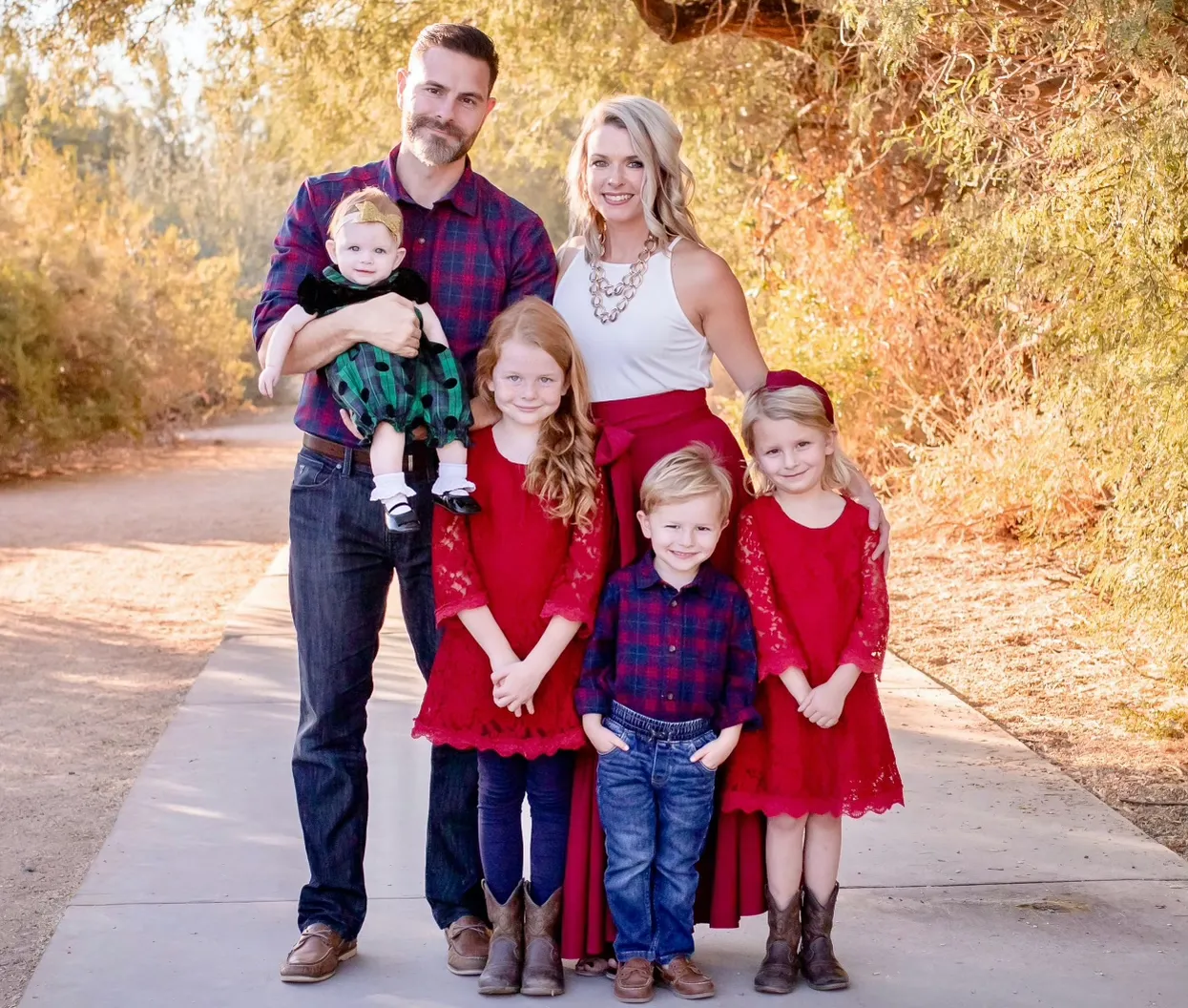
Eric and Geneva Matthews with their four children. / Narissa Lowicki
Different paths to the TLM
The pope’s motu proprio directly affects a tiny fraction of U.S. Catholics – perhaps as few as 150,000, or less than 1 percent of some 21 million regular Mass-goers, according to some estimates. According to one crowd-sourced database, only about 700 venues – compared to over 16,700 parishes nationwide – offer the TLM.
Also, since the motu proprio’s release July 16, only a handful of bishops have stopped the TLM in their dioceses. Of those bishops who have made public responses, most are allowing the Masses to continue as before – in some cases because they see no evidence of disunity, and in others because they need more time to study the issue.
But for those who feel drawn to the TLM – for differing reasons that have nothing to do with a rejection of Vatican II – it feels as if the ground has shifted under their feet.
Maureen McKinley wants her children to understand the importance of hard work, of which they have no shortage when it comes to their urban farm. After morning prayer, Maureen milks the family’s goats with the help of the children. Madeline (age 10) feeds the bunny; Augustine (7) exercises the dog; John (6) checks for eggs from the chickens; and Michael (4) helps anyone he chooses.
With a noisy clatter in the kitchen, the McKinleys eat breakfast, tidy up their rooms, and begin their daily activities. They break at 11 a.m. to head to daily Mass at Mater Misericordiæ, an apostolate of the Priestly Fraternity of Saint Peter (FSSP), where they first attended two years ago.
Matt, 34, wanted to know how the early Christians worshipped.
“The funny thing about converts is they’re always wanting more,” says Maureen, who was, at first, a little resistant to the idea of attending the TLM because she didn’t know Latin. “Worship was a big part of his conversion.”
Maureen agreed to follow her husband’s lead, and they continued to attend the TLM. What kept them coming back week after week was the reverence for the Eucharist.
“Matt had a really hard time watching so many people receive communion in the hand at the other parish,” says Maureen. “He says he didn’t want our kids to think that that was the standard. That’s the exception to the rule, not the rule.”
Reverence in worship also drew Elizabeth Sisk to the TLM. A 28-year-old post-anesthesia care unit nurse, she attends both the Novus Ordo, the Mass promulgated by St. Paul VI in 1969, and the extraordinary form in Raleigh, North Carolina, where her parish, the Holy Name of Jesus Cathedral, offers the TLM on the first Sunday of the month.
Sisk has noticed recently that more people in her area — especially young people who are converts to Catholicism — are attending both forms of the Mass. While the Novus Ordo is what brought many of them, herself included, to the faith, she feels that the extraordinary form invites them to go deeper.
“We want to do something radical with our lives,” Sisk says. “To be Catholic right now as a young person is a really radical decision. I think the people who choose to be Catholic right now, we’re all in. We don’t want ‘watered-down’ Catholicism.”
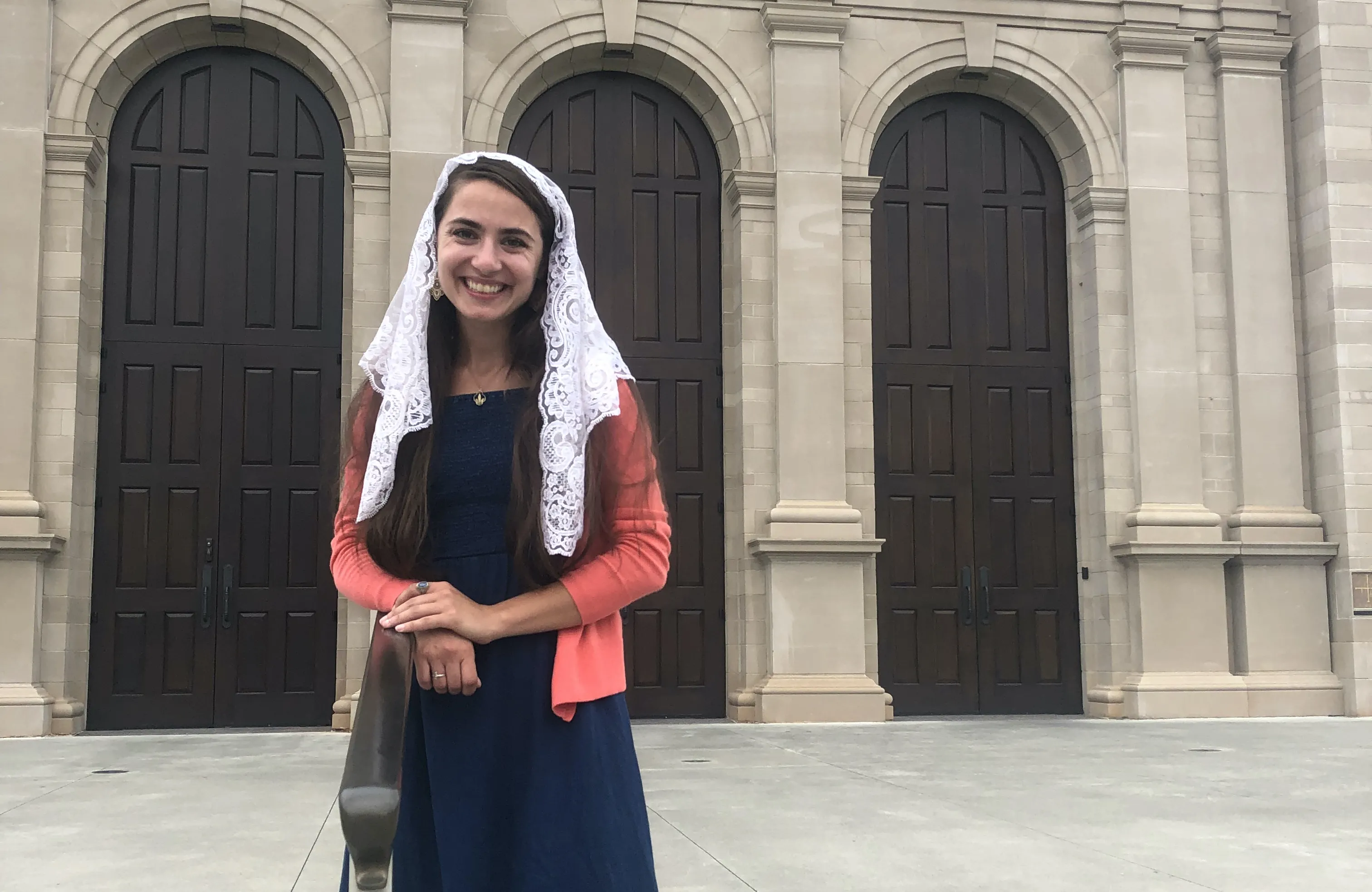
Elizabeth Sisk stands in front of Holy Name of Jesus Cathedral in Raleigh, North Carolina.
With the lack of Christian values in the world today, Sisk desires “something greater,” which she says she can tell is happening in the TLM.
Many TLM parishes saw an increase in attendance during the pandemic, as they were often the only churches open while many others shut their doors or held Masses outside. This struck some as controversial, if not disobedient to the local government. For others, it was a saving grace to have access to the sacraments.
The priests at Erin Hanson’s parish obtained permission from the local bishop to celebrate Mass all day, every day, with 10 parishioners at a time during the height of the COVID pandemic.
“We were being told by the world that church is not necessary,” says Hanson, a 39-year-old mother of three. “Our priest says, ‘No, that’s a lie. Our church is essential. Our salvation is essential. The sacraments are essential.’”
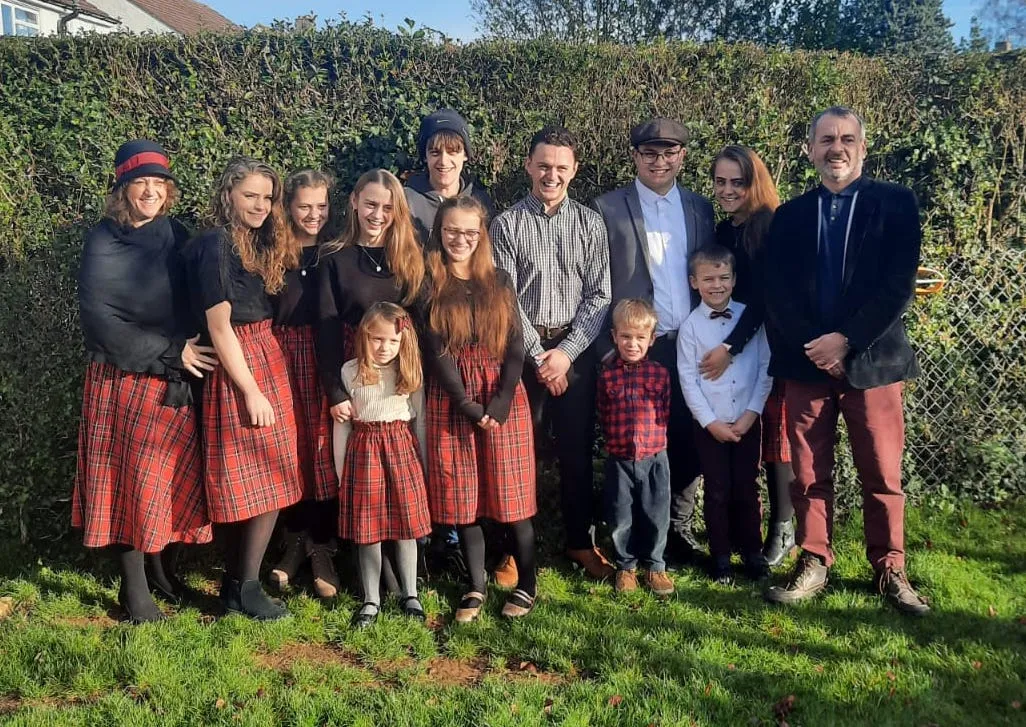
Andy Stevens, 52, came into the Church through the TLM, much to the surprise of his wife, Emma, who had been a practicing Catholic for many years. Andy was “very adamantly not going to become Catholic,” but was happy to help Emma with their children at Mass. It wasn’t until they attended a TLM that Andy began to think differently about the Church.
“He believed that you die and then there is nothing, and he never really spoke to me about becoming a Catholic,” says Emma, 48, who was pregnant with their seventh child at the time.
Andy noticed an intense focus among the worshippers, which he recognized as a “real presence of God” that he didn’t see anywhere else. After the birth of their 7th child, he joined the Church.
All 12 of the Stevens’ children prefer the TLM to the Novus Ordo.
Emma and Andy Stevens with their 12 children in Oxford, England.
“It’s a Mass of the ages,” says their eldest son, Ryan, 27. “I can feel the veil between heaven and earth palpably thinner.”
A native of Chicago, Adriel Gonzalez, 33, remembers attending the TLM as a child, which he did not particularly like. It was “very long, very boring,” and the people who went to the TLM were “very stiff and they could come off as judgmental” towards his family, he says.
Gonzalez, who also attended Mass in Spanish with his family, didn’t understand the differences among rites, since Chicago was a sort of “salad bowl, ethnically,” he says, and Mass was celebrated in many languages and forms.
He took a step back from faith for some time, he says, noting that he had a “respectability issue” with the Christianity he grew up with. He watched as some of his friends were either thoughtless in the way they practiced their faith, or were “on fire,” but lacked intentionality. When he did come back to the faith, it was through learning about the Church’s intellectual tradition.
He spent time in monasteries and Eastern Catholic parishes with the Divine Liturgy because there was “something so obviously ancient about it.” He decided to stay within the Roman rite with a preference for a reverent Novus Ordo.
When he moved to Ann Arbor, Michigan, Gonzalez committed to his neighborhood parish, which had a strong contingent of people who loved tradition in general. The parish instituted a TLM in the fall of 2020, when they started having Mass indoors again after the pandemic.
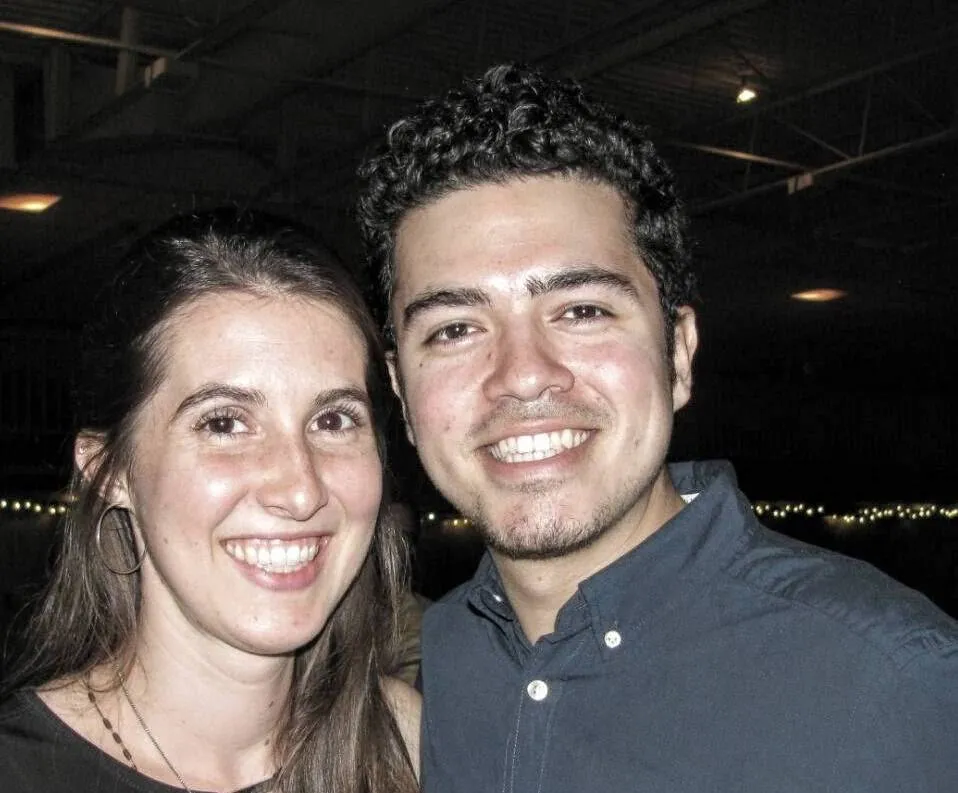
Hallie and Adriel Gonzalez.
“If I’m at a Latin Mass, I’m more likely to get a sense that this is a time-honored practice, something that has been honed over the millennia,” he says. “There is clearly a love affair going on here with the Lord that requires this much more elaborate song and dance.”
For Eric Matthews, the TLM feels a little like time travel.
“It could be medieval times, it could be the enlightenment period, it could be the early 1900s, and the experience is going to be so similar,” he says.
“I just feel like that’s that universal timeframe – not just the universal Church in 2021 – but the universal Church in almost any time period. We’re the only church that can claim that.”
What happens now?
The motu proprio caught Adriel Gonzalez’ attention. He sought clarity about whether his participation in the extraordinary form was, in fact, part of a divisive movement, or simply an expression of his faith.
If it was a movement, he wanted no part of it, he says.
“As far as I can tell, the Church considers the extraordinary form and the ordinary form equal and valid,” says Gonzalez. “Ideally, there should be no true difference between going to one or the other, outside of just preference. It shouldn’t constitute a completely different reality within Catholicism.”
With this understanding, Gonzalez says he resonated with some of the reasoning set forth in the motu proprio because it articulated that the celebration of the TLM was never intended to be a movement away from the Novus Ordo or Vatican II. Gonzalez also emphasized that the extraordinary form was never supposed to be a “superior” way of celebrating the Mass.
Gonzalez believes the Lord allowed the growth in the TLM “to help us to recover a love for liturgy, and to ask questions about what worship and liturgy looks like.” He would have preferred if what was good was kept and encouraged, and what was potentially dangerous “coaxed out and called out.”
Mater Misericordæ Catholic Church in Phoenix, Arizona. / Viet Truong
Erin Hanson, of Mater Misericordiæ, agrees.
“If [Pope Francis] does believe there is division between Novus Ordo and traditional Catholics, I don’t think he did anything to try to fix that division,” she says.
Hanson would like to know who the bishops are that Pope Francis consulted in making this decision, sharing that she doesn’t feel that there is any of the transparency needed for such a major document. If there are divisions, she says, she would like the opportunity to work on them in a different way.
“This isn’t going to be any less divisive if he causes a possible schism,” Hanson says.
According to the motu proprio and the accompanying letter, the TLM is not to be celebrated in diocesan churches or in new churches constructed for the purpose of the TLM, nor should new groups be established by the bishops. Left out of their parish churches, some are worried their only option to attend Mass will be in a recreation center or hotel ballroom.
Eric Matthews hopes that everyone is able to experience the extraordinary form at least once in their life so they can know that this is not about division.
“I can’t imagine someone going to the Latin Mass and saying, ‘This is creating disunity,’” he says. “There’s nothing to be afraid of with the Latin Mass. You’re just going to be surrounding yourself with people that really take it to heart.”
Maureen McKinley was home sick when her husband Matt found out about the motu proprio. He had taken the kids to a neighborhood park, where he ran into some friends who also attend Mater Misericordiæ. They asked if he had heard the news.
“I felt disgust at a document that pretends to say so much while actually saying so little and disregards the Church’s very long and rich tradition of careful legal documents,” Matt McKinley says.
Bishop Thomas Olmsted of Phoenix stated that the TLM may continue at Mater Misericordiæ, as well as in chapels, oratories, mission churches, non-parochial churches, and at seven other parishes in the diocese. Participation in the TLM and all of the activities of the parish are so important to the McKinleys that they are willing to move to another state or city should further restrictions be implemented.
For now, their family’s routine continues the same as before.
At the end of their day, the McKinleys pray a family rosary in front of their home altar, which has a Bible at the center, and an icon of Christ and a statue of the Virgin Mary. They eat dinner together, milk the goat again, and take care of their evening animal chores. After night prayer, the kids head off to bed, blessing themselves with holy water from the fonts mounted on the wall before they enter their bedroom.
“The life of the Church springs from this Mass,” Maureen says. “That’s why we’re here—not because the Latin Mass is archaic, but that it’s actually just so alive.”
The cardinal pointed to the Vatican’s recent declaration on human dignity, Dignitas Infinita, as “a wonderful summation of the Church’s moral teaching.”
If Gregory thinks the Church’s moral teaching has been or could be summarily reduced to DI, he and others of similar ilk should now prepare position papers which should try to justify why their have jobs, free apartments, and bully pulpits. Gregory’s flattery exposes the puniness of a mind; anyone else with an ounce of sense would be ashamed to have said such a thing. Bishops like him should refrain from any claim to teach anyone about anything. Alternatively, when such shepherds seek to do the same, the sheep should simply open their mouths en masse and drown them out with “BAAAs.”




I suspect Fr. Augustus Tolton will one day be canonized. I certainly hope so.
That being said, neither I nor any living clergyman can “recall” the 1800s any more than we can “recall” the assassination of Julius Caesar.
The cardinal pointed to the Vatican’s recent declaration on human dignity, Dignitas Infinita, as “a wonderful summation of the Church’s moral teaching.”
If Gregory thinks the Church’s moral teaching has been or could be summarily reduced to DI, he and others of similar ilk should now prepare position papers which should try to justify why their have jobs, free apartments, and bully pulpits. Gregory’s flattery exposes the puniness of a mind; anyone else with an ounce of sense would be ashamed to have said such a thing. Bishops like him should refrain from any claim to teach anyone about anything. Alternatively, when such shepherds seek to do the same, the sheep should simply open their mouths en masse and drown them out with “BAAAs.”