




ACI Prensa Staff, Apr 3, 2024 / 08:00 am (CNA).
The French government has initiated a series of legal measures against Father Matthieu Raffray for calling homosexual relations sinful and for describing homosexuality as a “weakness.”
On March 15, the priest of the Institute of the Good Shepherd — created in 2006 in Rome for “the defense and dissemination of Catholic Tradition in all its forms,” according to the website of this society of apostolic life — posted a video on Instagram in which he encouraged the faithful to fight against their weaknesses.
Raffray commented that each person has his or her own weapons with which to fight, but the devil convinces people that the fight “is too hard” and therefore it’s useless to resist.
The video was denounced by various LGBT lobby groups, and Aurore Bergé, government minister for equality between women and men and the fight against discrimination, called the priest’s statements “unacceptable.”
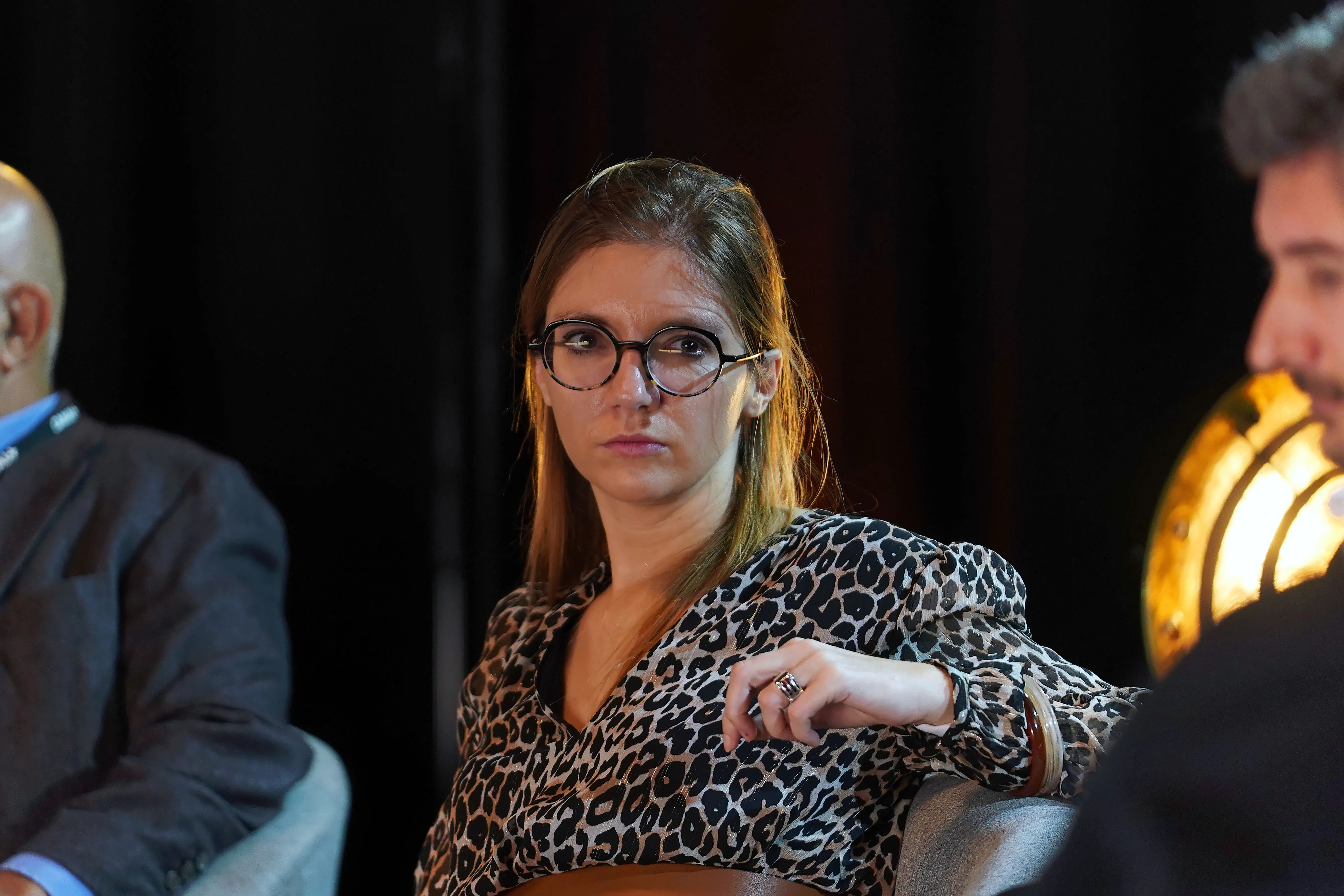
Bergé wrote on X that she has asked the Interministerial Delegation for the Fight against Racism, Anti-semitism, and Anti-LGBT Hatred (DILCRAH) to report the alleged infraction on the basis of Article 40 of the penal code to the public prosecutor. “In the face of hatred I’m not going to let anything get by, whatever it may be,” she added.
DILCRAH in turn stated on X that it received the minister’s message and has informed “the prosecutor of the homophobic comments made by Mr. Raffray on social media. So-called ‘conversion therapy’ has been illegal since 2022. Talking about homosexuality as a weakness is shameful.”
‘Christian morality and the entire Church’ are at stake
In an interview with the French Catholic media Famille Chrétienne (“Christian Family”), Raffray explained that the video was about “temptations in general. I wanted to make it clear that we do not have to give in to all our temptations, to all our desires.”
“Homosexual acts are a sin, but I think people don’t know what a sin is anymore. Condemning a sin is not the same as condemning the person who commits it,” he pointed out.
“You could have blamed me if I had said something clumsy or hurtful. That’s not the case at all. Not only am I not homophobic, but as a priest I am careful with the language I use on this topic, because I know that it is a sensitive topic and that people can easily feel hurt,” the priest explained.
The French priest then noted that “what’s at stake is not me but the freedom of being a Christian today. I hope that all the faithful realize that what is at stake is Christian morality and the entire Church.”
Raffray then shared that he has received comments from homosexuals thanking him for what he said, “this truthful speech. If some do not want to listen to the doctrine of the Church, no one forces them.”
Who is Father Matthieu Raffray?
Raffray is a well-known priest who has a growing apostolate on the internet and social media aimed especially at young French-speaking people.
He has more than 60,000 followers on Instagram, more than 22,000 on YouTube, and more than 21,000 on X.
He is a pro-life and pro-family advocate and has published French-language books such as “Myths and Lies of Progressivism” (2020) and more recently “The Greatest of Combats,” with which he seeks to answer the fundamental and existential questions of life.
Raffray, 45, was born in 1979 and is one of nine children. He studied mathematics before being ordained a priest in 2009.
He holds a doctorate in philosophy and teaches at the Pontifical University of St. Thomas Aquinas (Angelicum) in Rome.
According to the publication European Conservative, he rose to fame in 2020 after an interview with French YouTuber Baptiste Marchais in which he defended the return to a “virile Catholicism” and the feeling of patriotism among the Catholic faithful.
What does the Catholic Church teach about homosexuality?
Catholic teaching on homosexuality is summarized in paragraphs 2357, 2358, and 2359 of the Catechism of the Catholic Church.
The Church teaches that men and women with same-sex attraction “must be accepted with respect, compassion, and sensitivity. Every sign of unjust discrimination in their regard should be avoided.”
The catechism notes that homosexual inclination is “objectively disordered” and constitutes for those who experience it “a trial.”
Based on sacred Scripture, the catechism states that “homosexual acts are intrinsically disordered” and “they do not proceed from a genuine affective and sexual complementarity.” Consequently, “under no circumstances can they be approved.”
“Homosexual persons are called to chastity. By the virtues of self-mastery that teach them inner freedom, at times by the support of disinterested friendship, by prayer and sacramental grace, they can and should gradually and resolutely approach Christian perfection,” the catechism explains.
This story was first published by ACI Prensa, CNA’s Spanish-language news partner. It has been translated and adapted by CNA.
If you value the news and views Catholic World Report provides, please consider donating to support our efforts. Your contribution will help us continue to make CWR available to all readers worldwide for free, without a subscription. Thank you for your generosity!
Click here for more information on donating to CWR. Click here to sign up for our newsletter.



I’d tell the French government to go jump in a lake. The Catholic Church needs to stop accommodating to the immoral pagan culture. Christ expects nothing less.
You gettin’ soft in your old age, Backwards?
Whatever happened to ‘Smack ’em wid a 2 x 4′?
😆
If it’s an entire culture, then Paul is the one with the answer, because we ain’t big enough. He goes straight to the top, as should we:
De 32:25 ‘Vengeance is mine, and retribution, At the appointed time when their foot slips, For the day of their disaster is near, And what awaits them will come quickly.’
Hebrews 10:30
For we know the One who said: “Vengeance is mine; I will repay.” And again: “Jehovah will judge his people”
“In God we trust”, innit?
Seriously, if this thread progresses well, you’ll see better suggestions than yours or mine. Stay tuned
Shape of things to come.
Indeed.
Coming to a theatre near you.
So now the amoral cowards who run France are going to suppress Catholic teaching and bolster perversion?? Persecution of priests? I thought that ended after the bloody collapse of the French Revolution, where killing Catholics was all the rage.There is a world of difference from allowing secular legal tolerance of different lifestyles and trying to cherry pick beliefs away from religions by making select beliefs “illegal”. Will they now mandate women priests on the basis of “discrimination” too? Will this ditsy broad Berge who is persecuting Father and the Church name herself Pope? She might as well if she sees herself qualified to decide what constitutes Catholic belief. Notably, the French have been super welcoming to Muslim immigrants who have created a cultural uproar there , not to mention enacting more than a few terror attacks. I guess we can see whose religion they favor in France. American citizens, especially Catholics: keep your tourist dollars OUT of France. By the way, KUDOS to J.K. Rowling to standing up to similar crazed nonsense from the govt of Scotland. Scotland has made it a jailable offense to call a trans person by their REAL sex. Rowling told them to take a hike. She is a person whose courage should be copied.
Yes & no. France recently kicked an imam out of the country for disrespecting the French flag. Some things are tolerated, some things not.
I appreciate what J.K. Rowling did. Scotland’s an object lesson of what can happen when a small extremist political party with a slight majority gets in power. Our two party system has it’s troubles but when you have 4-5 parties vying in elections things can get weird.
Where are the rest of France’s priests and bishops?
Blessing the very very couples that Raffray is exhorting to fight against their weakness
They are scared out of their cassocks
I’m happy that father stood for the truth. Sodomy is not acceptable but correcting them is kindness. To not gently enlighten them of end of life in hell is not God’s plan.. Practicing same sex lifestyle is a demonic lifestyle that evil promotes to destroy humanity that they hate. God is love always. Purity brings peace and happiness.
They’re only demanding a pinch of incense.
LOL. Good one, and historical.
Where are the other Catholic priests?
In all of France, is only one priest preaching the truth of the Catholic faith in the face of such persecution?
Poor Jesus. He deserves so much better.
It would seem that The Universal Church has given up to secular demands. A sin is a sin. Has GOD sent out an email about this big change? We didn’t get the notice. Perhaps it is included in the email that states we no longer need to attend mass and concentrate on God’s gift to us. Does God no longer count? “No matter what, The Gates Of Hell shall not prevail against it.”
Talk to any and ALL of the Catholics in France that assist in the LATIN MASS and en masse they’ll say the same thing this man has been singled out for saying. How fine a point do I have to make on the issue of Vatican II? It should be anathematized. I know the charge: “off topic”. Really? Had we never LOST the Catholic Faith to the cra-cra following V-II, we would never have to be in the position of apologizing for the Catholic Faith as it makes its ascendancy again – and it is in ascendancy – as you look to the Latin Mass communities. Deo gratias et Mariae!
I recently checked on how things inside Russia are. I do this from time to time. This time I discovered that most of the Eastern Orthodox priests who did not approve the war are now prohibited to serve; some retired, some left Russia. I also recalled a case of a woman who stood silently in front of the church building with a piece of paper on which was written “You shall not kill” and was quickly arrested. (Another person who later attempted to stand with an empty piece of paper, nothing written on it, was arrested too.) It is Orwellian but what is written in the article, about a priest who is prosecuted for calling homosexuality “a weakness” and a sin, is equally Orwellian.
So, in Russia you can be prosecuted for displaying the commandment “you shall not kill” while in the West you can be prosecuted for saying that homosexuality is a sin.
I have been writing for some time that the West is becoming as totalitarian as Russia but in disguise; Russia destroys a person openly (via murdering) and the West – covertly, via a demand to tolerate everything which the state designates as tolerable. Funnily enough, in pre-revolutionary Russia brothels were called “houses of tolerance”. Every time I hear “tolerance” I recall that fact and laugh. The West is becoming a huge “house of tolerance”.
About 40 years ago, I knew a politically and socially liberal woman who was dating a man who, together with his parents, had emigrated from the USSR in the 1970s. He once told her that her politics sounded just like that of the Party officials and commisars he’d left behind in the Soviet Union. She found that puzzling; I wonder if she still does.
I’ve heard people who’ve fled from socialist regimes say they see the same warning signs appearing in the US.
If you look up the history of the Epoch Times, the founder says the same thing.
Homosxexual acts are the sin, not homosexual desires. Read the exposition of what the chatecism teaches.
You do not need to back up your statement with a reference to the catechesis – I know that you are correct. I was retelling the quote from the article:
“The French government has initiated a series of legal measures against Father Matthieu Raffray for calling homosexual relations sinful and for describing homosexuality as a “weakness.””
and did it without a distinction present in the original because I was concerned with shaping other thoughts. My mistake. I suspect most readers understood what I meant though.
OTOH, at least this priest is being hounded by the state, not his bishop.
Cleo, give it time.
In their attempt to be tolerant of all those migrants settling in Europe, those governments are flagrantly intolerant of Christianity and the very roots upon which Europe flourished.
But wasn’t the “Christianizing” of Europe a bit bloody at times?
Coming to America, if we continue on the road we are traveling
Of France et al, we read: “Homosexual acts are a sin, but I think people don’t know what a sin is anymore…”
The French novelist also got this right, back in the 1940s:
“The modern world will shortly no longer possess sufficient spiritual reserves to commit genuine evil. Already . . . we can witness a lethal slackening of men’s conscience that is attacking not only their moral life, but also their very heart and mind, altering and decomposing even their imagination . . . The menacing crisis is one of INFANTILISM.”
(Interview with Samedi-Soir, Nov. 8, 1947, cited in Hans Urs von Balthasar, “Bernanos: An Ecclesial Existence” [San Francisco: Ignatius, 1996], 457, caps added).
In the not distant future, many of us who choose to proclaim Christ, His Church and His truth, will be imprisoned or killed for doing so. Pray for us, holy martyrs, and lend us your strength and peace in the face of persecution. I think the storm that’s coming will make the Coliseum look like a picnic.
Dear Ms Berge,
“In the face of hatred I’m not going to let anything get by”
AS YOU WISH
“Government minister for equality between women and men and the fight against discrimination”: Ain’t that a mouthful.
St. Thomas Aquinas, pray for us.
Macron is nothing more and no less than a well tailored modernist Jacobin supported by his appointee, the new age madame DeFarge, Aurore Bergé. New age France must protect the purity of its woke image, the only European nation to include a right to murder prenatal infants in its constitution. Macron’s ego now dangerously apparent in his Napoleonic willingness [ironically the only French president never to have served in the military] to send French troops to oppose Russia in the killing fields of the Ukraine.
France,where their great Icon, Notre Dame burned.Perhaps God allowed that to happen because He saw the evil actions of many of the French people coming, such as putting abortion rights in their Constitution and the persecution of good and honest priests, such as this one.It seems as though God is removing His protective Hand from France.
The French government openly discriminates against the Roman Catholic Church and the French people shrug their shoulders.
I’m under the impression that the Church in France is actually showing some signs of life.
Still waiting for the bishop to slap this priest down as we saw a couple of months ago in Ireland. (Not sure if the Institute of the Good Shepherd is under a bishop).
I thought we saved this country once in the name of freedom?
it IS sinful!
Wow 😯 finally a proud Catholic moment.
You’ve lost the argument already the moment you acquiesce to the presumption that “homophobic” is an actual word.
Godspeed.
John 3:19
The Bible has a clear understanding of human nature.
Men love the darkness more than the light because their deeds are evil!