The dismissal of Bishop Strickland as the Ordinary of the Diocese of Tyler prompts us to consider the pathology of clericalism in today’s hierarchy. In happy times, the following Four Tiers of the Bureaucracy describe […]
Ultrasound scan of 15 week-old baby. / Credit: Allo4e4ka/Shutterstock
ACI Prensa Staff, Nov 13, 2023 / 18:00 pm (CNA).
By a vote of 72-26 with six abstentions, Peru’s Congress passed a bill on Nov. 9 that expressly recognizes the rights granted… […]
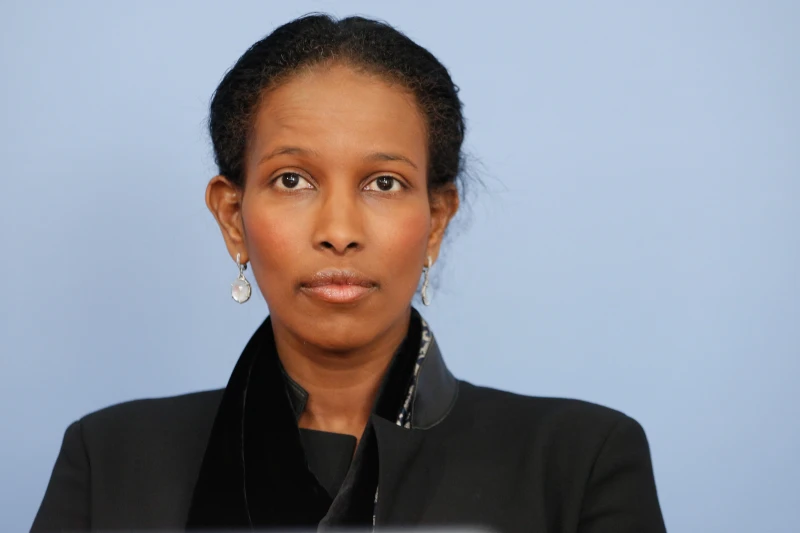
Ayaan Hirsi Ali is a Somalia-born American activist, writer, and politician and is known for her views critical of Islam and supportive of women’s rights. / Credit: Christian Marquardt/Getty Images
CNA Staff, Nov 13, 2023 / 17:04 pm (CNA).
Ayaan Hirsi Ali, a longtime critic of Islam and for years an outspoken atheist, said this week that she is “now a Christian,” stating she came to the religion both as part of a spiritual journey and as a response to the “nihilistic vacuum” of the modern world.
Hirsi Ali has long been a prominent critic of Islam. As a young girl growing up in Somalia, she suffered female genital mutilation in Somalia as a young girl and in 2002 renounced her Muslim faith and declared herself an atheist. In the years since she has been a vocal critic of what she sees as extremist violence and intolerance from many Muslims.
She wrote that she turned to Christianity in part “because I ultimately found life without any spiritual solace unendurable — indeed very nearly self-destructive.”
“Atheism failed to answer a simple question: What is the meaning and purpose of life?” she said, arguing that “the void left by the retreat of the church” in the modern world “has merely been filled by a jumble of irrational quasi-religious dogma.”
Hirsi Ali said in the essay that there is “no need to look for some new-age concoction of medication and mindfulness” to address these present crises: “Christianity has it all.”
Another reason she made that switch, she said, is “global”: The writer said in the essay that “Western civilization is under threat” from multiple fronts including Russia and China, “global Islamism,” and “woke ideology.”
“We endeavor to fend off these threats with modern, secular tools: military, economic, diplomatic, and technological efforts to defeat, bribe, persuade, appease, or surveil,” she wrote. “And yet, with every round of conflict, we find ourselves losing ground.”
Hirsi Ali said the only way to successfully “fight off” these threats is to answer the question “What is it that unites us?”
The “only credible answer, I believe, lies in our desire to uphold the legacy of the Judeo-Christian tradition,” she said; that legacy includes an “elaborate set of ideas and institutions designed to safeguard human life, freedom, and dignity.”
The writer said that she considers herself a “lapsed atheist,” writing: “I still have a great deal to learn about Christianity.”
“I discover a little more at church each Sunday,” she wrote, arguing that she has found “a better way to manage the challenges of existence than either Islam or unbelief had to offer.”
Hirsi Ali did not immediately respond to a request for comment on Monday regarding her essay.
The recipient of numerous awards for her global activism, Hirsi Ali previously served in the House of Representatives in the Netherlands and has worked at the Hoover Institution at Stanford University as well as the American Enterprise Institute.
Baby Indi Gregory was baptized on Sept. 22, 2023. Despite not being religious, Dean Gregory, her father, expressed that his time in court fighting for his daughter’s life felt like he had been “dragged to hell.” The experience moved him to decid… […]
Diane Mahoney’s original composition “We Do Believe, O Lord” has been selected as the 2024 National Eucharistic Congress’ official theme song. / Credit: Photo courtesy of Diane Mahoney
CNA Staff, Nov 13, 2023 / 13:30 pm (CNA).
Sheet music was made available online last week for the official hymns of the upcoming National Eucharistic Revival, which were chosen from among hundreds of entries in a contest last summer.
“The goal of this contest was to give voice to the truths of our faith in a way that only music can, inviting us to participate more deeply in the reality of the miracle present before us,” the National Eucharistic Revival announced in a Nov. 6 blog post, noting that the sheet music is free to download and use.
“Please share this with your parish’s music director and any musicians you know. We look forward to hearing these beautiful hymns in parishes throughout the country in the coming months!”
The National Eucharistic Revival is the U.S. bishops’ three-year initiative to inspire belief in and reverence for the Eucharist. The decision to embark on the initiative followed a 2019 Pew Research study that suggested only about one-third of U.S. Catholics believe the Church’s teaching that the Eucharist is truly the body and blood of Jesus Christ. As part of the revival, a National Eucharistic Congress will be held July 17–21, 2024, and is expected to draw at least 80,000 Catholics to Lucas Oil Stadium in Indianapolis.
The winning hymn and theme song, which were chosen from among some 177 entries, were announced in August. Composers Diane Mahoney and Kathleen Pluth both earned a cash prize of $2,500 and the opportunity to have their compositions professionally performed and recorded in both English and Spanish.
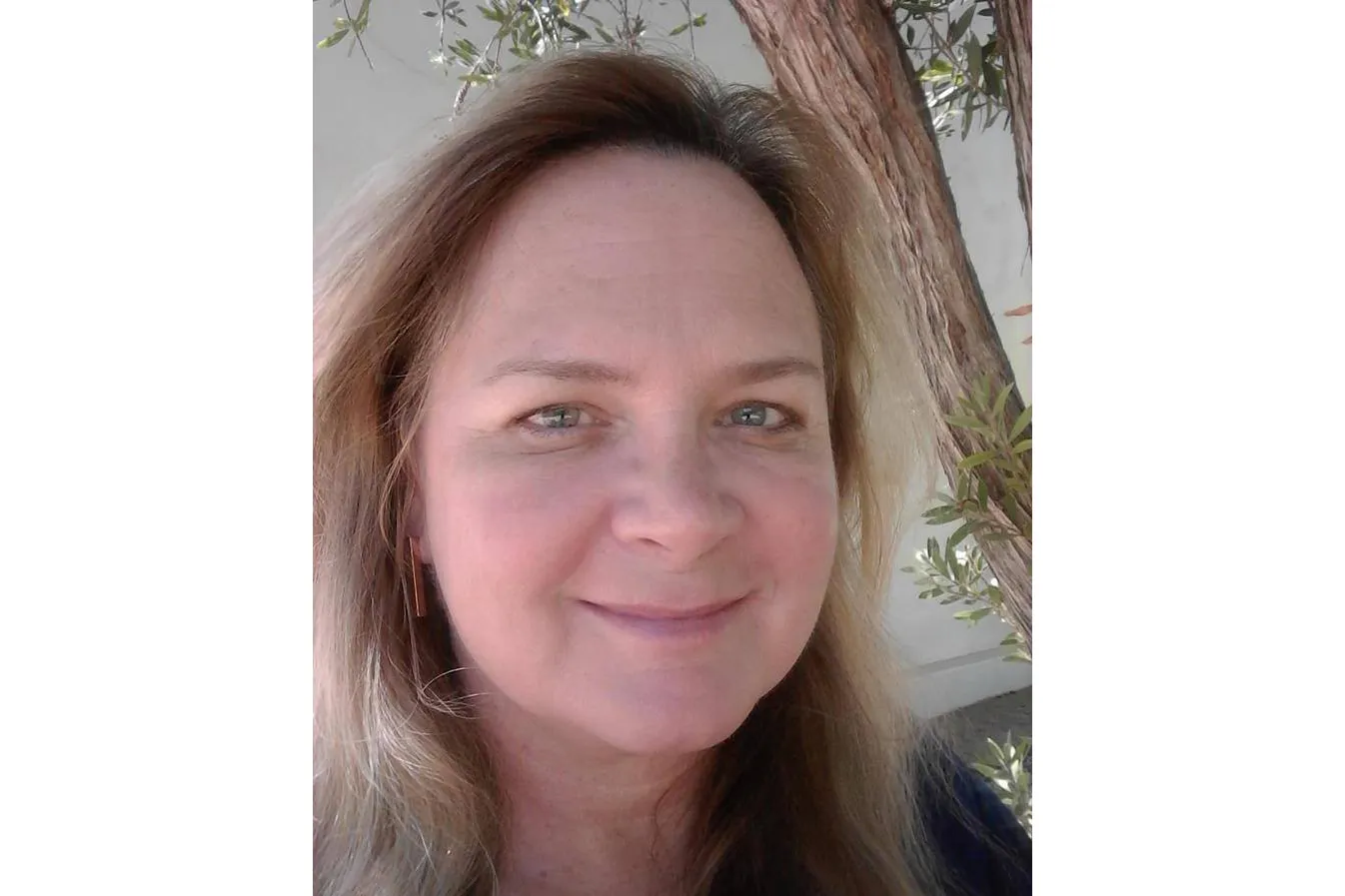
Kathleen Pluth has been writing hymns for 20 years. Her hymn, “Let the Earth Acclaim Christ Jesus” has been selected as the official hymn for the Eucharistic Congress to be held July 17–21, 2024 at Lucas Oil Stadium in Indianapolis. Credit: Photo courtesy of Kathleen Pluth
Entries were evaluated, the organizers say, on such criteria as poetry, musicality, creativity, theological and doctrinal soundness, beauty, appropriateness for liturgical use, and expression of the mission of the National Eucharistic Revival. Father Dustin Dought, associate director of the U.S. bishops’ Secretariat of Divine Worship, served as the nonvoting chairperson of the committee of judges.
Mahoney’s original composition, “We Do Believe, O Lord,” was selected as the Congress’ official theme song and is “appropriate to be sung at Mass, adoration, and any other gathering of Catholics where music might be used,” the organizers said.
Mahoney, a longtime church organist and occasional composer, told CNA in August that she entered the contest with “very little hope” that she’d actually win but with an openness to God’s will. She said her song is based on the passage from Mark’s Gospel in which a man tells Jesus: “I do believe. Please help my unbelief.”
Mahoney said she has wanted for years to use that passage in a Communion setting because, she said, receiving the body of Christ can help people recover their belief in him.
“I wanted it to be strong, something you would sing as you’re processing to Communion,” she told CNA.
The winning entry in the hymn category was “Let the Earth Acclaim Christ Jesus,” written by Kathleen Pluth. Her prizewinning lyrics were originally set to the 19th-century tune known as “Hyfrydol,” which many churchgoers will recognize better as the tune to “Alleluia! Sing to Jesus” or “Come Thou Long Expected Jesus.”
In addition, the National Eucharistic Revival shared sheet music with the “versatile” lyrics set to the tune known as “Nettleton” — which Massgoers will recognize from the hymn “Come Thou Fount of Every Blessing” — and also to the famous “Ode to Joy” tune by Beethoven.
Pluth, who has a licentiate in sacred theology, told CNA in August that she sought to use her theological knowledge to write deep meaning into the lyrics that will hopefully help the hymn to stand the test of time.
“I have a theology background, so maybe this is biased, but I feel that the more doctrine, the more Scripture, the more of these kinds of basic but deep truths of our religion can be worked into hymns, the better,” Pluth said.
“And I think when we look back and see which hymns have had staying power over the centuries, they have this rich doctrine.”
Links to download the sheet music, available in English and Spanish for both compositions, can be found at the National Eucharistic Revival’s blog post.
Sen. Tim Scott, R-South Carolina, speaks to members of the media in the spin room following the third Republican presidential primary debate at the Adrienne Arsht Center for the Performing Arts in Miami on Nov. 8, 2023. / Credit: GIORGIO VIERA/A… […]
Mater Ecclesiae Monastery in Vatican City State, where a group of Benedictine nuns from Argentina will take up residence in January 2024 at the invitation of Pope Francis. / Credit: Krzysztof Golik, CC BY-SA 4.0 via Wikimedia Commons.
I decided to introduce our school field trip to the Cabrini Shrine and the Met Cloisters with the following message: Most people today live as if the things we do, objects we use, and people […]