Catholic Relief Services on Saturday called for “immediate humanitarian access” in the Gaza Strip as the war between Israel and the terrorist group Hamas continues to unfold after Hamas’ surprise attack on Israel earlier this month.
The Baltimore-based aid group said in its Oct. 14 statement that it is “alarmed at the humanitarian crisis that is unfolding in Gaza” and asked for aid access “before a dire humanitarian situation becomes a catastrophe.”
“Civilians in Gaza are entitled to safety and protection, whether in the north or south,” the group said. “We also urge international stakeholders to work towards a cease-fire and an end to the violence that has killed more than 3,000 people.”
“We join Pope Francis’ call for people worldwide ‘to pray that there be peace in Israel and Palestine,’” CRS said.
CRS in its statement noted that nearly 1 million people, “almost half the population,” are “at risk of displacement” following Israel’s directive for people to evacuate the northern part of Gaza.
“Prior to the order, over 400,000 Palestinians were already displaced,” the group said. “Many who are sick, disabled, injured, or otherwise vulnerable are unable to comply with this order.”
“Electricity has been cut off, and critical supplies such as food, fuel, and water are running dangerously low, and in some areas have run out completely.”
Hamas’ surprise attack against Israel on Oct. 7 resulted in the deaths of 1,300 Israelis and international civilians. Israel subsequently declared war and vowed a siege of the Gaza Strip. The death toll in Gaza stood at approximately 2,700 people as of Monday, according to the BBC.
Of growing international concern has been the ongoing hostage crisis in the conflict. The Israel Defense Forces said on Monday that at least 199 Israelis had been abducted by Hamas since the start of the war. Hamas threatened last week to kill one hostage every time Israel’s military bombs civilian targets in Gaza “without warning.”
CRS says it and its partners are monitoring the situation and remain “ready to respond according to needs as they present.” The group has said in the past that it aims to help promote a “just, secure, and stable two-state solution for both Israelis and Palestinians.”
Pope Francis first addressed the war in Israel and Palestine on Oct. 8, declaring that “terrorism and war do not bring any solution but only death and suffering for many innocent people.”
“War is a failure. Every war is a failure,” the Holy Father said.
On Oct. 13, Cardinal Pietro Parolin, the Vatican’s secretary of state, condemned Hamas’ attacks as “inhuman” and said the Holy See expressed “complete and firm condemnation” of the strikes. He also said the Holy See stands ready to help mediate a peace agreement.
The Vatican’s diplomatic response to Hamas’ attacks was nevertheless recently criticized by Israeli Foreign Minister Eli Cohen, who suggested that the Holy See had not issued an “unequivocal and clear” condemnation of the “murderous terrorist actions” of Hamas terrorists.
If you value the news and views Catholic World Report provides, please consider donating to support our efforts. Your contribution will help us continue to make CWR available to all readers worldwide for free, without a subscription. Thank you for your generosity!
Click here for more information on donating to CWR. Click here to sign up for our newsletter.
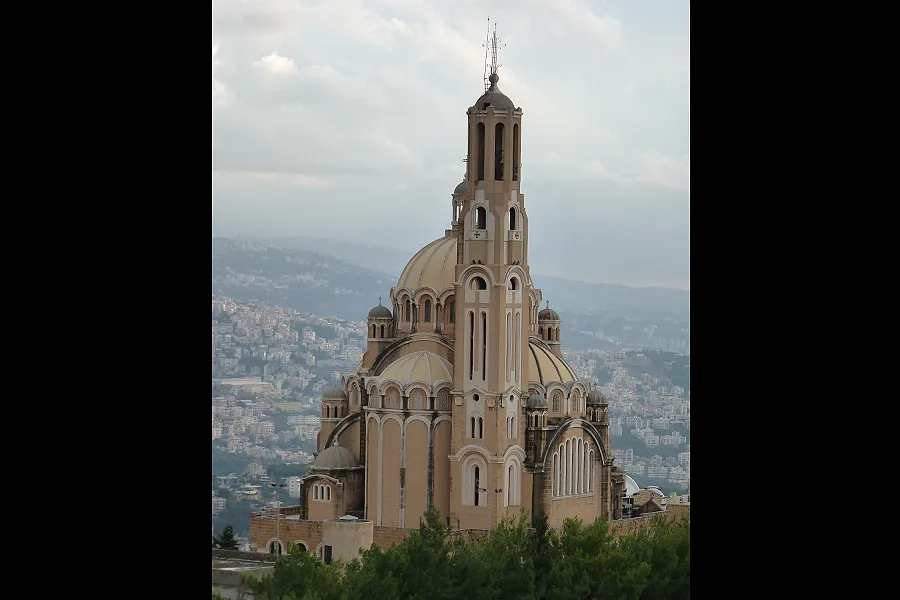
Beirut, Lebanon, Jun 22, 2017 / 12:07 pm (CNA/EWTN News).- The synod of the Melkite Greek Catholic Church elected on Wednesday Archbishop Youssef Absi as the Church’s new patriarch, who received ecclesiastical communion from Pope Francis the following day.
Elected June 21, Patriarch Absi, 71, succeeds Patriarch Gregorios III Laham, who retired May 6 at the age of 83.
The new patriarch was born in Damascus in 1946. He was ordained a priest of the Missionary Society of St. Paul in 1973. He became superior general of the society in 1999, and two years later was appointed curial bishop of the Melkite Patriarchate of Antioch. In 2007, he was appointed the Patriarchal Vicar of of the Melkite Archdiocese of Damascus.
The Melkite Greek Catholic Church is an Eastern Catholic Church of the Byzantine rite, and it consists of some 1.5 million members. It is based in Syria and Lebanon, and most of its eparchies are in the Arab world. It also has structures to serve the Melkite diaspora in Australia, Turkey, Canada, Mexico, the United States, Argentina, Brazil, and Venezuela.
The Melkite Church traces its roots to the earliest days of Christianity, when Sts. Peter and Paul first evangelized the peoples of Syria, where followers of Christ were first called “Christians.”
During the 2010 Synod on the Middle East, Patriarch Absi lamented the strife among the Eastern Catholic Churches, calling the struggle a “fount of impairment and false testimony,” according to Vatican Insider.
“The Christians of the East,” he said, “are all on the same boat, and confront the same struggle. They cannot be disinterested each in the other.”
The new patriarch holds licentiates in philosophy and theology, and a doctorate in musical sciences and Byzantine hymnography from the Holy Spirit University of Kaslik in Lebanon. He has taught philosophy, Greek, and musicology at the university level.
Pope Francis wrote to Patriarch Absi the day after his election, congratulating him and granting him ecclesiastical communion.
Francis also noted the tribulation facing Christians in the region.
“The election of Your Beatitude comes at the time of a delicate situation for the venerable Greco-Melkite Church and when many Christian communities in the Middle East are called to bear witness in a special way to their faith in the dead and risen Christ,” the Roman Pontiff said. “In this particularly difficult time, Pastors are called upon to manifest communion, unity, closeness, solidarity and transparency before the suffering people of God.”
“I am certain that your Beatitude, in fraternal harmony with all the Synod Fathers, will know, in all evangelical wisdom, how to be not only ‘Pater et Caput’ in the service of the faithful of the Greco-Melkite Church, but also a faithful and authentic witness to the Risen One.”
Bishop Mark Maigida Nzukwein of Nigeria’s Wukari Diocese and one of the church stewards who lost an eye. / Credit: Wukari Diocese
ACI Africa, Aug 14, 2024 / 17:06 pm (CNA).
The Diocese of Wukari in Nigeria has condemned an attack on All Saints Catholic Church Ikyaior by the Nigerian military personnel on Aug. 5 in which the priest in charge and his stewards were assaulted and badly injured.
In the attack, said to have happened between 9 and 10 a.m., one of the church stewards lost an eye, according to a statement the diocese shared with ACI Africa, CNA’s news partner in Africa, on Tuesday, Aug. 13.
The diocese noted that military personnel suspected to be from Makurdi in Nigeria’s Benue state arrived at the residence of Father Bernard Unum and assaulted him along with his stewards.
“They arrived in approximately six military trucks and motorcycles and proceeded to assault Father Unum and others present. During the attack, Cornelius Terhemen, Father Unum’s steward, sustained severe injuries, resulting in the loss of an eye,” the statement read.
The Nigerian diocese expressed shock following the incident, which is said to have occurred within the church premises despite the institution’s constant collaboration with government bodies in promoting development, justice, and peace.
The attackers continued to attack the priest even after he identified himself to the assailants.
While condemning the attack, the diocese called upon the chief of army staff “to identify and hold accountable the personnel responsible for this act of brutality.”
In the statement signed by the vicar pastoral, Father James Yaro, and the chancellor, Father Simon Akuraga, the diocese also urged the governor of Taraba state, which the diocese covers, to ensure a thorough investigation into the matter is conducted and appropriate action taken.
“We demand the immediate return of Father Bernard’s confiscated phone and appropriate compensation for Cornelius Terhemen, whose eye was permanently damaged due to the assault,” the officials of the diocese said.
They added: “The Catholic Diocese of Wukari remains committed to supporting and collaborating with the government to ensure peace and stability in our communities.”
“As a law-abiding institution, we believe in the institution of government and anticipate prompt and decisive action from the government on this matter,” they said.
Father Francesco Patton, custos of the Holy Land, stops at the Eighth Station of the Via Dolorosa in Jerusalem during the Good Friday Via Crucis on March 29, 2024. / Credit: Marinella Bandini
Jerusalem, Jan 28, 2025 / 06:00 am (CNA).
Franciscan Father Francesco Patton’s nine-year tenure as custos of the Holy Land began unexpectedly in 2016 when he found himself “redirected” — as he put it — to a largely unfamiliar land while preparing to take on a different assignment in Italy.
“I had only visited the Holy Land a couple of times as a pilgrim,” he admitted. “At first, I was apprehensive about accepting this responsibility because I felt I lacked the necessary knowledge to fulfill it properly.”
As the friar approaches the conclusion of his second term as custos of the Holy Land, he spoke with CNA about his experiences, challenges, and key moments in the role.
Father Francesco Patton, OFM, custos of the Holy Land, holding the replica of the jubilee cross during the opening ceremony of the holy year on Nov. 29, 2024, in Nazareth. Credit: Marinella Bandini
Patton emphasized that listening and studying were crucial to immersing himself in his new reality when he arrived. He credited the support of friars and collaborators, including Shibli, his driver. “He taught me to celebrate Mass in Arabic. While traveling, I would practice reading, and he would correct me. We developed a truly fraternal relationship.”
The custos serves as a unique provincial minister within the Franciscan order, leading a community of friars while also being the Holy See’s official guardian of the Christian holy sites. This responsibility was entrusted to the Franciscans by Pope Clement VI through the papal bull Gratias Agimus on Nov. 21, 1342.
Over its 700-year history, the Custody of the Holy Land has also become a point of reference for politicians, diplomats, and local authorities due to its deep roots in the region.
This distinctive role is reflected in the process of electing the custos. Unlike other provincials, who are directly elected by their friars, the custos is selected by the “General Definitorium” (the order’s governing council) and approved by the Holy See. The process is currently underway and will culminate between March and April with the appointment of the 169th custos of the Holy Land.
Father Francesco Patton, OFM, custos of the Holy Land, takes a group photo with 16 friars who have just made their solemn profession. Looking ahead, Patton envisions the custody’s mission continuing amid complexity. Internally, he foresees a more international community with less European influence. “This will be both a challenge and a source of enrichment,” he observed. “We will need to work much harder on formation.” Credit: Marinella Bandini
Patton described his service as deeply centered on the friars’ growth and community life. “I have personally interpreted my role as more focused on accompanying and supporting the friars,” he said.
“Intensity, spirituality, and fraternity” are the three words Patton used to summarize his experience in the Holy Land.
These nine years, he noted, have been “a profound spiritual journey, beginning with the connection to the holy sites. I have moved from theoretical knowledge to tangible reality.”
“I am even more convinced that as Christians, we must be anchored to the historical dimension of the mystery of the Incarnation,” he added.
Father Francesco Patton, custos of the Holy Land, in prayer during the celebrations of St. Francis of Assisi, founder of the Franciscan order. According to St. Francis, the custos explained to CNA, “fraternity means approaching others with trust and seeing them as brothers, never enemies. “Trust is always worth it.” Credit: Marinella Bandini
Among the custos’ favorite sites are the basilicas of the Annunciation, the Nativity, and the Holy Sepulcher, as well as the sanctuaries around the Sea of Galilee. “These are places where Jesus shared the life of ordinary people, performed acts of fraternity, and had profound conversations, such as with Peter,” he reflected.
Franciscan fraternity, he explained, means approaching others with trust and seeing them as brothers, never enemies. “Trust is always worth it,” he emphasized.
This is precisely what took place in the paradigmatic encounter between St. Francis and Sultan Malik al-Kamil in 1219, an event that marked the beginning of the Franciscan presence in the Holy Land.
“War and evil produce only destruction and ugliness, while fraternity and peace create beauty,” he said. “I believe this is God’s dream, and we should nurture it more.”
Father Francesco Patton, custos of the Holy Land, at a moment of rest. On the left, the general minister of the Order of Friars Minor, Father Massimo Fusarelli; on the right, the vicar of the Custody of the Holy Land and the custos’ primary collaborator, Father Ibrahim Faltas. Credit: Marinella Bandini
Fraternity is also a style of governance, one that he has sought to follow throughout these nine years.
“My approach has been to lead by sharing,” he explained. “Today, people often speak of synodality; I personally prefer the term participation. While some decisions must be made individually, the more the friars are involved, the more fruitful those decisions will be, because those who are included also feel responsible.”
This participatory leadership reflects the Franciscan tradition, which at all its levels operates through a communal decision-making body — the chapter. “The fundamental idea,” Patton noted, “is that leadership is a service. It’s not always easy or successful, but it’s essential.”
Father Francesco Patton, custos of the Holy Land, in front of the Edicule of the Holy Sepulchre at the end of the Good Friday Via Crucis on March 19, 2024. Credit: Marinella Bandini
“I have always seen my role as temporary,” he said. “My suitcase is always ready. Sometimes people joke about how I travel with just a small backpack, but Jesus himself, in the Gospel (Luke 10:4), tells us not to carry a bag. So, even the backpack might be too much!”
Patton pointed to the Gospel account of Christ washing his disciples’ feet as the ultimate example of servant leadership — a lesson that continues to shape his vision of fraternity in action.
The Franciscan acknowledged the challenges of his tenure, including war, the COVID-19 pandemic, and political tensions.
Father Francesco Patton, custos of the Holy Land, in prayer at the chapel of the Seventh Station on the Via Dolorosa, in Jerusalem, during the Good Friday Via Crucis, March 29, 2024. Credit: Marinella Bandini
“I have lived through difficult moments,” Patton shared. “I was especially apprehensive for the friars serving in dangerous areas, such as Syria. However, I have not faced major misunderstandings, as I do not expect everyone to fully grasp what I am trying to accomplish, and I consider it legitimate for some to have differing opinions.”
When he arrived in 2016, the war in Syria was at its peak. “I asked Fra Hanna Jallouf, now Latin vicar of Aleppo, if he wanted to leave. He told me he would rather stay with his people, even if it meant dying, not abandon them like a mercenary. His faith helped me approach difficult decisions with greater serenity.”
Nine years later, with the new situation in the country, that decision now seems almost providential. “The friars were the only Christian presence in the Idlib region for many years. Now, they can play a role in facilitating dialogue with the new leadership,” he said, adding: “When I arrived, I prayed to the Heavenly Father that I might at least witness the end of one war during my term. Perhaps that prayer has been heard.”
Father Francesco Patton, custos of the Holy Land, walks together with the Latin patriarch of Jerusalem, Cardinal Pierbattista Pizzaballa, during the Palm Sunday procession in Jerusalem in 2024. Credit: Marinella Bandini
Reflecting on the war in Gaza, Patton emphasized the need for true peace, not just temporary truces. “We need to adopt a long-term perspective, even if the path to peace is arduous.”
During the pandemic, the custody faced severe economic challenges, also taking out loans to support employees. “We faced these difficulties with faith and a willingness to take personal risks,” he said.
Patton also noted growing political tensions and pressures, including attacks on Christian sites and increased challenges from the Israeli political climate.
“In 2018, we closed the Holy Sepulcher, in agreement with all the churches, in order to oppose a legislative initiative that we believed would unfairly tax us and introduce mechanisms that could ultimately lead to the expropriation of Church properties.”
Father Francesco Patton, custos of the Holy Land, presides over the Eucharistic celebration in Tabgha, on the shores of the Sea of Galilee, on the occasion of the feast of the Primacy of Peter in May 2024. Among the custos’ favorite sites are the sanctuaries around the Sea of Galilee: “These are places where Jesus shared the life of ordinary people, performed acts of fraternity, and had profound conversations, such as with Peter,” he told CNA. Credit: Marinella Bandini
Over the years, the custos explained, “I have witnessed a progressive shift in Israeli politics, steering the country toward a right-wing alignment that combines nationalist and religious fundamentalism. Pressure has increased on the West Bank, and the war in Gaza would have been fought differently with another government, with more attention given to the issue of hostages. We ourselves have faced growing pressure, such as on the issue of taxes, as well as an increase in attacks, both in the holy sites and personally, with insults and even spitting.”
In these circumstances, Patton expressed confidence in the custody’s contribution to a different future: “I am convinced that the custody is already making a contribution, starting with the schools where we educate everyone to have a fraternal perspective toward others.”
Father Francesco Patton, custos of the Holy Land, greets a group of children from the Terra Sancta School of Bethlehem in Manger Square during the Advent entrance in 2023. “I am convinced that the custody is already making a contribution to a different future starting with the schools where we educate everyone to have a fraternal perspective toward others,” he told CNA. Credit: Marinella Bandini
Looking ahead, Patton envisions the custody’s mission continuing amid complexity. Internally, he foresees a more international community with less European influence. “This will be both a challenge and a source of enrichment,” he observed. “We will need to work much harder on formation.”
When it comes to his own future, amid speculation about a possible episcopal appointment, he said: “Nine years ago, I thought I would be a parish priest in Turin, but I came to the Holy Land instead. Since then, I have resolved not to make plans but to trust in God.”
CRS is dishonest and ideological every time they enter the world stage. There is no such place as Palestine, and it is profoundly evil to pretend that there is.
There is no Israeli targeting of civilians. There are typical shielding practices of Hamas terrorists hiding themselves within civilian shields as cowards. This includes a refusal to allow evactuation of civilians.
And the world does not need to hear a repetition of the ignorant remarks of Francis declaring that every war is a failure. If the war effort that prevented the liquidation of the Vatican during WW II never occurred, Francis would have no physical platform to make his pronouncements.
Organization-A has it as a written goal that Country-B should be eliminated “from the river to the sea”. Organization-A is deadly serious and Country-B understands this and has prepared accordingly.
Organization-A has no interest in a two party State. For them it is all or nothing.
It is what it is. Pray hard.
Thank you for your comments, Mark.
Hamas is a sort of welfare funds to weapons scam cartel. They don’t have anyone’s best interests at heart except their own.
If you choose the behavior, you choose the consequences of that behavior. Those resources are most appropriately directed to relieve the suffering victims of terrorism rather than toward those who tacitly support it. The relevant virtue is justice, not mercy.






CRS is dishonest and ideological every time they enter the world stage. There is no such place as Palestine, and it is profoundly evil to pretend that there is.
There is no Israeli targeting of civilians. There are typical shielding practices of Hamas terrorists hiding themselves within civilian shields as cowards. This includes a refusal to allow evactuation of civilians.
And the world does not need to hear a repetition of the ignorant remarks of Francis declaring that every war is a failure. If the war effort that prevented the liquidation of the Vatican during WW II never occurred, Francis would have no physical platform to make his pronouncements.
Organization-A has it as a written goal that Country-B should be eliminated “from the river to the sea”. Organization-A is deadly serious and Country-B understands this and has prepared accordingly.
Organization-A has no interest in a two party State. For them it is all or nothing.
It is what it is. Pray hard.
Thank you for your comments, Mark.
Hamas is a sort of welfare funds to weapons scam cartel. They don’t have anyone’s best interests at heart except their own.
If you choose the behavior, you choose the consequences of that behavior. Those resources are most appropriately directed to relieve the suffering victims of terrorism rather than toward those who tacitly support it. The relevant virtue is justice, not mercy.
At little while ago IDF bombed a hospital. The news so far is over 500 dead.
Terrorism requires collaborative policing effort not mass bombing of civilians.
Trump wants pro-life support but he must clarify where he is going on this.