Washington, D.C. Newsroom, Aug 9, 2023 / 08:00 am (CNA).
Catholic bishops are criticizing the Biden administration’s proposed rules related to the Pregnant Workers Fairness Act that would force employers to make accommodations for women who receive abortions.
The Pregnant Workers Fairness Act, which passed Congress with bipartisan support in 2022, established new protections for workers who are pregnant or recently had a child. It requires that employers make reasonable accommodations for women based on known limitations related to pregnancy, childbirth, or other related medical conditions as long as such accommodations do not create an undue hardship on the operations of the business.
Although the law makes no mention of accommodating women who abort their children, the U.S. Equal Employment Opportunity Commission (EEOC) on Monday issued proposed regulations that defined abortion as one of the “related medical conditions.” Under the draft regulations, employers would need to accommodate women for limitations that arise from “having or choosing not to have an abortion.”
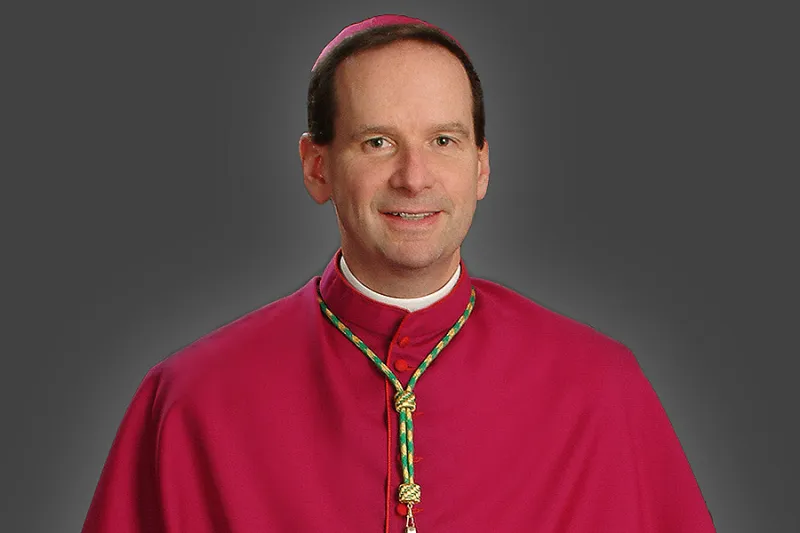
The United States Conference of Catholic Bishops (USCCB) initially supported the bill for its new protections for pregnant women. Now, USCCB Committee on Pro-Life Activities chairman Bishop Michael Burbidge is accusing the EEOC of distorting the law.
“We supported the bipartisan Pregnant Workers Fairness Act because it enhanced the protection of pregnant mothers and their preborn children, which is something that we have encouraged Congress to prioritize,” Burbidge said in a statement. “The act is pro-worker, pro-family, and pro-life. It is a total distortion to use this law as a means for advancing abortion and the complete opposite of needed assistance for pregnant mothers.”
Burbidge argued that the proposed rules are contrary to the legislative intent.
“To include accommodations for obtaining an abortion is wrong and contrary to the text, legislative history, and purpose of the act, which is to help make it possible for working mothers to remain gainfully employed, if desired, while protecting their health and that of their preborn children,” Burbidge continued. “We are hopeful that the EEOC will be forced to abandon its untenable position when public comments submitted on this regulation demonstrate that its interpretation would be struck down in court.”
The EEOC defended its inclusion of abortion as a related medical condition based on previous judicial interpretations of the Pregnancy Discrimination Act, which the agency argued included abortion as a medical condition related to pregnancy.
Some Republican supporters of the legislation have also accused the EEOC of disregarding the legislative intent and the text of the law. Sen. Bill Cassidy, who was the lead Republican co-sponsor of the legislation, issued a statement that argued the bill received bipartisan support because it excluded abortion.
“The Biden administration has gone rogue. These regulations completely disregard legislative intent and attempt to rewrite the law by regulation,” Cassidy said. “The Biden administration has to enforce the law as passed by Congress, not how they wish it was passed. The Pregnant Workers Fairness Act is aimed at assisting pregnant mothers who remain in the workforce by choice or necessity as they bring their child to term and recover after childbirth. The decision to disregard the legislative process to inject a political abortion agenda is illegal and deeply concerning.”
EEOC Chair Charlotte Burrows issued a statement along with the release of the new rules but did not make any mention of the inclusion of abortion. She said the proposal “furthers the agency’s leadership role in fulfilling the promise of the PWFA’s protections.”
“The PWFA is a step forward for workers, families, and the economy,” Burrows said. “This important new civil rights law promotes the economic security and health of pregnant and postpartum workers by providing them with access to support on the job to keep working, which helps employers retain critical talent.”
The proposed rules will undergo a 60-day public comment period, after which the EEOC can either revise the rules or hold a vote on whether to adopt them.
If you value the news and views Catholic World Report provides, please consider donating to support our efforts. Your contribution will help us continue to make CWR available to all readers worldwide for free, without a subscription. Thank you for your generosity!
Click here for more information on donating to CWR. Click here to sign up for our newsletter.
Seminarians at Good Shepherd Major Seminary in Nigeria’s Kaduna state where four students were kidnapped and one, Michael Nnadi, was killed in 2020. / Credit: Good Shepherd Major Seminary Kaduna/ Facebook
ACI Africa, Jan 26, 2024 / 11:40 am (CNA).
Last year, 2023, was a difficult year for Brother Peter Olarewaju, a postulant at the Benedictine monastery in Nigeria’s Ilorin Diocese who was kidnapped alongside two others at the monastery. Olarewaju underwent different kinds of torture and witnessed the murder of his companion, Brother Godwin Eze.
After his release, Olarewaju said his kidnapping was a blessing, as it had strengthened his faith. He even said that he is now prepared to die for his faith.
“I am prepared to die a martyr in this dangerous country. I am ready any moment to die for Jesus. I feel this very strongly,” Olarewaju said in an interview with ACI Africa, CNA’s news partner in Africa, on Nov. 26, 2023, days after he was set free by suspected Fulani kidnappers.
The late Brother Godwin Eze who was kidnapped from the Benedictine monastery in Nigeria’s Ilorin Diocese and murdered by his kidnappers in October 2023. Credit: Benedictine monastery, Eruku
The monk’s testimony is not an isolated case in Nigeria, where kidnapping from seminaries, monasteries, and other places of religious formation has been on the rise. While some victims of the kidnappings have been killed, those who survived the ordeal have shared that they have come back stronger — and ready to die for their faith.
Seminarian Melchior Maharini, a Tanzanian who was kidnapped alongside a priest from the Missionaries of Africa community in the Diocese of Minna in August 2023, said the suffering he endured during the three weeks he was held captive strengthened his faith. “I felt my faith grow stronger. I accepted my situation and surrendered everything to God,” he told ACI Africa on Sept. 1, 2023.
Father Paul Sanogo (left) and Seminarian Melchior Maharini (right) were kidnapped from their community of Missionaries of Africa in Nigeria’s Diocese of Minna. Credit: Vatican Media
Many other seminarians in Nigeria have been kidnapped by Boko Haram militants, Fulani herdsmen, and other bandit groups operating in Africa’s most populous nation.
In August 2023, seminarian David Igba told ACI Africa that he stared death in the face when a car in which he was traveling on his way to the market in Makurdi was sprayed with bullets by Fulani herdsmen.
Seminarian Na’aman Danlami died when the Fulanis attacked St. Raphael Fadan Kamantan Parish on the night of Sept. 7, 2023. Credit: Photo courtesy of Aid to the Church in Need
In September 2023, seminarian Na’aman Danlami was burned alive in a botched kidnapping incident in the Diocese of Kafanchan. A few days earlier, another seminarian, Ezekiel Nuhu, from the Archdiocese of Abuja, who had gone to spend his holidays in Southern Kaduna, was kidnapped.
Two years prior, in October 2021, Christ the King Major Seminary of Kafanchan Diocese was attacked and three seminarians were kidnapped.
Seminarian David Igba during a pastoral visit at Scared Heart Udei of the Catholic Diocese of Makurdi. Credit: David Igba
In one attack that attracted global condemnation in 2020, seminarian Michael Nnadi was brutally murdered after he was kidnapped alongside three others from Good Shepherd Major Seminary in the Diocese of Kaduna. Those behind the kidnapping confessed that they killed Nnadi because he would not stop preaching to them, fearlessly calling them to conversion.
After Nnadi’s murder, his companions who survived the kidnapping proceeded to St. Augustine Major Seminary in Jos in Nigeria’s Plateau state, where they courageously continued with their formation.
The tomb of seminarian Michael Nnadi, who was brutally murdered after he was kidnapped alongside three others from the Good Shepherd Major Seminary in the Catholic Diocese of Kaduna in 2020. Credit: Father Samuel Kanta Sakaba, rector of a Good Shepherd Major Seminary in Kaduna
As Christian persecution rages in Nigeria, seminary instructors in the country have shared with ACI Africa that there is an emerging spirituality in Nigerian seminaries that many may find difficult to grasp: the spirituality of martyrdom.
They say that in Nigeria, those who embark on priestly formation are continuously being made to understand that their calling now entails being ready to defend the faith to the point of death. More than ever before, the seminarians are being reminded that they should be ready to face persecution, including the possibility of being kidnapped and even killed.
Father Peter Hassan, rector of St. Augustine Major Seminary in the Archdiocese of Jos, Plateau state, said that seminaries, just like the wider Nigerian society, have come to terms with “the imminence of death” for being Christian.
Father Peter Hassan, rector of St. Augustine Major Seminary in Jos, Nigeria, walks with an unnamed companion. Credit: Father Peter Hassan
“Nigerian Christians have been victims of violence of apocalyptic proportions for nearly half a century. I can say that we have learned to accept the reality of imminent death,” Hassan said in a Jan. 12 interview with ACI Africa.
He added: “Nevertheless, it is quite inspiring and comforting to see the many young men who are still ready to embrace a life that will certainly turn them into critically endangered species. Yet these same young men are willing to preach the gospel of peace and embrace the culture of dialogue for peaceful coexistence.”
Shortly after Nnadi’s kidnapping and killing, St. Augustine Major Seminary opened its doors to the three seminarians who survived the kidnapping.
Hassan told ACI Africa that the presence of the three former students of Good Shepherd Major Seminary was “a blessing” to the community of St. Augustine Major Seminary.
“Their presence in our seminary was a blessing to our seminarians, a wake-up call to the grim reality that not even the very young are spared by those mindless murderers,” Hassan said.
Back at Good Shepherd, seminarians have remained resilient, enrolling in large numbers even after the 2020 kidnapping and Nnadi’s murder.
Good Shepherd Major Seminary in Kaduna, Nigeria. Credit: Father Samuel Kanta Sakaba, rector of a Good Shepherd Major Seminary in Kaduna
In an interview with ACI Africa, Father Samuel Kanta Sakaba, the rector of Good Shepherd Major Seminary, said that instructors at the Catholic institution, which has a current enrollment of 265 seminarians, make it clear that being a priest in Nigeria presents the seminarians with the danger of being kidnapped or killed.
ACI Africa asked Sakaba whether or not the instructors discuss with the seminarians the risks they face, including that of being kidnapped, or even killed, to which the priest responded: “Yes, as formators, we have the duty to take our seminarians through practical experiences — both academic, spiritual, and physical experiences. We share this reality of persecution with them, but for them to understand, we connect the reality of Christian persecution in Nigeria to the experiences of Jesus. This way, we feel that it would be easier for them to not only have the strength to face what they are facing but to also see meaning in their suffering.”
“Suffering is only meaningful if it is linked with the pain of Jesus,” the priest said. “The prophet Isaiah reminds us that ‘by his wounds, we are healed.’ Jesus also teaches us that unless the grain of wheat falls on the ground and dies, it will remain a single grain, but that it is only when it falls and dies that it yields a rich harvest. Teachings such as these are the ones that deepen our resilience in the face of persecution.”
Seminarians and their instructors at St. Augustine Major Seminary in Jos, Nigeria. Credit: Father Peter Hassan
Sakaba spoke of the joy of those who look forward to “going back to God in a holy way.”
“Whatever happens, we will all go back to God. How joyful it is to go back to God in a holy way, in a way of sacrifice.” he said. “This holiness is accepting this cross, this pain. Jesus accepted the pain of Calvary, and that led him to his resurrection. Persecution purifies the individual for them to become the finished product for God. I believe that these attacks are God’s project, and no human being can stop God’s work.”
However, the rector clarified that those who enroll at the seminary do not go out seeking danger.
“People here don’t go out putting themselves in situations of risk,” he said. “But when situations such as these happen, the teachings of Jesus and his persecution give us courage to face whatever may come our way.”
Sakaba said that although priestly formation in Nigeria is embracing the “spirituality of martyrdom,” persecution in the West African country presents “a difficult reality.”
“It is difficult to get used to pain. It is difficult to get used to the issues of death … to get familiar with death,” he said. “No one chooses to go into danger just because other people are suffering; it is not part of our nature. But in a situation where you seem not to have an alternative, the grace of God kicks in to strengthen you to face the particular situation.”
Sakaba said that since the 2020 attack at Good Shepherd Major Seminary, the institution has had an air of uncertainty. He said that some of the kidnappers who were arrested in the incident have been released, a situation he said has plunged the major seminary into “fear of the unknown.”
“It hasn’t been easy for us since the release,” Sabaka told ACI Africa. “The community was thrown into confusion because of the unknown. We don’t know what will happen next. We don’t know when they will come next or what they will do to us. We don’t know who will be taken next.”
Seminarians at St. Augustine Major Seminary in Jos, Plateau state, Nigeria, during a Marian procession. Credit: Father Peter Hassan
In the face of that, however, Sabaka said the resilience of the seminary community has been admirable. “God has been supporting, encouraging, and leading us. His grace assisted us to continue to practice our faith,” he said.
The jihadist attacks, which continue unabated in communities surrounding the seminary, do not make the situation easier.
Church at the Good Shepherd Major Seminary in Kaduna, Nigeria. Credit: Father Samuel Kanta Sakaba, rector of Good Shepherd Major Seminary in Kaduna
“Every attack that happens outside our community reminds us of our own 2020 experience. We are shocked, and although we remain deeply wounded, we believe that God has been leading us,” he said.
This story was first published by ACI Africa, CNA’s news partner in Africa, and has been adapted by CNA.
Father Patrick Wattigny / Archdiocese of New Orleans
Washington, D.C. Newsroom, Oct 28, 2022 / 13:05 pm (CNA).
An Archdiocese of New Orleans priest who is scheduled to be tried in January on child sex abuse charges was arrested again Oct. 25 on… […]
Shane MacGowan’s funeral Mass took place Friday, Dec. 8, 2023, at St. Mary of the Rosary Church in Nenagh, County Tipperary, Ireland. / Credit: National Inventory of Architectural Heritage
CNA Staff, Dec 14, 2023 / 16:00 pm (CNA).
A Catholic pr… […]
Leave a Reply
