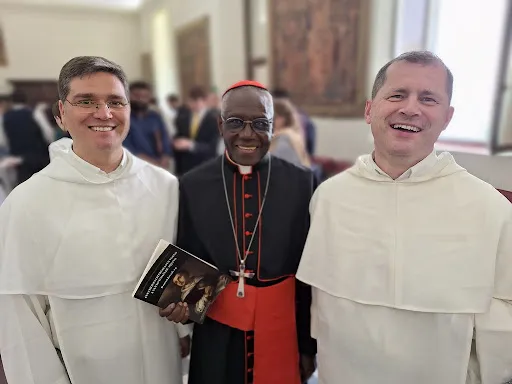
Cardinal Robert Sarah speaks with students and faculty at the Pontifical University of St. Thomas Aquinas on May 25, 2023. / Credit: Benedicte Cedergren/Angelicum. See CNA article for full slideshow.
Rome Newsroom, Jun 1, 2023 / 10:15 am (CNA).
Cardinal Robert Sarah urged students studying at the Pontifical University of St. Thomas Aquinas to ask in prayer for “an intimate and profound union with the Lord and with one another.”
Speaking at a Mass to mark the close of the academic year at the university in Rome known as the Angelicum, the Guinean cardinal spoke about the danger of division in the Church and the importance of prayer.
“Jesus asks that each person may live in love and in true unity, a deep communion, in the image of the Trinitarian communion. A union that immerses our lives fully in Jesus, just as Jesus’ life is immersed in the Father,” Sarah said in his homily.
He added: “Such a union is undoubtedly expressed in a Christian life of deep and intense prayer addressed to the Lord, which in daily life is manifested in a gaze of charity toward the brothers and sisters we meet.”
Seminarians, priests, religious, and laypeople studying philosophy and theology at the pontifical university attended the Mass on May 25.
The prefect emeritus of the Vatican Dicastery for Divine Worship and the Discipline of the Sacraments reflected on Jesus’ priestly prayer at the Last Supper in which the Lord prayed: “that they may all be one, as you, Father, are in me and I in you, that they also may be in us, that the world may believe that you sent me” (John 17:21).
Cardinal Robert Sarah celebrates Mass for students and faculty at the Pontifical University of St. Thomas Aquinas on May 25, 2023. Credit: Benedicte Cedergren/Angelicum
Sarah said: “Jesus calls for them to be a family of God … Jesus knows well that the spirit of division, hatred, or mutual contempt would destroy his Church and mission. It does not matter how the devil is dressed. Everything that divides is still inspired by him.”
“The danger of division, of infighting, of confusion in doctrinal and moral teaching is so grave that Jesus ventures an ambitious, lofty, almost impossible prayer: He asks the Father that his disciples have the same unity that exists between the two of them.”
The 77-year-old cardinal reminded the students that “if theological study does not make us grow in the love of God and neighbor, if we only work hard to pass the exams, then we are killing ourselves for nothing.”
“In our time, it is urgent to restart the missionary commitment to courageously bring the Gospel of Christ everywhere, but preaching must begin with prayer and the concrete witness of that evangelical love expressed with the death of Jesus on the cross and which impels us to look at others before themselves, to spend one’s life for the Gospel and not for one’s own interest or advantages,” he said.
Cardinal Robert Sarah speaks with students and faculty at the Pontifical University of St. Thomas Aquinas on May 25, 2023. Credit: Benedicte Cedergren/Angelicum
He said: “Jesus tells us that we should always be able to begin our prayer with this attitude of raising our eyes to heaven, detaching our attention, even physically, from our worries, from our earthly worries and turning towards the high, towards heaven, towards the Father who dwells in it.”
“A gaze bowed and closed in on ourselves does not open us up to God, it does not allow us to enter into a deep and intimate relationship with him. Before we begin to pray, we must, like Jesus, lift our eyes, take them away from our thoughts, even the thought of study and exams, so that we can truly and fully immerse ourselves in him, in his divine dimension.”
Cardinal Robert Sarah speaks with students and faculty at the Pontifical University of St. Thomas Aquinas on May 25, 2023. Credit: Benedicte Cedergren/Angelicum
Sarah told the students that “the more we know the Lord the more we can love him.”
The Angelicum, which is one of seven pontifical universities in Rome, has 1,000 students coming from almost 100 countries around the world.
Cardinal Robert Sarah celebrates Mass for students and faculty at the Pontifical University of St. Thomas Aquinas on May 25, 2023. Credit: Benedicte Cedergren/Angelicum
“We are called, like St. Paul, to have courage and to give our life for the Lord in everything that we are given to live, without fearing the cross, but like Jesus, embracing it tenderly, since that cross is the road to eternity, to fullness of God’s glory,” Sarah said.
“Let us ask the Lord, through the intercession of the Virgin Mary, to tend through our lives to an intimate and profound union with the Lord and with one another, to become credible witnesses of the Risen One.”
Matthew Santucci contributed to this story.
If you value the news and views Catholic World Report provides, please consider donating to support our efforts. Your contribution will help us continue to make CWR available to all readers worldwide for free, without a subscription. Thank you for your generosity!
Click here for more information on donating to CWR. Click here to sign up for our newsletter.
Bishop Rudolf Voderholzer speaks at a press conference on June 22, 2020. / Diocese of Regensburg.
CNA Newsroom, Sep 5, 2022 / 07:18 am (CNA).
The director of the Benedict XVI Institute in Regensburg, Germany, says a “healthy defense of the Fait… […]
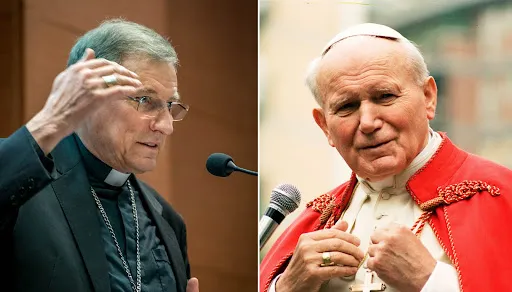
Archbishop Zbigņevs Stankevičs of Riga, Latvia (left), speaking during a Catholic conference in Warsaw in May 2022 on the natural law legacy of John Paul II (right.) / Photos by Lisa Johnston and L’Osservatore Romano
Warsaw, Poland, Jun 9, 2022 / 09:17 am (CNA).
Constant cooperation and dialogue among Catholic, Lutherans, Orthodox, and other Christian denominations have been crucial to protect life and family in the Baltic nation of Latvia, Archbishop Zbigņevs Stankevičs of Riga, Latvia, said during a recent Catholic conference in Warsaw.
In his speech, Stankevičs shared his personal ecumenical experience in Latvia as an example of how the concept of natural law proposed by St. John Paul II can serve as the basis for ecumenical cooperation in defending human values.
The metropolitan archbishop, based in Latvia’s capital, is no stranger to ecumenical work and thought. In 2001, he became the first bishop consecrated in a Lutheran church since the split from Protestantism in the 1500s. The unusual move, which occurred in the church of Evangelical Lutheran Cathedral in Riga, formerly the Catholic Cathedral of St. Mary, signaled the beginning of Stankevičs’ cooperation with the Lutheran church in Latvia, a cooperation that would ultimately become a partnership in the cause of life and the family. Since 2012, the archbishop has served on the Pontifical Council for Promoting Christian Unity.
“I would like to present this ecumenical cooperation in three experiences in my country: the abortion debate, the civil unions discussion, and the so-called Istanbul convention,” Stankevičs began.
Entering the abortion debate
Ordained as a priest in 1996, Stankevičs struggled to find proper consultation for Catholic couples on natural family planning. It was then that he decided to create a small center that provided natural family planning under the motto “let us protect the miracle [of fertility].”
This involvement in the world of natural family planning would lead him into the heart of the abortion debate in Latvian society, and, ultimately, to the conclusion that moral discussions in the public square benefit from a basis in natural law, something emphasized in the teachings of John Paul II.
“I knew that theological arguments would not work for a secular audience, so I wanted to show that Catholic arguments are not opposed to legal, scientific, and universal arguments, but rather are in harmony with them,” Stankevičs said.
“[A] few years later our parliament introduced the discussion to legalize abortion. No one was doing anything so I decided to do something. I consulted some experts and presented a proposal that was published in the most important secular newspaper in Latvia,” the archbishop said.
Stankevičs’ article, “Why I was Lucky,” used both biological and theological arguments to defend human life. He noted that his own mother, when pregnant with him, was under pressure to get an abortion; “but she was a believer, a Catholic, so she refused the pressure.”
After the Latvian parliament legalized abortion in 2002, the different Christian confessions decided to start working together to protect the right to life and the family.
In Latvia, Catholics comprise 25% of the population, Lutherans 34.2%, and Russian Orthodox 17%, with other smaller, mostly Christian denominations making up the remainder.
“We started to work together by the initiative of a businessman in Riga, a non-believer who wanted to promote awareness about the humanity of the unborn,” the archbishop recalled.
“Bringing all Christians together in a truly ecumenical effort ended up bearing good fruits because we worked together in promoting a culture of life: From more than 7,000 abortions per year in 2002, we were able to bring it down to 2,000 by 2020,” he said.
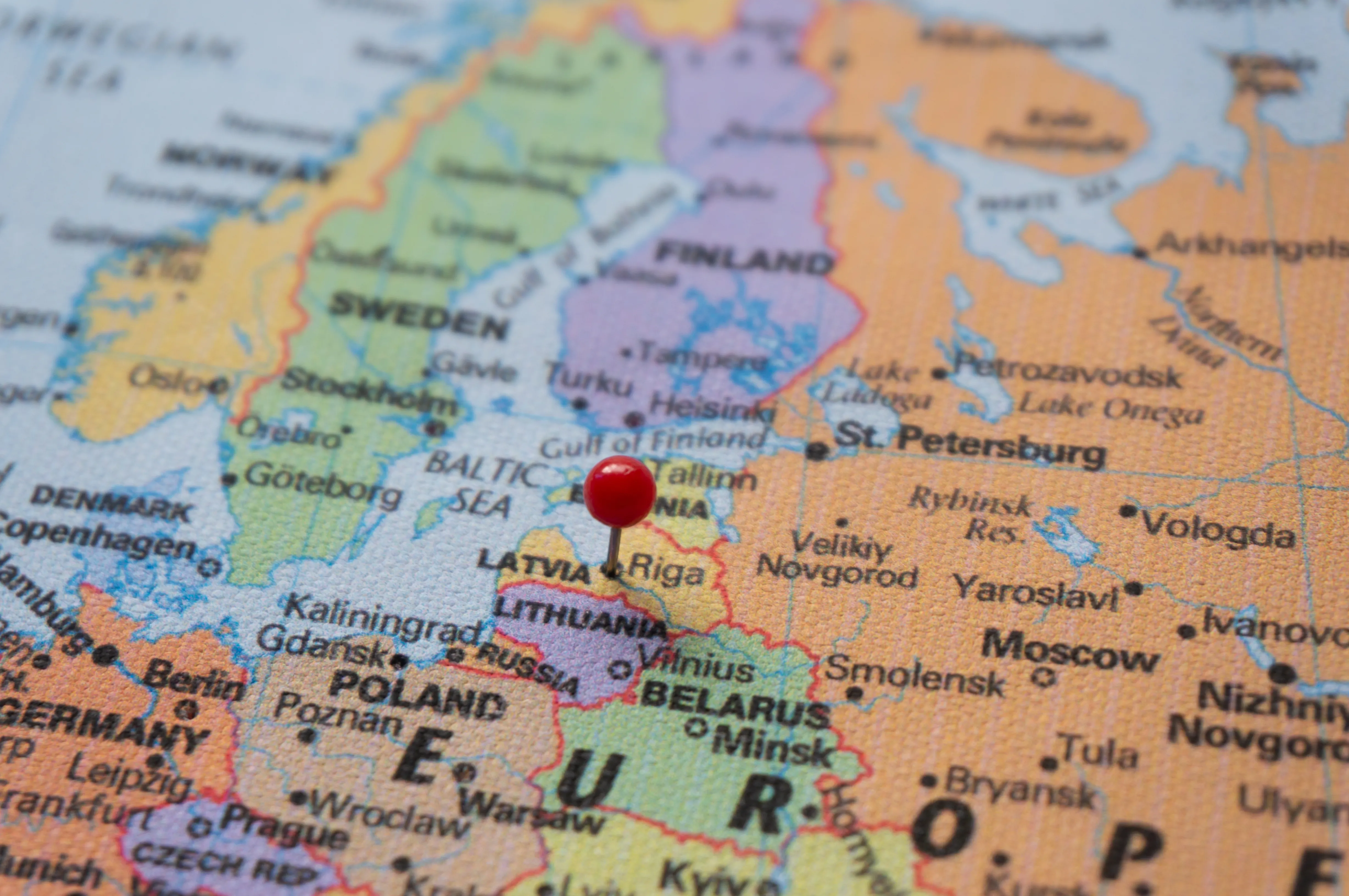
Map of Riga, the capital of Latvia. Shutterstock
Ecumenical defense of marriage, family
Regarding the legislation on civil unions, another area where Stankevičs has rallied ecumenical groups around natural law defense of marriage, the archbishop said that he has seen the tension surrounding LGBT issues mount in Latvian society as increased pressure is brought to bear to legalize same-sex unions.
Invited to a debate on a popular Latvian television show called “One vs. One” after Pope Francis’ remark “who am I to judge?” was widely interpreted in Latvian society as approving homosexual unions, Stankevičs “had the opportunity to explain the teachings of the Catholic Church and what was the real meaning of the Holy Father’s words.”
After that episode, in dialogue with other Christian leaders, Stankevičs proposed a law aimed at reducing political tensions in the country without jeopardizing the traditional concept of the family.
The legislation proposed by the ecumenical group of Christians would have created binding regulations aimed at protecting any kind of common household; “for example, two old persons living together to help one another, or one old and one young person who decide to live together.”
“The law would benefit any household, including homosexual couples, but would not affect the concept of [the] natural family,” Stankevičs explained. “Unfortunately the media manipulated my proposal, and the Agency France Presse presented me internationally as if I was in favor of gay marriage.”
In 2020, the Constitutional Court in Latvia decided a case in favor of legalizing homosexual couples and ordered the parliament to pass legislation according to this decision.
In response, the Latvian Men’s Association started a campaign to introduce an amendment to the Latvian constitution, to clarify the concept of family. The Latvian constitution in 2005 proclaimed that marriage is only between a man and a woman, but left a legal void regarding the definition of family, which the court wanted to interpret to include homosexual unions.
The Latvian bishops’ conference supported the amendment presented by the Men’s Association, “but most importantly,” Stankevičs explained, “we put together an ecumenical statement signed by the leaders of 10 different Christian denominations supporting the idea that the family should be based on the marriage between a man and a woman. The president of the Latvian Jewish community, a good friend, also joined the statement.”
The Freedom Monument in Riga, Latvia, honors soldiers who died during the Latvian War of Independence (1918-1920). Shutterstock
According to Stankevičs, something strange happened next. “The Minister of Justice created a committee to discuss the demand of the constitutional court, and it included several Christian representatives, including three from the Catholic Church, which worked for a year.” But ignoring all the discussions and proposals, the Minister of Justice ended up sending a proposal to parliament that was a full recognition of homosexual couples as marriage.
The response was also ecumenical: Christian leaders sent a letter encouraging the parliament to ignore the government’s proposal.
According to Stankevičs, the proposal has already passed one round of votes “and it is very likely that it will be approved in a second round of votes, with the support of the New Conservative party. But we Christians continue to work together.”
Preventing gender ideology
The third field of ecumenical cooperation mentioned by Stankevičs concerned the Istanbul Convention, a European treaty which the Latvian government signed but ultimately did not ratify.
The treaty was introduced as an international legal instrument that recognizes violence against women as a violation of human rights and a form of discrimination against women.
The convention claims to cover various forms of gender-based violence against women, but Christian communities in Latvia have criticized the heavy use of gender ideology in both the framing and the language of the document.
The word “gender,” for instance, is defined as “the socially constructed roles, behaviors, activities, and attributes that a given society considers appropriate for women and men,” a definition that allows gender to be defined independent of biological sex and therefore opens the document to the question of whether it really is aimed at the protection of women.
Christian communities also question the biased nature of the committee designated to enforce the convention.
The governments of Slovakia and Bulgaria refused to ratify the convention, while Poland, Lithuania, and Croatia expressed reservations about the convention though it was ultimately ratified in those countries, a move the government of Poland is attempting to reverse.
“When we found out that the Latvian parliament was going to ratify it, I went to the parliament and presented the common Christian position,” Stankevičs explained. As a consequence of that visit, the Latvian parliament decided not to ratify the convention, Stankevičs said, crediting the appeal to the unity provided by the common Christian position argued via natural law.
“In conclusion,” the archbishop said, “I can say that in Latvia we continue to defend the true nature of life and family. But if we Catholics would act alone, we would not have the impact that we have as one Christian majority. That unity is the reason why the government takes us seriously.”
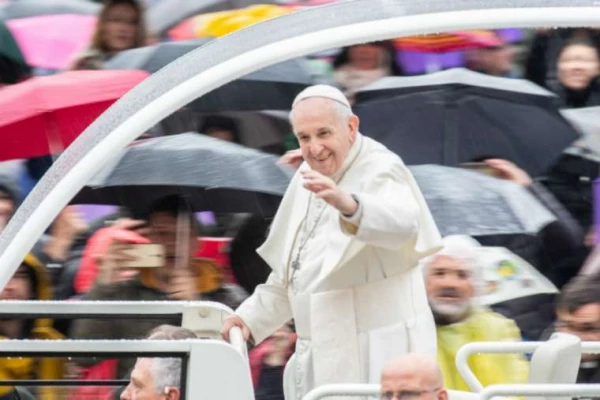
Vatican City, Apr 10, 2019 / 03:49 am (CNA).- Pope Francis warned Wednesday that pride is the most dangerous attitude in the Christian life, pointing out that even the holiest of people have received everything from God.
“None of us loves God as He loved us. It is enough to put oneself before a crucifix to grasp the disproportion,” Pope Francis said April 10.
“Before God we are all sinners,” Francis said. “If we say we are without sin, we deceive ourselves and the truth is not in us,” he said quoting the first epistle of John.
The pope said that pride is “the most dangerous attitude of every Christian life,” warning that arrogance can “also infect people who live an intense religious life.”
“There are glaring sins that make noise, and there are also devious sins, which lurk in the heart without us even realizing it. The worst of these is pride,” Francis said.
The sin of pride divides people and makes us presume to be better than others, he explained. “We always remain children who owe everything to the Father.”
Pope Francis said that when we go through difficult days, we must always remember that life is a miracle that God has created from nothing.
“In this life we have received so much: existence, a father and a mother, friendship, the wonders of creation,” he said.
“If you love, it is because someone next to you has awakened you to love, making you understand how in it lies the meaning of existence,” he explained.
Pope Francis called this principle the “mystery of the moon,” which has no light of its own, but reflects the light of the sun.
“We love because we have been loved, we forgive because we have been forgiven,” he said. “None of us shines with our own light.”
The pope said that understanding this can give us a greater empathy for others.
“Let’s try to listen to the story of some person who made a mistake: a prisoner, a convict, a drug addict,” Francis said. Without neglecting to consider personal responsibility, he said, you can ask yourself whether these mistakes are the result of a “story of hatred and abandonment that someone carries with him.”
Pope Francis reflected on a line, “Forgive us our trespasses” as a part of his ongoing catechesis on the “Our Father” prayer.
“Lord, even the holiest among us does not cease to be your debtor. O Father, have pity on us all,” Pope Francis prayed.
It was not until Pentecost that Jesus started His own Catholic Church. During His life of the flesh, Jewish Jesus, Jewish John the Baptist and the Jewish Apostles weekly celebrated the Sabbath at the Synagogue with their Jewish religious brothers, their God authorized Jewish Church leaders, the Jewish Pharisees. Were Jewish Jesus, John the Baptist and the Apostles, and their Jewish Pharisee brothers united or divided in the Jewish faith? Did Jewish Jesus, John the Baptist and the Apostles, love or hate their fellow Jewish Pharisee brothers of their combined Jewish faith? I would say that Jewish Jesus, John the Baptist and the Apostles, loved their Jewish Pharisee brothers, by pointing out their failures, but remained united in their Jewish faith, until Pentecost.
Just because Jesus, John the Baptist, and the Apostles, are in this huge religious struggle with the evil Jewish Pharisees, doesn’t automatically mean there is hatred or disunity. This is just how religion works.
Matthew 3:7
When he saw many of the Pharisees and Sadducees coming to his baptism, he said to them, “You brood of vipers! Who warned you to flee from the coming wrath? Produce good fruit as evidence of your repentance.
Matthew 23:1 Denunciation of the Scribes and Pharisees.
Then Jesus spoke to the crowds and to his disciples, saying, “The scribes and the Pharisees have taken their seat on the chair of Moses. Therefore, do and observe all things whatsoever they tell you, but do not follow their example. For they preach but they do not practice.
Matthew 23:13
“Woe to you, scribes and Pharisees, you hypocrites. You lock the kingdom of heaven before human beings. You do not enter yourselves, nor do you allow entrance to those trying to enter. “Woe to you, scribes and Pharisees, you hypocrites. You traverse sea and land to make one convert, and when that happens you make him a child of Gehenna twice as much as yourselves…
…“Woe to you, scribes and Pharisees, you hypocrites. You pay tithes of mint and dill and cummin, and have neglected the weightier things of the law: judgment and mercy and fidelity. [But] these you should have done, without neglecting the others. Blind guides, who strain out the gnat and swallow the camel! “Woe to you, scribes and Pharisees, you hypocrites. You cleanse the outside of the cup and dish, but inside they are full of plunder and self-indulgence. Blind Pharisee, cleanse first the inside of the cup, so that the outside also may be clean. “Woe to you, scribes and Pharisees, you hypocrites. You are like whitewashed tombs, which appear beautiful on the outside, but inside are full of dead men’s bones and every kind of filth. Even so, on the outside you appear righteous, but inside you are filled with hypocrisy and evildoing.
Jesus was crucified by Jewish God authorized Church leaders for not shrouding Jewish God authorized leaders sins in darkness.
Jesus, John the Baptist and the Apostles were all members of the Jewish Church, observing the Sabbath with their fellow God authorized Church leader Jewish brothers, the Pharisees, Sadducees and Jewish High Priest. Did Jesus, John the Baptist or Christ’s Disciples commit sin, hate, or ‘cause division’, by not shrouding Jewish God Authorized Church leader’s sins in darkness? I am sure that the Jewish people were all talking about the evil which Jewish God authorized Church leaders were committing, once Jesus, John the Baptist and Christ’s Disciples pointed out Jewish God Authorized Church leaders, evils out to them.
When any of God’s Prophets entered Judah, or Israel, they were usually pointing out the sins and wrongdoings of Israel’s God authorized Church leaders, Israel’s kings, and the people of Israel’s sins and wrongdoing. Did God Will His Prophets to point out the sins and wrongdoings of Jewish God Authorized Church leaders, or not? Pointing out all the sins of Israel, especially Jewish God authorized Church leaders, generally got Prophets martyred.
Jesus’ Matthew 24 sign for His Second Coming is, ‘When you see the Desolating Abomination’ ‘Standing in the Holy Place’. Well if we see the ‘Desolating Abomination’ ‘Standing in the Holy Place’, does not God Will us to warn our fellow Catholics and all the people of the world, about what we see?
Matthew 23:29
“Woe to you, scribes and Pharisees, you hypocrites. You build the tombs of the prophets and adorn the memorials of the righteous, and you say, ‘If we had lived in the days of our ancestors, we would not have joined them in shedding the prophets’ blood.’ Thus you bear witness against yourselves that you are the children of those who murdered the prophets; now fill up what your ancestors measured out! You serpents, you brood of vipers, how can you flee from the judgment of Gehenna? Therefore, behold, I send to you prophets and wise men and scribes; some of them you will kill and crucify, some of them you will scourge in your synagogues and pursue from town to town, so that there may come upon you all the righteous blood shed upon earth, from the righteous blood of Abel to the blood of Zechariah, the son of Barachiah, whom you murdered between the sanctuary and the altar. Amen, I say to you, all these things will come upon this generation.
The theology of Paul Tillich, “being and becoming” and whatnot, is not the Catholic faith and not Catholic religion. A Pope can not endorse Tillich, nor canonize his theology, nor rehabilitate their wrongness. Attempts by a Pope to do it “because it is done by a Pope” are both fraught and bad.








It was not until Pentecost that Jesus started His own Catholic Church. During His life of the flesh, Jewish Jesus, Jewish John the Baptist and the Jewish Apostles weekly celebrated the Sabbath at the Synagogue with their Jewish religious brothers, their God authorized Jewish Church leaders, the Jewish Pharisees. Were Jewish Jesus, John the Baptist and the Apostles, and their Jewish Pharisee brothers united or divided in the Jewish faith? Did Jewish Jesus, John the Baptist and the Apostles, love or hate their fellow Jewish Pharisee brothers of their combined Jewish faith? I would say that Jewish Jesus, John the Baptist and the Apostles, loved their Jewish Pharisee brothers, by pointing out their failures, but remained united in their Jewish faith, until Pentecost.
Just because Jesus, John the Baptist, and the Apostles, are in this huge religious struggle with the evil Jewish Pharisees, doesn’t automatically mean there is hatred or disunity. This is just how religion works.
Matthew 3:7
When he saw many of the Pharisees and Sadducees coming to his baptism, he said to them, “You brood of vipers! Who warned you to flee from the coming wrath? Produce good fruit as evidence of your repentance.
Matthew 23:1 Denunciation of the Scribes and Pharisees.
Then Jesus spoke to the crowds and to his disciples, saying, “The scribes and the Pharisees have taken their seat on the chair of Moses. Therefore, do and observe all things whatsoever they tell you, but do not follow their example. For they preach but they do not practice.
Matthew 23:13
“Woe to you, scribes and Pharisees, you hypocrites. You lock the kingdom of heaven before human beings. You do not enter yourselves, nor do you allow entrance to those trying to enter. “Woe to you, scribes and Pharisees, you hypocrites. You traverse sea and land to make one convert, and when that happens you make him a child of Gehenna twice as much as yourselves…
…“Woe to you, scribes and Pharisees, you hypocrites. You pay tithes of mint and dill and cummin, and have neglected the weightier things of the law: judgment and mercy and fidelity. [But] these you should have done, without neglecting the others. Blind guides, who strain out the gnat and swallow the camel! “Woe to you, scribes and Pharisees, you hypocrites. You cleanse the outside of the cup and dish, but inside they are full of plunder and self-indulgence. Blind Pharisee, cleanse first the inside of the cup, so that the outside also may be clean. “Woe to you, scribes and Pharisees, you hypocrites. You are like whitewashed tombs, which appear beautiful on the outside, but inside are full of dead men’s bones and every kind of filth. Even so, on the outside you appear righteous, but inside you are filled with hypocrisy and evildoing.
Jesus was crucified by Jewish God authorized Church leaders for not shrouding Jewish God authorized leaders sins in darkness.
Jesus, John the Baptist and the Apostles were all members of the Jewish Church, observing the Sabbath with their fellow God authorized Church leader Jewish brothers, the Pharisees, Sadducees and Jewish High Priest. Did Jesus, John the Baptist or Christ’s Disciples commit sin, hate, or ‘cause division’, by not shrouding Jewish God Authorized Church leader’s sins in darkness? I am sure that the Jewish people were all talking about the evil which Jewish God authorized Church leaders were committing, once Jesus, John the Baptist and Christ’s Disciples pointed out Jewish God Authorized Church leaders, evils out to them.
When any of God’s Prophets entered Judah, or Israel, they were usually pointing out the sins and wrongdoings of Israel’s God authorized Church leaders, Israel’s kings, and the people of Israel’s sins and wrongdoing. Did God Will His Prophets to point out the sins and wrongdoings of Jewish God Authorized Church leaders, or not? Pointing out all the sins of Israel, especially Jewish God authorized Church leaders, generally got Prophets martyred.
Jesus’ Matthew 24 sign for His Second Coming is, ‘When you see the Desolating Abomination’ ‘Standing in the Holy Place’. Well if we see the ‘Desolating Abomination’ ‘Standing in the Holy Place’, does not God Will us to warn our fellow Catholics and all the people of the world, about what we see?
Matthew 23:29
“Woe to you, scribes and Pharisees, you hypocrites. You build the tombs of the prophets and adorn the memorials of the righteous, and you say, ‘If we had lived in the days of our ancestors, we would not have joined them in shedding the prophets’ blood.’ Thus you bear witness against yourselves that you are the children of those who murdered the prophets; now fill up what your ancestors measured out! You serpents, you brood of vipers, how can you flee from the judgment of Gehenna? Therefore, behold, I send to you prophets and wise men and scribes; some of them you will kill and crucify, some of them you will scourge in your synagogues and pursue from town to town, so that there may come upon you all the righteous blood shed upon earth, from the righteous blood of Abel to the blood of Zechariah, the son of Barachiah, whom you murdered between the sanctuary and the altar. Amen, I say to you, all these things will come upon this generation.
The theology of Paul Tillich, “being and becoming” and whatnot, is not the Catholic faith and not Catholic religion. A Pope can not endorse Tillich, nor canonize his theology, nor rehabilitate their wrongness. Attempts by a Pope to do it “because it is done by a Pope” are both fraught and bad.