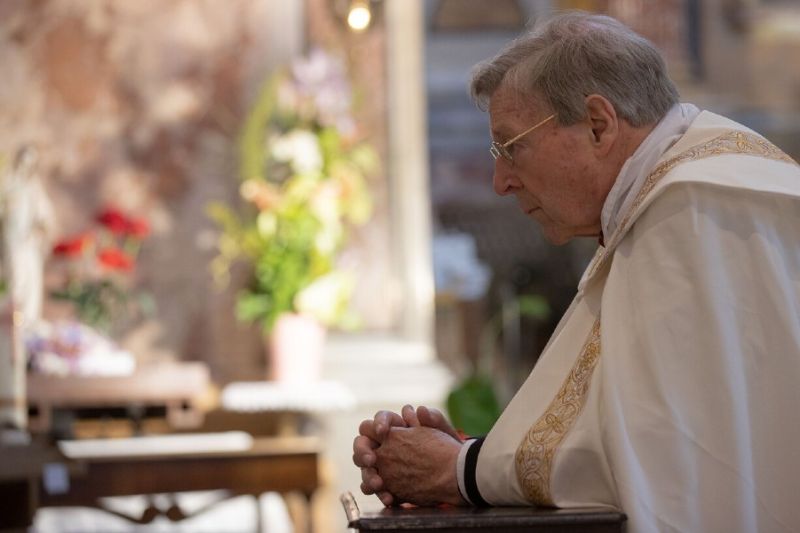
Cardinal George Pell / Daniel Ibanez/CNA. See CNA article for full slideshow.
Washington, D.C. Newsroom, Jan 11, 2023 / 08:30 am (CNA).
Australian Cardinal George Pell died Tuesday in Rome at age 81 after suffering a cardiac arrest following a routine hip replacement surgery, his secretary confirmed to EWTN.
Church leaders in Australia reacted with sadness and shock at the news of Pell’s death. “May eternal light now be his, who so steadfastly believed in the God of Jesus Christ,” Comensoli wrote on Twitter.
“I offer sentiments of heartfelt condolence,” the pope said in a Jan. 11 message, “remembering with a grateful heart his consistent and committed witness, his dedication to the Gospel and the Church, and particularly his diligent cooperation with the Holy See in the context of its recent economic reform, of which he laid the foundations with determination and wisdom.”
The prime minister of Australia, Anthony Albanese, said a memorial Mass will be held for Pell at St. Mary’s Cathedral in Sydney, where he will be buried, according to Sky News Australia.
Pell’s funeral Mass will be held at the Vatican. The date has not yet been announced.
Pell, prefect emeritus of the Vatican Secretariat for the Economy, recently remembered Pope Benedict XVI during an EWTN News In Depth Interview shortly after the late pope’s death.
The Australian was made a cardinal by Pope John Paul II in October 2003, while he was archbishop of Sydney. Ten years later, Pope Francis appointed Pell a member of his Council of Cardinals, and the year after, he put him in charge of Vatican finances.
In 2017, Pell left Rome for Australia to defend his innocence of abuse charges. After 404 days in prison he was ultimately acquitted in 2020. He returned to live in Rome on Sept. 30, 2020, his first visit back to the city since his trial and imprisonment.
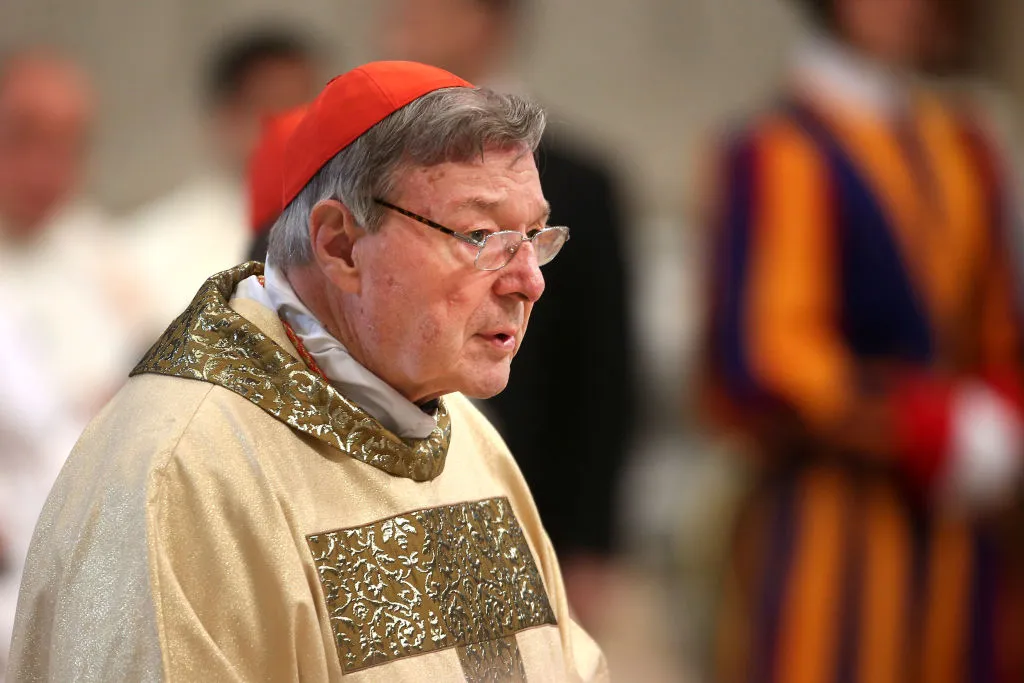
Below are photos of Pell throughout his time as cardinal.
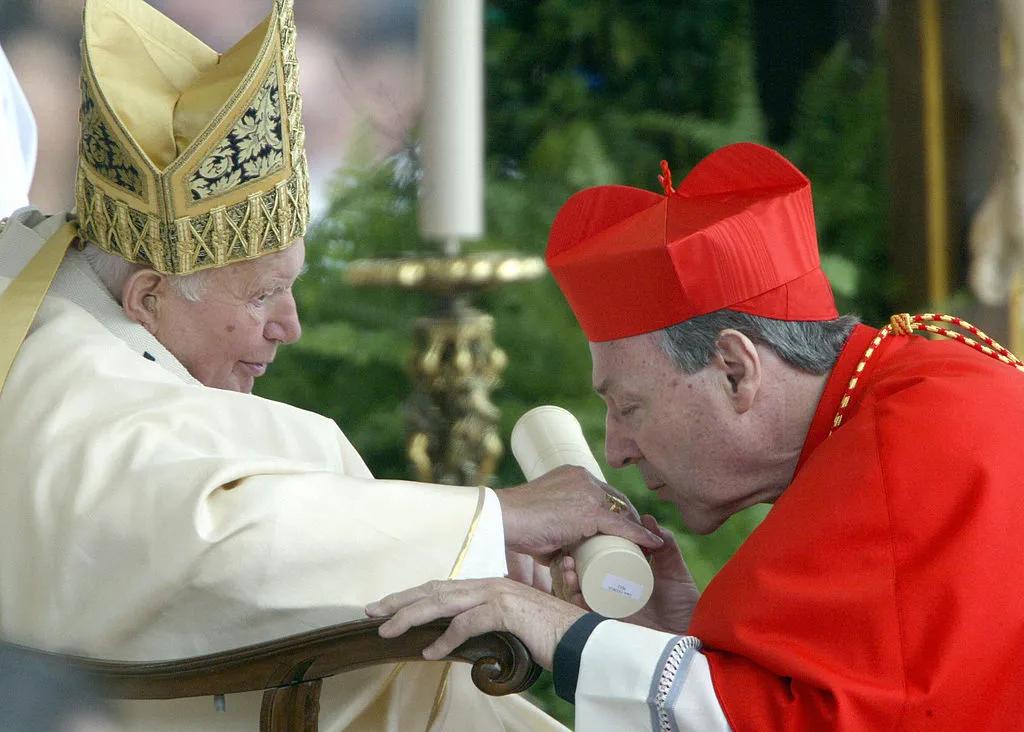
Newly appointed Cardinal George Pell of Australia kisses Pope John Paul II’s hand in St. Peter’s Square Oct. 21, 2003, at the Vatican during the ordination ceremony of new cardinals. Photo by PAOLO COCCO/AFP via Getty Images
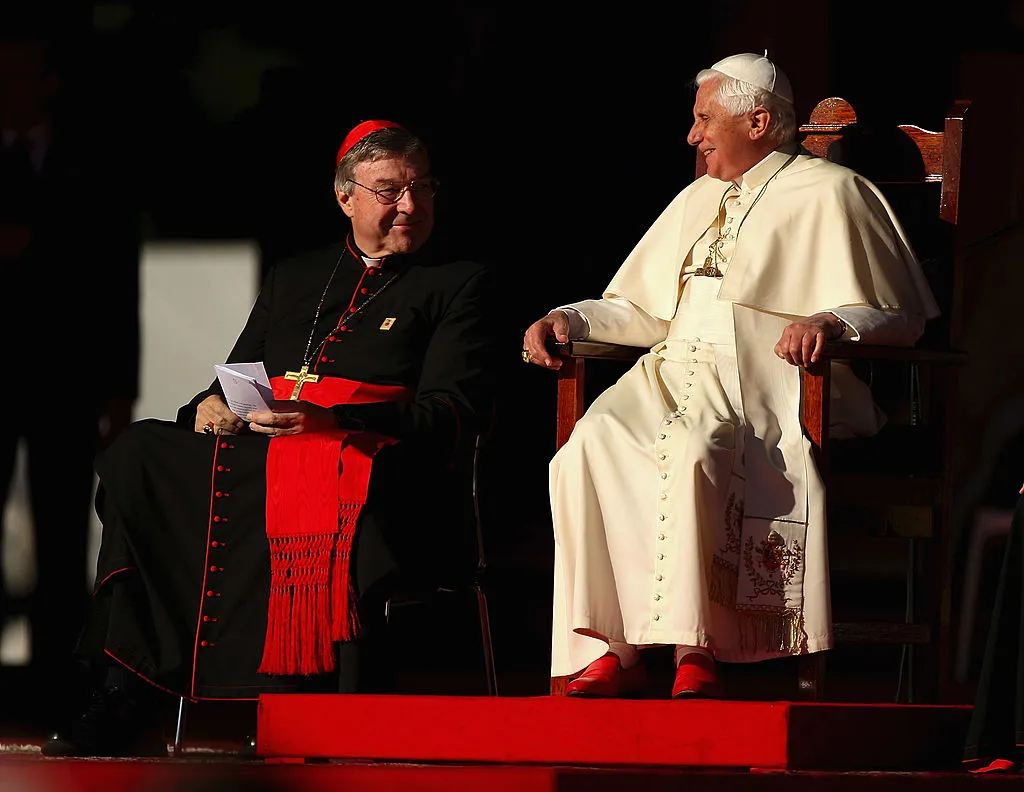
Pope Benedict XVI and Cardinal George Pell smile at one another while thanking all the volunteers at The Domain on July 21, 2008, in Sydney, Australia. Photo by Ezra Shaw/Getty Images
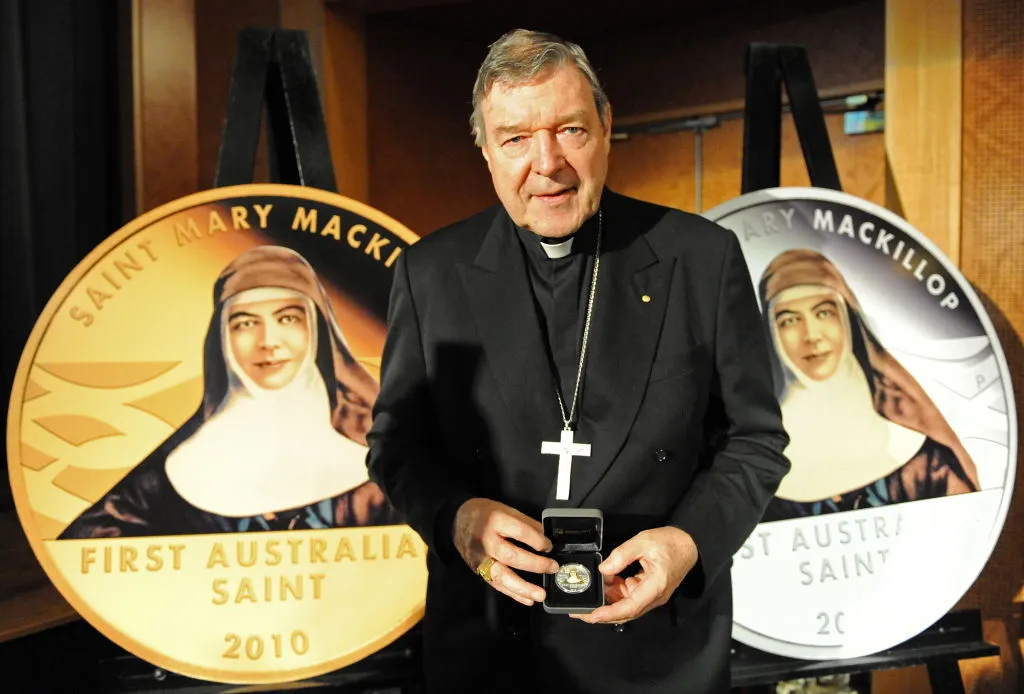
Cardinal George Pell, archbishop of Sydney, unveils Australia’s first pure gold (L) and silver (R) coins commemorating the canonization of Mary MacKillop in Sydney on Sept. 30, 2010. Photo by TORSTEN BLACKWOOD/AFP via Getty Images
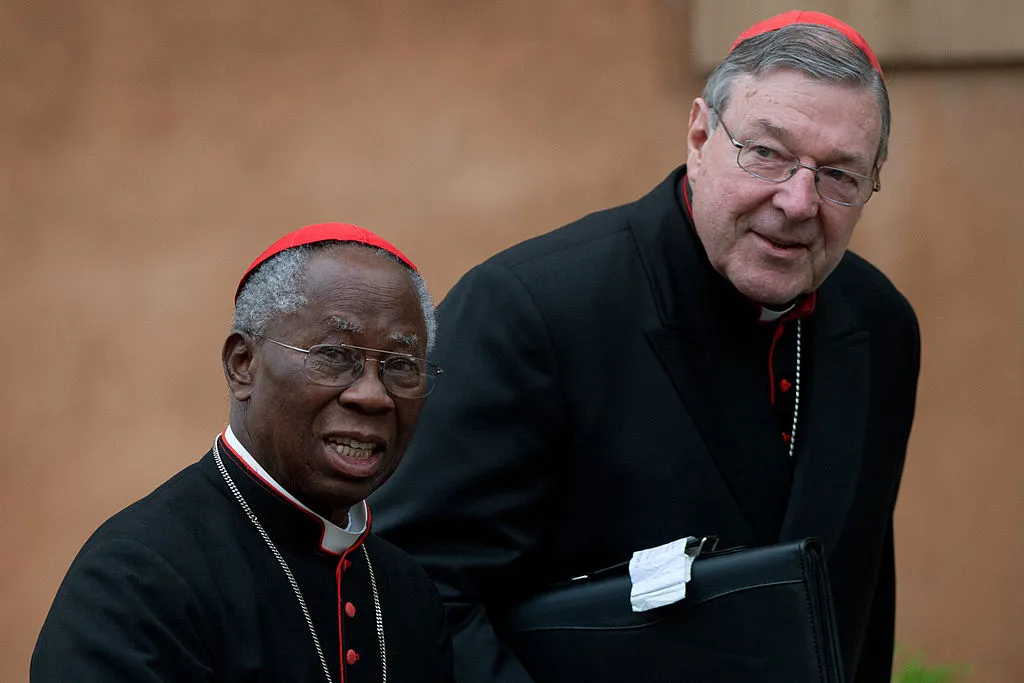
Australian Cardinal George Pell (R) and Nigerian Cardinal Francis Arinze arrive for a meeting on the eve of the start of a conclave on March 11, 2013, at the Vatican. Photo by JOHANNES EISELE/AFP via Getty Images
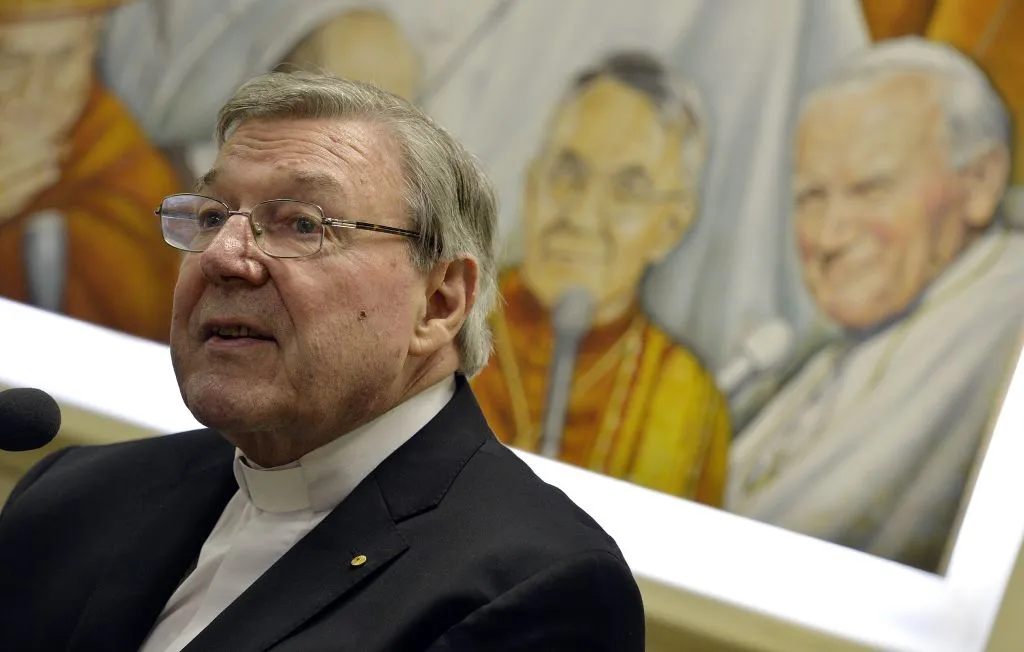
Australian Cardinal George Pell as prefect of the Secretariat for the Economy of the Holy See attends a press conference on March 31, 2014, at the Vatican. Photo by ANDREAS SOLARO/AFP via Getty Images
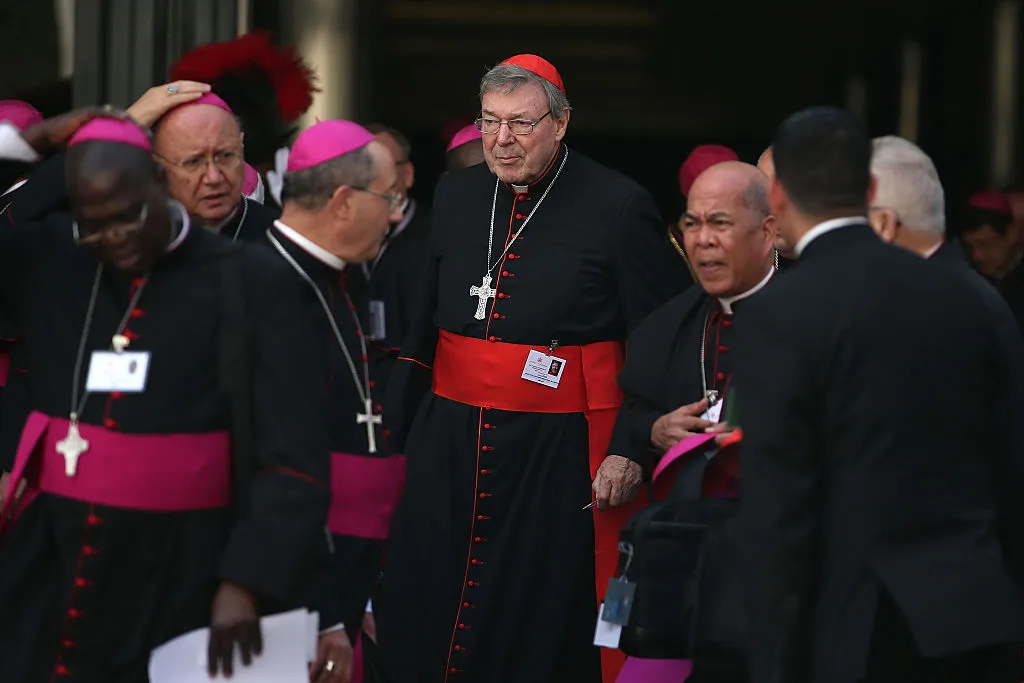
Cardinal George Pell leaves the opening session of the Synod on the themes of family at Synod Hall on Oct. 5, 2015, in Vatican City, Vatican. (Photo by Giulio Origlia/Getty Images)
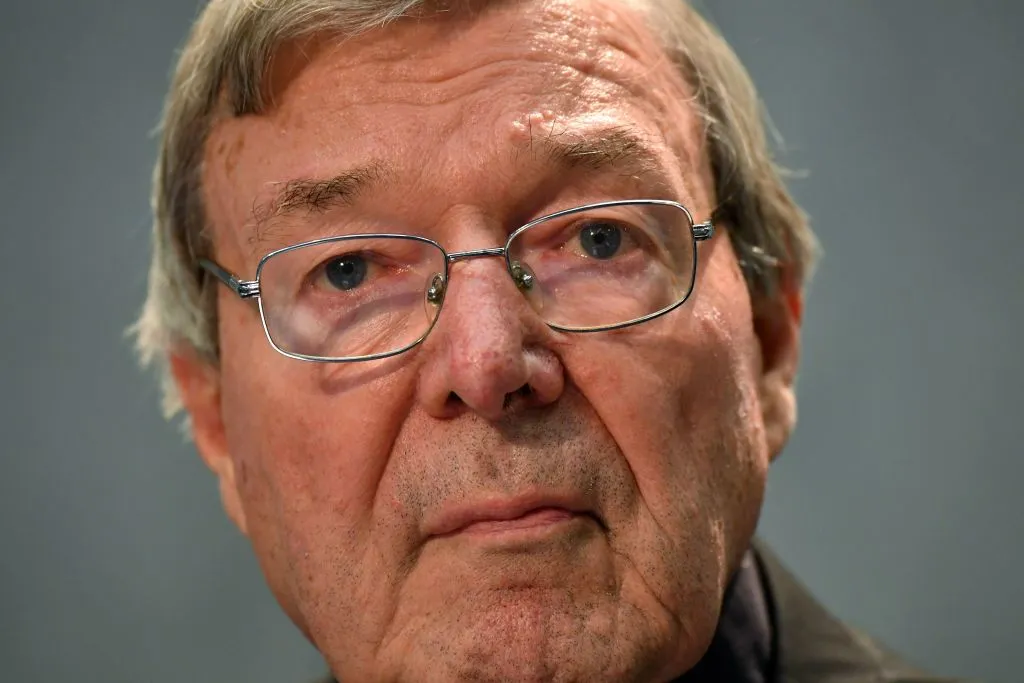
Australian Cardinal George Pell on June 29, 2017. Photo by ALBERTO PIZZOLI/AFP/Getty Images
Former archbishop of Sydney Cardinal George Pell attends the Chrism Mass at St. Peter’s Basilica on April 13, 2017, in Vatican City, Vatican. Photo by Franco Origlia/Getty Images
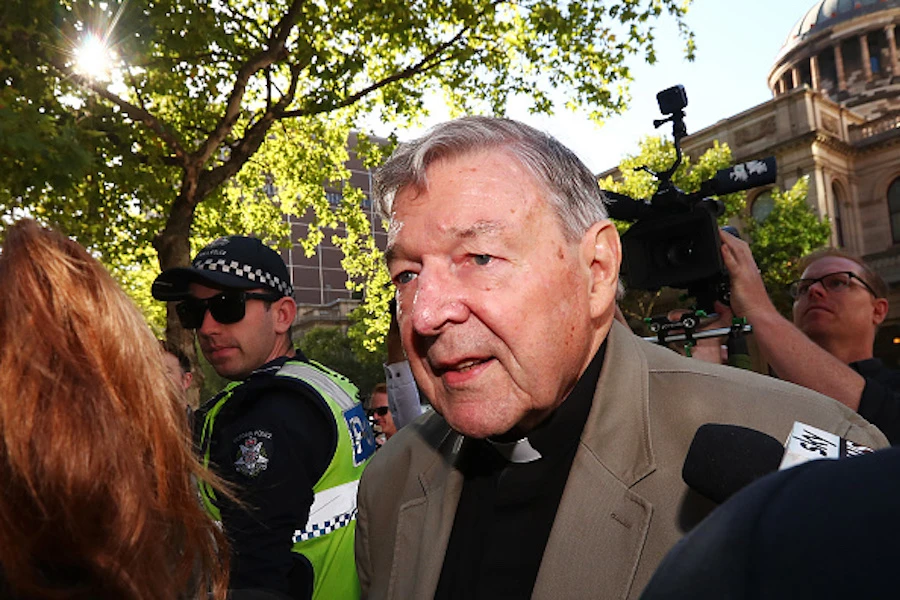
Cardinal George Pell arrives at Melbourne County Court on Feb. 27, 2019 in Melbourne, Australia. Michael Dodge/Getty Images
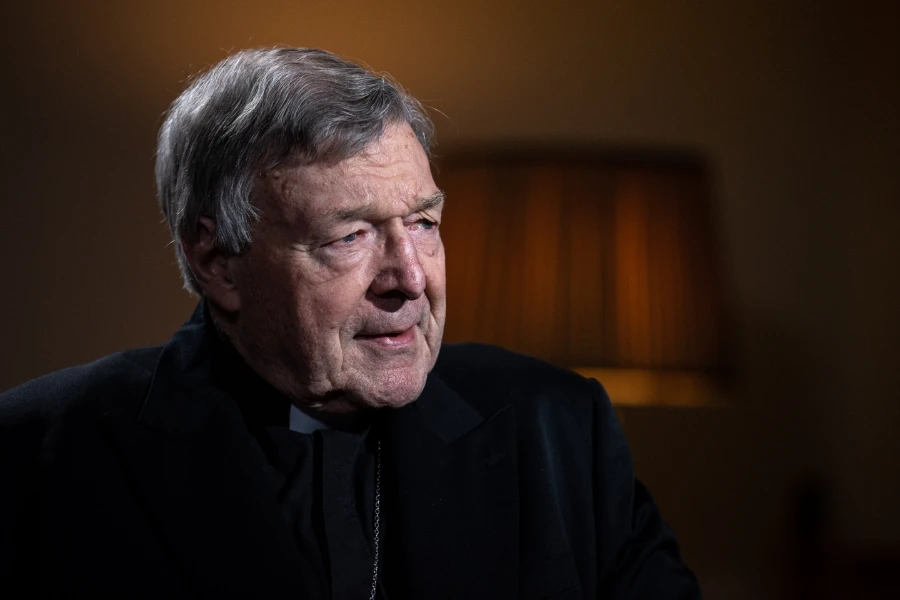
Cardinal George Pell gives an interview to EWTN News in Rome, Italy, on Dec. 9, 2020. Credit: Daniel Ibáñez/CNA.
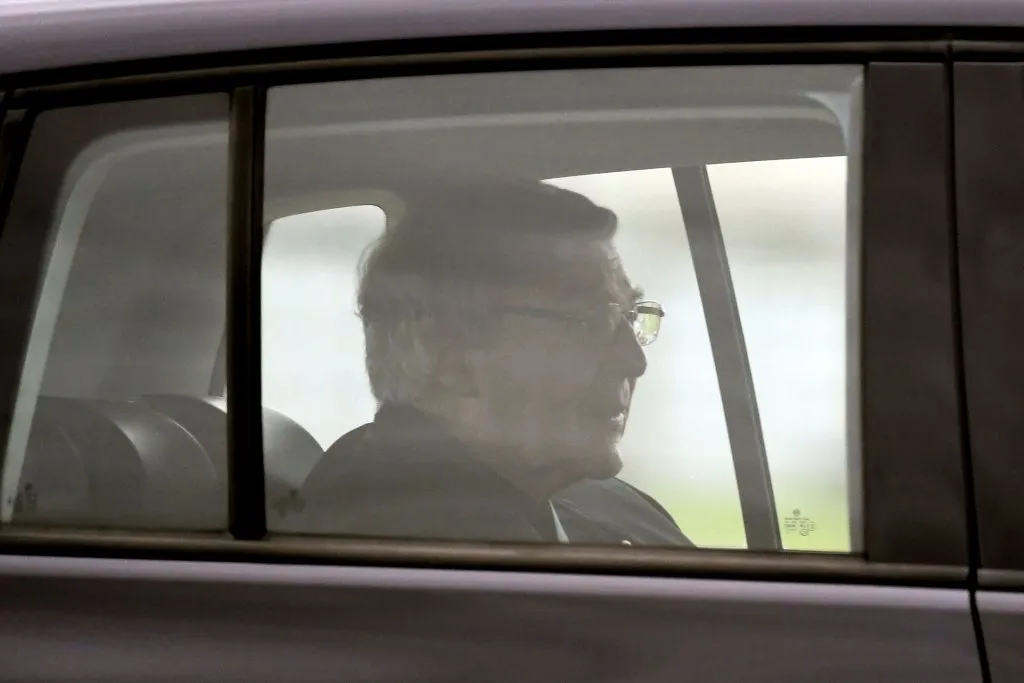
Australian Cardinal George Pell leaves after being released from Barwon Prison near Anakie, some 70 kilometers west of Melbourne, on April 7, 2020. Photo by WILLIAM WEST/AFP via Getty Images
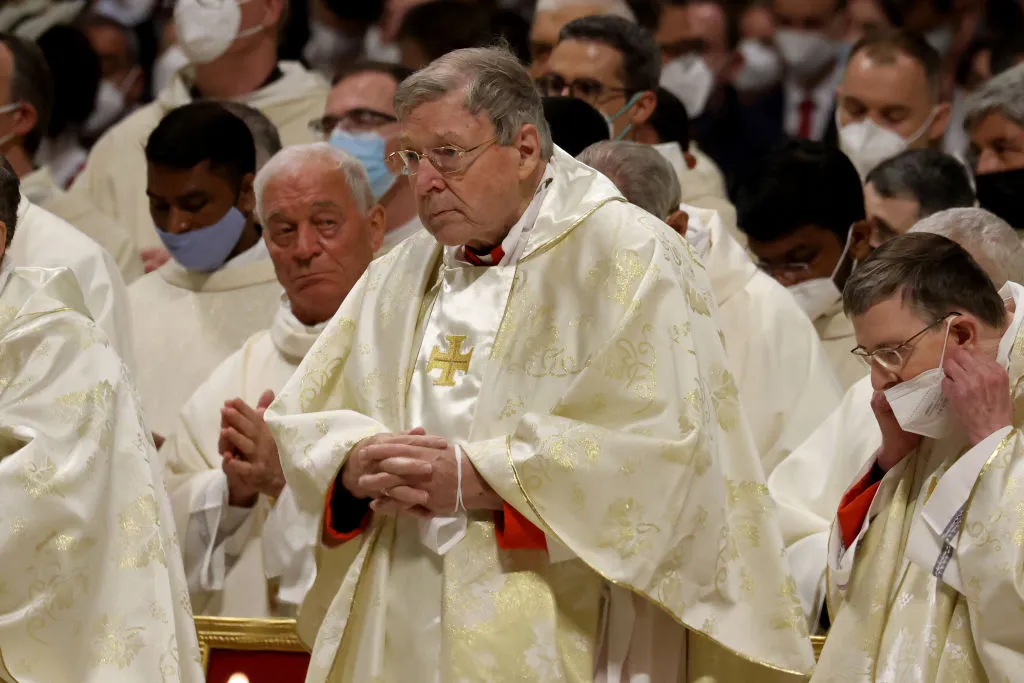
Former Archbishop of Sydney Cardinal George Pell attends the Easter Vigil Mass in St. Peter’s Basilica on April 16, 2022, in Vatican City, Vatican. Photo by Franco Origlia/Getty Images
Cardinal George Pell at the annual Eucharistic procession at the Angelicum in Rome, May 13, 2021. Daniel Ibáñez/CNA.
If you value the news and views Catholic World Report provides, please consider donating to support our efforts. Your contribution will help us continue to make CWR available to all readers worldwide for free, without a subscription. Thank you for your generosity!
Click here for more information on donating to CWR. Click here to sign up for our newsletter.
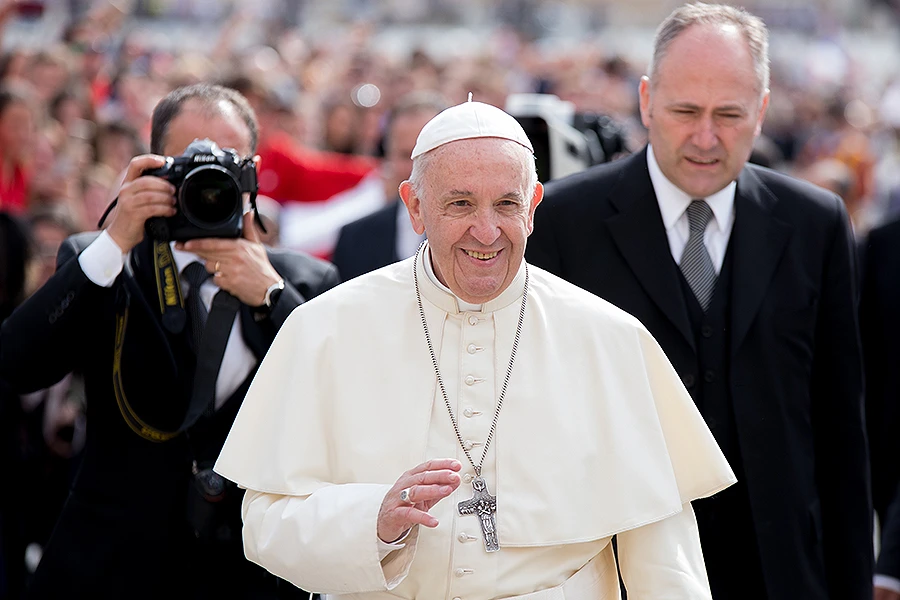
Pope Francis greets thousands of children and their families as he makes his way through St. Peter’s Square during the first World Children’s Day, Saturday, May 26, 2024. / Credit: Daniel Ibañez/CNA
Vatican City, May 26, 2024 / 13:15 pm (CNA).
After an exuberant kick-off event on Saturday for the first World Children’s Day, Pope Francis gathered together with tens of thousands of children in St. Peter’s Square for Mass on this feast of the Holy Trinity. A piercing early summer sun moved everyone — from nuns to the boys’ choir — to shade their heads with colorful hats.
Thousands gather in St. Peter’s Square in Rome on Saturday, May 26, 2024, for the first World Children’s Day with Pope Francis. Credit: Daniel Ibañez/CNA
The creation of a World Children’s Day was announced by the pope on December 8, 2023, at the midday Angelus. The idea for it was suggested to the pope by a 9-year-old boy in an exchange shortly before World Youth Day in Lisbon.
Among the special guests at the Mass was Italian Prime Minister Giorgia Meloni, who together with her daughter Ginevra, met the Pope briefly before the Mass.
With this first event complete, Francis announced at the end of the festivities today that the next World Children’s Day will be held in September 2026.
Among the special guests at the Mass for the first World Children’s Day was Italian Prime Minister Giorgia Meloni, who together with her daughter Ginevra, met the pope briefly before the Mass on Saturday, May 26, 2024. Credit: Daniel Ibañez/CNA
The One who accompanies us
The Holy Father, smiling and clearly happy to be surrounded by children, completely improvised his homily, making it a brief and memorable lesson on the Holy Trinity.
“Dear boys and girls, we are here to pray together to God,” he began. But then counting on his fingers and enumerating, Father, Son, and Holy Spirit, he asked, “But how many gods are there?”As the crowd answered “one,” the pope praised them and started talking of each of the Persons of the Holy Trinity.
He began with God the Father — “who created us all, who loves us so much” — asking the children how we pray to him. They quickly answered with the “Our Father.”
Pope Francis went on to speak of the second person of the Trinity, after the children called out his name — Jesus — as the one who forgives all of our sins.
When he got to the Holy Spirit, the pope admitted that envisioning this person of the Trinity is more difficult.
“Who is the Holy Spirit? Eh, it is not easy …,” he said.
“Because the Holy Spirit is God, He is within us. We receive the Holy Spirit in Baptism, we receive Him in the Sacraments. The Holy Spirit is the one who accompanies us in life.”
Using this last phrase, the Pope invited the children to repeat the idea a number of times: “He is the one accompanies us in life.”
“He is the one who tells us in our hearts the good things we need to do,” the Pope said, having the kids repeat the phrase again: “He is the one who when we do something wrong rebukes us inside.”
The pope speaks to thousands of children and many others who gathered in St. Peter’s Square on Saturday for the first World Children’s Day on the feast of the Holy Trinity. May 26, 2024. Credit: Daniel Ibañez/CNA
The pope ended the homily thanking the children and also reminding them that “we also have a mother,” asking them how we pray to her. They answered “with the Hail Mary.” The pope encouraged them to pray for parents, for grandparents, and for sick children.
“There are so many sick children beside me” he said, as he indicated the children in wheelchairs near the altar. “Always pray, and especially pray for peace, for there to be no wars.”
Applauding the grandparents
The pope frequently urges young people to seek out their grandparents, and the give-and-take of his homily gave the impression of a beloved grandpa surrounded by his grandkids. He insisted that the kids quiet down for the time of prayer.
When the Mass concluded, and after praying the midday Angelus, the pope summarized the lessons of the homily: “Dear children, Mass is over. And today, we’ve talked about God: God the Father who created the world, God the Son, who redeemed us, and God the Holy Spirit … what did we say about the Holy Spirit? I don’t remember!”
The children needed no further invitation to answer loudly that “the Holy Spirit accompanies us in life.” Joking that he couldn’t hear well, the Pope had them say it again even louder, and then prayed the Glory Be with them.
Pope Francis speaks with a group of children in St. Peter’s Square in Rome during the first World Day of Children on Saturday, May 26, 2024. Credit: Daniel Ibañez/CNA
The pope also asked for a round of applause for all the grandparents, noting that at the Presentation of the Gifts, a grandfather had accompanied a group of children who brought forward the bread and wine.
Dreaming and dragons
After the closing procession, Italian actor Roberto Benigni took the stage for a lively and inspirational monologue that combined good humor and life lessons.
While Benigni is known especially to the English-speaking world for his role in Oscar-winning Life is Beautiful, in Italy he’s also known for his commentaries on important issues, combined with his exuberant humor.
“When I was a boy, I wanted to be pope,” he told the audience.
Urging the children to read — “Kids need to read everything!” — he paraphrased G.K. Chesterton who insisted that fairy tales are important: “Fairy tales do not tell children the dragons exist. Children already know that dragons exist. Fairy tales tell children the dragons can be killed,” Chesterton said.
Italian actor Roberto Benigni speaks at the World Children’s Day in St. Peter’s Square at the Vatican. He took the stage for a lively and inspirational monologue that combined good humor with a call for children to read and to dream. Credit: Daniel Ibañez/CNA
“Dream!” Benigni urged the children. “It’s the most beautiful thing in the world. But I want to tell you a secret. You’ll tell me you know how to dream; you’ll say you just have to close your eyes, sleep, and dream. … No, no. I’ll tell you a secret — to dream, you don’t have to close your eyes. You have to open them! You have to open your eyes, read, write, invent.”
The actor emphasized the need to be peacemakers, saying that the Sermon on the Mount contains “the only good idea” that’s ever been expressed. War is the “most stupid sin,” he lamented.
“War must end,” Benigni insisted, going on to quote a famous author of children’s literature. “You will tell me: That is a dream, it is a fairy tale. Yes, it is, but as Gianni Rodari said, ‘Fairy tales can become reality, they can become true!’”
Vatican City, Aug 21, 2018 / 12:20 pm (CNA/EWTN News).- Pope Francis said in a video message to the Irish people Tuesday he hopes his visit will bring about unity and reconciliation among Christians in the country.
“Although the specific reason for my visit to Ireland is the World Meeting of Families, I would like it to embrace all members of the Irish family,” he said Aug. 21.
“In particular, I pray that it will serve to increase unity and reconciliation among all the faithful of Christ, as a sign of that lasting peace which is God’s dream for the whole human family.”
The pope will travel to Dublin Aug. 25-26 for the conclusion of the World Meeting of Families. In his message, Francis said he was looking forward to being in Ireland again. In 1980, while a priest, Pope Francis spent two months in the country to try to improve his English.
Mostly speaking in Italian, Francis added in English: “I’m excited to think I’ll come back to Ireland!”
The World Meeting of Families is “a celebration of the beauty of God’s plan for the family” and “an opportunity for families from all over the world to meet and support each other in living their special vocation,” he said.
You all know that families today face many challenges, he stated, and voiced his hope that the meeting will be a source of encouragement to families around the world – especially those present in Dublin.
“May we remember the essential place of the family in the life of society and in building a better future for young people,” he said.
The pope also thanked everyone for their work in preparation of his visit and asked for prayers for the meeting to be a moment of “joy and serenity.”
“From my heart, I give you my blessing,” he said, adding in English, “God bless you all. The Father, the Son and the Holy Spirit.”






Leave a Reply