


Rome Newsroom, Oct 11, 2022 / 05:08 am (CNA).
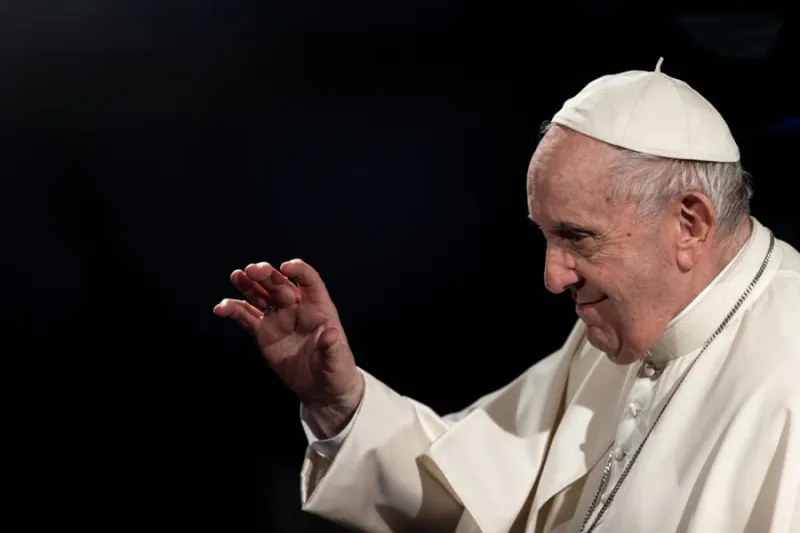
The Vatican confirmed Tuesday that Pope Francis will join other religious leaders at a prayer service for peace at Rome’s Colosseum later this month.
The Oct. 25 prayer meeting is part of a three-day interreligious summit called “The Cry for Peace,” organized by the Community of Sant’Egidio.
Sant’Egidio has held an international conference on the subject of peace every year since 1986, when Pope John Paul II convened the first World Day of Prayer for Peace in Assisi, Italy.
The Catholic community of Sant’Egidio announced last month that Rome would be the location of this year’s meeting Oct. 23–25.
The conference’s final event will be the interreligious prayer service from 4:30 to 6 p.m. at the Colosseum. The famous monument is believed by some historians to be a site of early Christian martyrdom.
Representatives of the world’s major religions will take part in the prayer service and conference, which will include discussions on “an architecture of dialogue that protects and affirms peace, always and in every context,” according to the Sant’Egidio website.
If you value the news and views Catholic World Report provides, please consider donating to support our efforts. Your contribution will help us continue to make CWR available to all readers worldwide for free, without a subscription. Thank you for your generosity!
Click here for more information on donating to CWR. Click here to sign up for our newsletter.



Interfaith prayer is a meaningful initiative. The community of Sant’Egidio is serving humanity with dedication and distinction. May their tribe increase.
Really? What does it mean?
For the Christens persecuted worldwide by those who deny the Blessed Trinity, the Incarnation, who worship demons that if named cause censurship?
For Catholics kicked out of Churches by the 2nd Bishop in White because they pray in Latin – first in China, and now Worldwide: what does it mean?
What does it mean to see the once honourable Catholic Church confirming gnostics, heretics, and those worshiping false idols in their error?
Simpleton headline writers, and others, continue to equate “interreligious” with the inventive non sequitur: “interfaith.” Religious beliefs are one thing; the unique faith in the person of incarnate Jesus Christ is quite another.
From their sites, it’s clear that Sant’ Egidio, itself, knows the difference. As for the spirit of Saint Francis, what was the purpose for his famous visit in A.D. 1219 with Sultan Malek al-Kamil at Damietta on the Nile Delta, then under siege by an army of the Fifth Crusade?…
The purpose was conversion, not the sharing of tea in a flat-earth dialogue of interreligious equivalency. So, without implying such equivalency, in the Roman Colosseum let there be interreligious prayer for peace. (At least it’s not the twelve-niched, polytheistic and now secularized pantheon!) But for the global spectators, also let there by some understanding and indication of the Christian Faith.
And, even some anti-cancel culture curiosity about the ins and outs of real history. In the Paradiso, Canto XI, Dante says that St. Francis sought martyrdom and that failing this he left; and implies that the Sultan might not have been attracted to Lady Poverty. Later in the mid-13th century, and fearful of the Mogul invasions, other Franciscans made their way to Mongolia (where there is now a newly minted Catholic cardinal!) in unsuccessful efforts to convert the Khan, and with the remote possibility of even joining in an alliance against Islam. One of these (John of Pian de Carpine, 1180?-1252) had been a companion of St. Francis (See Daniel Boorstin, “The Discoverers”, 1983).
The present “Francis” presented bishops to the World from the Amazon proudly announcing in his name that they “had never committed a single baptism.”
Proselytism being a “crime” in Freemasonry and a “Sin” in post-catholic Bergoglioism – not that there could possibly be even a remote connection – there should be no risk of any baptisms at the Colosseum – to the great relief to all of Francis’ “Sin-OD” friends. Perish the thought! This is the Francis who begs Anglican bishops NOT to Convert…