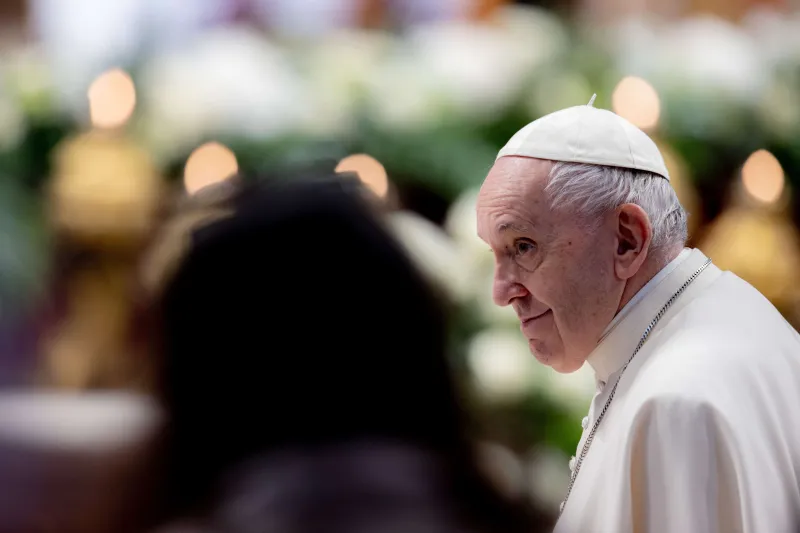
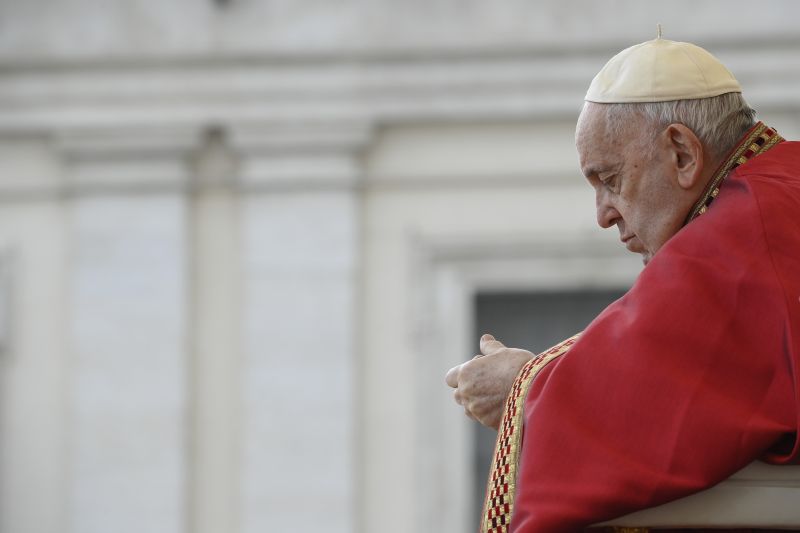
With the next World Youth Day less than a year away, Pope Francis has promised that a pope will be in attendance, but joked that it may be “Pope John XXIV.”
Pope Francis told CNN Portugal in a television interview that aired on Sept. 4 that he plans to attend the 2023 World Youth Day, the largest international Catholic youth gathering scheduled to take place in Lisbon next August.
“I plan to go. The pope is going to go — either Francis or John XXIV — but the pope is going,” he joked.
The quip was made after months of speculation in the media that the 85-year-old pope could be close to retirement. Pope Francis told journalists on his return from Canada in July that he is “open” to the possibility of retiring if he discerns that it is God’s will.
Pope Francis did not explain why he guessed his successor could be named Pope John XXIV. He has made this joke several times since he canonized St. Pope John XXIII, the last pope who took the name John, who reigned from 1958 to 1963.
The pope said in the interview that next year’s World Youth Day presents a great opportunity “for the youth from different parts of the world to connect.”
The multi-day gathering, established by St. Pope John Paul II in 1985, is typically held on a different continent every three years with the presence of the pope. At some past World Youth Days, attendance has reached into the millions.
The meeting in the Portuguese capital of Lisbon is scheduled for Aug. 1-6, 2023.
Speaking about World Youth Day, Pope Francis said: “When you go to a meeting with young people, you have to be prepared to listen to another language. Young people have their own language. And that comes from their own culture because there is a youth culture. And that also comes from their own creativity.”
He added: “We must speak with the youth language … They have their culture and a progressive language that goes forward, right? So, you have to listen to them in their way of interpreting things and answer to them in ways that they can understand. I cannot answer to a young person facing a difficulty with an old theology book… They won’t understand … you have to answer them in a language that they understand and according to the experiences they are living, right?”
The CNN Portugal interview, recorded on Aug. 11, also touched on clerical abuse and the war in Ukraine. The second half of the interview is scheduled to air on the night of Sept. 5.
If you value the news and views Catholic World Report provides, please consider donating to support our efforts. Your contribution will help us continue to make CWR available to all readers worldwide for free, without a subscription. Thank you for your generosity!
Click here for more information on donating to CWR. Click here to sign up for our newsletter.
Pope Francis presides over the funeral Mass for Pope Emeritus Benedict XVI in St. Peter’s Square on Jan. 5, 2023. / Vatican Media
Rome Newsroom, Jan 15, 2023 / 11:00 am (CNA).
It was widely anticipated that a major reform of the Diocese of Rome was coming, as Pope Francis has been thinking about it for some time.
But no one expected it to come when it did: On Jan. 6, one day after the funeral of Francis’ predecessor as Bishop of Rome, Pope Emeritus Benedict XVI.
With the reform, Pope Francis firmly took over the reins of the vicariate, or hierarchy, of the diocese. Everything is centralized, and everything must pass, at least formally, under the control of the pontiff.
Cardinal Angelo de Donatis, the pope’s vicar for the diocese, sees his role deeply diminished. The diocese’s auxiliary bishops strengthen their direct link with the pope. In the end, the pope has made it clear that he is the one who also formally presides over the Episcopal Council, a new body established as an “expression of synodality.”
Cardinal Angelo De Donatis. . Daniel Ibanez/CNA
The backstory
Before going into some details of the new decree, however, some background is necessary.
The last reform of the structure of the Vicariate of Rome was outlined by John Paul II in 1908, with the apostolic constitution Ecclesia In Urbe. For the new reform, Pope Francis copied and pasted several passages from that document. In some cases, these have been minimally rewritten to emphasize some details instead of others. In other cases, greater changes were made but these do little to alter the basic substance of things.
The reform presents two general characteristics of Pope Francis’ way of legislating: using councils or commissions and requiring those bodies to report directly to him.
It is clear that the pope is the bishop of Rome and that the pope’s vicar for the diocese is his auxiliary. Pope Francis, however, in this case, goes further, including with the constitution a decree that directly defines the areas of competence of the auxiliary bishops.
Pope Francis shows, in this way, a willingness to exercise greater personal control over everything that happens in the vicariate. At the same time, this choice also testifies to a “break” in the relationship of trust with his vicar, Cardinal de Donatsi.
Although Francis called de Donatis to preach retreats to the Roman Curia in 2014, he was never the pope’s candidate to succeed Cardinal Vallini as vicar. That was Cardinal Paolo Lojudice.
Pope Francis, however, wanted to first consult the parish priests of Rome, 80% of whom preferred de Donatis. It was impossible, therefore, for the pope not to listen to them. He appointed De Donatis vicar (and cardinal) and made Lojudice archbishop of the prestigious Diocese of Siena, and a cardinal, as well.
Last May, at the general assembly of the Italian Episcopal Conference, it seemed clear that Pope Francis preferred the appointment of Cardinal Lojudice as the new president of the CEI.
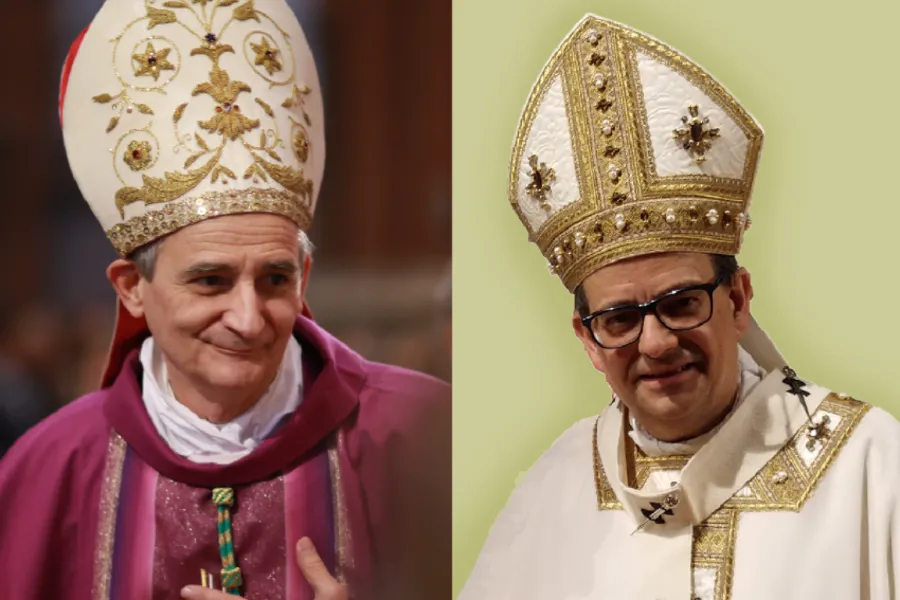
Cardinal Matteo Zuppi and Cardinal Augusto Paolo Lojudice. Francesco Pierantoni via Wikimedia (CC BY 2.0)/Pufui PcPifpef via Wikimedia (CC BY-SA 4.0).
The plan was to appoint Lojudice vicar of the Diocese of Rome to succeed Cardinal de Donatis, who had finished his five-year term, which would then have made Lojudice the primary contact person for the pope both in Rome and among the Italian bishops. De Donatis would have been appointed the new Penitentiary in place of Cardinal Mauro Piacenza, who has now turned 78.
The Italian bishops, however, preferred Cardinal Matteo Zuppi, archbishop of Bologna, who was not unwelcome to Pope Francis.
Lojudice didn’t become vicar for the Rome Diocese, either, as everyone assumed would happen. Meanwhile, the relationship of trust between de Donatis and the pope seemed to have been interrupted in 2020, when, at the beginning of the lockdown for COVID-19, de Donatis decided to close the churches of Rome. When Pope Francis later highlighted the inadvisability of closing churches, de Donatis withdrew the decree but announced that every decision had been made in agreement with the pope. There also have been other moments of friction in recent years.
The pope, however, now seems intent on changing the vicar this year when de Donatis’ mandate expires. An indication of this is the fact that in the decree in which the Pope defines the area and pastoral competencies of the auxiliary bishops, de Donatis is not mentioned as vicar. One might take his presence for granted, of course, but the general interpretation is that the change will be made.
What’s new
What are the novelties introduced by Pope Francis? First, the figure of the prelate general secretary disappears, while the vicegerente (or the deputy of the vicar) manages the offices of the General Secretariat. The prelate secretary also had the function of the moderator of the Curia. In this case, everything is entrusted to the vicegerente, who thus sees his functions and weight increase.
The pope chose the vicegerente from among the auxiliary bishops, and in this case, Baldassare Reina was selected. Bishop Reina does not come from the Diocese of Rome but was called from Agrigento. The pope’s logic is to break possible power chains by bringing in fresh and foreign forces.
The choice of a new parish priest is entrusted to a lengthy procedure which must then, in any case, be submitted to the pope, who acts as the true and proper bishop of Rome without relying on the vicar, who is left with the appointment of assistant parish priests.
Article 20 of the Constitution requests a report for each candidate for the priesthood or diaconate to be submitted before ordination. Also, in this case, the candidates must be presented by the cardinal vicar to the pope, and only after obtaining the Episcopal Council’s consent. Therefore, the vicar seems to be practically a commissariat: He does not choose the candidates but submits them to the pope and can submit them only after the Episcopal Council has endorsed the choice.
The council is defined as the “first organ of Synodality” and must meet “at least three times a month,” presided over by the pope. Only in the absence of the pope can the cardinal vicar preside over the council, which is made up of the vicegerent and the auxiliary bishops. However, the pope wants to receive “the agenda for each meeting as soon as possible.”
Finally, there is also the establishment of an Independent Supervisory Commission. This will have a regulation that must be “approved by the Pope” and six members appointed by the pope who can remain in office for a maximum of two five-year terms.
The service for the protection of minors and vulnerable people is also added, which “reports to the Episcopal Council, through the auxiliary bishop appointed by me,” the pope has decreed.
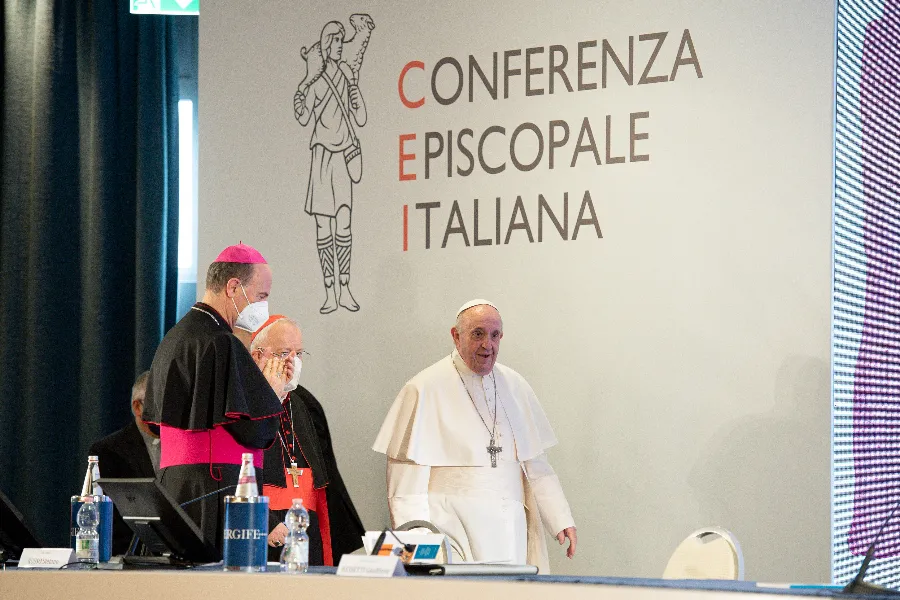
Pope Francis attends the Italian bishops’ plenary assembly in Rome on May 24, 2021. Vatican Media.
The effects of the reform
The constitution also redistributes the areas and offices of the Vicariate’s Curia, and the accompanying decree gives each auxiliary bishop a specific task.
Beyond the reorganization, it should be noted how the pope enters into action as the actual bishop of Rome. Everything must pass through the decisions of the pope, while before, the cardinal vicar enjoyed trust and discretion. For the first time, however, the pope’s vicar is defined as an “auxiliary.” He is, therefore, an auxiliary among the auxiliaries, with a considerable reduction in his weight.
With this centralization, Pope Francis probably wants to overcome the risk of having “abuses” within the Vicariate.
It is worth remembering that in June 2021, Pope Francis ordered an inspection of the Vicariate itself. It was an audit entrusted to the Auditor General of the Holy See, Alessandro Cassinis Righini. It was the first time the Vicariate sifted through the accounting books, registers, and cooperative societies.
However, the Pope, as a matter of practice, has sent an inspection to all the dicasteries of the Curia every time there is a reform or a new mandate. The review, therefore, already predicted the change of pace in the Vicariate, one that has led Pope Francis to be increasingly alone in command.
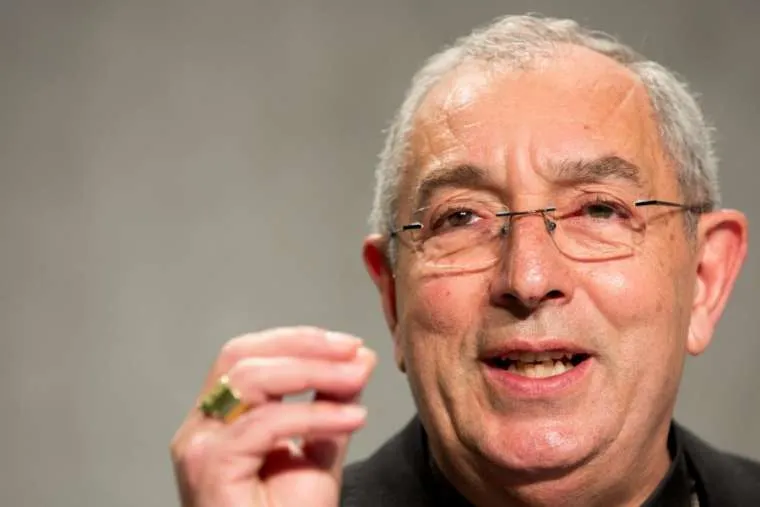
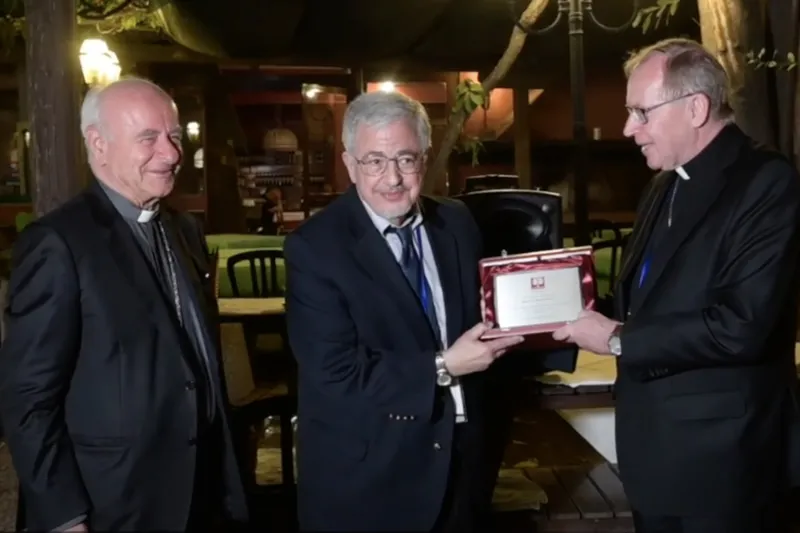
Dale Recinella (C) accepts the Pontifical Academy for Life’s Guardian of Life Award from Archbishop Vincenzo Paglia (L) and Cardinal Wim Eijk (R), Sept. 28, 2021. / PAL screenshot
Denver Newsroom, Sep 30, 2021 / 13:00 pm (CNA).
Dale Recinella, a Florida lawyer who has ministered to death row inmates for decades, was given an award honoring his service on Tuesday at the Vatican.
The Pontifical Academy for Life bestowed on Recinella its first Guardian of Life Award Sept. 28. In accepting the award, Recinella said he sees the honor as “a profound statement by our Church” about how important the lives of death row inmates are.
“When I have men [on death row] who want to become Catholic, I ask: why? And they say: because that’s the Church that wants me,” Recinella said.
In the mid-’80s, Recinella was working as a high-powered lawyer, first as a partner in a law firm in Miami and then as a supervising attorney at a “very significant law firm” in Tallahassee.
Though Recinella’s family life and career were stellar, by any measure, he began reassing how he had been using his gifts and his skills up to that point. A desire began to stir in both Recinella and his wife; a desire to give back.
So Recinella and his wife Susan got involved in a ministry to the homeless. At that time, one of the biggest problems facing the homeless people Recinella encountered was AIDS, and they ended up taking the state training, through the local AIDS service organization, to get certified to work with people with AIDS.
Eventually, the organizer of the ministry approached Recinella to see if he’d be willing to go even deeper.
“He asked if I would be willing to come to his prison and start seeing men that were terminal with cancer and AIDS,” Recinella recalled, speaking to CNA in May 2020.
“And what I didn’t have the courage to tell him was I’d never been in a prison, I had financed prisons on Wall Street all over the country, huge prisons, but I’d never been in one and had no desire to go in one.”
Recinella’s family helped to convince him that he should take the plunge in the early 1990s.
“It was Susan and the kids quoting Jesus from the Gospel in Matthew 25 that convinced me that if my faith was really guiding my life, that Jesus had said when we visited the least in prison, we visited him, but when we didn’t, we had refused to visit him. And so I figured I’d give it a shot,” he said.
It would be a couple of years before the idea of death row, specifically, really crossed Recinella’s mind, when he and his family ended up moving to the small town of Macclenny, Florida. That town just happened to be the home of the state’s death row prison.
Recinella was shocked at the harsh conditions he encountered when he first set foot in a death row prison.
“The very first thing that struck me, my first experience was, ‘I can’t believe we’re still doing this in the 20th century,’” he recalled, noting that despite the Florida heat, the inmates were not given air conditioning.
Ministering to condemned criminals has not proven easy. Recinella recalls being assigned to a serial killer who had killed young women of a similar age to Recinella’s daughter.
He found the strength to do it through conversations with a trusted priest and through the sacraments, he said.
“I was not ready to handle the spiritual challenges of dealing with the level of human suffering that we’ve experienced in street ministry, AIDS ministry, prison, ministry, and death row ministry,” Recinella said.
“And that’s what we’ve learned is: this is really meant to be done in ‘gangs’ if you will, by ‘gangs of Christians’ doing the gospel. And so we’ve had to make sure that we have a community of accountability that’s calling us to be honest with ourselves, and for me with death row, that is to make sure I’m dealing with the suffering in the way our Church provides for us to do it.”
Once Recinella realized he had a heart for prison ministry, he quickly realized that he could not continue to minister in death row prisons as a practicing lawyer. So, although he kept his law license active, he gave up the practice of law to minister to the death row inmates.
In addition to spending several days a week visiting inmates himself, he has also trained other people to do prison ministry, and has acted as a witness for nearly two dozen executions so far.
Florida, especially the northern part and the panhandle, falls squarely in the Bible belt— which consists mostly of southern states, with Baptist majorities.
Since 1976, nearly 90% of all the executions in the United States have taken place in this region. In fact, Recinella found during his research that just 2% of US counties account for over half of all the executions in the US since 1976. In recent years counties in Texas, Missouri, and Florida have routinely topped the list.
The fact that support for capital punishment remains so strong, especially in parts of the country where it seemed to Recinella that nearly everyone was Christian, troubled him.
So several years ago, Recinella wrote a book identifying 44 requirements of the death penalty when it was the law of the land in Israel— such as a ban on circumstantial evidence, treating all offenders equally, establishing unquestionable guilt, et cetera.
“I identified 44 absolute non-waivable requirements of the biblical death penalty that had to be met before it could even be considered,” Recinella said.
By contrast, he found that the death penalty, in Florida and the US, fulfilled none of those biblical requirements. Last year, Bishop Felipe Estevez of St. Augustine released a pastoral letter calling for an end to the death penalty, quoting extensively from Recinella’s work.
Recinella’s experience over the years has also shown him just how inequitable the death penalty can be— how it disproportionately affects people of minority races, and how those who are poor are less likely to be able to appeal their conviction.
For example, his research found that a prisoner is more than ten times more likely to be executed if it was a black defendant and a white victim, than if it were a white defendant and a black victim. In Florida, nearly 40% of the death row is black, out of a population that is 15% black.
“This is the real death penalty; it’s not the thing that the death penalty supporters think it is,” Recinella commented.
“The real death penalty is a monstrosity, it’s error prone, it’s full of mistakes and human failings, and yes, we get it wrong.”
Recinella says his years of death row ministry have led to many deep friendships, positive relationships with prisoners, and numerous conversions.
“Susan and I, since coming to death row, I think we’ve accumulated about 30 some either godchildren or confirmation godchildren, and those are long-term relationships,” he said.
“The Gospel brings us into long term relationships with the people who are suffering and who the world doesn’t want relationship with.”
Acts 20:28 Pay careful attention to yourselves and to all the flock, in which the Holy Spirit has made you overseers, to care for the church of God, which he obtained with his own blood.
Colossians 3:17 And whatever you do, in word or deed, do everything in the name of the Lord Jesus, giving thanks to God the Father through him.
Colossians 1:18 And he is the head of the body, the church. He is the beginning, the firstborn from the dead, that in everything he might be preeminent.
Thank you for your consideration, may God richly bless you!






Papa makes a funny!
The youth have a progressive language that goes forward? Define progressive.
Lisboa – Here we come. Wishing Pope Francis strength and stamina. Nossa Senhora do Rosário de Fátima – Ora Pro Nobis.
Dear Dr Coelho:
May I ask you how you read the following verses?
Acts 20:28 Pay careful attention to yourselves and to all the flock, in which the Holy Spirit has made you overseers, to care for the church of God, which he obtained with his own blood.
Colossians 3:17 And whatever you do, in word or deed, do everything in the name of the Lord Jesus, giving thanks to God the Father through him.
Colossians 1:18 And he is the head of the body, the church. He is the beginning, the firstborn from the dead, that in everything he might be preeminent.
Thank you for your consideration, may God richly bless you!
Brian Young