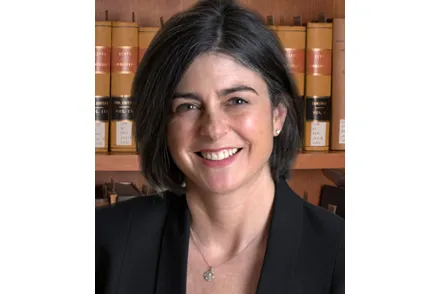
 Elizabeth Kirk, research associate and lecturer at CUA’s Columbus School of Law. / Catholic University of America
Denver Newsroom, Oct 5, 2021 / 00:01 am (CNA).
This December, the US Supreme Court is set to hear Dobbs v. Jackson Women’s Health Organization, a case that many experts say presents the most momentous test yet of Roe v. Wade, the 1973 decision that legalized abortion nationwide. At issue is the constitutionality of Mississippi’s 2018 law banning abortion after 15 weeks of pregnancy.
As with any high-profile Supreme Court case, dozens of amicus curiae, or “friend of the court,” briefs have been filed both in support of and in opposition to the Mississippi law.
What follows is a Q&A with Elizabeth Kirk, a research associate and lecturer at the Catholic University of America and one of the signers of an amicus brief supporting Mississippi’s abortion law.
The brief lays out an argument that abortion has hurt women’s advancement; that women were making strides toward equality before Roe; and that abortion is not necessary for women’s socioeconomic success.
Kirk is a research associate and lecturer at the Catholic University of America, where she also serves as the Director of the Center for Law and the Human Person. Her scholarly interests are in the area of law and the family, and in particular the intersection between law and the Catholic intellectual tradition.
CNA: The amicus brief you signed lays out an argument that contrary to the Supreme Court’s rulings, abortion has not facilitated women’s advancement, and in reality, has hurt women. Can you walk me through the brief’s argument and evidence?
EK: There are 80 briefs in support of the State of Mississippi in the Dobbs case, each one articulating a different relevant argument. The focus of this particular amicus brief relates to the claim made in Planned Parenthood v. Casey (1992) to justify upholding Roe: “the ability of women to participate equally in the economic and social life of the Nation has been facilitated by their ability to control their reproductive lives.”
The authors rebut this claim, summarizing the empirical evidence relating to women’s historical achievements and their participation in society in the last half-century, and demonstrate convincingly that the Casey premise is false, i.e., that there is no causal link between the availability of abortion and women’s participation in society.
Furthermore, the authors point out that the data actually suggest some correlation between abortion and negative consequences for women, such as the feminization of poverty and declining levels of happiness.
Finally, the authors make the point that the argument that women need abortion to participate necessarily takes the male reproductive experience as the model for economic and social participation, and that this lopsided view has prevented meaningful accommodation of women, including their experience of pregnancy and motherhood, in the workplace and other spheres of society.
How did it come about that you signed the amicus brief in this case? Have you signed amicus briefs in similar cases in the past?
The amicus brief drafted by Teresa Collett, Helen Alvare and Erika Bachiochi was written on behalf of professional women and women scholars who hold doctorate degrees, as well as prolife feminist organizations. Any woman who fit that description and supported the brief’s argument was welcome to join. I know the drafters personally and was honored to sign.
I have testified in state legislatures on matters related to abortion, but this is the first amicus brief I have signed on the topic. I joined previous amicus briefs in Fulton v. City of Philadelphia [a significant case related to religious freedom] and Harris Funeral Homes v. EEOC, a companion case to Bostock [a 2020 decision that a federal ban on sex discrimination also protects sexual orientation and gender identity].
Many are saying the Dobbs case has a chance of overturning Roe v. Wade. Do you agree?
Certainly. This case presents this question to the Court: “Whether all pre-viability prohibitions on elective abortions are unconstitutional.” Under the governing precedents of Roe and Casey, there is a constitutionally protected right to abortion and states may not place an “undue burden” on it before viability. So, the question presented goes to the heart of the matter.
Of course, there are a number of ways the Court could handle this case short of overturning Roe and Casey. For example, it may affirm the constitutional right itself, but articulate a different test than the current “undue burden” test, or it may reconsider the role of viability in evaluating laws restricting abortion.
Many people are talking about what a “post-Roe” country could look like. What could the legal landscape of the United States look like, in terms of abortion law, if Roe is overturned?
A post-Roe legal landscape will better reflect the different views our pluralistic society holds on abortion. If Roe is overturned, all this means is that abortion regulation will again become the province of the states (as it was before 1973) and different states may be more restrictive or more permissive, as their constituencies demand through the legislative process.
We already know that some states, either legislatively or judicially, allow abortion in almost every instance. For example, New York and Illinois have very permissive abortion laws. The state supreme court of Kansas recently found a natural right to abortion in its state constitution which will likely invalidate many of its state restrictions on abortion. Overruling Roe would have little impact on the law in such states.
Some have speculated that since abortion rates are highest in places that already have such permissive abortion laws, if Roe were overturned, the national abortion rate would not be impacted dramatically. Those seeking to promote a culture of life, and a culture that supports women and embraces pregnancy and motherhood, would still have work to do.
Of course, overturning Roe would give more latitude to those states that wanted to protect human life more vigorously than is possible under the Roe/Casey regime. Pro-life advocates would need to persuade legislators and voters of the wisdom of this and to be creative about laws, policies, and initiatives to help women and families welcome children more readily.
Do you ever feel you are treated differently from others because you are a pro-life woman?
Frequently, I experience the presumption that, because I am a professional woman with an advanced degree, I must be pro-choice.
We hear a lot about the pro-life position being “anti-science” or “anti-intellectual.” Do you face this accusation often? If so, how do you respond?
I do not experience this accusation often. I think many people today, familiar with incredibly detailed ultrasound photos of their siblings or their own children, are reluctant to deny the obvious humanity of the unborn child.
Rather, I experience more frequently the arguments that (1) the pro-life position fails to promote women’s equality (refuted in our brief); (2) women’s healthcare includes abortion access (which depends on the faulty premise that fertility and pregnancy are “diseases”), or (3) the pro-life movement only demonstrates concern for unborn children (which Helen Alvaré has convincingly called the “lazy slander of the pro-life movement”.)
Have you always considered yourself to be pro-life, or was there a moment or event that convinced you of the position?
For me this has always been a very personal matter as I was the child of a “crisis pregnancy” and my husband and I were blessed to adopt our four children, three at birth through private placements by their birth families and the littlest one through foster care.
The reality of the pressures that my mother, and the birthmothers of our children, may have experienced has informed my thinking about how we might best respond generously to women in need to support them and their children.

[…]


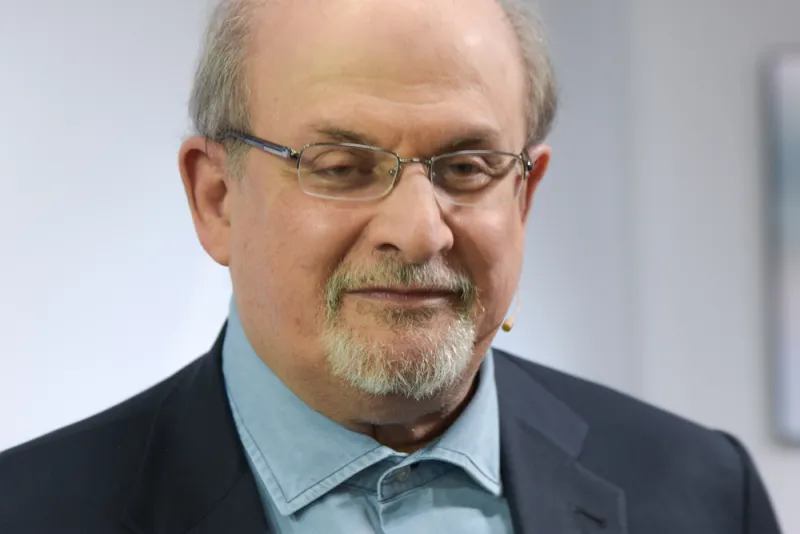


Though Islam refers to itself as “The Religion of Peace”. serenity and tranquility seem to allude it too often. The news of the day gives a different impression as to the claims!
Muslims that have converted to Christianity are outstanding representatives of the Christian faith. Praise God for their testimony.
Psalm 119:165 Great peace have those who love your law; nothing can make them stumble.
Psalm 34:14 Turn away from evil and do good; seek peace and pursue it.
Psalm 29:11 May the Lord give strength to his people! May the Lord bless his people with peace!
Psalm 4:8 In peace I will both lie down and sleep; for you alone, O Lord, make me dwell in safety.
James 3:18 And a harvest of righteousness is sown in peace by those who make peace.
Blessings for Rushdie and for all Muslims that they too come to the un-surpassing knowledge of Jesus Christ.
About the novel, “Satanic Verses,” this further explanation of its origin: “The title refers to the Satanic Verses, a group of Quranic verses that refer to three pagan Meccan goddesses: Allāt, Al-Uzza, and Manāt. The part of the story that deals with the ‘satanic verses’ was based on accounts from the historians al-Waqidi and al-Tabari” (Wikipedia).
Even the very first biographers wrote long after Muhammad, the first about one hundred twenty years after his death: Ibn Ishaq (704-773 A.D.). The only version of this lost work was edited by Ibn Hisham (d. 835 or 840), a full two centuries after Muhammad, and translated into English by A. Guillaume only in 1955 (“The Life of Muhammad”. Oxford University Press, 800 pages of small print).
The “satanic verses” in the Qur’an refer to a visit Muhammad (as the revolutionary monotheist) is said still to have made one night to a pagan temple. The triad goddesses are the offspring of Allah and his wife. Charged with hypocrisy, Muhammad immediately regretted the one-night relapse and unambiguously clarified the distance between Allah alone and the paganism of Mecca.
Related to which, Muhammad’s understanding of the Triune Oneness is distorted by the cultural imprint that the Christian Faith is only a (pagan-like) triad. And, further, the error identifies the triad as God, Jesus (under Islam, a prophet rather than “the word made flesh”), and Mary (there is no Holy Spirit).
Muslims do not read the Bible, because they know (!) that under the Qur’an, as the final revelation (“the word made book”), all chronologically earlier scriptures—both Jewish and Christian—are corruptions of Islam as the definitively-restored natural religion.
I’m starting to think of Francis not as a new Luther but as a new Mohammed, seeking, in due course to erase all that preceded him. Of course he needs references to Christ from time to time, but essentially as a prop to confer an imaginary semblance of legitimacy for his agenda.
God bless you dear physicist and seeker of God’s truth.
Or, maybe not a new Muhammad, but a sprout from the same trunk of natural religion?
In olden times the Syrian scribes—forced converts to Islam—are thought to have inserted Christian references into the Qur’an, in order to make scavenger-hunt Islam more palatable. (Hold that thought…).
The Qur’an borrow from the Pentateuch, in part to endorse the “law of Moses,” but so far as I can find, explicit reference is made only to the first four (affirmative) commandments, and not to the (prohibitive) final six (thou shalt not…). The parallel, some would say, is with current distortions of moral theology, which celebrate works of charity and mercy while discounting the absolute moral prohibitions as steadfastly affirmed (rigid?) in the Catechism and Veritatis Splendor.
So, will the new super-dicastery of Evangelization peddle a generic Christianity unaccountable to the demoted “dicastery” for Doctrine of the Faith, or not?
And, does “fraternity”—-with all of its favorable meanings–also represent an accommodation like that of the Syrian scribes of the 7th and 6th centuries? But, instead of making Islam more palatable to past-Christians (as in the past), does the current trajectory render a diluted Christianity more palatable to a resurgent Islam? Is Hollerich’s synodal “scientific foundation” (for jettisoning sexual morality) simply a natural religion (tending toward a folk religion) like Islam but cross-dressed in modern clothes? Bishop Batzing in an open collar rather than a turban?
Osmosis works in both directions! Syrian-Islam and post-Christian Catholicism, both, as natural religions? No longer convinced, or forthright, or proclaiming (different from proselytizing), or even articulate about the divinely-revealed and gifted life of supernatural grace?
7th and 8th centuries.
Seriously Edward J Baker? How do you extrapolate a judgement of Pope Francis from this article or is it that you have to negate our Pope as some badge of belonging to right thinking?…..
“Of course he needs references to Christ from time to time, but essentially as a prop to confer an imaginary semblance of legitimacy for his agenda.”
……if you alone say so!
In 1989, I, being a callow college student, was predicing that shocking and barbaric crimes like this one would surely knock some sense into the thick-skulled liberals who congregate at such places as Chautauqua. They would surely demand immigration policies to keep such people as this fanatic out of the country. Alas, since that time, there have been many such incidents, some far worse than this one, and the open-borders lunacy on the Left has only become more extreme. As the title of James Burnham’s classic put it, liberalism is the suicide of the West.
And from Tony W, it’s the thick skulled liberals who cop some flack. Indeed they need some sense knocked into them! Observations and insights inspired by what? Chautauqua is not your style? Not mine either but I hardly see it as a contributor to the social/spiritual malaise you are attributing. It’s a big world after all. Somehow for many in the USA it’s getting terribly small?
Ok so lets think for a moment that you can have it your way. All the likes of Chautauqua are done away with. The Immigration policy now prevents all crazies
( Muslims, Aliens and others who encroach upon your national boarder i suppose ) are no longer a problem…. they are gone or only the nice ones remain. Your ‘Christian Nation’ has uniformity of doctrine from east to west, north to south. All people conform to ( your ) world view by some form of decree I suppose. The Christian world view according to the likes of you, because that is what it would be. Do you really think that would address ‘the human condition’ Jesus so clearly enunciated in his teachings as contained in the Gospels? Let your imagination run wild!
Salman has lived under terrible pressure for so many years. I Pray he recovers.