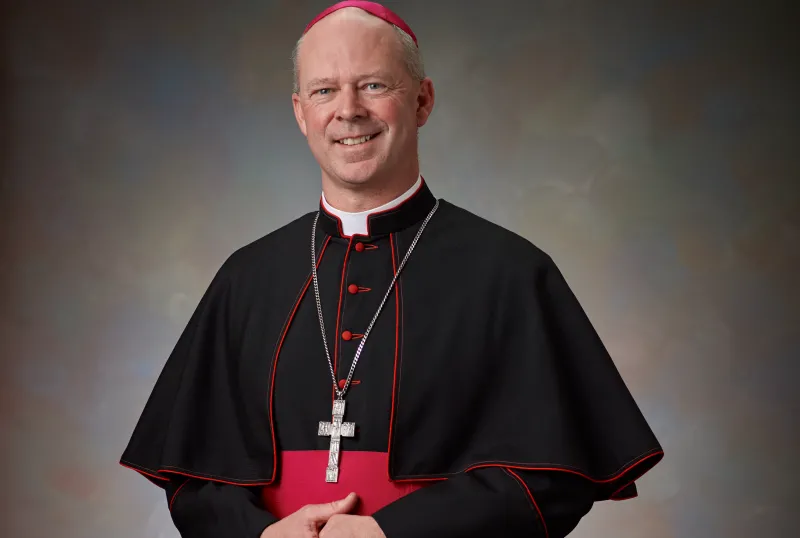
Pope Francis on Tuesday appointed former Air Force chaplain and Fairbanks Bishop Chad Zielinski to lead the Diocese of New Ulm, Minnesota.
The seat of the Diocese of New Ulm, which covers almost 10,000 square miles southwest of Minneapolis, has been vacant since August 2020, when Bishop John M. LeVoir resigned at age 74 for health reasons.
Zielinski, 57, has been bishop of Fairbanks since 2014. He will be installed in the Diocese of New Ulm on Sept. 27.
Before becoming a bishop, Zielinski served for 12 years as an Air Force chaplain; his final two years he was stationed at the Eielson Air Force Base in Alaska, 26 miles southeast of Fairbanks. He is an avid fisherman.
The Diocese of Fairbanks covers over 409,000 square miles in northern Alaska. The diocese with the largest geographical spread in the U.S., Fairbanks has around 11,500 Catholics and 46 Catholic parishes, only nine of which can be reached by car. The area’s total population is around 166,800.
The Diocese of New Ulm has 59 parishes and serves almost 51,000 Catholics.
Bishop Zielinski was born in Detroit, Michigan in 1964, and is the oldest of five children.
He enlisted in the U.S. Air Force after high school. During his military career, he served tours of duty in war zones, including Iraq and Afghanistan.
While attending university in Ohio, he felt a call to the priesthood, and after a tour of duty in 1986, entered the seminary. He was ordained a priest in 1996 at the age of 31, and then served for a time in parishes in Empire and Maple City, Michigan.
After the 2001 terrorist attacks, he felt a call to help those in the military, and his bishop allowed him to join the Archdiocese for the Military Services.
As a military chaplain, he was stationed at different Air Force bases across the U.S., and in Suffolk, England.
“As I leave the vast expanse of Northern Alaska, I am fully aware of the countless blessings I received from 46 parishes,” Zielinski said in a July 12 statement.
“The faithful of the entire Diocese of Fairbanks patiently helped form me to be the shepherd I am today,” he added. “Our Native Alaskan brothers and sisters have opened my mind and heart to the cultural beauty and richness of their traditional way of life.”
“I come to the Diocese of New Ulm with the same open heart and mind, eager to learn and encounter new blessings as I visit parishes and families in this beautiful prairie land of south and west-central Minnesota,” he said.
If you value the news and views Catholic World Report provides, please consider donating to support our efforts. Your contribution will help us continue to make CWR available to all readers worldwide for free, without a subscription. Thank you for your generosity!
Click here for more information on donating to CWR. Click here to sign up for our newsletter.

Vatican City, Apr 11, 2017 / 03:33 pm (CNA/EWTN News).- Pope Francis chose French biblical scholar, Anne-Marie Pelletier, to write the meditations for this year’s annual Good Friday Stations of the Cross at the Colosseum.
A recipient of the Ratzinger Prize in 2014, as well as a wife and mother, Pelletier’s meditations follow her own scripturally-based Stations of the Cross, or Via Crucis, based on the 14 biblical stations used by St. John Paul II in 1991.
Because the Stations of the Cross do not have a “binding form,” Pelletier told Vatican Radio, “I chose those moments that seemed particularly significant.”
Her stations are not significantly different from the traditional 14 stations followed by pilgrims walking the Via Dolorosa in Jerusalem, though the biblical stations don’t include the three falls of Jesus or Veronica wiping the face of Jesus as in the traditional devotion.
She also begins with Jesus’ condemnation, rather than his prayer in the garden of Gethsemane.
Using more than just the accounts of Christ’s Passion in the Gospels, Pelletier’s reflection weaves in Scripture and biblical references from both the Old and New Testaments as she reflects on how the entire life of Christ has been leading him, and us, to his ultimate sacrifice.
Pelletier’s meditations also reflect significantly on the perspective of the women along Jesus’ path, especially his mother, Mary.
An important scholar of contemporary French Catholicism, Pelletier has taught biblical studies at the European Institute of Religious Sciences and served as vice-president of the Jewish-Christian Documentation Information Service in Paris. She is the first woman to win the Ratzinger Prize.
The Ratzinger Prize was begun in 2011 to recognize scholars whose work demonstrates a meaningful contribution to theology in the spirit of Cardinal Joseph Ratzinger, the Bavarian theologian who became Benedict XVI.
The prize is awarded by the Ratzinger Foundation, which was founded in 2010 with Benedict XVI’s approval to study and promote his writings as a theologian, as a cardinal in charge of the Vatican’s Congregation of the Doctrine of the Faith, and as Pope.
Pelletier opens the stations with Jesus’ condemnation before the members of the Sanhedrin, who “did not need a lengthy discussion to come to a decision,” she wrote. “The matter had long been settled. Jesus must die!”
Showing how at each point of his life Jesus faced enemies, she wrote that “our recollection must go back even further,” to Bethlehem, to Jesus’ very birth, when “Herod had decreed that he must die.”
Jesus escaped that time, but “already his life hung in the balance. In the sobbing of Rachel mourning her children who are no more, we hear a prophecy of the sorrow that Simeon will foretell to Mary (cf. Mt 2:16-18; Lk 2:34-35),” she writes.
In the fourth station, when Jesus is crowned with a crown of thorns, draped in a purple cloth and mocked with the words, “Hail, King of the Jews!” the paradox of Jesus’ kingship is revealed to us “as a love that seeks only the will of his Father and his desire that all should be saved.”
In this station she prays, “Lord our God, on this holy day that brings your revelation to fulfillment, we ask you to tear down every idol in us and in our world. You know the sway they have over our minds and our hearts. Tear down in us every deceitful illusion of success and of glory.”
When Jesus meets the mourning women of the daughters of Jerusalem, at the seventh station, Pelletier reflects on the gift of tears Jesus bestows upon them, asking them not to weep for him, but for the world.
The tears “fall silently down their cheeks. And undoubtedly, even more often, they fall unseen in the heart, like the tears of blood spoken of by Catherine of Siena,” she writes. “Not that women alone should weep…” she emphasizes, though it is their grief that “embraces all those tears shed quietly and without fanfare in a world where there is much to weep for.”
The eleventh station is devoted to Jesus and his mother Mary. Throughout her son’s life, Pelletier writes, Mary had entrusted each event “to the great patience of her faith” and today, the day of his crucifixion “is the day of fulfilment.”
“The sword that pierced her Son’s side pierces her own heart. Mary too plunges into that bottomless trust whereby Jesus lives to the full his obedience to the Father. Standing there, she does not desert him. Stabat Mater. In the darkness, but with certainty, she knows that God keeps his promises.”
The reflection on the tender faithfulness of women continues in the final station, as Jesus is laid in the tomb and the women prepare to anoint his body the following morning at daybreak, after the Sabbath has ended.
“Grant too that we, who have accompanied you along this path of love to the very end, together with the women of the Gospel, may remain in expectant prayer,” Pelletier concludes.
“For we know that our prayers will be answered by the resurrection of Jesus, which your Church now prepares to celebrate in the joy of Easter night.”
Vatican City, Mar 22, 2018 / 11:47 am (CNA/EWTN News).- The United States delegates to a pre-synod gathering in Rome this week have said they think young Catholics in the nation need – and desire – faithful and authentic accompaniment in order to live the faith and to form a relationship with Christ.
“The common thread that we kept going back to… was the need for companionship for young people, and how there’s this real desire to meet authentic people who are authentic witnesses,” delegate Katie Prejean McGrady told CNA.
“That word [authentic] came up frequently. And then the whole concept that it didn’t matter where you were from, and it didn’t matter what the state of the Church was, young people respond far better to personal relationships and one-on-one interactions with people of faith.”
Prejean McGrady, a wife, mother, youth minister, and speaker from Louisiana, is one of four representatives – all in their 20s – who were chosen by the U.S. bishops as delegates to the Vatican’s pre-synod gathering happening ahead of the October Synod of Bishops on young people.
Prejean McGrady spoke to CNA March 21 alongside Br. Javier Hansen, FSC, a LaSallian Brother who teaches religion in El Paso; Nick López, a single young adult who is the director of campus ministry for the University of Dallas; and Chris Russo, a Byzantine Catholic who works as a research technologist at a hospital in Boston.
The pre-synod gathering has included discussion among young people from all over the world as they help to prepare and edit a document which will serve as a guide for bishops during the synod. The final document will be presented Saturday, and given to the Pope at Palm Sunday Mass.
Speaking to CNA, all four delegates said that the growing number of young Americans not practicing the faith they were given is one of the major concerns they brought to the meeting, and something they would like to see addressed.
Prejean McGrady said that she thinks one reason for the disaffiliation is that many Catholics in the US were catechized in a way that merely presented “bullet points to learn or these things to do”, rather than integrating these as part of the basis for a relationship with Christ.
She also noted that it is her belief that having “companions on the journey” makes it “much easier to build that relationship.”
Delegates also expressed frustration at feeling that older generations often place the blame of youths’ disengagement from the faith on the young people themselves, and do not admit their own share in the responsibility.
Russo said that people to whom he’s spoken are “very distressed about disaffiliation in the Church,” but those “who ask why young people are no longer involved in the Church, are the same people who then criticize, saying, ‘oh, well, you’re too young to understand or to express an opinion.’”
Lopez agreed that it often feels like older generations think young people “don’t care” or are “too distracted,” but he takes hope in the fact that bishops are making an effort to listen to young people. He also expressed his desire that adults outside the hierarchy will also be inspired to listen more.
The four acknowledged that disaffiliation is also a problem in other parts of the world, and that it is not the only challenge young Americans have in common with youth in other parts of the globe.
They noted the increase in mental illness, the effects of media, and pornography use, in particular.
Because the meeting’s participants come from different backgrounds, including different religions, Prejean McGrady said that not everyone in attendance has had a positive view of the Church. But in general, the discussions have been instructive and focused on cooperating with the Church, not tearing it down.
She said that she thinks there’s great hope “because we were already brought to the table. I think that’s the bishops appealing to us, saying we want to know how to meet you face-to-face.”
Br. Javier expressed the desire that the same sort of discussions happening at the pre-synod meeting could take place on a national or local level, creating a conduit for communication with young people.
In the end, the delegates all emphasized that young people are both the future of the Church and the Church now.
Russo also requested that the world continue to pray for everyone involved in the Synod. “This is only an initial step – this isn’t the be-all-end-all,” he said. “This isn’t ending, this is something so, so much bigger. We have to talk to our communities… we’re the Church.”
Jacob Matham’s portrait of Leo XI, who reigned April 1-27, 1605. / public domain
Denver Newsroom, Sep 18, 2022 / 14:00 pm (CNA).
Blessed John Paul I did not serve as Roman Pontiff for long, but 10 other popes had shorter pontificates than he did. Their stories are a microcosm of the history of the papacy. Some were friends of saints and worked for the good of the Church, while the qualifications of others might be a bit questionable. Through all these more or less flawed men who sat in the Chair of Peter, the Catholic Church teaches that the connection to St. Peter and his profession of faith in Christ endures.
Urban VII was pope for 13 days, Sept. 15–27, 1590.
He was born Giambattista Castagna at Rome, the home city of his mother. His father was of Genoan nobility. His uncle was a cardinal, whom he served at points during his long career in the Church. He held doctorates in civil and canon law.
Castagna worked in government and diplomacy on behalf of the papacy, which at the time held civil power over parts of Italy. He led several commissions during the Council of Trent and helped organize the military alliance against the Ottoman Empire, according to the New Catholic Encyclopedia. He was appointed archbishop in 1553 and became a cardinal in 1583.
He had a reputation for genuine piety, intelligence, and ability to govern.
Jacopino del Conte’s portrait (c. 1590) of Urban VII. public domain
After his election as pope, he made sure to address the needs of the poor in Rome. His initial plans included expanded public works to employ the poor.
As God’s providence allowed, he did not have time to do much more than plan. He died of malaria at the age of 69. In his will, he left his personal fortune to support poor girls.
Celestine IV reigned for 15 days, Oct. 25–Nov. 10, 1241.
The future pope was born Goffredo da Castiglione in Milan. He spent time with the Cistercian religious order and was a cardinal bishop of Sabina. He was a nephew of Pope Urban III. He was already in poor health when he was elected, at a time when the papacy was a center of political conflict between backers and opponents of Holy Roman Emperor Frederick II.
Boniface VI reigned for 16 days, April 11–26, 896.
He was born in Rome. Not much is known about this pope, though records indicate that during his life he was canonically deprived of holy orders on two occasions: the first time as a subdeacon, and the second as a priest. His irregular past caused controversy over his election, the New Catholic Encyclopedia says.
Theodore II reigned for 20 days in December 897.
Another little-known pope, it is said that his clergy loved him, that he loved peace, and that he lived a life of chastity and charity to the poor. He came to power soon after a low point of the papacy. Pope Theodore annulled the acts of the “Cadaver Synod,” which had put on trial the corpse of his predecessor, Pope Formosus. He recovered the dead Roman Pontiff’s body from the River Tiber and gave it a proper burial. He also reinstated clergy who had been forced to resign.
Sisinnius was pope for 21 days, Jan. 15–Feb. 4, 708.
This pope was born in Syria. His health troubles included disabling arthritis, and he was unable to feed himself. The papacy was responsible for the military defense of Rome at this time, with Lombards invading from the north of Italy and Muslim armies advancing from the south. Sisinnius ordered the walls of Rome to be reinforced as his first act, the New Catholic Encyclopedia says. Before he died, Pope Sisinnius ordained one priest and consecrated a bishop for Corsica.
Marcellus II was pope for about 22 days in April and May, 1555.
He was born Marcello Cervini, at Montefano in Tuscany. Like the sainted Pope Marcellus of the fourth century, he kept his baptismal name as his papal name.
His father worked under several pontificates as a scribe and secretary.
Before Cervini was elected pope he served various roles as a secretary to popes and cardinals, including work to correct the Julian calendar. He was actively engaged with the “New Learning” of Renaissance humanism. He served as protector of the Vatican Library and helped improve and expand its collection. Cervini served the Vatican at the time of its response to the Protestant Reformation. He was a president at the Council of Trent, which continued through his short pontificate.
He gained a reputation as a Church reformer and had hoped to pursue this path during his papacy. He was not consecrated a bishop until the day after he was elected pope.
Pope Marcellus reputedly became sick from overwork during the celebrations of Holy Week and Easter, and the illness turned fatal.
The Missa Papae Marcelli of Giovanni Pierluigi da Palestrina was composed in his honor.
Damasus II reigned for 24 days in July and August, 1048.
This pontiff was named Poppo. He was born in Bavaria and was of German extraction. He served as Bishop of Brixen in Tyrol, in what is now western Austria.
Popes at the time could be nominated in an unusual manner. Pope Damasus II was named by Holy Roman Emperor Henry III. The pope, however, soon died of malaria.
Pius III was pope for 27 calendar days, Sept. 22–Oct. 18, 1503.
He was born Francesco Todeschini in Siena. He was the nephew of Pope Pius II, a famous Renaissance-era pope. His uncle took him into his household and became his patron, allowing the young man to add the pontiff’s family name Piccolomini to his own last name.
Francesco studied canon law. His uncle named him to become administrator of the Archdiocese of Siena and later made him a cardinal-deacon.
The future Roman Pontiff had a reputation of living an upright life as a cultured, gentle man, the New Catholic Encyclopedia reports. He took part in several conclaves of his time, including that which elected Alexander VI.
His service to the papacy included several diplomatic appointments to Germany, France, and Perugia.
Francesco’s own papal election took place amid ruling Italian families’ disputes over control of Rome and included an unsuccessful power play by the Borgia family.
Pius III was known to be in poor health. At the time of the papal coronation he was already suffering from a diseased leg, which developed into a septic ulcer. He died at the age of 64.
Leo XI was pope for 27 days, from April 1–27, 1605.
The Florentine-born Alessandro de Medici was a member of the famous Medici family. He was grand-nephew to Pope Leo X. He sought to become a priest from an early age, but because his mother objected he was not ordained until after she died, according to the New Catholic Encyclopedia. He served as an ambassador to Rome on behalf of Tuscany, before he began to advance in the Church. He would eventually become a bishop, then archbishop of Florence, before being named a cardinal.
He served as a papal legate to France and was head of the Congregation of Bishops.
Among his great friends was St. Philip Neri, founder of the Oratorians.
He was elected pope at the age of 69 and became sick almost immediately.
Benedict V served as pope for 33 days, May 22–June 23, 964.
He was born in Rome and had a reputation for great learning.
He reigned at a time of great turmoil in the Church. Holy Roman Emperor Otto I had interfered with the pontificates of his predecessors. The emperor had forcibly deposed a pope and installed his own nominee on the See of Peter. There were rival claimants to the papacy under Benedict V and Otto again interfered, laying siege to Rome and taking the pope away from Rome by force. Benedict either renounced the papacy or was forcibly deposed. He lived in exile in Hamburg for another year.
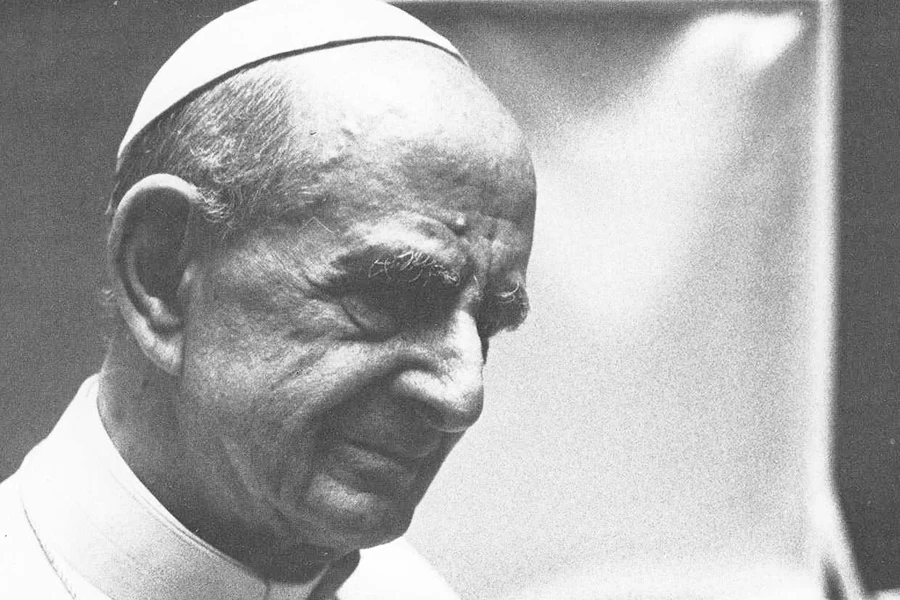
John Paul I served as Roman Pontiff from Aug. 26–Sept. 28, 1978, 33 calendar days.
His beatification on Sept. 4 renewed attention to his life. He had a reputation for humility and for teaching the faith in an understandable way.
The future John Paul I took part in the Second Vatican Council and was named patriarch of Venice.
As a cardinal, Luciani published a collection of “open letters” to historic figures, saints, famous writers, and fictional characters. The book, “Illustrissimi,” included letters to Jesus, King David, Mark Twain, Charles Dickens, and Christopher Marlowe, as well as Pinocchio and Figaro, the barber of Seville.
He was the first pope to have two names. He took his papal name from his immediate predecessors, Sts. John XXIII and Paul VI.
Leave a Reply