Cardinal Stanisław Dziwisz visits Pope emeritus Benedict XVI at the Vatican on April 27, 2022. / Twitter @ArchKrakowska.
Vatican City, Apr 28, 2022 / 02:45 am (CNA).
St. John Paul II’s long-time secretary visited Pope emeritus Benedict XVI on Wednesday.
Cardinal Stanisław Dziwisz met with the pope emeritus at the Vatican on April 27, the eighth anniversary of the Polish pope’s canonization.
The Archdiocese of Kraków, southern Poland, said that Dziwisz, who led the archdiocese from 2005 to 2016, celebrated Mass at the tomb of St. John Paul II in St. Peter’s Basilica.
The cardinal then greeted Benedict XVI at his Vatican residence, the Mater Ecclesiae Monastery. The German theologian succeeded John Paul II as pope in 2005 and retired in 2013.
Pope Francis canonized St. John Paul II, who led the Catholic Church from 1978 to 2005, on April 27, 2014.
The pope recalled the anniversary at this Wednesday general audience.
— Archidiecezja Krakowska (@ArchKrakowska) April 27, 2022
Speaking to Polish pilgrims, he said: “Today, on the eighth anniversary of the canonization of St. John Paul II, through his intercession, let us ask to be faithful witnesses of Christ and his merciful love in the world, in the family, and in the workplace.”
The apostolic nunciature in Poland announced on April 22 that the Vatican had concluded an investigation into allegations that Dziwisz mishandled abuse cases as archbishop of Kraków, declaring that his actions were “correct.”
Benedict XVI celebrated his 95th birthday on April 16.
If you value the news and views Catholic World Report provides, please consider donating to support our efforts. Your contribution will help us continue to make CWR available to all readers worldwide for free, without a subscription. Thank you for your generosity!
Click here for more information on donating to CWR. Click here to sign up for our newsletter.
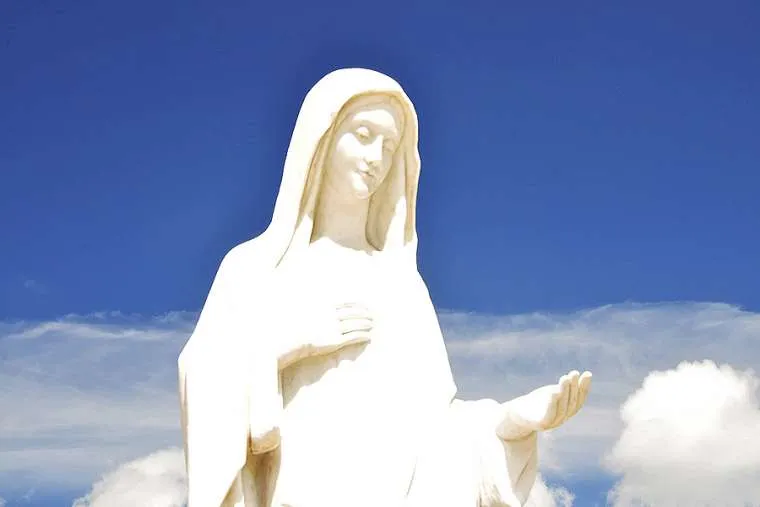
Vatican City, May 31, 2018 / 05:39 am (CNA/EWTN News).- Pope Francis Thursday extended the mandate of his special envoy to Medjugorje, tasking him with oversight of the pastoral needs of both the local parish community, and pilgrims who come to visit the site of alleged Marian apparitions that took place in the city.
Henryk Hoser, archbishop emeritus of Warszawa-Praga, was tapped as the pope’s special envoy to study the pastoral situation of Medjugorje in February 2017.
On May 31 Francis named him apostolic visitor to the site for an undetermined amount of time “ad nutum Sanctae Sedis,” or “at the desire of the Holy See.”
Hoser’s task now, according to a Vatican communique on the appointment, is an “exclusively pastoral” role in continuity with the work Hoser did when first named as the papal envoy.
According to the Vatica, Hoser concluded his work sometime within the past few months. In his new role as apostolic visitor, the archbishop’s specific mission, rather than simply looking into the pastoral situation, will be to ensure “a stable and continuous accompaniment” of the parish community in Medjugorje, as well as pilgrims who visit the shrine, “whose needs require special attention.”
The alleged Marian apparitions in Medjugorje started June 24, 1981, when six children in the town, now a part of Bosnia and Herzegovina, claimed to have had a vision of the Blessed Virgin Mary.
According to the alleged visionaries, the apparitions conveyed a message of peace for the world, a call to conversion, prayer and fasting, as well as certain secrets surrounding events to be fulfilled in the future.
These apparitions are said to have continued almost daily since their first occurrence, with three of the original six visionaries claiming to have received apparitions every afternoon because not all of the “secrets” intended for them have been revealed.
In April 1991, the bishops of the former Yugoslavia determined that “on the basis of the research that has been done, it is not possible to state that there were apparitions or supernatural revelations.”
On the basis of those findings, the Congregation for the Doctrine of the Faith directed in October 2013 that clerics and the faithful “are not permitted to participate in meetings, conferences or public celebrations during which the credibility of such ‘apparitions’ would be taken for granted.”
However, Benedict XVI established a commission, headed by Cardinal Camillo Ruini, to study the topic in further detail.
In January 2014, the commission completed their study on the supposed apparitions’ doctrinal and disciplinary aspects, and was to have submitted its findings to the Congregation for the Doctrine of the Faith. The congregation has yet to submit its final document to the pope for a final decision.
Pope Francis tapped Archbishop Hoser as a special envoy to look into the pastoral situation in Medjugorje in February 2017.
Two months after his appointment as special envoy, Hoser told members of the press that the site bore many genuine expressions of faith, and many vocations were found there. However, he clarified that the final determination of the apparition’s authenticity remains to be seen.
Pope Francis has often referenced the alleged Medjugorje apparitions in daily homilies, saying Mary is not a “post-master” who delivers messages everyday on the hour.
When asked by journalists about the apparitions on the flight back from Fatima, Portugal in May 2017, the pope said the original apparitions from more than three decades ago deserve further study, but the ongoing visions seem less credible.
He stressed the need to distinguish between the two sets of apparitions, and referenced the report given to the CDF by Cardinal Ruini in 2014.
“The first apparitions, which were to children, the report more or less says that these need to continue being studied,” he said, but as for “presumed current apparitions, the report has its doubts.”
“I personally am more suspicious, I prefer the Madonna as Mother, our Mother, and not a woman who’s the head of an office, who every day sends a message at a certain hour. This is not the Mother of Jesus. And these presumed apparitions don’t have a lot of value.”
He clarified that this is his “personal opinion,” but added that the Madonna does not function by saying, “Come tomorrow at this time, and I will give a message to those people.”
Pope Francis with the Pontifical Academy for Life on Feb. 20, 2023. / Credit: Vatican Media
Rome Newsroom, Feb 20, 2023 / 10:00 am (CNA).
Pope Francis told the Pontifical Academy for Life on Monday that it faces an enormous task in evaluating t… […]
Pope Francis at the Jubilee of the Sick in St. Peter’s Square on Sunday, April 6, 2025, wearing nasal cannulas for supplemental oxygen as he continues recovering from bilateral pneumonia. / Credit: Daniel Ibañez/EWTN News
CNA Newsroom, Apr 6, 2025 / 07:32 am (CNA).
Still recovering from bilateral pneumonia that hospitalized him for nearly 40 days, Pope Francis made a surprise appearance in St. Peter’s Square on Sunday for the Jubilee of the Sick, sharing profound reflections on suffering, care, and the transformative power of illness.
Wearing nasal cannulas that provide supplemental oxygen, Pope Francis arrived in a wheelchair accompanied by a nurse.
Pope Francis blesses the faithful at the Jubilee of the Sick in St. Peter’s Square, Vatican City, on April 6, 2025, as his personal nurse, Massimo Strappetti, assists him in the wheelchair. Credit: Daniel Ibáñez/CNA
Hundreds of faithful gathered in St. Peter’s Square on April 6, receiving him enthusiastically around 11:45 a.m. local time.
The pontiff said that “the sickbed can become a ‘holy place’ of salvation and redemption, both for the sick and for those who care for them.”
“I have much in common with you at this time of my life, dear brothers and sisters who are sick: the experience of illness, of weakness, of having to depend on others in so many things, and of needing their support,” the pope told his audience.
“This is not always easy, but it is a school in which we learn each day to love and to let ourselves be loved, without being demanding or pushing back, without regrets and without despair, but rather with gratitude to God and to our brothers and sisters for the kindness we receive, looking toward the future with acceptance and trust.”
The 88-year-old pontiff invited the faithful to contemplate the Israelites’ situation in exile, as Isaiah described. “It seemed that all was lost,” Francis noted, but added that it was precisely in this moment of trial that “a new people was being born.” He connected this biblical experience to the woman in the day’s Gospel reading who had been condemned and ostracized for her sins.
Her accusers, ready to cast the first stone, were halted by the quiet authority of Jesus, the pope’s homily explained.
Faithful gather in St. Peter’s Square for the Jubilee of the Sick and Health Care Workers on April 6, 2025, including religious sisters, medical professionals, and pilgrims from around the world. Credit: Daniel Ibáñez/CNA
In comparing these stories, Pope Francis emphasized that God does not wait for our lives to be perfect before intervening.
“Illness is certainly one of the harshest and most difficult of life’s trials, when we experience in our own flesh our common human frailty. It can make us feel like the people in exile, or like the woman in the Gospel: deprived of hope for the future,” the pontiff’s homily said.
“Yet that is not the case. Even in these times, God does not leave us alone, and if we surrender our lives to him, precisely when our strength fails, we will be able to experience the consolation of his presence. By becoming man, he wanted to share our weakness in everything.”
Pope Francis thanked all health care workers for their service in a particularly moving passage: “Dear doctors, nurses, and health care workers, in caring for your patients, especially the most vulnerable among them, the Lord constantly affords you an opportunity to renew your lives through gratitude, mercy, and hope.”
The pontiff encouraged them to receive every patient as an opportunity to renew their sense of humanity. His words acknowledged the challenges facing medical workers, including inadequate working conditions and even instances of aggression against them.
Bringing his address to a close, the pontiff recalled the encyclical Spe Salvi of Pope Benedict XVI, who reminded the Church that “the true measure of humanity is determined in relation to suffering.” Francis warned, with the words of his predecessor, that “a society unable to accept its suffering members is a cruel and inhuman society.”
Archbishop Rino Fisichella incenses a statue of the Madonna and Child during the Jubilee of the Sick and Health Care Workers at St. Peter’s Square, April 6, 2025. Credit: Daniel Ibáñez/CNA
The Holy Father urged all present to resist the temptation to marginalize and forget the elderly, ill, or those weighed down by life’s hardships: “Dear friends, let us not exclude from our lives those who are frail, as at times, sadly, a certain mentality does today.”
‘I feel the finger of God’
In his brief Angelus remarks following the Mass, the pope shared his personal experience: “Dear friends, as during my hospitalization, even now in my convalescence I feel the ‘finger of God’ and experience his caring touch.”
The pope also called for prayers for all who suffer and for health care professionals, urging investment in necessary resources for care and research, so that health care systems may be inclusive and attend to the most fragile and poor.
Pope Francis concluded with a plea for peace in conflict zones, including Ukraine, Gaza, the Middle East, Sudan, South Sudan, the Democratic Republic of Congo, Myanmar, and Haiti.
The Holy See has not yet commented on whether Pope Francis will participate in Holy Week ceremonies, with the Vatican press office indicating that “it is premature to discuss this” and assuring that further details will be provided later.





Leave a Reply