Los Angeles, Calif., Feb 8, 2022 / 13:07 pm (CNA).
A Catholic religious sister and longtime school principal has been sentenced to a year in federal prison for embezzling more than $800,000 from a Los Angeles-area elementary school.
“I have sinned, I’ve broken the law and I have no excuses,” Mary Margaret Kreuper reportedly told the court. “My actions were in violation of my vows, my commandments, the law and, above all, the sacred trust that so many had placed in me. I was wrong and I’m profoundly sorry for the pain and suffering I’ve caused so many people.”
The 80-year-old sister pleaded guilty in July 2021 to wire fraud and money laundering.
She admitted to diverting more than $835,000 in donations, tuition, and fees from St. Joseph School in Torrance from 2008 to 2018. She reportedly used the money for gambling, trips, and other personal expenses.
An audit in 2018 uncovered the embezzlement.
In addition to serving time, U.S. District Court Judge Otis D. Wright II also reportedly ordered Kreuper to pay more than $825,000 to the school as restitution.
Kreuper was principal at St. James Catholic School for 28 years.
Another religious sister originally implicated in the case did not face any charges. Both sisters retired from the school in 2018.
The Archdiocese of Los Angeles originally planned to file a criminal complaint against the sisters for misappropriation of funds but ultimately decided the matter would be handled internally.
The sisters are members of the Los Angeles Province of the Sisters of St. Joseph of Cardondelet. In 2018, the community declined to defend the actions of the sisters.
“As a religious community we will not defend the actions of our Sisters,” the community wrote in a 2018 statement. “What happened is wrong. Our Sisters take full responsibility for the choices they made and are subject to the law.”
If you value the news and views Catholic World Report provides, please consider donating to support our efforts. Your contribution will help us continue to make CWR available to all readers worldwide for free, without a subscription. Thank you for your generosity!
Click here for more information on donating to CWR. Click here to sign up for our newsletter.
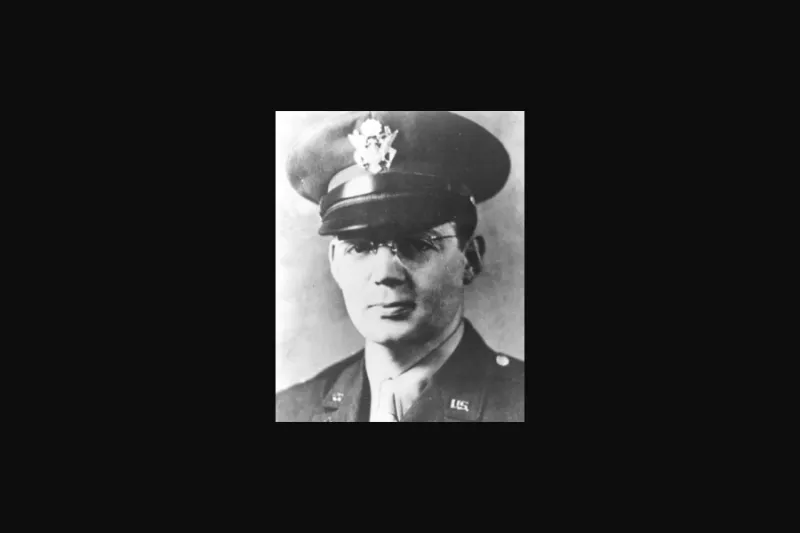
Father John P. Washington, one of the ‘Four Chaplains’ who gave their lives to save others during the sinking of the SS Dorchester, Feb. 3, 1943.x / public domain
Washington, D.C. Newsroom, Feb 3, 2022 / 16:00 pm (CNA).
Four Chaplains Day, Feb. 3, recognizes the heroism of four World War II military chaplains who sacrificed their lives to save those trapped on a sinking U.S. Army transport ship.
“Their voices were the only thing that kept me going,” one survivor remembered of the fateful day in 1943.
The four men — Fr. John P. Washington, a Catholic priest, Rev. George L. Fox, a Methodist minister, Rabbi Alexander D. Goode, and Rev. Clark V. Poling, a Reformed Church in America minister — died after ministering to civilians and military personnel on the sinking SS Dorchester.
The four first met in 1942, at the Army Chaplains School at Harvard University. Each chaplain held the rank of first lieutenant, Columbia magazine reported.
The ship, packed with more than 900 people, departed New York for an Army base in Greenland on Jan. 23, 1943, Military Benefits reported. A few days later, on Feb. 3, a German submarine torpedoed the ship in the middle of the night. The lights went out as the cold Arctic waters surrounded the soldiers.
Amid of panic, the chaplains remained calm — and sprang into action. Fr. Washington, who had celebrated Mass just hours before, now gave absolution, according to the Army Historical Foundation. The four offered their life jackets to men who did not have them, and helped as many as they could escape into lifeboats. They themselves stayed behind.
Several eyewitnesses later spoke of the chaplains’ bravery, Military Benefits reported.
At one point, Petty Officer John J. Mahoney remembered turning back to his cabin to find his gloves. Rabbi Goode halted him, saying, “Never mind. I have two pairs,” and handed him some.
Mahoney later realized that the rabbi had just one pair.
Off the ship and in the water filled with debris, oil, and dead bodies, Pvt. William B. Bednar remembered hearing “men crying, pleading, praying.” But then he heard the chaplains, who were “preaching courage.” Those voices, he said, kept him alive.
Another survivor, named Grady Clark, recalled the scene.
“As I swam away from the ship, I looked back. The flares had lighted everything. The bow came up high and she slid under,” Clark said. “The last thing I saw, the four chaplains were up there praying for the safety of the men. They had done everything they could. I did not see them again. They themselves did not have a chance without their life jackets.”
Another eyewitness, John Ladd, said, “It was the finest thing I have seen or hope to see this side of heaven.”
The ship sank in fewer than 30 minutes.
With the frigid air and water temperatures, many of the men died from hypothermia before they could be rescued. Only 230 survived. Those who did remembered the chaplains linking arms and joining together in prayer and singing as the ship went down.
Today, they are remembered as “the four chaplains,” or “the immortal chaplains.”
In recognition of the chaplains’ heroism, Congress established Feb. 3 as “Four Chaplains Day” in 1988.
A year after their deaths, in 1944, Congress posthumously awarded each chaplain with a Purple Heart and the Distinguished Service Cross. In 1960, Congress also approved the Four Chaplains’ Medal, which was presented to the chaplains’ families the following year.
Throughout the country, the chaplains are remembered with monuments and memorials, including stained glass windows at the Pentagon, Military Benefits reported.
Their faces appeared on U.S. postage stamps in 1948, and, in 1951, President Harry S. Truman dedicated the Chapel of the Four Chaplains in the basement of Grace Baptist church in Philadelphia.
Today, the Four Chaplains Memorial Foundation, founded by the chaplains’ families and the ship’s survivors, continues their legacy, from supporting first responder chaplain programs to hosting student scholarship competitions.
Washington, D.C. Newsroom, Nov 14, 2022 / 14:07 pm (CNA).
The FBI has released a video and photos of the June 2022 attack on the upstate New York pro-life pregnancy center, CompassCare Pregnancy Services, that … […]
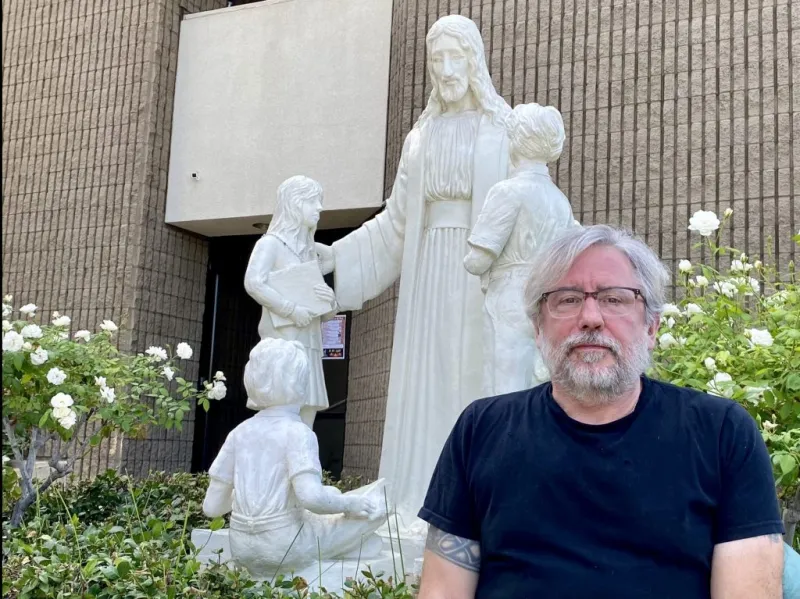
Michael Stucchi poses in front of the restored statue of Jesus with children at St. Mel’s Church in Woodland Hills, California. / Photo credit: Tom Hoffarth
Woodland Hills, California, Nov 5, 2022 / 08:00 am (CNA).
In the darkness of an early Saturday morning last March 19, Father Steve Davoren and his golden lab, Blue, came out the back exit of the rectory at St. Mel’s Church in Woodland Hills, California, for a pre-dawn run.
But before he could start, the priest’s heart sank when he saw what the floodlights pointing at the church’s iconic statue cluster of Jesus and three children revealed.
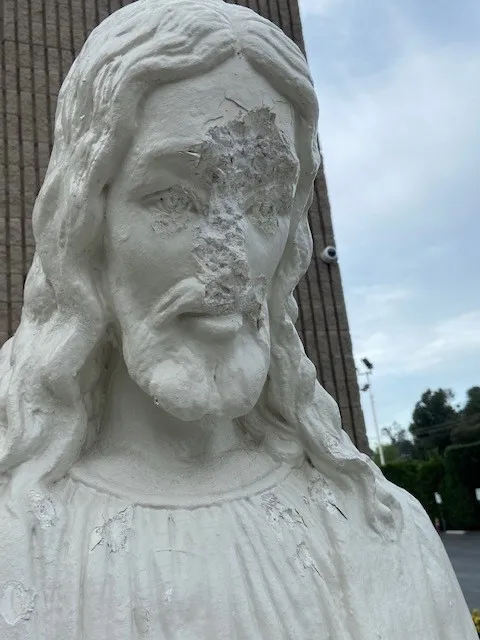
Grainy security footage only captured the arm of a person repeatedly swinging an unidentified weapon at the statues. Pieces fell from what has been a longtime centerpiece of the parish, in a highly visible spot off of busy Ventura Boulevard.
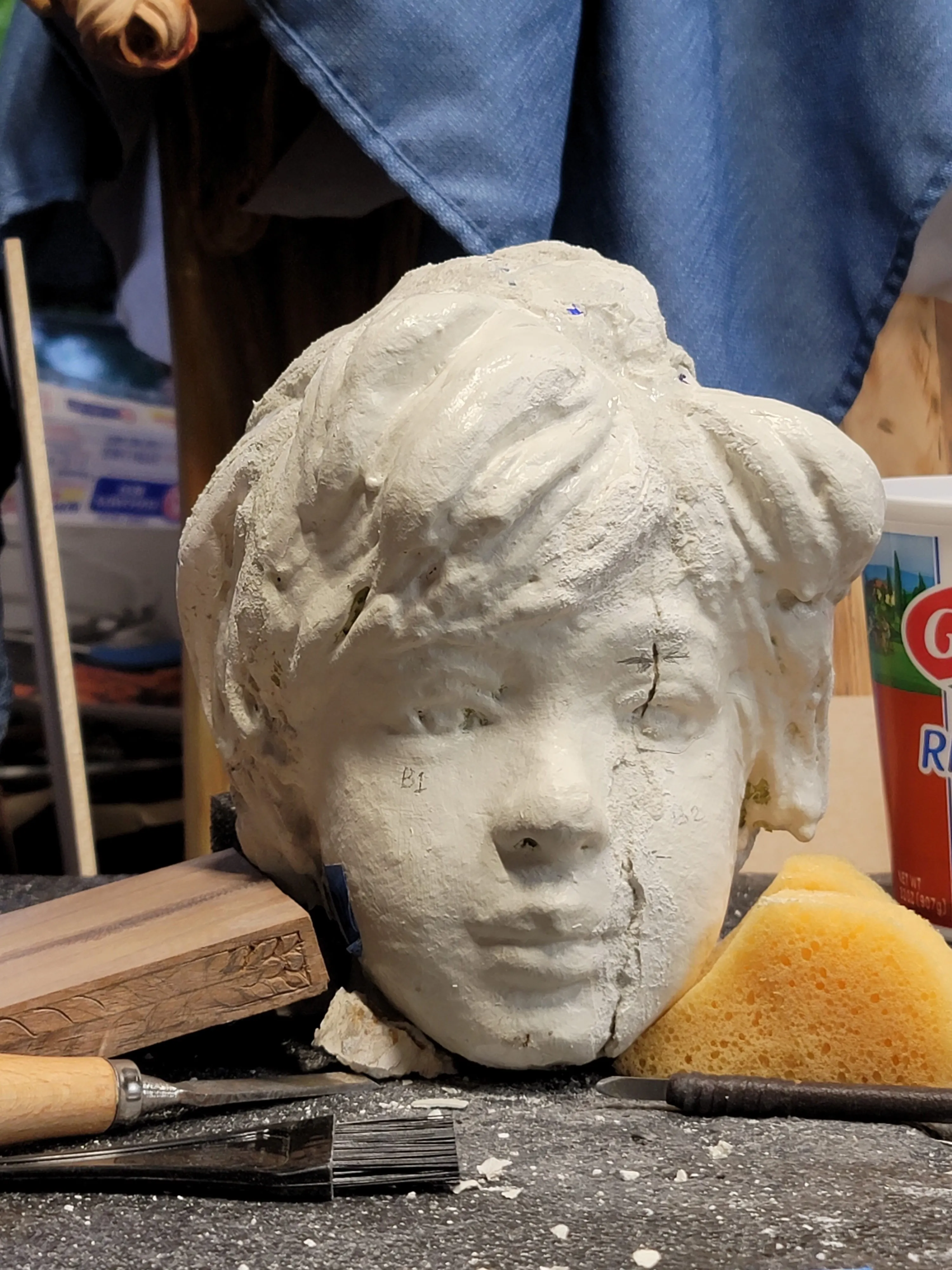
Chunks of the marbled concrete that came off the twisted, exposed rebar were everywhere: in the raised flower bed flanked by white rose bushes, in the parking lot, on the sidewalk next to the parish office.
Davoren immediately called the church’s business manager, Lisa Feliciano, who threw on a hoodie and came right over.
“It was horrific,” Feliciano said. “But now we were putting pieces in a box, crying. I couldn’t believe anyone could have this much hate to do this.”
Feliciano filed a police report along with the surveillance video, which she described as “two minutes of torture.”
“I see it and it still makes me cry,” she said.
Details of the damaged statues of Jesus at St. Mel’s Church in Woodland Hills, California. Photo credit: Michael Stucchi
It fell to Davoren to explain the attack to parishioners the next day at Sunday Masses, preaching understanding and forgiveness in the place of anger and frustration.
“To me, the irony of this was the person who did this had to be a broken person himself,” said Davoren, pastor at St. Mel’s since 2018. “Through Scripture we know we need to pray for people who feel they have to destroy.”
Michael Stucchi heard Davoren’s message loud and clear that weekend. A systems software engineer by trade, Stucchi has found satisfaction working for the parish to restore four in-church statues in the past as well as Nativity scene statues.
He has been their humble go-to, fix-it man. But this was something bigger.
“When I spoke to Father Steve about it a few days after it happened, I admit, I was angry, mad, indignant because the statues were special to me and my family,” said Stucchi, whose son works in the parish office. “But then I heard his sadness and concern for the mental state of the person who damaged the statues. That’s so much like him. This really altered my paradigm from reactive to proactive — to ask if I could look into ways of repairing them.
“Father Steve’s compassion is what Jesus would want us to have. All the people who work here are in the same mindset of love and forgiveness. We have no idea what terrible things are in that person’s life.”
Stucchi and Feliciano started the reconstruction by collecting and studying photographs of the statues to examine all their features. The depiction of Jesus is about 6 feet tall and weighs about 1,000 pounds; each child on its own concrete base weighs about 300 pounds.
The collection dates to the 1950s, when the parish was first built. It had once been part of a fountain display in front of the school office and later relocated near the church’s west doors in the 1990s when the new parish center was built.
Feliciano had contacted the Los Angeles Archdiocese about filing an insurance claim and was told it might cost as much as $30,000 to repair.
Stucchi said he could take care of it, with no charge to the parish.
That didn’t surprise Feliciano, who calls Stucchi “a true angel.”
“Look at the difference between someone filled with hate and destruction … and then someone like Michael who spends his time showing pure love and joy putting it back together,” Feliciano said. “Both are our neighbors, they live among us. How can there be such a vast difference in someone’s heart and soul?”
Michael Stucchi has pieced together the statues at St. Mel’s Church in Woodland Hills, California, to where they may even be in better condition when finished. Photo credit: Michael Stucchi
Stucchi experimented with different combinations of compounds — crushed marble, white Portland cement, and waterproof exterior grout. Most of the work had to be done on site, with some pieces taken to his home garage.
“I was super cautious about not making anything worse,” said Stucchi, noting the materials often dried too quickly in the summer heat, causing more delays. “The saddest part to me was the damage to Jesus. We know enough about the pain and suffering Jesus went through in his life, but to see an image of him obliterated, that’s too much.”
Slowly and meticulously, Stucchi has pieced together the statues to where they may even be in better condition now because of the ways weather and age already caused cracks and decay before the vandalism.
Seven months later, Stucchi has a few finishing touches — and plenty of gratitude — still left.
“As a priest’s sacrifice and commitment are beyond my comprehension or capabilities, having seen their dedication and that of the other volunteers and staff, I felt it’s the least I can do,” Stucchi said. “Notwithstanding, the Catholic Church was always there for me when I was a child and young adult.”
From a business perspective, Feliciano said the experience has taught her about the need for better security. The statues also were previously vandalized in 2021 when someone painted the faces a green color, but they were easy enough to repaint white.
“As a parishioner, the kindness of Michael reminds me that there is goodness in the world,” said Feliciano, who noted the 100-degree days Stucchi spent with the statue last summer. “I am reminded to pray for the person who was filled with enough hate to do the damage and thank God for blessing us with Michael.”
Father Davoren believes that “to some degree, we’re all broken and damaged, but our faith in the love of God allows people like Michael the tenderness to painstakingly put those pieces of the statue back together.
“It’s about giving people the right amount of grace to rebound in their lives.”




Leave a Reply