



Denver Newsroom, Aug 20, 2021 / 13:22 pm (CNA).
A Chicago police chaplain says he is “mortified” that he mistakenly gave Holy Communion to Mayor Lori Lightfoot, a non-Catholic Christian in a same-sex marriage, during Thursday’s funeral Mass for fallen city police officer Ella French.
In an interview Friday with CNA, Fr. Dan Brandt said just moments prior to Communion he was asked by Cardinal Blase Cupich, the main celebrant, to take his place distributing the Eucharist and became flustered when he saw the mayor step forward as the first in his line.
“You know something, I am to blame for that and I am mortified,” Fr. Brandt said.
“I actually gave her Communion, but she was the very first one up there and I wasn’t supposed to give out Communion, and at the last second Cardinal Cupich said, ‘I’m going to sit out Communion, you take my spot.’
“And so, I didn’t know where I was going. I mean I was totally, the whole weekend was a blur. I was going on very little sleep,” the Catholic police chaplain explained. “And anyways I’m making excuses but yes, she came up, and I put the sacred host in her hand and I was like ‘Oh!’ and of course it was too late at that point. And I was like, ‘Oh dear God, have mercy.'”
.@Chicago_Police Chaiplan Fr. Dan Brandt distributed ashes today to about 150 CPD officers and staff. #ashwednesday pic.twitter.com/36UIuN6oZP
— Archdiocese Chicago (@archchicago) March 6, 2019
Fr. Brandt added that he is deeply apologetic toward those who were offended by the mayor receiving Communion.
“I apologize for any scandal that my absentmindedness may have caused. It was certainly not intentional and wish I had my wits about me. Or better yet I wish the Cardinal had just given out Communion because I was planning on going back and sitting for the next portion of the Mass and procession,” he said.
“I can’t apologize enough for anyone who’s upset by the fact that she received the Eucharist. That is totally on me and I own it,” he said. “And it was an honest mistake and I pray that your readers have the same mercy that I hope the Lord gives me.”
Catholic canon law permits non-Catholic Christians to receive Communion only in limited circumstances and in the case of a “grave necessity.” Neither the archdiocese nor the mayor’s office responded to multiple inquiries from CNA seeking comment Friday.
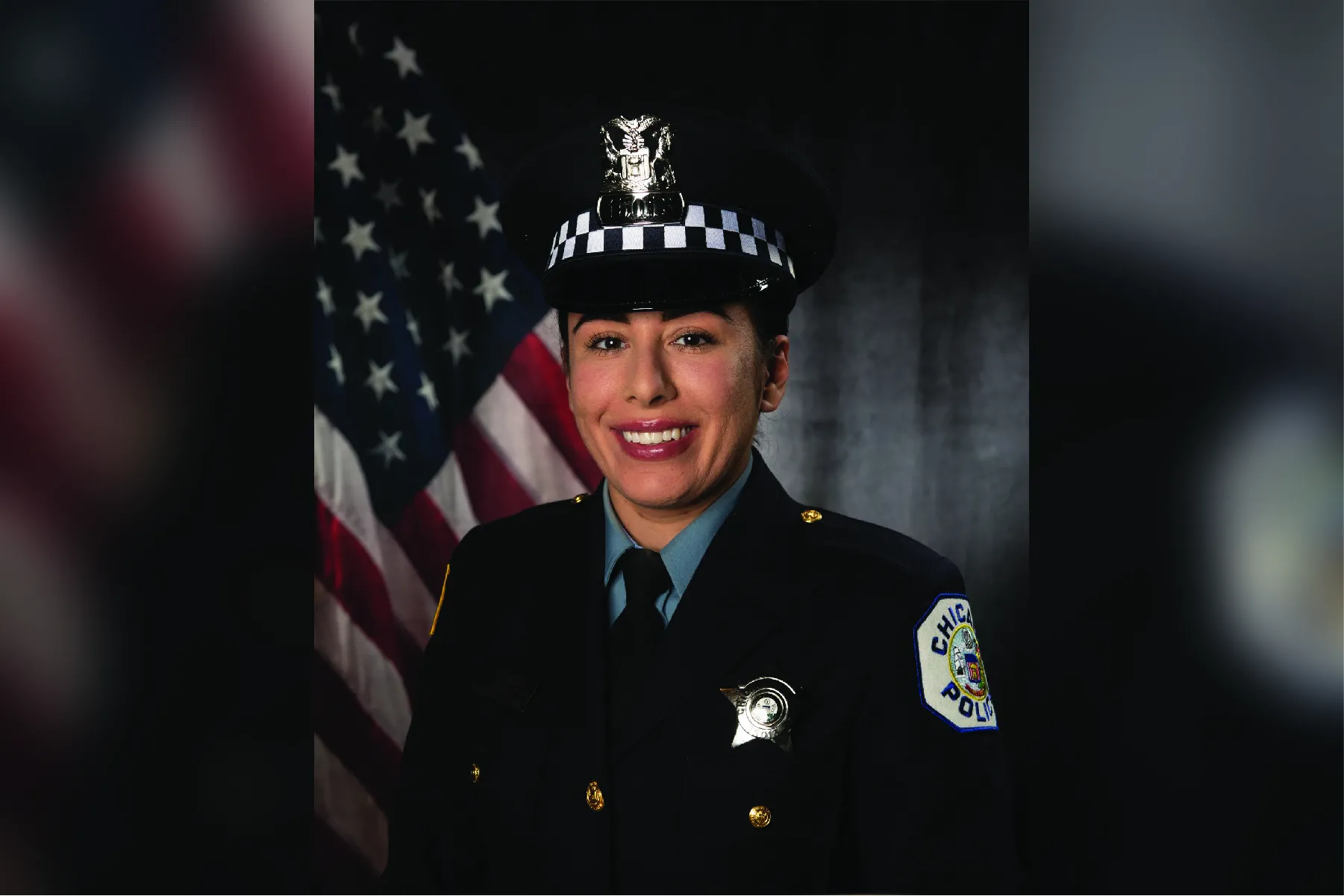
Cardinal Cupich celebrated the Mass at St. Rita of Cascia Catholic Church for French, 29, who was shot and killed in the line of duty during a traffic stop Aug. 7. In his homily, Cupich called the 3-year-veteran of the Chicago Police Department a “woman of empathy for the sufferings of others” and “generous to the point of dedicating her life to making a difference in the world.”
Lightfoot was seated in a front pew during the Mass and was the first in line to receive Communion according to video footage of the Mass, which was broadcast live on TV and over the Internet.
According to the alumni association for Washington High School, her alma mater, Lightfoot is a member of the St. James AME Zion Church in her hometown of Massillon, Ohio, which is part of a Methodist ecclesial community. The same website identifies her as a founding trustee of Christ the King Jesuit High School, which serves underprivileged African-American community members on Chicago’s west side. A spokesperson for the mayor confirmed she is Christian.
Lightfoot is the first openly gay mayor of Chicago, as well as the city’s first African-American woman to serve in that post. She is married to Amy Eshleman, with whom she has a daughter.
During a press conference after Thursday’s Mass, Lightfoot, viewed by some critics as being at odds with the police department as mayor, said she hoped her presence at the funeral would be seen as a “simple, but beautiful expression of solidarity and support for the French family.”
Under canon law, for a Protestant to be given Communion they must be unable to approach a minister of their own community; express their adhesion to the Catholic faith regarding the sacraments; and be properly disposed.
Proper disposition to receive Communion includes freedom from mortal sin and actual devotion, and it is dogma that the state of grace is necessary for the worthy reception of the Eucharist.
Outside the danger of death, in addition, the diocesan bishop or bishops’ conference must judge that there is a ‘grave necessity’ for the administration of Communion.
A 1972 Vatican document that guides the interpretation of the relevant canon foresees that cases of “grave necessity” allowing for the administration of Communion to Protestants would be such situations as imprisonment, persecution, and large-scale movements of population that result in non-Catholic Christians being “scattered in Catholic regions.”
And the ecumenical vademecum issued in 2020 by the Pontifical Council for Promoting Christian Unity guided bishops in the discernment of ‘grave necessity,’ stating that, “Sacraments may never be shared out of mere politeness. Prudence must be exercised to avoid causing confusion or giving scandal to the faithful.”
Thank you to the many that traveled from all over the country to say their final farewell to Officer Ella French . Ella will be missed, but she will not be forgotten.
EOW: 7 August 2021#NeverForget #EllaFrench #CPDMediaCar pic.twitter.com/1B51CqTgOY
— Chicago Police (@Chicago_Police) August 19, 2021
The Communion episode came during a crowded and moving funeral Mass for French, the first female officer killed in the line of duty in Chicago since 1988.
French’s mother, Elizabeth French, who adopted her daughter through Catholic Charities, was among those who spoke during the funeral Mass.
“Today, I am here with half of my heart,” she said. “Ella was an amazing young woman.”
She thanked all the members of law enforcement present at the funeral Mass for her daughter.
“Ella was so proud to be a member of your family,” she said.
A second city police officer, Carlos Yanez Jr., sustained major injuries during the traffic stop where French was gunned down. He remains in the hospital.
If you value the news and views Catholic World Report provides, please consider donating to support our efforts. Your contribution will help us continue to make CWR available to all readers worldwide for free, without a subscription. Thank you for your generosity!
Click here for more information on donating to CWR. Click here to sign up for our newsletter.


This is a start.
There is a place – Purgatory Project – Where one can go, where one MUST go.
In a journey of 10,000 miles one must take the first step – this is it.
What does this say about Mayor Lightfoot?
Plenty. She has no integrity and no sense of decency. I couldn’t believe when I read that she pushed herself onto the floor in the hospital where Officer French’s family was gathered even though she was told not to go there. What an evil woman.
I admire the police officers who turned their backs on her to show how low their opinion of her is.
“Whoever, therefore, eats the bread or drinks the cup of the Lord in an unworthy manner will be guilty of profaning the body and blood of the Lord. Let a man examine himself, and so eat of the bread and drink of the cup. For any one who eats and drinks without discerning the body eats and drinks judgment upon himself”-Corinthians 11:27-29 (RSVCE); Catechism of the Catholic Church 1385
At 87 plus years and having served as an RN, and had Basic a Brooks Medical Center, and having almost headed for Vietnam, having retired from Medical Nursing in Government Hospital it seems to me that Jesus last words — Forgive Her, She does not KNOW what She is doing. Jesus told us that Those who were not against him were for Him. In my Tour as Military Nurse, we had Docs and Nurses of Several Faiths, and We respected Life. We had a Great ECUMENICAL TEAM dedicated to our Country — Under God. I will leave this Communion (and I am CONVINCED that Our Lord is Present) Judgement to The only Person that will be our Saviour — Sad that we are fighting over incidentals, when most of the Catholics do not even believe in the TRUE Presence. Better to be out there witnessing for Pro-Life Doctor Scott Peck (Author of Road Less Traveled) spent ears in the Military, and wrote about Young Persons serving in War. Their serving left SCARS that need the Healing therapy of our Creator . Hospice nurses have witnessed this Healing Presence of JESUS, and God’s Mercy/ “Forgive Us Our Sin, Lead All Souls To Heaven — Pray for THose who are in Most need of God’s Mercy.
It’s almost as if Cupich didn’t intend this outcome.
We’re reminded of April 1998 when a priest in South Africa gave Communion to the visiting non-Catholic President Clinton. Wouldn’t want to embarrass an elitist and notorious adulterer by inviting him to go back to his seat. (The Lewinsky scandal broke earlier on January 17, 1998.) https://www.latimes.com/archives/la-xpm-1998-apr-11-me-38210-story.html
And, today in Chicago, a red-hatted poseur steps aside at the last second so the same well-positioned stunt can unfold once again, thereby signaling in advance an embedded and ecclesial cancel-culture opposed to Eucharist coherence. President Clinton, Mayor Lightfoot—-what the hell does it matter? It’s all about smiley-button religiosity!
And today, we now have a conflicted and even obtuse Catholic President Biden, right there in front of the line, this time imposing a federal-level culture of abortion with captive-audience tax support, light-headed homosexuality and gender theory, and even his personally blessing of homosexual marriage parodies. Says he of these very public positions, his faith is a “private thing.”
If your body is not a Temple of God ready to receive the Holy Eucharist then the communion wafer is just stale cracker at the end of a strange ritual as it is for Lightfoot, Biden, Pelosi, McCarrick, Colbert and whole bunch of false shephards.
A really dirty trick on the part of Cupich.
You got that right! My first thought was that Cupich knew she would come up and he didn’t want to be the culprit that gave this person Communion. As far as the Chaplain, well, I don’t really buy his excuses. He is apologizing to people; he should be on his knees apologizing to the Divine Savior.
He stated as much, give him a break. We all, at one time or another, find ourselves in a moment of split-second decision making and end up failing the test. This good man will spend the rest of his life regretting and apologizing that he fell short of the proper protocol in this instance and that is all God ever asks of us. He doesn’t really need, but humbly asks, that we forgive him too. And forgiveness is demanded of us by Christ Himself. Let none of us fail His test.
Perhaps His Eminence decided to “sit out” Communion because he did not want to be confronted with the problem of Her Honor approaching him!?
I am sure you are correct, Father. I am sure!
Imagine the opportunity which His Eminence was too blind to see and seize. The beautiful unity of the Catholic faith. The ecumenism with which VCII has become synonymous. The red bird could have sung the glories of the Eucharist and invited the non-Catholics to come forward to receive a blessing BUT NOT the Eucharist. The opportunity to teach and to preach and to bless separated brethren? Squandered. Like too many others during the reign of Francis’ and his red hat appointees. Why do they bother themselves? Do they simply like to dress in vestment?
Perhaps?
“She [Lightfoot] is married to Amy Eshleman, WITH WHOM SHE HAS A DAUGHTER.”
Stated as if this were almost ‘concept’-ually possible!
This could easily have been solved by a short announcement that is given before it is time to approach for Communion as is often announced at some of our Masses when there will be groups of non-Catholics. “Those Catholics who are properly disposed to receive the Holy Eucharist may come forward.” Sometimes the celebrant or a priest will announce that if a person is not disposed to receive the Holy Eucharist he or she may come up for a blessing by crossing his or her arms over their chest…there is too little education today on the Holy Eucharist, and proper preparation for it, including Confession for anyone not in the state of grace. We are living in a time where everything is “loosy-goosy” in some parishes. A few priests deem it appropriate that everyone come forward. Not so in our diocese!
Flustered? Flustered by what? By who?
It leaves me uncharacteristically without words.
Why isn’t it standard practice in EVERY diocese that, when there is a Mass where it is likely that non-Catholics will be attending, the celebrant would read a prepared comment before Communion such as the following:
“We are glad that so many have decided to attend this Catholic Mass today. The Mass is the essential form of worship of God for us Catholics. And because of its pivotal role in our worship as Catholics, only Catholics who are in the state of grace may come forward to receive Communion. Please do not approach the altar for a blessing since, at the end of Mass, I will be offering a blessing to all here assembled.”
Or maybe we should return to excluding public sinners, penitents, and non-Christians from the liturgy of the Eucharist…
I attended one last Sunday – a Latin Mass, with the bishop present. An announement was made ahead of time that Holy Communion is received in the mouth because there is no provision for receiving it in the hand in the traditional Latin Mass. Simple, straightforward. It would be just as easy to do as you said, Deacon Peitler.
I like your suggestion. Great idea. My first thought is not that the priest should feel guilty but why in the world did the chief come forward for communion in the first place? This is on her.
Welcome to the Illinois State run Church.
And both wonder why we are leaving in droves?
The silence on this from Illinois Bishops and USCCB is deafening.
Look, I would like to know which one of you (Autumn Jones, Lori Lightfoot , Cardinal Culpin, Joe Bukuras or Carl Bunderson) is responsible for this trash : “Mayor Lori Lightfoot, a non-Catholic Christian in a same-sex marriage” ? What the H*** is it supposed to mean ? What on God’s good earth do you people think you are doing ?
And once is not enough. You write more anti-Catholic trash like this : “She is married to Amy Eshleman, with whom she has a daughter.” Have you people been taking lessons from Biden ?
Do yourselves a Catholic favour and buy a copy of the Baltimore Catechism, as a matter of Catholic emergency. I truly thought CAN was a genuine Catholic publication, I was a fool.
May the eternal soul of this brave young lady, Police Officer Ella French, Rest in Peace for ever.
I offer my sincere condolences to her family.
Goodbye.
Why did Cardinal Cupich step aside? Because he didn’t want to be placed in a position to reject the mayor – or not? Did he see what was coming? Did he put someone else in his place to take the fall? Did the chaplain also bow to the pressure of politics? Well, who knows. How long, I wonder, before even the devil is allowed by politically-correct (or worse) bishops and priests to partake of the Blessed Sacrament?
Could the Cardinals’ sudden bailout be due to conscientious reverberations fired up by his liberal stance on Eucharistic worthiness? Consciences can be pesky indeed.
As the principal celebrant, Cupich should have been distributing Communion. He abdicated his responsibility just as he has repeatedly done since being ordained to the Priesthood. It’s his modus operandi.
Fr. Brandt owned what he did and expressed contrition, but what did Cardinal Cupich say about it? It sounds suspiciously as if the Cardinal knew that if he gave Communion to the mayor that it would hit the fan, so – seeing no way out of it – he sluffed it off on Fr. Brandt and let him take the rap.
Another chance missed.
I agree with those who say a clear statement about the APPROPRIATE reception of Communion should have been made PRIOR to Communion.This was done a month ago at a wedding I attended.Clearly not everyone at a wedding or a funeral is apt to be Catholic these days. And even many Catholics today are non-practicing and likely not “properly disposed” to receive Communion. Maybe calling them on it would make some of them THINK. This statement should be printed in every Catholic parish bulletin and announced verbally at every wedding and funeral service. If some folks think its unfriendly, tough. The Protestant understanding of communion is quite different than ours.
What can one expect when the vast majority of Communions in every Catholic Church are Sacrilegious? Oh, wait. Nu-Church says everybody is going to Heaven so they all must be Saints. My bad.