

 By
By 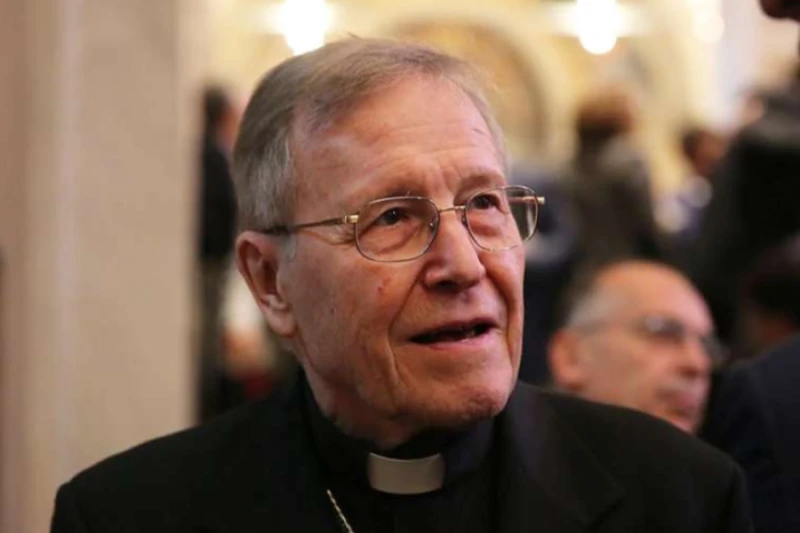
Denver Newsroom, Jul 23, 2021 / 13:30 pm (CNA).
German prelate Cardinal Walter Kasper argued that the Traditional Latin Mass was a source of division and scandal within parishes in an interview about Traditiones Custodes with the National Catholic Register on Thursday, July 22, 2021.
The cardinal stated that those who prefer the Traditional Latin Mass “reject the Second Vatican Council more or less in its entirety” and characterized Benedict XVI’s Summorum Pontificum as a failed attempt at furthering unity.
While Cardinal Kasper did recognize that other threats to unity exist within the Church–notably the German synodal way–he stayed away from characterizing them with the same degree of danger as adhering to the Traditional Latin Mass.
“As far as I know, none of the bishops wants any schismatic act and there is a slowly growing number in the bishops’ conference who are resistant,” said the Cardinal about the German synodal way.
The full text of the interview can be found here.
If you value the news and views Catholic World Report provides, please consider donating to support our efforts. Your contribution will help us continue to make CWR available to all readers worldwide for free, without a subscription. Thank you for your generosity!
Click here for more information on donating to CWR. Click here to sign up for our newsletter.


Well, that’s a big fat lie.
Thankfully he addresses one subject at a time! One cause of divisive results! Typically journalists love to water down the affected subjects by drawing attention to other events!
Snort. Consider the source.
A source of scandal??? The Latin Mass? REALLY?? Can this guy exaggerate even more?? The opinions from the nest of vipers which is Germany hold no water for many in any case. .
Okay, Boomer.
Can you explain your cryptic comment? To whom is it addressed?
As I understand it, the phrase is a way to avoid substantial discussion by dismissing the opinions of any persons born from 1946 to 1964 (so, some 71 million people in the United States) as valueless because of when they were born.
Kasper has dedicated his life to fostering division by undermining and contradicting Church teaching on the Virgin Birth, Resurrection, the Real Presence etc. and by deliberately undermining Pope’s St John Paul Ii and Benedict XVI as a member of the Sankt Gallen mafia. Pot, meet kettle.
From Cardinal Kasper: “As far as I know, none of the bishops wants any schismatic act and there is a slowly growing number in the bishops’ conference who are resistant.”
About the German Synodal Way(ward) we have only “worries” and wishful thinking from Kasper. Perhaps the possibly shifting results of Kasper’s nose count of German bishops can be made as public as could be the also undocumented results of the Vatican survey regarding the Latin Mass?
The “slowly growing number” of resistant bishops rests on an originally small handful. I recall a reported 13 out of 69 bishops against the directions taken early by the synodal way. The schismatic and invalid blessing of homosexual unions is already a well-known “schismatic act”. From Rome, case-specific corrections would be most welcome, as such an approach could have been made against only those alleged traditionalist enclaves who reportedly reject the Second Vatican Council. Unlike the theology of Aquinas, for example, a similar precision in policy making is too-often vastly undervalued (but how to do this without being duped into creating photo-op martyrs and seemingly triggering the full-blown schism?)
As for the German Catholic laity: “The Catholic weekly newspaper Die Tagespost reported Sept. 17 [2020] that 53 percent of German Catholics said they were not interested in the Synodal Path” (https://cruxnow.com/church-in-europe/2020/09/cologne-cardinal-warns-german-churchs-synodal-path-could-cause-schism/).
On the other hand, also in 2020, “conservative clerics were repeatedly outvoted by 80% to 90% when they tried to change the [unstructured membership] rules governing the [eventually “binding” synodal] talks” (https://www.ncronline.org/news/world/reformers-ideas-gain-momentum-german-synodal-way).
Apart from any future results, is the synodal-path process itself, in Germania, already schismatic?
This is the clerical equivalent of “You are a racist because you don’t agree with me.” EVERY single person who attends a Latin Mass rejcts Vatican II??? What world are these people living in? And he is a cardinal? So much for mercy and dialogue.