Denver, Colo., Jul 13, 2017 / 03:01 am (CNA).- Chastity actually means fulfillment, not suffering – and labeling people in terms of their sexual inclinations or attractions first is ultimately a reduction of their human dignity.
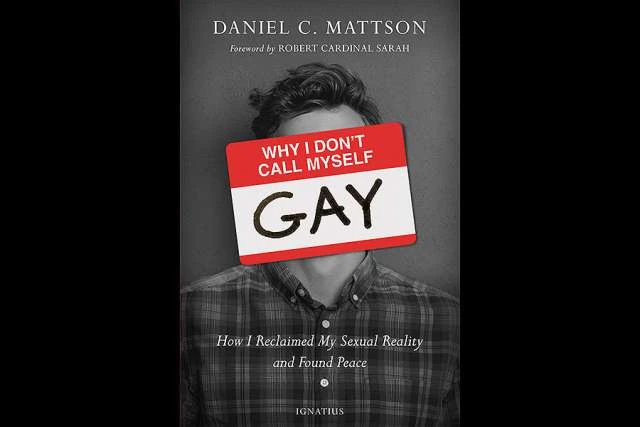
These ideas form the basis of a provocative new book by Daniel Mattson, a Catholic who finds identifying as “gay” unhelpful in the dialogue on the issue, and who also believes that living the Church’s teaching on sexuality leads to the most profound experience of peace and freedom.
“The Church must truly have a missionary zeal in proclaiming chastity as an invitation to a more fulfilling life for all men and women,” Mattson told CNA.
He said that Catholics need to reach out “to those who identify as LGBT to truly ‘come out,’ and let the masks of the world’s sexual identity labels fall from them, and see themselves as God sees them: solely as men and women, beloved children of God.”
“The dividing line of human sexuality is not between gay and straight, but rather between male and female, as we see in the Creation account of Genesis,” said Mattson.
In his new book, “Why I Don’t Call Myself Gay,” Mattson delves into the story of his upbringing: how he was raised in a Christian family, his experience of sexual confusion and social rejection in his early childhood, an addiction to pornography and an anger towards God. Living out his same-sex desires later in his life only made him more unhappy and lonely, and it wasn’t until he turned to the Church that he found true fulfillment.
Archbishop Jose Gomez of Los Angeles has called Mattson’s book “powerful” and Cardinal Robert Sarah, prefect of the Congregation for Divine Worship and the Discipline of Sacraments, said Mattson’s voice is one “seldom heard” in discussions surrounding same-sex attraction.
Mattson said a major reason why he wrote the book was to take on the notion of people identifying themselves first in terms of straight or gay. When Mother Teresa was asked about “homosexuals” in an interview, he said she refused to refer to anyone with same-sex attraction as anything else but “a child of God.”
“Even though men and women may be living outside of God’s plan for them, their dignity as children of God calls them to love others as Christ loved us,” Mattson said. “As a Christian, that means sex must always be reserved for use only in true marriage, which is always open to life. The Church needs to have enough confidence in Her beautiful vision of human sexuality to help people believe God says no to sex outside of marriage because He loves us.”
In the book, he describes how he can trace the contours of his life that lead to his same-sex attractions, which contrasts with the assumption that homosexuality is innate.
But while understanding where his same-sex attractions came from was helpful for Daniel, he says it’s not necessary for everyone. Though the Church teaches in the Catechism that homosexuality has a “psychological genesis,” how same-sex attractions come into a person’s life is a minor question. The Church, Mattson says, is “more concerned about providing a path to a fulfilling life in the future.”
In his interview with CNA, Mattson emphasized that his adherence to the Catholic view on human sexuality isn’t rooted in moralism or a suppression of desire.
“The biggest reason I have embraced the Church’s teaching as good, true and beautiful is because following the world’s vision of happiness in the realm of human sexuality brought far more suffering into my life,” he said. Today, he finds in the Church’s vision of human sexuality true happiness and liberation.
“The Church recognizes that there is a ‘theology of the body,’ and our bodily reality as male and female points to the path of both what is normal and healthy in human sexuality, as well as to what is moral.”
In his book, Mattson references the self-identified lesbian feminist and scholar Camille Paglia, who agrees that same-sex attraction is not of the norm, but as a self-labeled pagan, says that the fulfillment of man comes with conquering what she sees as the confines of nature. Mattson disagrees with her view of morality, but he finds her acknowledgment of the true nature of sexuality refreshing.
“At least she’s honest about the fact that everyone’s sexuality is truly ordered toward procreation.” Mattson said.
But what Paglia’s view of sexual liberation ignores, Mattson argues, is that “there is far more pain and suffering in the lives of those who live outside of God’s design and ordering for human sexuality than those who choose to live within it.”
He also noted that self-denial is an essential part of chastity, which everyone – not just people with same-sex attraction – are called to. For example, single men and women attracted to the opposite sex “are taught by the virtue of chastity to refrain from any sexual activity, too, and though this can be challenging, there is less suffering – and even more importantly, more peace – in one’s life when one follows the path set before us by God than if we go our own way.”
It’s not an issue of who suffers more but rather a shared connection of “the common human experience of suffering,” which stems from “rejection from other people, dashed hopes and dreams, heartbreak and loneliness.”
Mattson said that one reason he wrote his book is to help pave a path forward for those who have suffered from heartbreak and loss in their own relationships.
These sufferings, Mattson said, are universal to the human experience and not something particular to people with same-sex attraction. He referenced Cardinal Ratzinger’s 1986 “Letter on the Pastoral Care of the Homosexual Person,” which helped him refrain from self-pity and “thinking that somehow my various forms of suffering associated with living out a single and celibate life are more challenging than anyone else’s challenges.”
Through his book, Mattson says he wants to help the Church to, as he puts it, “reclaim sexual reality” and to help the Church and the world move beyond a view of the person which is ultimately “based on a reductionist label of sexual identity rooted in one’s sexual attractions and feelings.”
“In the eyes of the Church, there is no ‘us’ and ‘them,’ there is just us, and this is one of the great gifts of the Church.”
Mattson also offered a key distinction between Catholics being welcoming and shifting on magisterial teaching. He said that often the homosexual community has viewed the Church as ostracizing “for the reason that the Church won’t affirm them in their chosen way of living their lives.”
“The Church must be as welcoming and as loving as possible, but we cannot be more welcoming or loving than Jesus was who does not condemn us for our sins, but always calls us to go and sin no more.”
This call to change one’s moral life can be challenging, but it’s a calling which invites people to conversion and “is a sign of true love and compassion.”
 […]
[…]


 By
By 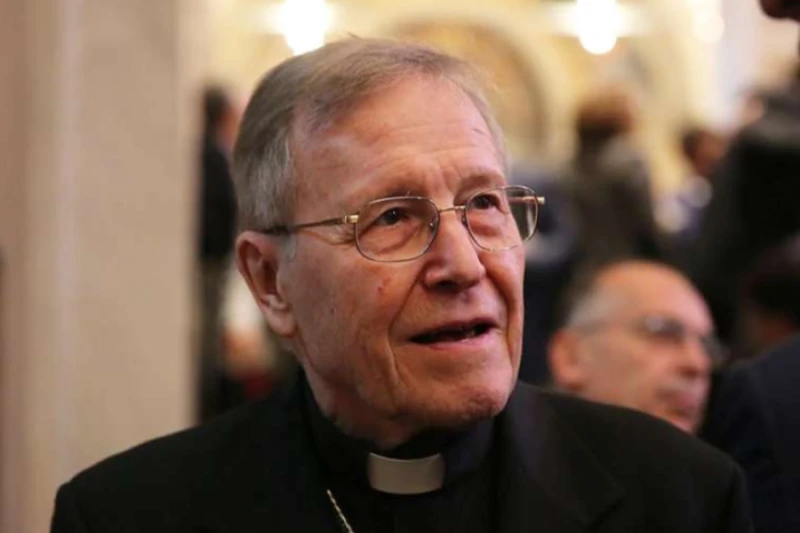


Well, that’s a big fat lie.
Thankfully he addresses one subject at a time! One cause of divisive results! Typically journalists love to water down the affected subjects by drawing attention to other events!
Snort. Consider the source.
A source of scandal??? The Latin Mass? REALLY?? Can this guy exaggerate even more?? The opinions from the nest of vipers which is Germany hold no water for many in any case. .
Okay, Boomer.
Can you explain your cryptic comment? To whom is it addressed?
As I understand it, the phrase is a way to avoid substantial discussion by dismissing the opinions of any persons born from 1946 to 1964 (so, some 71 million people in the United States) as valueless because of when they were born.
Kasper has dedicated his life to fostering division by undermining and contradicting Church teaching on the Virgin Birth, Resurrection, the Real Presence etc. and by deliberately undermining Pope’s St John Paul Ii and Benedict XVI as a member of the Sankt Gallen mafia. Pot, meet kettle.
From Cardinal Kasper: “As far as I know, none of the bishops wants any schismatic act and there is a slowly growing number in the bishops’ conference who are resistant.”
About the German Synodal Way(ward) we have only “worries” and wishful thinking from Kasper. Perhaps the possibly shifting results of Kasper’s nose count of German bishops can be made as public as could be the also undocumented results of the Vatican survey regarding the Latin Mass?
The “slowly growing number” of resistant bishops rests on an originally small handful. I recall a reported 13 out of 69 bishops against the directions taken early by the synodal way. The schismatic and invalid blessing of homosexual unions is already a well-known “schismatic act”. From Rome, case-specific corrections would be most welcome, as such an approach could have been made against only those alleged traditionalist enclaves who reportedly reject the Second Vatican Council. Unlike the theology of Aquinas, for example, a similar precision in policy making is too-often vastly undervalued (but how to do this without being duped into creating photo-op martyrs and seemingly triggering the full-blown schism?)
As for the German Catholic laity: “The Catholic weekly newspaper Die Tagespost reported Sept. 17 [2020] that 53 percent of German Catholics said they were not interested in the Synodal Path” (https://cruxnow.com/church-in-europe/2020/09/cologne-cardinal-warns-german-churchs-synodal-path-could-cause-schism/).
On the other hand, also in 2020, “conservative clerics were repeatedly outvoted by 80% to 90% when they tried to change the [unstructured membership] rules governing the [eventually “binding” synodal] talks” (https://www.ncronline.org/news/world/reformers-ideas-gain-momentum-german-synodal-way).
Apart from any future results, is the synodal-path process itself, in Germania, already schismatic?
This is the clerical equivalent of “You are a racist because you don’t agree with me.” EVERY single person who attends a Latin Mass rejcts Vatican II??? What world are these people living in? And he is a cardinal? So much for mercy and dialogue.