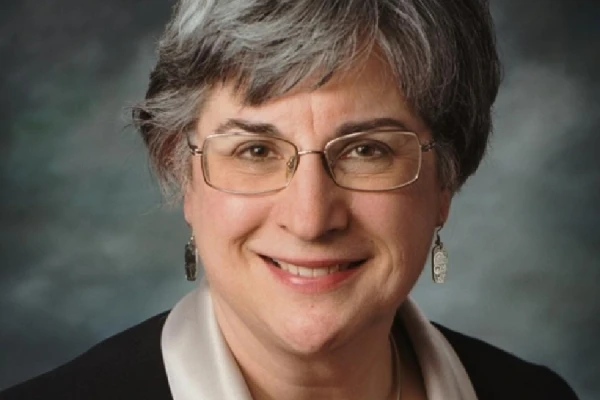
Denver, Colo., Apr 7, 2020 / 05:46 pm (CNA).- In the wake of the coronavirus epidemic, the nationwide shutdown of Catholic churches has halted regular Mass attendance and impeded access to other sacraments for the Catholic faithful. Now, some Catholics have endorsed an open letter asking the Catholic bishops to do everything possible to make the sacraments more available.
“We don’t absolutely need to have the Eucharist, but we want to be in the presence of the Eucharist, we want to have Mass said. We want adoration, we want processions, we want all these things,” she told CNA April 2, describing the goals of the open letter and its supporters.
“We’re putting our emphasis on the last rites, the Anointing of the Sick, and Mass and Adoration,” said Smith, a retired professor of moral theology at Detroit’s Sacred Heart Major Seminary. For her, the greatest concern is what she says is “the failure to work extremely hard to make certain that those who are sick and dying can receive the anointing of the sick.”
“Most concerning is the refusal by at least one bishop to permit his priests to give the sacrament of Anointing of the Sick,” Smith told CNA. “I am impressed with one order who offered to make it more available even to those who are not terribly sick. The sacrament does have the power to heal and strengthen.”
Amid the pandemic, some American dioceses have allowed pastors to administer some sacraments and devotions in conformity with government rules banning large assemblies of people. Some priests have implemented “drive-through” confessionals or “drive-in” Eucharistic adoration and benediction.
Some bishops have regularly livestreamed messages and Masses, or adore the Eucharist in public view on cathedral steps.
Other bishops have had a more cautious reaction. Some have locked all church buildings in their diocese, and have attempted to bar the administration of all sacraments except in danger of death, even if not required by law or public health recommendation to do so.
“The precipitous closing of the churches is very concerning. In Rome within 24 hours after they were closed, they were reopened. In those places where the law has decreed that people must stay home, we should abide, but if churches can be open, they should be. Surely we can ensure that for private prayer and adoration, people can remain 6 ft apart,” Smith said.
“The one size fits all policy seems very wrong headed. In small rural communities with no outbreak of the disease, more freedom to gather should be permitted than in urban communities that are being devastated by the disease,” she added.
For backers of the open letter, more needs to be done for the laity.
“Bishops, we, your faithful flock, implore you to do everything you can to make the sacraments more available to us during this crisis. Something is terribly wrong with a culture that allows abortion clinics and liquor stores to remain open but shuts down places of worship,” the open letter says.
“While safety and cooperation with civil authorities is necessary, we must do everything we can to have access to what is essential for our spiritual lives. We should certainly not voluntarily deprive ourselves of the sacraments.”
Smith said the bishops’ response to the coronavirus pandemic has been about about “trying to protect human life,” and the letter endorsers “share completely” that goal.
“We don’t want anything to be done that isn’t following the guidelines,” she said.
The open letter encourages bishops to do everything possible t o provide some form of a public Mass, especially for the Easter liturgy, including offering it themselves.
It is unclear whether some gatherings, like “drive-in” Masses offered in parking lots while attendees sit in their cars, would comply with government bans on large public gatherings, a local bishop’s ban on public Masses, or public health experts’ recommendations on social distancing.
The open letter asks bishops to “demand that civil authorities permit events such as offering and attending a Mass in a parking lot, if they are currently prohibited.”
Smith said if a state or local government ban on large public gatherings includes people going to a parking lot in their car to hear Mass, “that has to be fought.”
“We want the bishop calling up the governor and the mayor and calling up the legislators and calling up whoever, and saying ‘No no no, this is freedom of religion that we have to be allowed to do’,” she said.
“We are not asking for anything that would put our neighbors in danger. All due precautions would be observed. How can a parking lot Mass where everyone drives there in their cars and stays in their cars and where there is no distribution of the Eucharist put anyone at danger? That is one of our chief requests to be put under consideration.”
“There is absolutely no way that this relates to the spread of the virus,” Smith told CNA.
Asked if letter organizers had consulted with public health experts on their proposals, Smith said:
“We didn’t consult any, although we have heard from many who have provided more good ideas on what can be done. We are not proposing anything specific but are asking the bishops to do everything they can to provide the sacraments within the parameters determined necessary by experts.”
Smith herself raised and then answered the question of whether organizers should have gone directly to the bishops. She said “it’s not possible.”
“They’re busy with meetings, and it’s hard to get through,” she said. “But if you do a petition that we hope thousands will sign, then I hope we get their attention.”
The open letter advocates that civil authorities recognize religious services as “essential services,” a move which some states have done amid stay-at-home orders.
Referring to emergency declarations’ distinction between “essential” and “non-essential” employees and businesses, Smith said she is concerned “the Catholic world does not seem to understand that it is simply wrong to concede that religious services are ‘non-essential’.”
“Yes, we can dispense with them as virtually everything can be dispensed with in certain conditions,” she said. “But the conditions we are in right now do not, at least as far as the experts tell us, require all that our bishops have done and have allowed to be done.”
In Smith’s view, “the bishops are missing in action in clearly responding to the spiritual needs of their people.” She acknowledged that almost all bishops are streaming Masses on Sunday, saying this is “a good thing” but “not the most important thing.”
While she has seen many priests doing “very innovative things” to make available the sacraments and ensure the spiritual needs of their people are being met, she others are not visibly doing enough. Some, she said, were “almost denying sacraments before they needed to.”
“We need bishops who are trying as hard as priests are to attend to the spiritual needs of people,” she said. “They are making decisions that impact our spiritual lives and we need explanations of them. We need them to tell us how we can keep our spiritual lives alive.”
The “We are an Easter People” open letter said that if the government prohibits priests ministering to the sick in the hospital or their homes, bishops should “make a personal and formal request of civic leaders to permit such ministry with assurances that all due precautions will be taken.” They should find ways for priests to provide the anointing of the sick, “especially to those at risk of dying.”
While priests who minister to the sick are encouraged to take precautions like wearing personal protective equipment, such equipment has been the subject of a nationwide shortage. Smith acknowledged the shortage and said health care professionals should have priority for their use. In many places, she added, there is not a shortage. She added that an increase in manufacturing could eliminate a shortage before long.
The open letter lists more than 20 project endorsers, including Catholic commentators, video bloggers and others. More than 24,000 internet users had signed the letter as of Tuesday afternoon.
Project endorsers include Thomas Farr, president of the Religious Freedom Institute; former abortion clinic manager Abby Johnson; Phillip F. Lawler, editor of Catholic World News; and Dr. Jennifer Roback Morse, founder and president of the Ruth Institute; Catholic speaker Mary Beth Bonnaci, a Catholic speaker; podcaster Matt Fradd; author and movie producer Steve Ray; and Daily Wire columnist Matt Walsh.
In mid-March 2020, after the coronavirus had begun to devastate Italy, Farr told CNA that bans on religious gatherings due to high rates of deadly infection can be justified, but may not target a particular religion or religion in general. They should be based on “overwhelming evidence,” with clear time limits.
“Speaking as a Catholic for whom the sacraments are not optional, and are necessary to health and welfare, however, I would hope that the Italian Church, or the Church in any jurisdiction would do everything it could reasonably do to make the sacraments available in ways that would be consistent with just authority,” Farr said.
“We invited people who have large followings in the Catholic community who would have an interest in having the sacraments and having their bishops explain their choices,” Smith told CNA.
One open letter endorser, Peter Kwasniewski, is an independent scholar who signed a 2019 letter accusing Pope Francis of heresy. Another endorser, YouTube video caster Patrick Coffin has expressed skepticism regarding of media reporting and the government response to the coronavirus.
In a March 28 YouTube video titled “The Truth About the Commie Virus,” Coffin discusses “media-fueled hysteria” and “hyperbole” about coronavirus models. They are “misleading, because they are incomplete,” he said in the video and its description. After presenting his interpretation of a medical journal article co-authored by Dr. Anthony Fauci, Coffin declared “We are burning the house down to kill a termite.”
A March 24 video from Coffin is entitled “Did Pope Francis Help Cause the Covid-19 Pestilence?”
Project endorsers have “a wide variety of views,” Smith told CNA. “They are endorsing us; we are not endorsing all their positions.”
Both expert opinion and public opinion about the coronavirus response have changed in recent months. Two separate surveys from a Public Agenda-USA Today-IPSOS and ABC News-IPSOS suggest a vast majority of respondents now support canceling large-scale events. Most Americans now say they are avoiding large gatherings or crowds, and a significant minority now say they avoid religious services.
The letter’s request, Smith told CNA “is one that helps us grow in the virtues that enable us to do all the good things we should be doing now. We should speak of our love for Jesus and our need for Jesus. Our belief that He is truly there in the sacrament and just being close to him is a powerful experience of intimacy with the divine.”
 […]
[…]


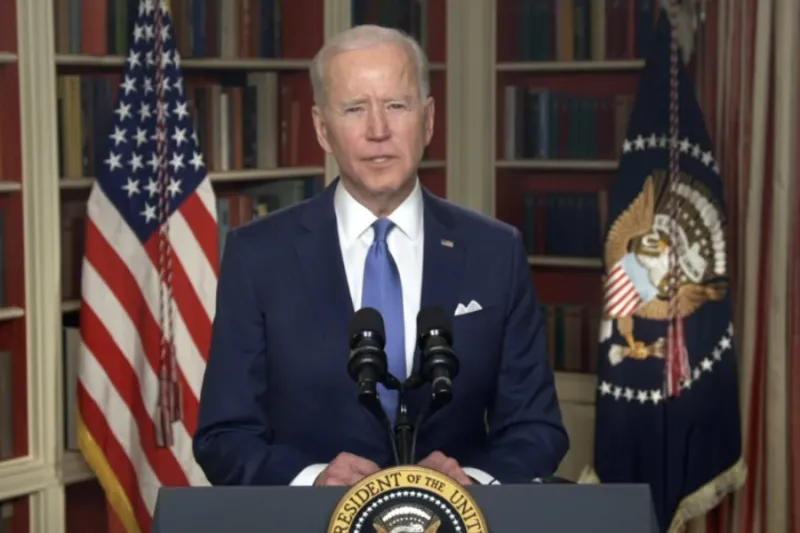

Another door-stop USCCB document on “Eucharistic coherence” with page after page of pious blather that a 2nd grader preparing for First Communion could summarize in a simple declarative sentence completely misses the point. Biden is a heretic and is already excommunicated latae sententiae. The bishops need to declare Biden’s excommunication formally and publicly and then proceed down the line from there. U.S. Catholics have had enough. Actions, not words, are what is demanded.
Problem is this action would not only apply to Biden. It would apply to millions of Catholics, who might stop coming to church and no longer financially supporting the church. Then the church could face a dilemma. How important is money?
Also this could lead to schism. Do we really want another of these? Maybe some do.
Valid points, but maybe a spiritual housecleaning is necessary at this point. Better to have a smaller, faithful Church than a morally and spiritually corrupted larger body.
At least those “millions of Catholics” will have ceased committing sacrilege by receiving Holy Communion in a state of mortal sin.
John 6:66
Great Expectations. Biden’s expectation [a shameless excerpt from a previous comment] has an imperious tone, solemnly urging the Church to desist from its faithful practice, refusing what’s owed him over a mere trifle, a predisposed approval of the murder of approx 70 million innocents since 1973. The president lives in a world bereft of “rules”, except his own, with license presumptuously due to separation of Church and State. He recently shouted, arms flailing, that he’s made far greater radical change to our Nation than any predecessor. Destructive changes to timeless moral doctrine on life, family, and sexuality. An infant in the womb is in greater danger during his administration than at any time in history. What’s at stake for the Church isn’t political expediency. Nor maintaining order and cohesion. Neither is separation of Church and State at issue. Rather it’s the foundation of a just society in which religious freedom and the right to uphold its values. Values that are the source of that foundation for justice.
“An infant in the womb is in greater danger during his administration than at any time in history.”
Well said.
I think we can have a pretty good idea of the bishops who supported going forward on the document, if we’ve been following this story. Several bishops have come forward, besides Cordileone and others who have been forthright thus far.
“Hope springs eternal . . .”
So are we going to deny communion to those Catholic politicians advocating the death penalty?
While on this path what about those who campaigned for sending US troops to Iraq?
Oh, please. Support for abortion, “gay marriage”, and trans-sexualism is different, in kind and degree, from prudential judgments re: capital punishment and national defense.
Oh, please, the invasion of Iraq had nothing to do with national defence. It was an act of un godly evil, in every respect it was a murderous pursuit! And one can argue that prudential judgements as applied to capitol punishment can also apply to the issue of Abortion. It is my personal position that I am against abortion, full stop. However to what degree or extent, in a democratic republic where there is the separation of church and state, can I insist that an other, who does not share my faith in Jesus, be beholden to a law that may be against the wishes of a voting majority who are non christian?
The answer you seek is no, because as the court of the Pontiff Francis has reluctantly implied by its “eloquent ambiguity,” (to quote one apologist) the death penalty cannot be declared immoral.
This is as compared to abortion, fornication, sodomy, false witness and idolatry, which, among other things, remain mortal sins.
I have no academic qualifications in Ethics unlike Mr Weigel but a quick look at the Wikipedia page on the subject states:
[ In ethics, a “prudential judgment” is one where the circumstances must be weighed to determine the correct action. Generally, it applies to situations where two people could weigh the circumstances differently and ethically come to different conclusions.
For instance, in the theory of just war, the government of a nation must weigh whether the harms they suffer are more than the harms that would be produced by their going to war against another nation that is harming them; the decision whether to go to war is therefore a prudential judgment.]
Mr Weigel, an author and academically qualified ethicist who has written extensively on the subject of Just War Theory was a signatory to the Project For a New American Centurary’s Statement of Principals, accompanied by the political elite of the Bush administration. His support for invasion of Iraq is on record, in effect a Catholic blessing of this act of war: https://www.americamagazine.org/issue/428/article/just-war-case-war
Why is Mr Weigle, a celebrated contributor of articles to CWR not the subject of serious discourse with respect to the sanctity of life?
One could mount an argument that he should be denied communion!
An ordinary and commonplace and “private thing,” says the hollow-suited and sleepwalking occupier of the White House…
When Hannah Arendt interviewed Adolf Eichmann, the captured overseer of Hitler’s “final solution” to the Jews, she found him to be “quite ordinary, commonplace, and something neither demonic nor monstrous” (Eichman in Jerusalem: A Report on the Banality of Evil, 1964).
Biden has frequently said that he personally opposes abortion but that he “won’t impose his beliefs on anyone else”, or some such blather.
Mr. President – we’re not asking you to do that, we are merely asking you to DEFEND what you say your beliefs are, and there is NO sign that you have any intention to do so.