

CNA Staff, May 6, 2021 / 17:00 pm (CNA).
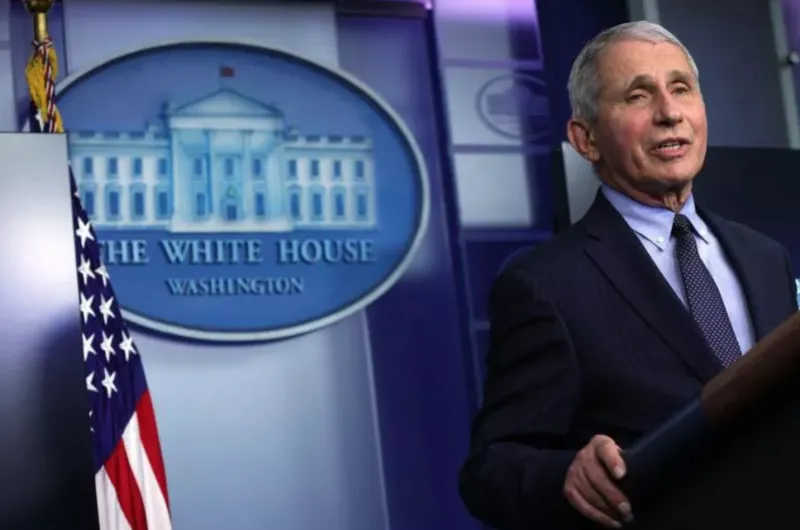
At the first day of an online Vatican conference on “exploring the mind, body, and soul,” Dr. Anthony Fauci spoke about the evolution of the scientific community’s response to the novel coronavirus outbreak, and the difference between acting based on instinct and acting from data.
Fauci, an immunologist and chief medical adviser to U.S. President Joe Biden, responded to questions from CNN journalist Sanjay Gupta, who asked him how much doctors “have to rely on faith, not just religious faith, but your own system of belief,” when confronting something new, like COVID-19.
“I think you have to rely on it when you’re starting with nothing,” Fauci said. But he added that “as more solid scientific information becomes available, you pull away a bit from the kind of experience, instinct and get more into the reality of the evidence you have.”
He said there are some people “who don’t appreciate the evolution of understanding and the evolution of knowledge, that you’re going to change some of your viewpoints because the data itself will not necessarily change, but additional data changes the status of your knowledge.”
“Your knowledge may be minimal and you’re acting on quote ‘faith,’ as it were, versus the true, substantive evidence in data, which really gives you a much better foundation,” he said. “So that’s the way I look at it.”
Fauci spoke near the beginning of a three-day international conference on “Exploring the Mind, Body & Soul: How Innovation and Novel Delivery Systems Improve Human Health,” taking place virtually May 6-8.
It is the fifth conference of its kind organized by the Pontifical Council for Culture and the Cura Foundation, which describes itself as “a nonsectarian, nonpartisan, public 501(c)(3) organization with a mission to improve human health globally.”
Cura Foundation president Robin Smith and Cardinal Gianfranco Ravasi gave the opening remarks.
Ravasi said that “the body is a fundamental reality of human existence and of communication,” and pointed to Christianity’s central mystery, the Incarnation.
He said the conference would be organized around three themes, which he described as three stars that light up the sky: the body, the soul, and the mind.
The cardinal added that the conference would involve dialogue with different experts and people on these themes, and that people’s visions on the issues would differ.
Deepak Chopra, a leading figure in the New Age movement, was part of a discussion with Dr. Rudolf Tanzi about inflammation and the brain, moderated by surgeon and television personality Dr. Mehmet Oz.
Chopra and Tanzi are co-authors of the book “The Healing Self” about “how a positive attitude can trigger health,” according to Oz.
In the context of neurological diseases such as Alzheimer’s, Lou Gehrig’s Disease, and Parkinson’s disease, Chopra gave his lifestyle advice for decreasing stress-based inflammation, including good sleep, mind-body coordination, exercise, emotional resilience, food, mindfulness, and yoga.
Oz asked Chopra about “the mind’s role in healing the body.”
Chopra said: “One of the fundamental questions in science is called ‘the hard problem of consciousness’: How do we experience thoughts, feelings, emotions, insight, intuition, inspiration, creativity, vision, even reverence for God?”
The question, he continued, is “how does the brain do that? Is the mind doing the brain or the brain doing the mind? And right now, the conversation seems to be neither is doing each other.”
“Consciousness is more fundamental. We experience it subjectively as the mind and we experience it objectively as the body and the brain, but the brain is part of the body,” he said.
This “consciousness,” he suggested, is “what spiritual traditions call the soul and cognitive scientists call the conscious agent.”
Oz asked Chopra “what gives you this essence, that soul? Where does that come from in your cosmology?”
Chopra said that “right now cognitive scientists, those who believe in this framework, say that that soul, or that conscious agent, is an aspect of a universal consciousness which religions might call God.”
“It doesn’t matter what you call it… there’s an underlying field of awareness, of consciousness, which modulates itself and differentiates itself into conscious agents which we call souls.”
The Vatican health conference also features the CEOs of large pharmaceutical companies, including Moderna and Pfizer, along with celebrities active in medical philanthropy, global health advocates, policymakers, physicians, and religious leaders.
The conference’s website lists more than 100 speakers, including Kerry Kennedy, Cindy Crawford, John Sculley, Brandon Marshall, Joe Perry of the rock band Aerosmith, and Msgr. Dario Edoardo Viganò, prefect emeritus of the Vatican Secretariat for Communications.
If you value the news and views Catholic World Report provides, please consider donating to support our efforts. Your contribution will help us continue to make CWR available to all readers worldwide for free, without a subscription. Thank you for your generosity!
Click here for more information on donating to CWR. Click here to sign up for our newsletter.


Lord have mercy.
A wonderful syncretic assembly of all types! What a sad lot!
“Lord Have Mercy.”
No doubt, the atheist materialists overpopulation alarmist globalist and their ilk, have a strong presence in The Vatican, claiming for themselves or for Caesar, what belongs to God, The Ordered Communion Of Perfect Complementary Love, The Most Holy And Undivided Blessed Trinity, Through The Unity Of The Holy Ghost (Filioque), The Author Of Love, Of Life, And Of Marriage, and thus The Author Of our unalienable Right to Life, to Liberty, and to The Pursuit of Happiness, the purpose of which can only be, what God intended.
It is indeed heartbreaking that Vatican II, which did away with The Charitable Anathema, led to error being able to take root, despite the efforts of the Faithful Popes, to weed it out.
We can know through both Faith and reason, that it is never necessary or proper to destroy an innocent human life, in order to save a human life, and that mandating a vaccine that uses the cells of an aborted child, who obviously could not have given their consent, and that furthermore, does not provide immunity from disease, or stop the spread of disease, and in some persons, can actually cause disease, due to the imbalance of iron, can never be justified, because we simply do not know for certain, whether these vaccines, in certain individuals, will correct the proper balance of FURIN, which regulates HEPCIDIN, which regulates Iron, or possibly make it worse.
Mandating a “vaccine”, that does not provide immunity from disease, or stop the spread of the disease, has not been adequately tested to determine both the short term and long term effects on targeting the spike protein of COVID 19, which includes the addition of a FURIN receptor, cannot possibly be necessary or proper, and does not pass the Law Of General Applicability Test because FURIN levels and thus Hepcidin levels , and thus Iron levels, can differ among human persons. AND “Even if selective inhibition of individual PCSKs can be achieved, systemic long‐term inhibition will most likely have detrimental effects, as PCSKs are required for the activation of hundreds of cellular substrates. Thus, local applications such as targeted treatment of tumors or topical treatment of bacterial and viral infections may be more feasible than systemic therapy. Finally, the ability of tumor cells or pathogens to evolve resistance or evasion mutations remains poorly investigated. For example, several substrates such as dengue virus prM harbour suboptimal furin target sequences and may optimise their cleavage sites upon therapy to enable sufficient cleavage in the presence of inhibitors.” https://www.ncbi.nlm.nih.gov/pmc/articles/PMC6682551/ See -Therapeutic inhibition of FURIN
These vaccines were created to provide systemic long term inhibition, not short term.
How could it be Constitutional to mandate an injection that does not provide immunity from COVID 19, or stop the spread of COVID 19, and there has not been any risk/ benefit assessment done to determine the long or short term possible harm to those most susceptible, nor is there any liability protection. For these reasons, it is not possible for anyone to provide informed consent. They simply do not know what exactly they are consenting to in regards to this experimental injection.
Speech that is not grounded in Truth, can have harmful consequences.
Why then, the push to continue to mandate these injections and boosters while any scientific evidence that may provide an explanation as to why a risk/benefit analysis must be done, is being censored and Medical experts are losing their jobs, along with a multitude of persons who could not, in good conscience, submit to these injections?
Some scientific information that would be helpful to know while performing a risk/benefit analysis of COVID 19 vaccines:
https://www.google.com/search?q=the+spike+protein+of+covid+mimics+hepcidin&ie=UTF-8&oe=UTF-8&hl=en-us&client=safari
Hepcidin and the spike protein :
https://www.google.com/search?q=hepcidin+and+the+spike+protein&ie=UTF-8&oe=UTF-8&hl=en-us&client=safari
POSTTRANSLATIONAL PROCESSING OF HEPCIDIN IN HUMAN HEPATOCYTES IS MEDIATED BY THE PROHORMONE CONVERTASE FURIN:
https://www.ncbi.nlm.nih.gov/pmc/articles/PMC2211381/
FURIN AT THE CUTTING EDGE: FROM PROTEIN TRAFFIC TO EMBRYOGENESIS AND DISEASE:
https://www.ncbi.nlm.nih.gov/pmc/articles/PMC1964754/
Iron dyshomeostasis and ferroptosis in Alzheimer’s disease: Molecular mechanisms of cell death and novel therapeutic drugs and targets for AD. – Abstract – Europe PMC:
https://europepmc.org/article/pmc/pmc9523169
Furin inhibits epithelial cell injury and alleviates experimental colitis by activating the Nrf2-Gpx4 signaling pathway – PubMed:
https://pubmed.ncbi.nlm.nih.gov/33640301/
NRF2 and BACH1 inhibit and promote ferroptosis, respectively, by activating or suppressing the expression of genes in the major regulatory pathways of ferroptosis: intracellular labile iron metabolism, the GSH (glutathione) -GPX4 (glutathione peroxidase 4) pathway and the FSP1 (ferroptosis suppressor protein 1)-CoQ ( …Feb 2, 2022 https://pubmed.ncbi.nlm.nih.gov › … Ferroptosis: regulation by competition between NRF2 and BACH1 and propagation of the death signal – PubMed
Frontiers | The role of B cells in COVID-19 infection and vaccination:
https://www.frontiersin.org/articles/10.3389/fimmu.2022.988536/full
Furin inhibits epithelial cell injury and alleviates experimental colitis by activating the Nrf2-Gpx4 signaling pathway – PubMed: 🙏🌷💕
https://pubmed.ncbi.nlm.nih.gov/33640301/
NRF2 plays a critical role in mitigating lipid peroxidation and ferroptosis – ScienceDirect:
https://www.sciencedirect.com/science/article/pii/S2213231718310267 (Niemann-Pick ?).
My question to those in the Vatican etc., –
Since it is never necessary to destroy an innocent human life to save a human life, this is a Pro-Life question:
How exactly does this vaccine restore the proper balance of FURIN which regulates HEPCIDin which regulates iron and thus correct iron imbalance, given the fact that this proper balance is necessary for both maintaining health and fighting disease?
The Faithful, who respect and affirm The Sanctity of Human Life from the moment of conception to natural death, need to know.
Godspeed🙏💕🌹
May Our Blessed Mother’s Immaculate Heart Triumph soon and restore Peace in her Son’s One, Holy, Catholic, And Apostolic Church.
Sciacca, the birthplace of Fauci’s father is in the Agrigento region of Sicily where my mother was born. She emigrated to Brooklyn with little education as was my father born in Leocata adjacent to Agrigento [Akragas] noted as the Valley of the Temples. Difference is Fauci’s Dad had higher ed prestigious Columbia U pharmacy his Mom forebearer Swiss artist. My point is the influence of higher education, a certain cultural sophistication that lends to free thought, questioning of facts essentially what is true. There were Catholic kids in my neighborhood who achieved high levels of ed and accomplishment. Hopefully, I’m not drifting too far afield in the question of a boy with like background becomes a humanist finding Catholicism wanting in areas. And there were some from my roots that abandoned religious belief, that there is a good God and a moral ordering of nature the basis of scientific research. Perhaps I can’t answer the question, perhaps it’s the mystery of free will and beyond all the variables that only God is aware of. We didn’t produce any humanists in my neighborhood that I’m aware of. Columbia U is notable for its humanist predilection. A gifted scientist nonetheless an advocate of abortion considering it a health rights issue. I won’t question why this wayward Vatican selected Fauci for his expertise. It’s a wayward Vatican. My neighborhood did not produce saints far from it. Neither, I should add do I ascribe to Skinnerian environmental determined ethics. Although there is a nuance of truth in it. My query is more the disquiet that a humanist can be at ease in conscience with the approval of the inhuman carving, dismembering, saline solution scorching, of a fellow human. Somewhere along the line intellectual arrogance. Grace refused the sin against the Holy Spirit.
If the dimension of “consciousness” alone is summation of the personal soul, then is Hegel still in charge? Been there, done that…faith as the diminishing margin allowed by scientific advancement.
The precise moment of emergence as an integral human person is better termed the “ontological leap (into) the uniquely human factors of consciousness, [and!] intentionality, freedom, and creativity.” (International Theological Commission, “Communion and Stewardship,” Origins, July 23, 2004). More than simply another step in mechanistic or even wraparound evolutionary complexity, the ontological leap (sometimes mistranslated and flattened as an “evolutionary leap”) evidences a spiritual simplicity irreducible to either one dimension, or to mere complexity, or to a “an aspect of a universal consciousness.”
The term “ontological leap” appears earlier in John Paul II, “Message on Evolution to the Pontifical Academy of Sciences,” (October 23, 1996). He wrote: “…the experience of metaphysical knowledge, of self-awareness and self-reflection, of moral conscience, freedom, or again of aesthetic and religious experience, fall within the competence of philosophical analysis and reflection, while theology brings out its ultimate meaning according to the Creator’s plans” (n. 6).
Whatever will the next for days of the conference dispense to a waiting audience? But, hey, 1996 and 2004 both precede the New Age, or the current moment, or the latest in mass immunology, or amorphous Bidenism—-and therefore no longer exist.
Deepak Chopra professes a universal consciousness that assimilates what we call God. An amorphous godlike presence, although He doesn’t believe in a personal god. As such God is everywhere but nowhere as a definitive presence. His thought is eclectic, largely a development elicited from Hinduism and Buddhism. Specifically Brahmanism. “If Brahman is the One that becomes the many, then isn’t the becoming many an eternal and infinite unfolding?” (Deepak Chopra Twitter Sep 5 2013). Deepak apparently perceives himself as a Brahmin. If according to this pseudo religion, more a philosophy, the many of us who are individual manifestations of this collective consciousness he is among the exceptional enlightened, naturally privileged people entitled to rule and dominate society. Being as we understand it is not, in this pseudo religion identified in definitive beings such as persons rather in various phases of consciousness. For Chopra and his followers wisdom is found in Brahman the One who becomes many. Morals as we understand in Christianity found in the order of nature, and in revelation, specifically Christ, are for the Brahmin convenient for practical reasons rather than the pathway to eternal life. For example healthy lifestyle and social integration. As Cardinal Ravasi says in opening remarks that “the body is a fundamental reality of human existence and of communication” taken in context of the highlight of this health conference, health as understood by Deepak Chopra we already sense a Cathartic distancing of body from soul. As if the body were a practical appendage to the soul. Vatican Franciscus is leading us down a rosy path to anthropomorphism.
I wonder if there was any mention of the role of maintaining the proper balance of FURIN, HEPCIDIN, And IRON, in order to maintain Health and fight disease at this particular “Health” conference, and if not, why not?
https://www.google.com/search?q=iron+in+health+and+disease&ie=UTF-8&oe=UTF-8&hl=en-us&client=safari