
Orange, Calif., Mar 6, 2017 / 03:39 pm (National Catholic Register).- On Friday, Feb. 17, a rainstorm was raging in Orange County, California. During a lull in the storm, at around 5:00 p.m., Teresa Johnston left to walk an elderly neighbor’s dog.
“She was always like that—making or doing things for our neighbors. She would pick flowers from one neighbor’s garden, and she would give them to another neighbor who was sad, had a trauma, or was sick. That’s why they called Teresa the ‘neighborhood’s sunshine,’” said Teresa’s father, Dr. Roch Johnston, D.C.
When Teresa failed to return home around an hour later, her parents, Roch and Vera, became worried. “She was always like clockwork: leave our house, go to the neighbors, walk the dog for 30 minutes, and be back 40 minutes after she left our house,” says Roch.
After calling the owner of the dog that she was supposed to have been walking, the Johnstons learned that their daughter had never arrived to get the dog. “That’s when our radars went up. Our first concern was that she had been abducted,” he says.
Frantically, the Johnstons searched their neighborhood for Teresa. “One of my sons and I ran through all of the different paths and trails where she walks, and we climbed over the very tree that struck her,” says the father of seven.
Transported to the Hospital
What the Johnstons hadn’t known was that their daughter was already at the hospital. Teresa had walked only a few minutes away from their home when the 60-foot tree struck her. According to a Los Angeles Times article, a neighbor, who had heard the tree fall, came to Teresa’s rescue. While waiting in the rain for emergency response to arrive, the neighbor covered the unconscious girl with a blanket and held an umbrella over her. Firefighters removed Teresa from the scene without having to dig her out or to move any tree branches. Teresa was being transported to the hospital before her family even had an inkling that anything was wrong.
Unsettling Diagnosis
During their hunt for Teresa, Roch flagged down a policeman, who quickly verified that Teresa had been found, but he didn’t tell the Johnstons about the condition of their daughter. “We saw her in the emergency room just before they transferred her to CCU,” he recalls. “I felt faint when I saw her, and when they read the diagnosis, I almost passed out.”
The Johnstons learned that Teresa suffered multiple cranial facial fractures. On their YouCaring page, Misha Johnston, Teresa’s older sister, writes, “The base of her ocular orbit is fractured with possible damage to the optic nerve. There are fractures of her maxillary bone, her zygomatic arch, her mandible, her hard pallet, her clavicle, and possible compressions of her T6, T7, and T8. Also, there is intracranial bleeding in her right frontal lobe and right occipital lobe.”
The outlook looked bleak for Teresa, and she appeared to be declining because of swelling on her brain. The Monday after the accident, doctors took Teresa off the medical coma drugs, so she could undergo a five-hour surgery, which involved removing part of her skull to alleviate intracranial pressure due to excess blood. During the operation, doctors feared that she might have had a stroke—if this was the case, then it was likely that Teresa would never wake up from her deep comatose state.
Why Bad Things Happen to Good People
Most of us have stories proving how God has protected us in our moment of need, so it can be easy to think that prayer will keep us immune from accidents and tragedies. Fr. Alan Benander, O. Praem, Dean of St. Michael’s Prep in Silverado, California, has kept many vigil hours at Teresa’s bedside. Her parents are Third Order Norbertines, so they are particularly close to Norbertine community of St. Michael’s. He told NCR, “Prayer does not make us immune from accidents and tragedies simply because sometimes it is not part of the Will of God that we avoid a given evil. God allows such evils to occur to us in order to bring about a greater good (e.g., the salvation of more souls).”
Fr. Benander continues, “Thus, for example, Our Lord Himself […] asked that the ‘chalice of suffering’ be removed from Him (though adding, importantly, ‘not my will, but Thine be done’). However, this chalice was not removed simply because that was not part of the Divine Will; the Divine Will allowed Christ to suffer in order that a greater good might be obtained, namely, the eventual glorification of Christ, in his Sacred Humanity, in the Resurrection and Ascension, and the redemption of the entire human race.”
Tragedy Becomes Catalyst for Conversions
Within hours after Teresa’s injury, thousands of people all over the of the world—including in Australia, Norway, France, England, Scotland, Czech Republic, Israel, Jordan and Brazil—began praying for the young girl, who is known for her smile and generosity. As messages started pouring in, the Johnstons learned that their daughter’s accident has been the catalyst for conversions. “I have family members who were away from the church for years and have gone to confession. One of my daughter’s teachers sent me a letter saying she had stopped praying because she felt separated from God. Now she’s back praying on her knees for Teresa.”
He continues, “Another lady told us that she got on her knees immediately and started praying for our daughter. She thought of another friend that has cancer and then another friend. Teresa’s accident is causing people to pray for others not just our daughter.”
The consistent presence of the Norbertine Fathers at the hospital has also impacted strangers. “Not only has Teresa been able to receive the graces of priestly blessings and the Sacraments, but, also, other persons, both Catholic and non-Catholic (i.e., other patients, visitors, even hospital staff and media), have had opportunity to receive the Sacraments, blessings, and prayers from us priests, and simply an opportunity to talk to a priest about God and the Catholic Faith,” Fr. Benander explains.
Because the Norbertine priests were there visiting Teresa, they had the opportunity to administer the last Sacraments to dying people in the hospital and console their families. “All these graces have been given to souls there precisely because of the situation involving Teresa,” Fr. Benander says.
Teresa’s mother, Vera Johnston, writes on their YouCaring page, “There have been so many visible touches from above with His grace that bring us peace and consolation through this all. Our little queen is enthroned in the hospital bed, and God is using her now to shower His graces upon us all.”
Asking for the Intercession of Blessed James Kern
The family is asking that people pray for the intercession of Bl. James Kern, so that Teresa may have a complete healing. “At first, I didn’t want to leave anyone out, I wanted to pray to all of the saints for their intercession, but one of the Norbertine priests said that’s the wrong way to think about it. Whenever you pray for the intercession of any particular saint, all of the saints join in especially when this could be a miracle that could raise the canonization process,” Roch explains.
Bl. James Francis Kern (1897-1924) entered the Norbertine Order because he wanted to be a victim soul and to make reparation for a schism.
In 1916, while serving in the Army during World War I, he received a bullet wound in his lung that doctors thought would be fatal. He surprised them by living. Though he was still unwell, he went on to join the seminary of the Archdiocese of Vienna. “About this time, a sad event occurred in the Czech Republic. A group of Catholics separated themselves from Rome and founded the schismatic Czech National Church. Isidore Bogdan Zahradnik, a Norbertine canon of Strahov and a doctor of philosophy, also fell away and became a leader of the schism. […] James was deeply shocked by all this and decided to offer himself in atonement for Isidore,” according to Premontre.org, a Norbertine website.
In 1924, Fr. James Kern ultimately died due to his war injuries. On June 21, 1998, he was beatified by Pope John Paul. He only needs one more miracle to further his cause for canonization.
Eyes Open
As the Johnstons, and tens of thousands of other people, continue to invoke Bl. James Kern, Teresa’s condition has taken a turn for the better.
As of February 27th, Teresa’s sister Misha writes, “Teresa opened her eyes today—she is waking up! And she was moving her legs and arms around a bit (and getting annoyed at the nurse shining lights in her eyes, hitting the flashlight away with her hand)! I spoke to her a bit (telling her the whole world loves her and is praying for her), not sure if she understood any of that, but she is waking up! Thanks be to God!”
To help pay for Teresa’s medical expenses, visit her YouCaring page. As of Feb. 28, 1,154 donors have donated more than $95,000.
This article was originally published by the National Catholic Register.
 […]
[…]



What load of BS…..he praises the baby killers and he condemns baby killing
Cdn Dolan deserves everything he gets.
“This upheaval was made the more nauseating as it was seemingly encouraged by the one sworn to uphold the Constitution and the rule of law, and because it trashed the very edifice designed to be a sanctuary of safety, reason, civility, and decorum,” the Cardinal added.”
Read the transcript or watch the speech. President Trump did not encourage violence; he specifically called for peaceful and patriotic protest.
Those pro-abortion politicians, who have spent the last seven months or so refraining from condemning, or actively praising, the rioters who have been destroying pubic and private property, killing people, bullying and terrorizing, have no standing to complain about the actions of those who rioted at the Capitol. I do, because I have condemned rioting all along. The aforementioned politicians, safe in the womb of the Capitol building, were suddenly shocked to realize that, like all the peasants whose suffering at the hands of rioters they have dismissed with a wave of the hand, they, too, are vulnerable.
“Our new president, whom we wish well and who speaks with admirable sensitivity
(excuse me while I go outside and ralph)
about protecting the rights of the weakest and most most threatened ran on a platform avidly supporting this gruesome capital punishment for innocent pre-born babies.”
It’s called – HYPOCRISY
We – the gum chewing public – figured it out decades ago, and we have been waiting for you and your ilk to figure it out for yourself and then summon the stones to call it what it is.
We’re still waiting, but more and more of us are giving up every day.
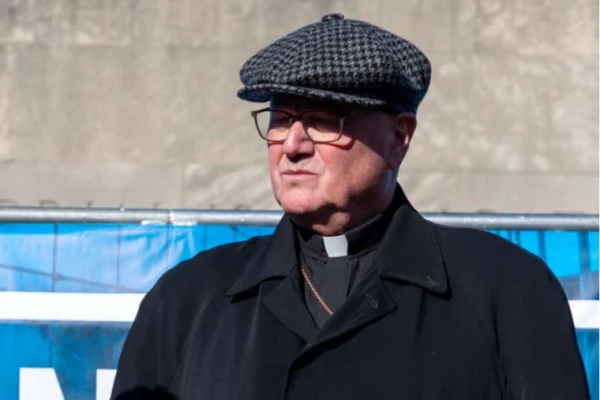
BTW – Nice hat.