No Picture
News Briefs

Dozens killed, missing after landslide in India

August 12, 2020 CNA Daily News 0

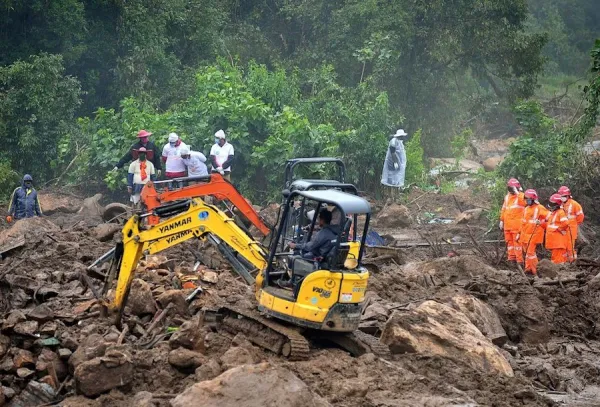
CNA Staff, Aug 12, 2020 / 05:16 pm (CNA).- A landslide in southern India has killed at least 52 people and destroyed dozens of buildings, including one Protestant church, in recent days.

For nearly a week, Kerala state has faced monsoon rainfalls and flooding, triggering a massive landslide in the Idukki district. Dozens of houses on a tea plantation were demolished, and about 70 people were buried by the mud when a hill collapsed.

More than a dozen people are still missing, and search-and-rescue operations are ongoing.

A 151-year-old Protestant Church of South India building collapsed during the flooding on Aug. 11, UCA News reported.

Local Catholics are now working to help those affected by the flooding.

The Archdiocese of Changanaserry is coordinating relief efforts, with priests, nuns, and lay volunteers assisting.

Fr. Jacob Mavunkal, an official with the Kerala Catholic Bishops’ Council, told UCA News that volunteers have “rushed food, drinking water and other immediate requirements to the affected people.”

Other areas of the state are also suffering with strong winds, heavy flooding, erosion, landslide, and falling trees causing damage, he said. Distributing supplies has been challenging, as many people are hesitant to approach relief camps due to fear of the COVID-19 pandemic.

Flooding during the monsoon season is an annual threat for people in certain parts of India. Last year, it was estimated that 17 million people were affected by flooding and landslides throughout the monsoon season.

Caritas India works with local diocesan-level partners throughout the country each year to offer food, shelter, and other assistance to those who have been displaced or affected by the flooding.


[…]

No Picture
News Briefs

Pope Francis meets with bishop newly consecrated to lead Mongolia’s Catholics

August 12, 2020 CNA Daily News 1

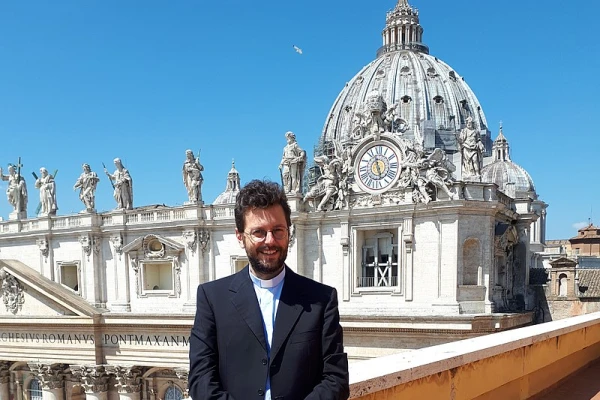
Vatican City, Aug 12, 2020 / 03:11 pm (CNA).- Pope Francis met Wednesday with an Italian missionary who was recently consecrated a bishop to lead Mongolia’s apostolic prefecture.

Bishop Giorgio Marengo, 46, served as a Consolata missionary priest in Mongolia for 17 years before Pope Francis appointed him Prefect of Ulaanbaatar April 2.

His episcopal consecration took place in Turin Aug. 8, with Cardinal Luis Tagle, prefect of the Congregation for the Evangelization of Peoples, as his principal consecrator.

“I am very grateful to the Pope for this great grace that has granted me to meet him personally and to receive a word of encouragement for this mission,” Marengo told Vatican News after his Aug. 12 meeting with the pope.

Pope Francis is “very interested in the … the Church in Mongolia and of the Mongolian people in general. We know how much the pope cares about the entire Church, even those areas where there are not large numbers, indeed precisely where the Church is more in the minority,” he said.

At the Mass of episcopal consecration, Tagle said: “May your heart, your words, your smiles whisper Jesus to the people, the poor, the suffering, the steppe, the rivers, the eternal blue skies of Mongolia.”

“A bishop can only boast of the compassionate love of Jesus,” Tagle added.

Marengo was born in northern Italy’s Piedmont region and grew up in Turin. He studied theology at the Pontifical Gregorian University in Rome and later obtained a license and doctorate from the Pontifical Urbaniana University.

While serving as a Consolata missionary in Mongolia, Marengo established a new catechesis program. He told CNA in 2014 that the program sought to form young adults into future catechists by providing lessons in theology and the Church and its mission.

Mongolia has a population of 1,300 Catholics in a country of more than 3 million people. The Prefecture Apostolic of Ulaanbaatar serves the entire country.

“I believe being a bishop in Mongolia is very similar to the episcopal ministry of the early Church,” Marengo said. “The Church is a very small reality, it is a minority but there is this group of Mongolian faithful who have chosen, with great courage and also a sense of responsibility, to follow the Lord and become part of the Catholic Church.”

The first modern mission to Mongolia was in 1922 and was entrusted to the Congregation of the Immaculate Heart of Mary. But under a communist government, religious expression was soon thereafter suppressed, until 1992.

In 2002, the Ulaanbaatar mission was elevated to the present apostolic prefecture. The mission’s superior, the late Fr. Wenceslao Padilla, a priest of the Immaculate Heart congregation, was appointed prefect, and was consecrated a bishop the following year. Padilla died in September 2018. Mongolia’s first native priest was ordained in 2016.

Marengo told Vatican News that because Mongolia’s Catholic community is so small it is especially important to pay attention to interreligious dialogue and the cultural traditions of the Mongolian people.

“It means dedicating time to know and study the language, to refine those tools that allow us to enter into a true dialogue with people, to understand their points of reference, their history, their cultural and religious roots,” he said. “And at the same time, in all this, to be faithful to the Gospel itself … to offer with great humility, with great sincerity this precious pearl we have received which is the Gospel of the Lord.”

The new bishop chose “Respicite ad eum et illuminamini” as his episcopal motto, which means “Look to him and you will be radiant.”

Marengo expects to return to Mongolia in September if coronavirus restrictions allow.

[…]

No Picture
News Briefs

Catholic Archbishop of Minsk calls for end to violence after Belarus election

August 12, 2020 CNA Daily News 0

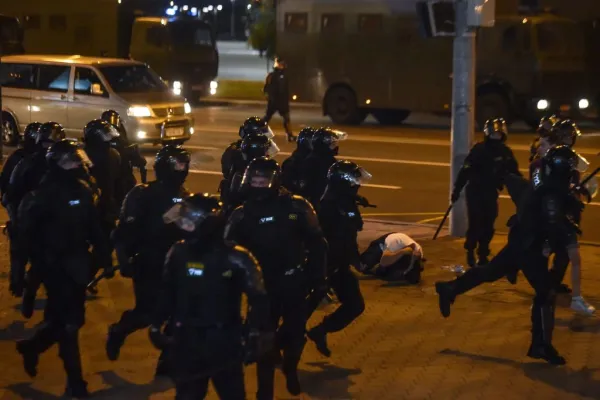
CNA Staff, Aug 12, 2020 / 01:01 pm (CNA).- The Archbishop of Minsk-Mohilev called Tuesday for an end to the violent clashes occurring across Belarus following a disputed presidential election.

“At this crucial moment in our history, in the name of the God of boundless mercy, love, and peace, I call on all parties to the conflict to end the violence. May your hands, created for peaceful work and fraternal greetings, lift neither weapons nor stones. Let the force of argument, based on dialogue in truth and mutual love, prevail over the argument of force,” Archbishop Tadeusz Kondrusiewicz, who chairs the Belarusian bishops’ conference, wrote Aug. 11.

Protests began Aug. 9 after president Alexander Lukashenko was declared to have won that day’s election with 80% of the vote. Lukashenko has been president of Belarus since the position was created in 1994.

Electoral officials said that the opposition candidate, Sviatlana Tsikhanouskaya, earned 10% of the vote. She was detained for several hours after complaining to the electoral committee, and has fled to Lithuania.

Protests have taken place across the country, and thousands of protesters have been detained.

Belarusian athorities say demonstrators have used metal rods, and police forces have used tear gas, stun grenades, and batons on them. Police in Brest, 110 miles west of Pinsk, shot live bullets at protesters Aug. 11.

Journalists from the BBC were harassed by police in Minsk, and other journalists were reportedly detained there and in Brest and Grodno.

US Secretary of State Mike Pompeo said Aug. 10 that the election “was not free and fair,” citing “severe restrictions on ballot access for candidates, prohibition of local independent observers at polling stations, intimidation tactics employed against opposition candidates, and the detentions of peaceful protesters and journalists.”

“We urge the Belarusian government to respect the rights of all Belarusians to participate in peaceful assembly, refrain from use of force, and release those wrongfully detained. We strongly condemn ongoing violence against protesters and the detention of opposition supporters,” he added.

Archbishop Kondrusiewicz wrote that Belarus has “witnessed unprecedented tensions” related to the election, saying: “There were clashes between citizens and law enforcement officers. As a result of the active confrontation, unfortunately, the first blood has been shed and there are victims on both sides. For the first time in the modern history of Belarus, a brother raised his hand against his brother.”

“Why do we, a nation with more than a thousand years of Christian history, today seem to have forgotten about love of neighbor and our inherent tolerance towards dissenters,” he asked.

Appealing to the Slavic tradition of veche, or popular assemblies, the archbishop said, “I propose to convene immediately an emergency round table to decide the future of our fatherland behind it, and not at the barricades,” so as “to overcome the crisis in society and stop the violence as soon as possible.”

“I encourage all people of good will to pray fervently for peace and harmony in our country,” Archbishop Kondrusiewicz concluded.

Lithuania, Poland, and Latvia have also offered to mediate between the government and protesters.

Tsikhanouskaya entered the presidential race after her husband, Siahei Tsikhanouski, was blocked from running and was arrested. Tsikhanouski is a pro-democracy activist.

[…]

No Picture
News Briefs

‘Hate speech’ label does damage to civil dialogue, Philadelphia Statement warns

August 12, 2020 CNA Daily News 1

CNA Staff, Aug 12, 2020 / 03:26 am (CNA).- Efforts to protect people from harm and error now marginalize and even demonize others for unpopular opinions, warns a new statement urging a revival of civil engagement and conscientious respect for the convictions of others.

“We want—and to be true to ourselves we need—to be a nation in which we and our fellow citizens of many different faiths, philosophies, and persuasions can speak their minds and honor their deepest convictions without fear of punishment and retaliation,” said the newly released Philadelphia Statement.

The statement was released Aug. 11. Its signers include academics, religious leaders and other commentators, including Archbishop emeritus of Philadelphia Charles Chaput and Princeton Law School professor Robert George.

“Our liberty and our happiness depend upon the maintenance of a public culture in which freedom and civility coexist—where people can disagree robustly, even fiercely, yet treat each other as human beings—and, indeed, as fellow citizens—not mortal enemies,” the statement continued.

It cited former slave and abolitionist Frederick Douglass, who said “Liberty is meaningless where the right to utter one’s thoughts and opinions has ceased to exist.”

“Truly open discourse—the debates, exchange of ideas, and arguments on which the health and flourishing of a democratic republic crucially depend—is increasingly rare,” the statement continued. “Ideologues demonize opponents to block debates on important issues and to silence people with whom they disagree.”

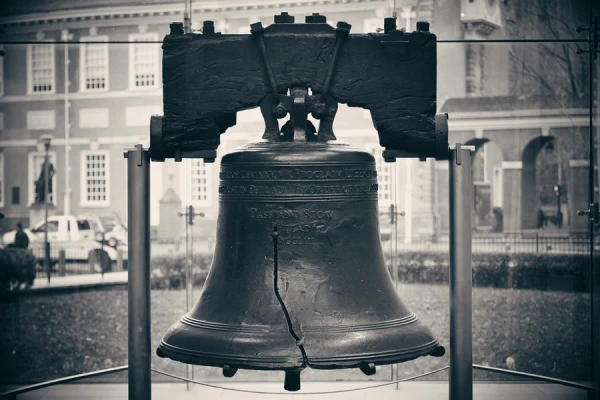
The Philadelphia Statement takes inspiration from Philadelphia’s pivotal role in American independence and the drafting of the U.S. Constitution.

It was drafted after meetings with “a diverse working group of prominent thinkers, scholars, and practitioners,” the statement’s website says. It says it is the start of “an ongoing movement to restore free speech and civil discourse in American law and culture.”

The statement criticized the spread of “blacklisting;” corporations’ use of “hate-speech” policies that block content deemed “wrong” or “harmful;” and speech regulations that protect students from “challenges to campus orthodoxy.”

“Common decency and free speech are being dismantled through the stigmatizing practice of blacklisting ideological opponents, which has taken on the conspicuous form of ‘hate’ labeling,” the statement continued. “Responsible organizations are castigated as ‘hate groups.’ Honest people of good faith are branded ‘hate agents.’ Even mainstream ideas are marginalized as ‘hate speech.’ This threatens our ability to listen, discuss, debate, and grow.”

The statement lamented phenomena like “social media mobs,” “cancel culture” and “campus speech policing,” all of which have drawn increasing concern from free speech advocates in recent years.

In June 2020, the Catholic former president of Florida State University’s student senate said he was removed from office for questioning controversial policy positions of the Black Lives Matter Global Network Foundation on abortion and sexuality in a private text message thread with fellow Catholic students that was later sent to student leadership.

In 2017, the payment processor Vanco dropped service for the Ruth Institute, claiming it promoted “hate, violence, harassment and/or abuse.” The institute, which rejected the charge, said it aims to combat family breakdown. The institute supports Christian teaching about marriage, family and human sexuality.

In 2012, a Catholic student group left the Vanderbilt University campus over a controversial school non-discrimination policy which barred the group from requiring its leaders to be Catholic.

At the same time, the Philadelphia Statement comes after years of debate about how to respond to political misinformation, false or misleading medical information, alleged foreign interference in elections, online harassment, political extremism, and pornography.

Free speech, in the view of the Philadelphia Statement, does not include “defamation, obscenity, intimidation and threats, and incitement to violence.”

However, it stressed, making “hate speech” an exception to free speech is “foreign to our free speech ideals.” The concept is “impossible to define” and is “often used by those wielding political, economic, or cultural power to silence dissenting voices.”

“That is why we must favor openness, to allow ideas and beliefs the chance to be assessed on their own merits; and we must be willing to trust that bad ideas will be corrected not through censorship but through better arguments,” the statement said.

To seek unity instead of division and to secure a free, pluralistic society where people may live according to their consciences, the statement said, “we must renounce ideological blacklisting and recommit ourselves to steadfastly defending freedom of speech and passionately promoting robust civil discourse.”

The statement’s signers include Alan Sears, former president of Alliance Defending Freedom; Dr. Daniel Mark, past chairman of the U.S. Commission on International Religious Freedom; Dr. Mary Eberstadt of the Faith and Reason Institute; Nina Shea, director of the Hudson Institute’s Center for Religious Freedom; Howard Slugh, founder and general counsel of the Jewish Coalition for Religious Liberty; Dr. Russell Moore, president of the Ethics and Religious Liberty Commission of the Southern Baptist Convention; and Dr. Thomas Farr, president of the Religious Freedom Institute.

One signer is Ayaan Hirsi Ali, a Somali-born former Muslim who is now an atheist, a staunch critic of Islam, and a research fellow at the Hudson Institution. Another signer is Dr. Charles Murray, whose controversial 1994 book “The Bell Curve” discussed social stratification and apparent racial differences in intelligence. Kevin D. Williamson, a writer for the conservative National Review, also signed. In 2018 Williamson was briefly hired by the prestigious cultural commentary journal The Atlantic, then fired for polemical comments he made in 2014 that appeared to suggest hanging as a criminal punishment for abortion.


[…]