The Divine Mercy Biopic, featuring St. Faustina
MPAA Rating: Not rated at this time of this review USCCB Rating: Not rated at this time of this review Reel Rating: 4 out of 5 reels Although she probably never envisioned it, Faustina Kowalska […]

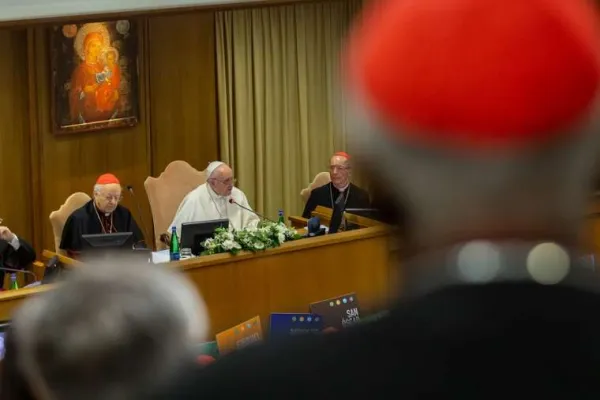
Vatican City, Oct 26, 2019 / 03:45 pm (CNA).- The Amazon synod final document, published Saturday, laid out the need to define “ecological sins” while calling the Church to walk new paths of “integral conversion.”
“We propose to define ecological sins of commission or omission against God, one’s neighbor, the community and the environment,” paragraph 82 of the final document states. “They are sins against future generations and are manifest in acts and habits of pollution and destruction of the harmony of the environment.”
“No believer, no Catholic can live their life of faith without listening to the voice of the earth,” Bishop David Martínez de Aguirre Guinea, apostolic vicar of Puerto Maldonado, Peru explained at a press conference to present the final document Oct. 26.
“If we are going to face the problem, then we have to change,” Cardinal Michael Czerny, special secretary for the synod, added.
Czerny, who also serves as under-secretary of the Migrants and Refugees Section of the Dicastery for Promoting Integral Human Development, warned that the “good news” will not necessarily reach people in the Amazon “if we continue doing what we have been doing.”
The final document for the Synod of Bishops on the Pan-Amazon region calls for a new four-fold expression of “integral conversion” for the Church in the Amazon: pastoral, cultural, synodal, and ecological. These are framed in terms of “new paths of conversion” in the chapter titles for each of the subjects.
“New paths” are a way of saying “change,” Czerny said. “Without conversions, we are repeating what we have done before …but there is no real change.”
“We have brought our tradition into play so that we can find a way forward,” he said. For the pope, the most important necessary change is “pastoral change.”
The 33-page document, was approved article by article by a two-thirds majority vote on Oct. 26. It is the result of a three-week meeting in Rome during which the synod’s 181 voting members, together with representatives from indigenous communities, religious orders, lay groups and charities, discussed a range of issues concerning the region, spread across nine countries.
In ordinary sessions of the Synod of Bishops, delegates are elected by the world’s bishops conferences. In the special session for the pan-Amazonian region, all attendees were by special invitation.
The document was drafted by a committee of experts and special secretaries, assisted by a drafting committee elected from among the synod fathers. The draft text was presented to the assembly on Friday night, and various amendments were proposed and debated during the approval process.
The final synodal document has no teaching or binding authority of its own.
Pope Francis said in his closing remarks in the synod hall on Saturday that he will write a post-synodal exhortation, to hopefully be published before the end of the year.
Ecological Conversion
In addition to the synod document’s proposal to change universal Church discipline on clerical celibacy and create new roles for women, it also contains strong exhortations on environmental issues and the rights of indigenous peoples.
On the topic of integral ecology and the environment, the document references the threat of exploitation of the Amazon and its peoples.
It also criticizes as “scandalous” the criminalization of Amazonian ethnic communities whose rights are threatened, it says, by public policies favoring the exploitation of natural resources.
These projects “exert pressure on ancestral indigenous territories” and are accompanied by “widespread impunity throughout regarding human rights violations.”
The document notes the Church’s teaching on the inviolability of the human person, which is created in the image and likeness of God.
The synod fathers propose giving support to “fair” sustainable development initiatives, though it does not name specific initiatives.
“The Amazon is in the hands of us all, but it depends mainly on immediately abandoning the current model that is destroying the forest, not bringing well-being and endangering this immense natural treasure and its guardians,” the report states.
It goes on to say it is “incumbent” on the Church to help protect the Amazon by being an “ally” of the local communities, “who know how to take care of the Amazon, how to love and protect it.”
The indigenous peoples are “asking the church to become their ally and the answer of the church is yes,” Czerny said.
“With the Amazon burning, many more people are realizing that things have to change. We cannot keep repeating old responses to urgent problems,” Czerny said. “The ecological crisis is so deep that if we don’t change we won’t make it.”
Czerny said that environmental scientists and other experts who audited the synod helped the bishops to understand “the planet suffering” because “they drove scientific facts home in a way that we can feel them.”
The Canadian cardinal said that people want “a plastic solution” that is not going to affect their lives and not require them to change, but he stressed that it does not exist and conversion is required.
The synod document also condemns the theft of the “traditional wisdom” of the Amazonian peoples as “biopiracy” and a “form of violence.”
“The Church chooses to defend life, the land and the native Amazon cultures,” including in the Amazon peoples’ “registration, processing and dissemination of data and information about their territories and their legal status,” it states.
The report says the Church must guard itself against “the power of neo-colonialism” and “unlearn, learn and relearn” in order to overcome any tendency toward “colonizing models.”
The synod reaffirms a “commitment to defend life seamlessly from conception to natural death and the dignity of each and every person.”
Pastoral service to the indigenous, it says, “obliges us to proclaim Jesus Christ and the Good News of the Kingdom of God.”
Pope Francis announced in his closing speech to the synod that he would create a new section in the Dicastery for the Promotion of Integral Human Development dedicated to the Church in the Amazon.
The synod final document also called for a “socio-environmental and pastoral office” to work in alliance with the Latin American church organizations REPAM, CELAM, CLAR, and other non-ecclesial actors representing indigenous peoples.
Cultural Conversion
The synod document states that “inculturation is the incarnation of the Gospel in indigenous cultures… and at the same time the introduction of these cultures into the life of the Church.”
The Amazon culture and spirituality already have a rich “indigenous theology, Amazonian face of theology and popular piety,” it says, adding that they “reject a colonial style of evangelization.”
“The evangelization that we propose today for the Amazon is the inculturated proclamation that generates processes of interculturality, processes that promote the life of the Church with an Amazon identity and face,” the report states.
Czerny said that it is very important for the Church to learn how to be “interculturally respectful.”
“Not to assume that the way I am or the way we are is definitive, is the norm, is the way it has to be … differences have to be embraced,” he said.
“The church is not an inflexible structure in which your cultures and traditions will find no place … it is the opposite,” Bishop Guinea said.
“A Church with an Amazonian face,” the document states, “needs its communities to be infused with a synodal spirit, supported by organizational structures of this dynamic, as authentic organisms of ‘communion.’”
“The Church’s research and pastoral centres, in alliance with the indigenous peoples, should study, compile and systematize the traditions of the Amazon’s ethnic groups in order to favor an educational effort that starts from their identity and culture…”
Synodal Conversion
The synod document also calls for “new paths for synodal conversion.”
Cardinal Czerny said that this process involved “an unprecedented process of listening” before the Amazon synod.
“You know that synodality is working when you find yourself voting for something that you knew before the synod that you disagreed with,” Czerny said.
When asked what was the working definition of “synodality” understood among the synod fathers, Czerny replied, “Everyone had a sense of what it meant because we were doing it. Could we explain that in words … does it matter?”
A synod is a consultative assembly, convened by the pope or a bishop, to advise on a particular topic of interest to the local, regional, or universal Church.
The Synod of Bishops for the Pan-Amazonian region will conclude Oct. 27 with a closing Mass in St. Peter’s Basilica.
Lourdes, France, Oct 26, 2019 / 03:33 pm (CNA).- As reports of theft are on the rise at a famous Marian shrine in France, Lourdes authorities have increased security and encouraged pilgrims to be more aware of their belongings.
Pierre Aurignac, a loca… […]
Vatican City, Oct 26, 2019 / 01:17 pm (CNA).- The meeting for the Synod of Bishops for the Pan-Amazonian region has approved a final document which calls for the ordination of married men as priests […]

Vatican City, Oct 26, 2019 / 01:10 pm (CNA).- In his closing remarks for the Amazon synod Saturday, Pope Francis urged the media not to give undue attention to aspects of the assembly’s final report addressing Church discipline while ignoring the assembly’s “diagnoses” of cultural, social, pastoral and ecological issues in the Pan-Amazonian region.
It’s “in small disciplinary things, which have their significance but that would not do the good that this synod has to do,” he said Oct. 26, “that society takes care of the diagnosis we have made in the four dimensions.”
“There is always a group of elite Christians who like to take up this kind of diagnosis as if they were universal,” he continued, “however small, or in this kind of more inter-ecclesiastical disciplinary resolutions.”
There is a danger, the pope said Oct. 26, of only looking to see “what they decided on this disciplinary issue, what they decided on another, making of the world who won this game, lost this…”
“No, we all win with the diagnoses we made and as far as we arrive in the pastoral and inter-ecclesiastical issues, but don’t get locked in on that.”
“Thinking today about these Catholic and Christian elites sometimes, but especially Catholics who want to go to the little things and forget the big things, I remembered a phrase from Péguy and went to look for it, I try to translate it well, I think it can help when describing these groups that want the little thing and forget about the thing: ‘Because they don’t have the courage to be with the world, they believe they are with God. Because they don’t have the courage to compromise on man’s options, on man’s life options, they believe they are fighting for God. Because they don’t love anyone, they believe they love God,’” said the Holy Father.
The Vatican synod hall responded to the pope’s remark with long applause.
Pope Francis spoke inside the synod hall at the end of the final session of the Synod of Bishops on the Pan-Amazonian Region, which will officially end with a closing Mass Oct. 27.
During the session, the Amazon synod’s final report was presented, and voted on paragraph by paragraph by the 185 synod members.
In his remarks, Pope Francis said, based on a request in the final report, he will re-open the Church’s study of the possibility of women deacons.
He said he will re-open his 2016 commission on the study of the possibility of having a female diaconate, possibly adding new members and having it operate within the Congregation for the Doctrine of the Faith.
He noted that the commission ended its work without a consensus on the topic, but he had heard the request by some on this topic and would “pick up the gauntlet.”
In May, the pope said the commission he opened in August 2016 to study the possibility of a female diaconate, with or without the sacrament of ordination, had been unable to reach a consensus, though further study would continue to take place.
In his speech, Francis noted that there were three issues which are ideas for the “next synod” and received a majority of votes, one of which is synodality.
“I do not know if that will be chosen or not, I have not yet decided, I am reflecting and thinking,” he said. “But I can certainly say that we have walked a lot and we have to walk more on this path of synodality. Thank you very must for this company.”
He said he would like to write a post-synodal exhortation on the Amazon synod “before the end of the year so that not much time passes,” adding that “it all depends on the time you have to think.”
Francis praised tradition as not a “museum of old things,” but “safeguarding the future.”
In his speech, he also praised another proposal he had received, that young priests who are studying to enter the Holy See’s diplomatic corps could first spend one year serving alongside a bishop in a mission territory.
The creation of an “Amazonian rite” of liturgy, the pope said, would fall under the competency of the Congregation for Divine Worship.
He proposed the creation of a regional bishops’ group for the Amazon and said he would ask Cardinal Peter Turkson, the head of the Dicastery for the Promotion of Integral Human Development, to open a new section on the Amazon within his Vatican department.
He said the main dimension of the synod, which includes everyone, is the proclamation of the Gospel. This is the “pastoral dimension,” he said. “But that is understood, that is assimilated, that is understood by those cultures.”
“And there was talk of how lay people, priests, permanent deacons, religious men and women have to point to that point, and they talked about what they do and to strengthen that.”
Vatican City, Oct 26, 2019 / 10:21 am (CNA).- Last week, Vatican Media interviewed Fr. Paulo Suess, a German priest who has served for decades among the indigenous peoples of the Amazon. Fr. Suess is […]
A while back, I wrote a piece for The Catholic Herald that said, in essence, “Everybody stay calm: things aren’t as bad as they seem; they’re worse.” That piece had as its analytical focus the […]

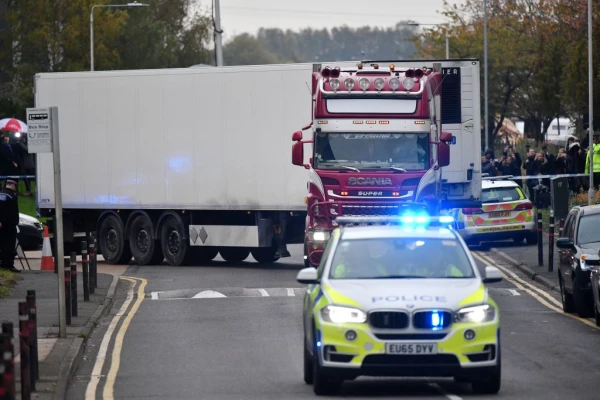
Brentwood, England, Oct 26, 2019 / 06:01 am (CNA).- In the wake of the discovery of the bodies of eight women and 31 men inside a semi trailer in eastern England on Wednesday, Catholics are calling for prayers for the victims and their families, as well as safer means for immigrants and asylum seekers in Europe.
‘We are praying for the thirty-nine women and men who died, for their families, and for all those across the world who have lost their lives while trying to reach a better future,” Bishop Paul McAleenan, Auxiliary Bishop of Westminster and lead bishops for migration and asylum in the English and Welsh bishops’ conference, said Oct. 25.
“This tragedy underscores the urgent need to redouble our efforts in establishing safe passages and combatting criminals who exploit desperate people,” McAleenan said.
Police have not yet released details about whether the people who died were migrants, or seeking asylum, and the nationalities of the victims has not been officially confirmed, though Essex police initially reported that all 39 of them were Chinese nationals.
Jesuit Refugee Service UK called for policies for safe and legal migration, including a widening the definition of family members eligible to reunite under refugee family reunion rules, in response to the discovery of the bodies.
“This is devastating news. We know very little about the people who lost their lives at this point, but they are someone’s son, daughter, brother, sister, father, mother, friend or neighbour. We pray for those who died and for their families and friends,” said Sarah Teather, JRS UK’s Director, Oct. 23.
“This is truly tragic news, but depressingly predictable and avoidable news,” said Maurice Wren, Chief Executive of the Refugee Council.
“If you deny people safe and regular travel routes to find safety, you are leaving them with no choice but to risk their lives on utterly perilous journeys and in the hands of criminal gangs.”
Despite the police’s initial report on the victims’ nationalities, at least three of those on board may have been from Vietnam. Several Vietnamese people, who fear that their family members were on board and among the dead, have confided to the BBC.
“Our thoughts are with the 39 victims in #Essex, no matter where they are from,” Liu Xiaoming, the Chinese Ambassador to the UK, said in a tweet Friday.
“This has again drawn world attention to the issue of illegal immigration. The world should join hands and take resolute measures to prevent such tragedy from happening again.”
GPS data from the trailer, which had been leased from Global Trailer Rentals, shows that it left the Republic of Ireland Oct. 15, crossed into the UK and made its way to the port of Dover before crossing into mainland Europe. There it moved among several cities in France and Belgium before crossing the channel again to the town of Purfleet on the Thames.
A man and a woman, both 38, from a town near Liverpool, have been arrested and are being held on suspicion of manslaughter and conspiracy to traffic people, The Times reports. On Wednesday a truck driver from Northern Ireland was arrested on suspicion of murder.
The Times also reports that the arrests come after port authorities and police were accused of failing to act on repeated warnings about migrant activity near the docks.
The BBC notes that this is not the first time that the bodies of people believed to be migrants have been found in England; in June 2000, the bodies of 58 Chinese people who had suffocated to death, along with two survivors, were discovered in a semi truck at Dover.
Miao, India, Oct 25, 2019 / 06:01 pm (CNA).- As the Amazon Synod considers the evangelization—and exploitation—of indigenous Amazonian tribes, the conversation reflects as well on what is happening in other parts of the world.
In rural nor… […]

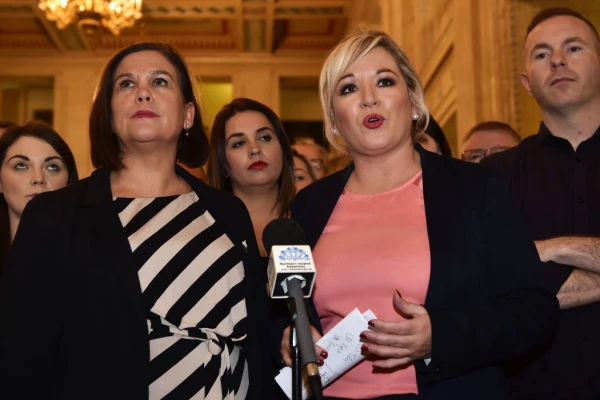
Belfast, Northern Ireland, Oct 25, 2019 / 05:05 pm (CNA).- A priest in Northern Ireland has exhorted pro-choice politicians not to receive Holy Communion, and Catholic voters not to vote for pro-choice candidates or parties, after legislation expanding abortion access in the region took effect this week.
“To be publicly pro choice-abortion is irreconcilable with being a faithful Catholic. Therefore, such persons should not approach the Holy Eucharist. If they do so, they are committing the mortal sin of sacrilege,” Fr. Patrick McCafferty, parish priest at Corpus Christi in Belfast, said in an Oct. 21 Facebook post.
“The Word of God calls everyone to be in the state of grace when they approach the Lord’s Table,” added the priest of the Diocese of Down and Connor.
Northern Ireland’s devolved legislature failed Monday to block a change to the region’s law imposed by the British parliament, which expands access to abortion. Previously, abortion was legally permitted in Northern Ireland only if the mother’s life was at risk or if there was risk of permanent, serious damage to her mental or physical health.
The British parliament passed the Northern Ireland (Executive Formation etc) Act 2019 in July. The act took effect Oct. 22 because the Northern Ireland Assembly, which has been suspended the past two years due to a dispute between the two major governing parties, was not able to do business by Oct. 21.
Pro-life members of the Northern Ireland Assembly, largely comprised of members of the Democratic Unionist Party recalled the assembly Monday for the first time since January 2017 in order to block the relaxed abortion restrictions.
However, in order for the assembly to make any binding changes, the election of a speaker of the assembly with cross-party support was required. This proved impossible when the Social Democratic Labour Party walked out of the Oct. 21 meeting.
Members of the assembly from Sinn Fein, the Green Party, and People Before Profit did not participate in the Oct. 21 session.
“We were betrayed today at Stormont,” Fr. McCafferty wrote in another Facebook post, on Oct. 21. “I implore all faithful Catholics, faithful Christians and all good people who value human life and true (not fake) human rights, to withdraw all support from pro abortion-choice politicians and political parties.”
“For Catholics and nationalists/republicans, in particular, Sinn Fein and the SDLP have betrayed us in a most hideous fashion,” he said.
Sinn Fein supports abortion rights, while the SDLP allows their Members of the Legislative Assembly a conscience vote on the topic. Fr. McCafferty noted that “Sinn Fein is avowedly pro abortion,” and charged that “The SDLP is infected with influential pro abortionists.”
And Fr. McCafferty wrote Oct. 22 on Facebook that “We have been failed miserably by politicians – all of them.”
He noted that the Northern Ireland Assembly collapsed because of the Renewable Heat Incentive scandal, saying some of the politicians and officials of the DUP “are at the heart of this scandal.”
“The collapse of the Northern Ireland Assembly, due to the RHI Scandal, has left the door wide open for a phalanx of determined and fanatical pro abortion MPs in Westminster, led by Stella Creasy – unelected by the people of Northern Ireland – but aided and abetted by pro abortion-choice politicians in Sinn Fein, the SDLP, Alliance, PBP and the Green Party – to railroad through, at Midnight last night, one of the most extreme abortion regimes in the world,” the priest lamented.
Fr. McCafferty wrote that “The SDLP, once a party that Catholics could trust and vote for with confidence, is no longer such a party. There are now a significant and influential number of SDLP MLAs and councillors, who are pro abortion-choice. Catholics voting in the future, for SDLP candidates, need to carefully determine their stance on abortion before giving that candidate their vote.”
Dolores Kelly, an MLA from the SDLP who told the Belfast Telegraph she is “a pro-life politician”, said that “many people who are pro-life and practising Catholics will also be very alarmed and angry about Fr McCafferty’s comments” regarding not approaching Holy Communion.
“I don’t know much about canon law, but I know that such a decision would have to come from Rome,” Kelly stated.
Canon 916 of the Code of Canon Law states that “anyone who is conscious of grave sin may not celebrate Mass or receive the Body of the Lord without previously having been to sacramental confession”; and the previous canon notes that those “who obstinately persist in manifest grave sin are not to be admitted to Holy Communion.”
Fr. McCafferty noted, “I have the utmost regard and respect for those persons who, knowing they are living in an irregular situation, present themselves at Mass, during Holy Communion, for a blessing,” saying that “such persons are real men and women of Faith.”
He reiterated that pro-choise politicians “should not receive Holy Communion … until they sincerely repent, seek reconciliation with the Lord and renounce their pro abortion-choice positions.”
© Catholic World Report