No Picture
News Briefs

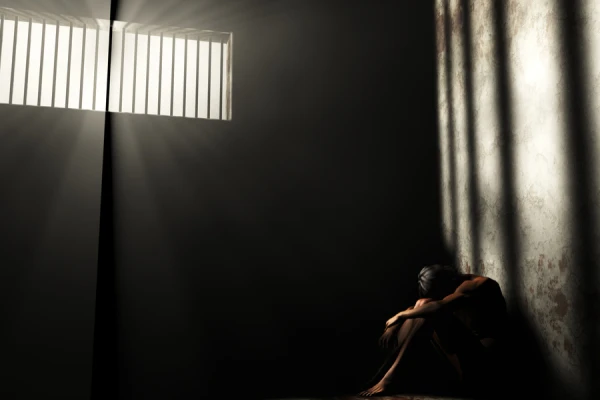
Faith leaders call for an end to solitary confinement

May 8, 2019 CNA Daily News 1

Albany, N.Y., May 8, 2019 / 04:00 pm (CNA).- New York’s faith leaders gathered in protest of solitary confinement this week, pushing for a bill that seeks more humane ways to treat prisoners.
 
“We believe solitary confinement is a form of torture, and it has been vastly overused historically in New York State. Even with some recent reforms, not enough has been done,” Dennis Poust, communications director for the New York State Catholic Conference, told CNA.

Thirty-five faith leaders and 30 others rallied in support of the Humane Alternatives to Long-Term (HALT) Confinement Act in the New York Capitol Building in Albany on May 7.
 
Attendees included representatives from the National Religious Campaign Against Torture, T’ruah the Rabbinic Call for Human Rights, and New York State Council of Churches – a coalition of numerous denominations.

The New York State Catholic Conference was not present at the event, but it expressed strong support for the HALT bill, which has not yet been debated on the Senate or House floor. The conference issued a memorandum in support of the act in January.

The bill seeks to “limit the time an inmate can spend in segregated confinement, end the segregated confinement of vulnerable people, restrict the criteria that can result in such confinement, improve conditions of confinement, and create more humane and effective alternatives to such confinement,” according to the statement.

If passed, the law would restrict solitary confinement to 15 days or less. The United Nations Special Rapporteur on Torture has denounced solitary confinement that exceeds more than 15 days as a form of torture.

On any given day, there are an estimated 3,000 inmates in solitary confinement in New York’s state prisons. Prisoners in solitary confinement are isolated in 6-by-10 foot cells for 23 hours at a time.
 
After a 2016 settlement in a lawsuit challenging New York’s widespread use of solitary confinement as a punishment, the state reformed its prison system to limit the solitary confinement of pregnant women, youth and the disabled.
 
Solitary confinement can have serious consequences for prisoners’ psychological health, leading to an increase in depression or even suicide, Poust told CNA.
 
“It’s not necessary in modern society and modern prison systems to take this action. We are asking the state to look at its historic overuse of this policy and to present these prisoner with more humane conditions,” he said.

Poust drew attention to the care of the imprisoned prescribed by the Old and New Testaments. He said it is the responsibility of Christians to express solidarity with incarcerated people.

“Prisoners don’t lose their innate human dignity when they are sentenced. While there are many prisoners who present a danger to society and must be incarcerated, the idea that they should be treated as less than human is anathema to what we as a society should be striving for,” he said.

Bishop Edward Scharfenberger of Albany has said that solitary confinement deteriorates mental illness, trauma, and recidivism, side effects that Americans cannot ignore.
 
“Social science has affirmed that solitary confinement works against the purpose of rehabilitation and restorative justice. It also works against the purpose of improving public safety, both inside our prisons and jails and in our communities,” he wrote in a 2016 op-ed article in Times Union.
 
Pope Francis, an advocate care of the most vulnerable and on the peripheries of society, has spoken out on the topic. In 2014, he said solitary confinement was a form of torture and drew attention to its negative effects.

“The lack of sensory stimuli, the total impossibility of communication and the lack of contact with other human beings induce mental and physical suffering, such as paranoia, anxiety, depression, weight loss, and significantly increase the suicidal tendency,” Pope Francis said.

[…]

No Picture
News Briefs

Judge rules against Virginia law banning abortions by non-doctors

May 8, 2019 CNA Daily News 0

Richmond, Va., May 8, 2019 / 03:58 pm (CNA).- A federal judge in Richmond, Virginia has ruled against state medical regulations requiring first-trimester abortions be performed only by physicians.

“After a careful review of the experts’ opinions from both sides, a consensus appears to have evolved that first trimester abortions, which typically require only medication, do not require the onsite presence of a licensed physician and is consequently unduly burdensome,” wrote U.S. District Judge Henry E. Hudson on May 6.

Nearly a dozen lawsuits filed in states across the U.S. are seeking to allow medical professionals other than doctors – such as nurse practitioners, midwives and physician assistants – to perform abortions.

Planned Parenthood affiliates and abortion rights lobbying groups, including the American Civil Liberties Union, have filed 11 lawsuits across the United States since 2016, beginning after the U.S. Supreme Court struck down health and safety regulations on abortion providers in Texas.

The judge has yet to set a date for when the Virginia ruling will take effect. Pro-life advocates decried the decision, saying the ruling demostrated a disregard for the safety of women who choose to have abortions.

“Laws requiring that ‘physicians only’ perform abortions exist in 40 states. The court decision today in the U.S. District Court for the Eastern District of Virginia is directly contrary to controlling U.S. Supreme Court precedent,” said Olivia Gans Turner, president of Virginia’s National Right to Life state affiliate.

“In their unceasing quest to promote no-limits destruction of unborn children regardless of stage of development or ability to feel pain, abortion advocates are more extreme even than the Roe v. Wade decision they claim to defend.”

The Center for Reproductive Rights, an abortion rights group, is challenging similar laws in Mississippi, Arizona, Kansas, Montana and Louisiana, the Washington Post reports.

A trial is set for May 20 on Virginia state requirements that all second-trimester abortions be performed in a hospital; that patients wait 24 hours after getting an ultrasound to undergo an abortion; as well as licensing standards for clinics, the Post reports.

The Maine chapter of the American Civil Liberties Union and Planned Parenthood in Sept. 2017 filed a lawsuit in federal court, taking issue with a state law that only permits doctors to perform abortions. Democratic Gov. Janet Mills has also introduced legislation that would allow nurse practitioners, physician assistants and certified nurse-midwives to perform abortions.

Clarke Forsythe, senior counsel at Americans United for Life, told CNA in 2017 that requiring only doctors to perform abortions “establishes a high standard of safety for patient care.” Allowing non-doctors to perform abortions would “further isolate abortions from other gynecological care,” he told CNA.

According to Forsythe, the number of doctors who perform abortions has continued to shrink.

“Doctors don’t want to get into the business,” he said. “The abortion industry and population controllers have been desperately looking to increase the number of abortionists.”

Suzanne Lafreniere, director of public policy for Diocese of Portland in Maine, described the lawsuit as “a desperate attempt to increase abortions in the state of Maine.”

She said that the number of surgical abortions has been declining in Maine, and that the abortion lobby is doing “everything it can to increase its business, to be perfectly honest.”

Yesterday, the Maine House of Representatives passed a bill that would require Maine’s Medicaid program and private insurance companies to pay for elective abortions. The bill now moves to the state Senate. Fifteen other states already spend public money on abortion— Maine’s Medicaid already covers abortions in cases of rape or risk to the mother’s life.

Last month, the Montana Supreme Court upheld a ruling allowing a nurse practitioner and a nurse midwife to continue to perform abortions in the early stages of pregnancy, until the court makes a final decision on whether a state law excluding nurses from performing abortions is constitutional.

[…]

No Picture
News Briefs

Government figures have asked Church for asylum, Venezuelan bishop says

May 8, 2019 CNA Daily News 1

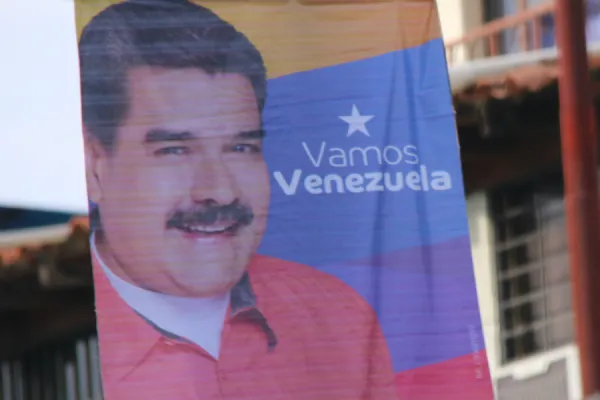
San Cristobal, Venezuela, May 8, 2019 / 03:30 pm (CNA).- A Venezuelan bishop said Sunday that prominent figures in the government of Nicolas Maduro have asked for asylum from the Church in case the regime should fall.

Opposition leader Juan Guaidó called last week for protests against Maduro. Under Maduro’s socialist administration, Venezuela has been marred by violence and social upheaval, with severe shortages and hyperinflation leading 3 million to emigrate.

“Some of the principal leaders of the government went to ask the bishops’ conference for the right to asylum, if the government fell,” Bishop Mario del Valle Moronta Rodriguez of San Cristóbal de Venezuela said during a May 5 Mass.

Two days later, it was announced that Manuel Christopher Figuera, a former intelligence chief and a general, had broken ranks with Maduro’s government. The US declared May 7 that it had lifted sanctions against Figuera, and would consider doing so for any other defectors.

Bishop Moronta recalled the Church’s right to provide refuge for people when their lives are in danger, as happened several years ago when pro-government politicians  “had to hide in many of our churches.”

In a statement released Sunday May 5 by local media, Moronta reiterated that “some high ranking leaders went to some bishops. Obviously for logical reasons who they were won’t be said, but they went to consult whether in the case that events turned against them they retained the right of asylum that the Church universally recognizes.”

“Of course, the Church is open to protecting all those who are attacked, those who require some assistance. On the other hand, the Church is not going to be their lackey. It is not hiding for the sake of hiding, but to protect,” the prelate clarified.

Bishop Morontoa also said that the nation’s bishops sent a report to Pope Francis on the events in recent days in Venezuela, on the attacks against the Catholic Church throughout the country, and the suffering the people are undergoing.

“And the pope told us to forge ahead, for the Church to not lose heart, that the voice of the bishops is the voice of the pope, and that everything done against the Church is not done just against the local Church but the Church throughout the world,” the prelate said.

He expressed his solidary with the people of Our Lady of Fatima parish in San Cristóbal, which was attacked by members of the Venezuelan National Guard May 1. Such attacks are possible because of a lack of “the fear of God in those who act like this,” he said.

The bishop related that he was recently stopped at a GNB checkpoint where the military police told him that “they felt ashamed of what their fellow soldiers had done at Our Lady of Fatima parish.”

Guaidó, head of the opposition-controlled legislature, the National Assembly, declared himself interim president in January and has been recognized by a number of Western governments, but has been largely unable to secure the support of Venezuela’s military.

Protests last week failed to dislodge Maduro from power.

[…]

No Picture
News Briefs

After Vatican-China deal, Chinese bishop imprisoned for 23 years is not yet released

May 8, 2019 CNA Daily News 0

Beijing, China, May 8, 2019 / 11:30 am (CNA).- The nephew of a Chinese bishop who was arrested 23 years ago has said he does not know where his uncle is incarcerated, or even whether he is still alive.

“His whereabouts are unknown and I don’t even know if he is alive or not. I am upset with tears every time I think of this 87-year-old man. Please pray for him,” Su Tianyou told UCANews recently.

His uncle is Bishop James Su Zhimin of Baoding, in China’s Hebei province, southwest of Beijing.

In 1996, the bishop was arrested during a procession, and charged with conducting “unregistered” religious activities: Su had refused to join the Chinese Catholic Patriotic Association, the government recognized Catholic Church in China, and was instead a member of the “underground” Church- in communion with Rome, and appointed a bishop by Pope St. John Paul II, but unrecognized by the Chinese government as a bishop.

It was not the first time Su was arrested. According to the U.S. House of Representatives’ Human Rights Commission, Su has spent 40 years in prison, “without charge, without trial.”

“Before being arrested in 1996, Bishop Su Zhimin was held off and on for 26 years either in prison or forced labor camps.  The Chinese government deemed him as ‘counterrevolutionary’ because, since the 1950s, he has refused to join the Patriotic Association,” the Human Rights Commission says.

Su reportedly escaped Chinese detention in 1997, but was rearrested.

“In November 2003, his family discovered him by chance at a hospital in Baoding, surrounded by police and public security.  He has not been heard or seen from since, despite repeated international inquiries,” according to the Human Rights Commission.

Su’s nephew, Su Tianyou, told UCANews that he met in 2015 with Guo Wei, a Chinese official who told him that the bishop might be released if there were an improvement in Vatican-China relations.

In September 2018, Beijing and Vatican officials signed a provisional agreement on bishop appointments, that was intended to unify the underground Church and the Chinese Catholic Patriotic Association.

According to Su Tianyou, neither Vatican nor Chinese officials have indicated whether Su might now be released.

In October 2018, Hong Kong’s Bishop Michael Yeung said that his diocese continued to pray for Su, and hope for his release.

“Whether he is in prison, or kept secret in some other place, or whether he has already died, nobody really knows,” Yueng told Reuters.

The US Commission on International Religious Freedom’s latest report, issued April 29, noted that despite last year’s Vatican-China deal on the appointment of bishops, “repression of the underground Catholic Church increased during the latter half of the year.”
The commission, known as the USCIRF, is a bipartisan group that advises the President, Congress, and the Secretary of State on international religious freedom issues.

Among the report’s inclusion of commissioners’ “individual views” were those of Johnnie Moore, who called the deal “one of the most alarming incidents as it relates to religious freedom in the entire year.”

“Within days of the Vatican negotiating its deal, the Chinese used it as cover to embark upon the closure of several of the nation’s largest and most prominent unregistered church communities,” Moore wrote.

Moore believes the Vatican “now bears a significant moral and legal responsibility to help solve the problem which it helped created—albeit inadvertently—by providing China license to viciously crack down on Christian communities (as cited in this report), and by providing the Chinese government further cover to continue its incomprehensible, inexcusable and inhumane abuses of Muslim citizens in the western part of the country.”

“While I am entirely for direct engagement on these issues, including with the most severe violators in the world, that engagement must not result in these types of unintended consequences, as has been the case in China. The Vatican made a terrible mistake, which it must take seriously. This debacle must be dealt with urgently and seriously.”

April’s USCIRF report also highlighted the plight of the Uyghur Muslim minority in China. To date, between 800,000 to 2 million Uyghurs— or about 10% of their population— have been detained and sent to “re-education camps” to be subjected to abuse and political indoctrination.

The report calls on the US government to sanction those in the Chinese government responsible for the detention of the Uyghurs.

[…]

No Picture
News Briefs

Bid to end death penalty in Louisiana fails

May 8, 2019 CNA Daily News 0

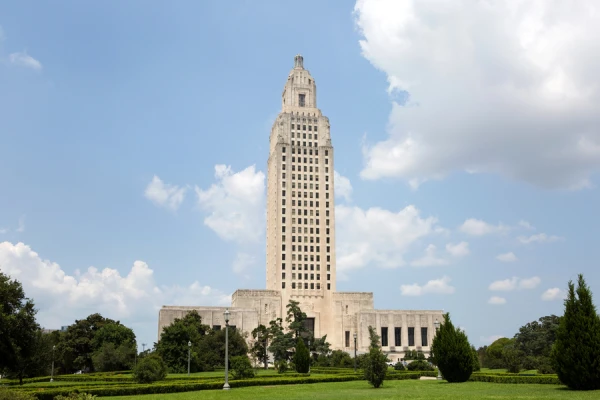
Baton Rouge, La., May 8, 2019 / 11:00 am (CNA).- A proposal to allow voters to decide if capital punishment should remain legal in Louisiana has been defeated in the state senate.

Senate Bill 112 would have added a question to the next state-wide ballot proposing a constitutional amendment to abolish the death penalty. It was defeated Monday by a vote of 25-13 against, having needed a two-thirds majority to pass.

The measure narrowly passed out of legislative committee on April 30. Speaking during the senate debate, the bill’s sponsor Sen. Dan Claitor, (R-Baton Rouge) said that respect for all human life was paramount.

“It’s a morally wrong thing to do, and at the end of the day, it cheapens life,” Claitor said.

The senator, a former prosecutor, argued that execution did not work as an effective deterrent, was often flawed in its application, and had resulted in miscarriages of justice.

Claitor was supported by a minority of senators across party lines.

Sen. JP Morrell (D-New Orleans) spoke during the committee debate about the high percentage of exonerations of death row inmates which suggested the potential for mistaken executions.

“It’s indisputable that we had people on death row who were [then] found innocent,” Morrell said in support of Claitor’s bill.

State representative Terry Landry (D-New Iberia) has proposed a similar measure in the House. A former superintendent of the Louisiana State Police and a former supported of capital punishment, he said that his beliefs had evolved and that he “now believe[s] the death penalty is wrong.”

The measure was supported by the Catholic bishops of the state. Speaking on behalf of the Louisiana Conference of Catholic Bishops, executive director Rob Tasman said that “justice can never be wrought by killing a human being.”

Pope Francis has called the death penalty a rejection of the Gospel and of human dignity, calling on civil authorities to end its use. Last year, he ordered a revision of paragraph 2267 of the Catechism of the Catholic Church to describe the death penalty “inadmissible” and urging its elimination.

Opponents of the measure said that Claitor’s argument about deterrence was irrelevant.

“Nowhere does [the law] say we shall ‘deter,’ said Sen. Bodi White (R-Baton Rouge). “It says ‘shall be punished’ and that’s what this does.”

District Attorney Scott Perrilloux of the 21st district told News Star that deterrence was not a relevant factor in cases where he sought the death penalty.  

“What we consider is the victims and what victims consider as justice” he said.

The last execution to take place in Louisiana was in 2010.

Although there are currently 72 inmates on death row in the state, Gov. John Bel Edwards has imposed a moratorium on any further executions until July of this year because of the unavailability of the drugs used in lethal injections.

[…]

The Dispatch

On the composting of thee and me

May 8, 2019 George Weigel 4

In Herman Wouk’s novel, War and Remembrance, Warren Henry shocks his Bible-reading father, the novel’s hero, by claiming that human beings are “microbes on a grain of dust…and when it’s over we’re just dead meat.” […]

No Picture
News Briefs

Why these men walked 24 miles to the ‘Rome of the Midwest’

May 8, 2019 CNA Daily News 0

St. Louis, Mo., May 8, 2019 / 03:37 am (CNA).- It can be hard to find time for silent reflection in today’s bustling modern society. But a group of men this past weekend found peace and silence in an unlikely place – on the sidewalks and shoulders of busy roads leading into the heart of a Midwestern metropolis.

The annual Joseph Challenge Pilgrimage, held this year May 4-5 in St. Louis, Missouri, brought together men ranging from their 20s to their 60s who were looking for both a physical challenge and spiritual rejuvenation.

Along the way, the pilgrims would encounter four Catholic churches dedicated to St. Joseph – appropriate, considering the Church celebrated the feast of St. Joseph the Worker the previous Wednesday.

The challenge

The idea was to start at a parish in Manchester, a western St. Louis suburb, and trek 24 miles along sidewalks, paths, through parks, and occasionally on road shoulders all the way to downtown St. Louis.

The men – around 20 total – gathered at St. Joseph Church and began their walk around 10 a.m. Saturday. They stopped for lunch in a park, and again for Mass at the Carmel of St. Joseph, a monastery of discalced Carmelite nuns, around 3:30 p.m.

In addition to carrying a yellow and white Vatican flag, the men took turns carrying a large wooden cross along with them.

“The experience of having carried a cross, basically a nailed together 2×4 cross that I’m sure doesn’t weigh as much as Christ’s cross, but carrying that a mile and a half was a very challenging and yet rewarding experience,” said Patrick Swackhammer, 45.

After Mass at the monastery, the group continued for several more miles before reaching the place of the night’s rest – St. Joseph’s in Clayton, Missouri. Total distance walked the first day: approximately 14 miles.

The men had dinner, adoration of the Blessed Sacrament and a holy hour including a Latin rosary, followed by fellowship and a few beers before settling into their sleeping bags on the tile floor of the church basement for the night.

Origins

“This was kind of my crazy idea several years ago,” said Gabe Jones, 30, one of the two main organizers of the pilgrimage.

Jones said he had been on pilgrimages and men’s retreats in the past that usually involved an invitation for men to drive to and meet at a sacred destination, rather than walking to it. To him, driving straight to a pilgrimage site defeated the purpose; it removed the physical hardship involved in actually getting to the site.

“A pilgrimage is: you walk, and you walk, and you walk, and you walk, and you get to this beautiful church, and you fall on your knees when you get there. That’s a pilgrimage,” he said.

The United States does not have the same kind of culture of pilgrimage that Europe has, he said, partly because the U.S. as a country is much younger than the European continent, and thus is built primarily around the automobile.

Jones said the idea for the St. Joseph pilgrimage started as “just a bunch of guys getting together.”

The first year, 2015, a handful of guys expressed interest in the challenge, but nearly all of them canceled before it began or dropped out along the way for various reasons – a tweaked back, other plans for the weekend, a torn ACL – until, by the end, the only two pilgrims left were Jones and the priest that had come with him.

Jones said he was disappointed in the turnout the first year, but came to understand that the idea of walking 24 miles over a weekend and being away from your family is perhaps a bigger ask than he thought.

“What I learned from that first year is that material success and immediately seeing the fruits of our labor are not the most important thing,” Jones said.

“Just do the thing that you’re called to do, and if it’s the right thing then there will be good fruit. And it may not be right away, heck, it may not be in your lifetime. But just stick to it, and if God’s calling you to that, do it.”

The next year, 2016, they had more like 40 guys sign up, with around 38 walking at any one time, Jones said. The pilgrims were coming from a whole range of places, physically and spiritually.

But the feeling of being the same boat and taking on the same physical challenge fostered a sense of brotherhood among the men.

“As a convert to the Catholic faith, the concept of a pilgrimage is something new, it’s something I had to embrace along with embracing all the other unique aspects of the Catholic faith,” second-year participant Russell Yount reflected.

“But it’s an idea that resonates with me, of having a goal and pursuing it.”

The importance of silence

Walking twenty-plus miles through an urban jungle may not sound like the most peaceful way to spend a weekend. But the organizers made sure that despite the constant hum of traffic next to the marching group of men, there were times when quiet contemplation was encouraged.

During some stretches of the route, the men were encouraged to socialize and get to know one another. During other sections, the organizers led rosaries via megaphone.

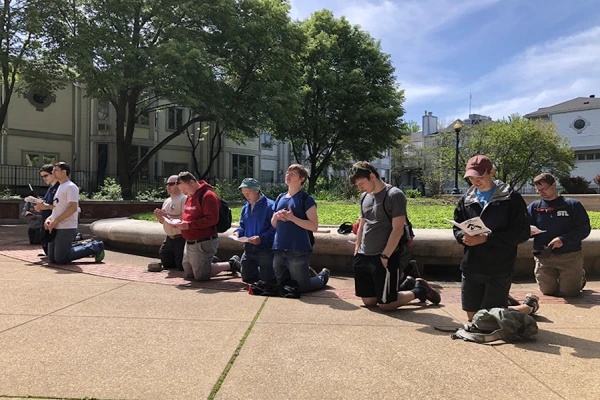
At other points, the men were encouraged simply to walk in silence, their quiet reverie interrupted only occasionally by drivers in passing cars pipping their horns in support.

“It’s a good visible witness as we walk through the city,” co-organizer Chris Horan said.

“To people who aren’t Catholic, people who are Catholic, to just plant seeds and show them that Catholicism is not dead, it’s growing and growing, and maybe is more alive than ever.”

The homilist at Mass on Saturday pointed to St. Joseph as a model of silent masculinity.

“Given that [St. Joseph] said absolutely nothing in scripture…when he would have spoken, he was obedient, he was prayerful, and he’s just the perfect model of silence, I think,” Horan said.

“And especially for men who are flooded with junk in the culture, it can be hard for us to keep St. Joseph in mind. But if we do that then it’s only going to bring us grace…that’s the main model for us as husbands, fathers, brothers, and even those called to the priesthood.”

Fr. Gustavo Serpa, a member of the Miles Christi religious order based in Detroit, was the official chaplain for the pilgrimage, giving several talks over the course of the weekend.

Horan said he appreciated Father Gustavo’s presence on the pilgrimage.

“I think his youth, his love of the Church, his love of St. Joseph have helped get us through and been a good example and model for us,” Horan commented.

Many of the participants pointed to the silence aspect as one of the most helpful parts of the pilgrimage, and one that helped them to bond with their fellow men.

“You can hear the cars going by, the footsteps on the pavement, and sometimes even voices. But it gives you an opportunity when you’re not required to be speaking or doing things – it lets your mind and your soul kind of settle down and be quiet with Christ for a little while,” Bill Hennessy, 55, reflected.

Cory Ross, a 30-year-old stay at home dad, was similarly inspired by the call to silence in his everyday life.

“Silence is one of those things that we can hold as an important practice in our daily lives,” he said. “And Father kind of talked about how it helps us grow in virtue and reflect upon our lives and purpose and things of that nature. It has been really profitable.”

For Yount, a weightlifter, the pilgrimage was an opportunity to take on a physical challenge while also developing the virtues he has come to value as a convert to the Catholic faith. He said he got to tell his conversion story at his home parish soon after last year’s Joseph Challenge.

“I think of things in terms of the cardinal virtues of prudence, justice, fortitude, and temperance, and then the theological virtues of faith, hope and charity,” Yount explained.

So, he says, he always approaches anything he does with the question: “How does each thing that I’m doing here help to build one of those virtues?” In terms of the St. Joseph Challenge, he said, he’ll be pondering what virtues are in play; certainly fortitude and prudence.

Rome of the Midwest

Apart from being a physical challenge and an opportunity for silent retreat, the pilgrimage offered a unique opportunity for the men to experience the Catholic culture of the city.

“It’s a city that I had always just kind of driven through before, but I have a totally different understanding of St. Louis now, having walked through it,” Yount said.

Much of the city’s robust Catholic culture originates in the mid-19th century, when a massive influx of foreign immigrants – many from Germany, Ireland, and Italy- arrived in the area, complementing the dominant French heritage in the city at that time.

Today, there are around 180 parishes in the Archdiocese of St. Louis, and so many beautiful Catholic churches that the city has been unofficially dubbed the “Rome of the Midwest.”

“Having walked all the way from Manchester to downtown, and realizing just how Catholic the city is. How strong the Catholic heritage of St. Louis is – I had no idea,” Yount said. “But now I know, and I tell people all the time: if you’re ever in St. Louis, there are these places that you don’t want to miss that are of importance to us as Catholics.”

Push to the finish

Bright and early Sunday morning, the men packed their belongings, and set off on the final day of the pilgrimage. Today would involve about 10 more miles before they reached their destination: The Shrine of St. Joseph, downtown.

Eventually, to the pilgrims’ delight, the shining curves of the St. Louis Arch, located on the riverfront in the heart of downtown, came into view. Soon the shrine itself was in view, and the group was all smiles as they finally approached the impressive edifice – just in time for the regularly scheduled 11 a.m. Sunday Mass.

Many of the men’s wives and families were there to meet them at the end of their pilgrimage. They knelt in front of the shrine and prayed a litany to St. Joseph as they concluded their journey.

“If you want something more physical – physical suffering, physical sacrifice, as opposed to just spiritual sacrifice – come out and join us next year. You’re only going to get grace from it, meeting like-minded Catholic men, and you’re going to grow, God willing, in greater devotion to St. Joseph,” Horan said.

“You’ll experience beautiful liturgies, and you’ll take what you experience from this back home to your wives, your kids.”

The spiritual experience isn’t all the men will bring back with them.

“Of course, I’ll be taking the blisters and the aches and pains back, too,” Swackhammer added.

All in all, it was a fitting introduction to the concept of pilgrimage, something many of the men had not encountered before.

“You may have to start small, but I think we make everything too stress-free and too easy, which also leads to distraction, and comfort, and not a lot of difference from our day to day lives,” Hennessy reflected.

“And being on foot, with being disconnected from our creature comforts for a few hours, a few days, it makes it much much easier to focus on what you’re supposed to be focused on, which is basically getting to heaven.”

All photos credit: Jonah McKeown / CNA.

[…]