The Dispatch

Ironies in the fire

September 18, 2019 George Weigel 3

The eminent sociologist Peter Rossi was a world-class punster whose scholarly accomplishments fed a sometimes-whimsical view of the human condition — in which, Rossi memorably observed, “there are many ironies in the fire.”  That’s certainly […]

No Picture
News Briefs

Austin bishop saddened by city’s intention financially to support abortion

September 17, 2019 CNA Daily News 2

Austin, Texas, Sep 17, 2019 / 05:01 pm (CNA).- Last week the Austin City Council voted to provide funding for costs associated with abortion, a move that was protested by the city’s bishop when it was proposed in August.

The city council voted Sept. 10 to provide $150,000 for transportation, lodging, or childcare for Austin residents seeking to procure abortion.

“I am saddened by the recent news that members of the Austin City Council are working on a proposal to increase financial support for access to abortion in the community,” Bishop Joe Vasquez of Austin had said Aug. 21.

“I, along with the Catholic Church, continue to affirm the intrinsic value of human life and the dignity of every person in a way that transforms culture,” he stated.

He added that the funds “would be better used to provide emotional, material and spiritual support for pregnant women and families in need.”

“Please join me in continuing to work with our government leaders, praying that all life will be protected from conception to natural death,” Bishop Vasquez said.

Texas had passed a law earlier in the year banning local governments from financially supporting abortion providers. The state law was in reaction to Austin’s decision to lease a building to Planned Parenthood for $1 a year.

Sen. Donna Campbell, who authored the Texas law, said she was unsurprised Austin would “use taxpayer dollars to pay for transportation and lodging to those seeking an abortion.”

Austin’s decision has been challenged in a lawsuit by former councilman Don Zimmerman, who charges the policy violates a state law criminalizing the furnishing of “means for procuring an abortion knowing the purpose intended,” the Texas Tribune reported.

Texas has adopted several laws regulating abortion in recent years.

A study published in March found that the number of abortions procured in Texas decreased 18 percent after the application of a 2013 law regulating abortion clinics. Though the total number of abortions fell, the number of abortions procured during the second trimester increased.

[…]

No Picture
News Briefs

Beware scammers, Cardinal Dolan warns, after online fraudster targets followers

September 17, 2019 CNA Daily News 0

New York City, N.Y., Sep 17, 2019 / 02:00 pm (CNA).- Cardinal Timothy Dolan of the Archdiocese of New York issued a statement Monday clarifying that he will not and has never used social media to privately solicit donations. The cardinal made the statement in response to an online scam operation being conducted using his name to solicit funds.

“I’ve heard from some of you you’ve received Facebook or Twitter messages from an account pretending to be me,” said the archbishop on Twitter Sept. 16. “Please know I will never reach out privately on social media to ask for donations.”

Dolan encouraged anyone who had been asked to donate money by an account purporting to be him on Twitter or Facebook to report it to the archdiocese. 

A spokesman for the Archdiocese of New York told CNA that they had received “several reports” that someone impersonating Cardinal Dolan was requesting money from people, “ostensibly for charitable purposes,” and that this was not the first time something like this has happened.

“Sadly, we’ve seen this scam being used in the past few months with other religious figures – pastors, priests, other clergy – being impersonated, and so wanted to remind people that Cardinal Dolan will never solicit donations in this way,” said Joseph Zwilling, the archdiocese’s director of communications.  

Zwilling added that, “While the internet and social media can be great tools of evangelization, they can also be used by unscrupulous individuals seeking to ‘rip-off’ trusting and generous people.” 

“It’s always a good idea to be cautious, and double or triple check, especially online, that the person is who he or she claims to be!” 

These types of scams are called “phishing,” and are relatively common. A “phisher” will pose as either a known, trusted person or as a website, and request money, passwords, or other protected information. Frequently, phishers will create spoof emails and addresses that look like genuine emails from an organization or person in order to harvest passwords and credit card information from an unsuspecting victim. 

A person can protect themselves from phishing by using security tools like two-factor authentication, and exercising constant vigilance before sending personal information or money electronically. Electronic security experts advise considering if any request is typical policy for an organization, and to take a step back before blindly giving away sensitive info. 

Other safety recommendations include checking the full email or account address to ensure the authenticity of the sender or, in the example of a public figure such as Cardinal Dolan, to see if the social media account is verified as authentic. 

[…]

No Picture
News Briefs

Eritrean bishops say seizure of Catholic schools is ‘hatred against the faith’

September 17, 2019 CNA Daily News 3

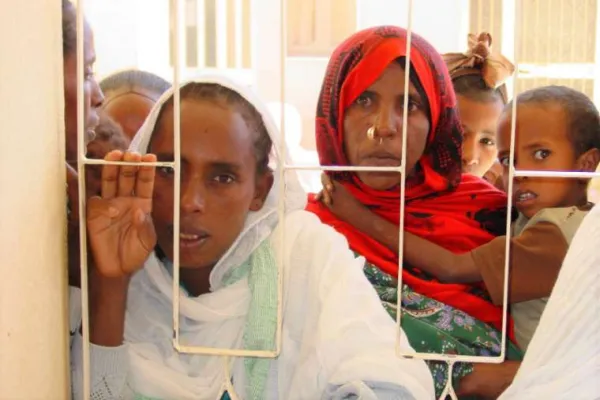
Asmara, Eritrea, Sep 17, 2019 / 01:45 pm (CNA).- Seven religious schools in Eritrea, four of them sponsored by the Catholic Church, have been seized by the country’s government this month. Catholic bishops in the country say the move was motivated by “hatred against the faith.”

“If this is not hatred against the faith and against religion what else can it be?” Eritrea’s bishops asked in a Sept. 4 letter addressed to the Minister of Public Education, Semere Re’esom.

The seven schools seized by the government include three run Protestant and Muslim groups, according to Comboni Catholic missionaries serving in the area. The schools have been nationalized, and will reportedly now be run by the country’s education ministry.

The Eritrean government has also seized Church-run health facilities.

“The actions that are being taken against our educational and health institutions are contrary to the rights and to the legitimate freedom of the Church,” the bishops wrote in their Sept. 4 letter.

The bishops also suggested that the government raise to them any objections to the way in which Catholic schools and hospitals are administered in Eritrea.

“If there are situations that need to be corrected or adjusted, not only is it good, but even the only viable way, in order for this to take place in a context of an open and constructive dialogue,” the bishops wrote.

Eritrea is a one-party state whose human rights record has frequently been deplored.

It is believed the seizures are retaliatory, after the Church in April called for reforms to reduce emigration.

The bishops had also called for national reconciliation.
Government seizure of Church property is not new, however.

A 1995 decree restricting social and welfare projects to the state has been used intermittently since then to seize or close ecclesial services.

In July 2018, an Eritrean Catholic priest helping immigrants and refugees in Italy told EWTN that authorities had recently shut down eight free Catholic-run medical clinics. He said authorities claimed the clinics were unnecessary because of the presence of state clinics.

Christian and Muslim schools have also been closed under the 1995 decree, according to the US Commission on International Religious Freedom’s 2019 annual report.

Eritrea has been designated a Country of Particular Concern since 2004 for its religious freedom abuses by the US Department of State.

Many Eritreans, especially youth, emigrate, due to a military conscription, and a lack of opportunities, freedom, education, and health care.

A July 2018 peace agreement between Ethiopia and Eritrea, which ended a conflict over their mutual border, led to an open border which has allowed for easier emigration.

Catholics make up 4 percent of Eritrea’s population.

ACI Africa contributed to this report.

[…]